
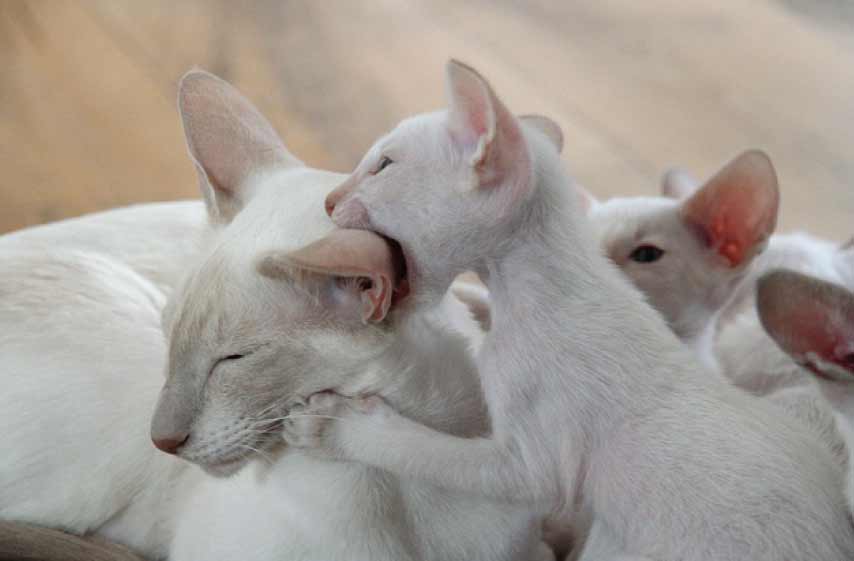
Cat Bites Neck of Other cat
Cat bites neck of other cat: if you just watched this happen at home, the most likely explanation is play, grooming that got too intense, or one cat asserting itself. Neck biting is a normal feline behavior. It becomes a problem when you see hissing, flattened ears, puffed fur, screaming or wounds, which signal a real fight that needs managing.
Cats grab each other by the neck for several different reasons, and they look surprisingly similar at first glance. This guide shows you how to read the body language, what each type of neck biting means, when to step in, and how to calm a tense multi-cat home without punishment.
See a vet if: a bitten cat has a puncture, swelling, limping, fever or lethargy, or if a previously friendly cat suddenly becomes aggressive. Cat bites can seal over and trap bacteria, and new aggression can be a sign of pain or illness.
Key takeaways
- Neck biting between cats is often play, social grooming or mating-type behavior.
- Play is quiet, loose and turn-taking; fighting involves hissing, growling, stiff bodies and flattened ears.
- The ASPCA notes rough play is common in cats under two years old.
- Never break up a real cat fight with your hands, and never punish either cat.
- Persistent aggression calls for a vet check, then separation and slow reintroduction.
In this guide
Cat Bites Neck of Other Cat: The Short Answer
In most homes, the cat that bites the neck of another cat is playing, grooming or establishing a little social order. The neck is a natural target: it is where mother cats carry kittens, where males grip females during mating and where a hunting cat aims its bite. Those instincts show up in everyday interactions even in spayed and neutered pets.
The ASPCA explains that rough play is common and natural among kittens and young cats less than two years of age, and that young cats learn to inhibit their bites and sheathe their claws through play with each other. So a cat bites neck fur, holds briefly and lets go, and both cats carry on as friends.
When Neck Biting Is a Warning Sign
Neck biting deserves a closer look when it comes with any of the following:
- Hissing, growling or screaming.
- Ears flattened back, dilated pupils or puffed-up fur.
- One cat always pinning the other and never trading roles.
- The bitten cat hiding, avoiding food or the litter box, or losing weight.
- Scabs, missing fur or wounds on the neck.
Any of these suggests real conflict rather than play, which we cover in detail below.
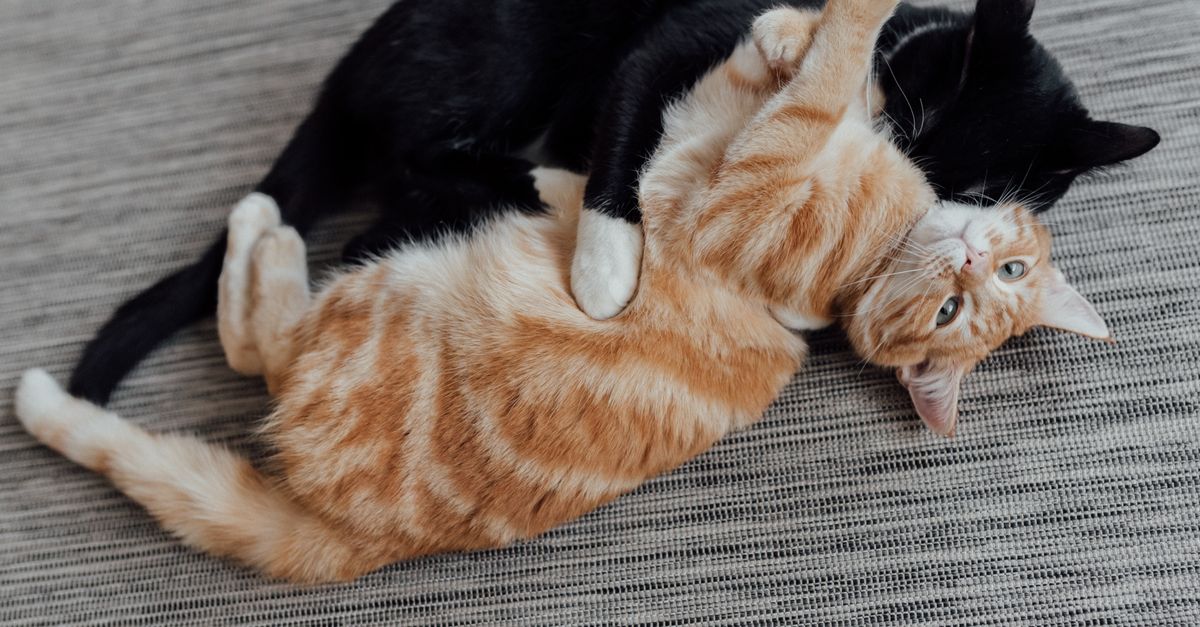
Why a Cat Bites Neck of Other Cat: 6 Common Reasons
Each reason a cat bites neck of other cat looks slightly different, so match what you see at home to the closest description below.
1. Play Fighting
Wrestling, chasing and grabbing the neck are all part of normal feline play, especially in young cats. Play mimics hunting, and the neck is where a hunting cat would bite. The Cornell Feline Health Center notes that cats raised alone during their early lives may not learn to keep their bites gentle, so single kittens sometimes play rougher as adults.
2. Grooming That Turns Into Biting
Cats that are bonded often groom each other’s head and neck. Sometimes the grooming cat ends the session with a nip, or bites when the other cat tries to leave. A cat-care guide from Temptations describes this pattern, sometimes called dominance grooming, as a way one cat controls the interaction. A quick nip followed by calm behavior is usually nothing to worry about.
3. Mating-Type Behavior and Mounting
During mating, the male grips the female’s neck. That same neck grip can appear in mounting behavior even in neutered cats. Cat behavior author Pam Johnson-Bennett explains that mounting between spayed and neutered cats may reflect social position, stress, play or attention-seeking, and that the behavior can persist out of habit if a male was neutered later in life.
4. Status and Territory
Cats in the same home sort out who uses which space and when. The ASPCA notes that aggression between household cats is more subtle and complex than fights between outdoor toms. A cat bites neck and shoulders, or blocks a doorway, to say “this spot is mine.” Too few litter boxes, feeding spots or perches can make this worse.
5. Redirected Aggression
A cat that sees an outdoor cat through a window, hears a loud noise or smells something unfamiliar may turn its arousal on the nearest cat. The ASPCA calls redirected aggression probably the most dangerous type because the bites are uninhibited. Cornell recommends removing or avoiding the trigger.
6. Pain, Illness or Fear
A cat in pain may lash out when touched or approached. Some owners also notice tension when one cat comes home from the vet smelling unfamiliar. Both the ASPCA and Cornell stress that a medical workup comes first for any cat showing new aggression.
Play or Fight? How to Tell When a Cat Bites Neck of Other Cat
Watch the whole body, not just the mouth. The ASPCA describes cats in a real standoff as sitting or standing stiffly with hackles up, ears swiveled backward and often growling, hissing or howling. Cornell adds dilated pupils and ears flattened backward on the head.
| Sign | Likely play | Likely real fight |
|---|---|---|
| Sound | Mostly quiet | Hissing, growling, yowling, screaming |
| Ears | Forward or neutral | Flattened or swiveled back |
| Body | Loose, bouncy | Stiff, hackles up, fur puffed |
| Roles | Cats take turns chasing and pinning | One cat always attacks, the other flees or hides |
| Claws and bites | Claws mostly sheathed, soft bites | Claws out, hard bites, fur flying |
| Afterward | Cats rest near each other or groom | Cats avoid each other, one may hide for hours |
Fight signs come from the ASPCA and Cornell; play signs, such as taking breaks, switching roles and staying relaxed, follow the Temptations guide. No single sign is proof, so look at the overall pattern over several days. Mixed signals, such as quiet wrestling that ends with a hiss, often mean play went a little too far rather than true aggression.
When a Cat Bites Neck of Other Cat Every Day
Daily neck grabbing is not automatically a problem. Two young cats who wrestle every evening and then nap together are probably just good playmates. Look instead at the cat on the receiving end. If that cat still approaches the other, eats and uses the litter box normally and starts play sometimes too, the relationship is likely healthy. If it hides, avoids shared rooms or watches the other cat warily, the daily neck biting has become bullying and needs management.
Check the Bitten Cat for Wounds
After any rough encounter, run your hands gently over the neck and shoulders of both cats. VCA Animal Hospitals explains that a cat’s canine teeth leave small, deep punctures that seal over and trap bacteria, so an abscess may not show for several days. Heat, swelling, pain, fever or lethargy mean a vet visit.

What to Do When a Cat Bites Neck of Other Cat Aggressively
- Don’t use your hands. The ASPCA warns that it’s never a good idea to break up a cat fight. Make a loud clap, drop a pillow or slide a piece of cardboard between them instead.
- Separate and calm down. Put the cats in different rooms with their own litter box, food and water until both are relaxed.
- Book a vet check. Cornell says the first step with an aggressive cat is to make sure there is no medical cause. Spaying or neutering all cats involved is also part of Cornell’s advice for aggression between males.
- Reintroduce slowly. Cornell advises separating cats that act aggressively and reintroducing them gradually with positive reinforcement, such as feeding them on either side of a door. This can take weeks to months.
- Never punish. The ASPCA notes that painful punishment is ineffective and can trigger pain-induced aggression and worsen fear and territorial aggression.
How to Prevent Neck Biting Fights
- Add resources: extra litter boxes, food bowls, water stations and scratchers in different rooms.
- Go vertical: cat trees and window perches let cats share space without crowding, as Pam Johnson-Bennett recommends.
- Play twice a day: interactive play with a wand toy burns off energy that might otherwise go into ambushing a housemate.
- Block outdoor triggers: cover the lower part of windows if a neighborhood cat sets off redirected aggression.
- Interrupt early: toss a toy away from the pair when play starts to get loud.
For more on cat body quirks and behavior, see our guide to tomcat cheeks in male cats, which explains why intact males fight more.
Common Mistakes Owners Make
- Reaching in to separate fighting cats: redirected bites to hands can happen fast and can be serious.
- Yelling at or spraying the “bully”: punishment increases stress for both cats.
- Rushing a reintroduction: Cornell stresses not to rush it.
- Ignoring small wounds: bite punctures can become abscesses days later.
Example Scenario (illustrative): Maya in Raleigh, North Carolina, noticed her 1-year-old cat grabbing her older cat’s neck every evening. She searched “cat bites neck of other cat” and watched more closely. The young cat bounced in quietly, but the older cat now hissed and hid.
Maya added a second litter box and a window perch, scheduled two wand-toy sessions a day for the youngster and booked a vet check for the older cat, who turned out to have a sore tooth. Within a few weeks, the evening ambushes had eased.
Cat Bites Neck of Other Cat: FAQs
Why does my cat bite my other cat’s neck while grooming?
It is often a sign the grooming cat wants to end or control the session. A quick nip with no hissing or fleeing afterward is usually normal between bonded cats.
Why does my neutered male cat bite and mount my other cat?
Mounting with a neck grip can continue after neutering out of habit, stress, play or social positioning. Rule out medical issues with your vet and add more resources and play.
Why does my cat hold my other cat down by the neck?
When a cat bites neck of other cat and pins it down, it is usually rough play, mounting behavior or a status move. If the pinned cat hisses, struggles or hides afterward, treat it as conflict and add space and resources.
Is it normal for kittens to bite each other’s necks?
Yes. Rough play is common in kittens and young cats, and it teaches them to soften their bites and keep their claws in.
Should I separate my cats if one keeps biting the other’s neck?
Separate them if you see hissing, flattened ears, injuries or one cat hiding. Then reintroduce slowly, with positive experiences such as meals on either side of a door.
Can a neck bite from another cat get infected?
Yes. Cat teeth make small, deep punctures that can trap bacteria and form an abscess over several days. See a vet if you notice swelling, pain, fever or lethargy.
Why did my cats suddenly start fighting?
Sudden fighting can follow redirected aggression, a new pet, pain or possibly a vet visit that left one cat smelling unfamiliar. A vet check is the first step.
Final Verdict: Cat Bites Neck of Other Cat
When a cat bites the neck of another cat, it is usually play, grooming or social sorting, especially in young cats. Watch for hissing, flattened ears, puffed fur, one-sided attacks or wounds, which point to real conflict. In that case, separate safely without your hands, get a vet check, reintroduce slowly and add resources, and never punish either cat.
Your next steps
- Watch your cats for a few days and compare what you see with the play-or-fight table.
- Add one extra litter box and one more perch or hiding spot.
- Explore more feline behavior help in our cat care guides.
Living with a neck-biting duo? Swap tips with other pet parents on our Facebook community.
About the author — Written and reviewed by the Pets Store Home Editorial Team: pet owners and animal lovers who check every guide against trusted US veterinary and animal-welfare sources. This article is general information, not a substitute for professional veterinary advice. Always talk to your veterinarian about your own pet’s health.
How we checked this guide: We used the ASPCA, the Cornell Feline Health Center, VCA Animal Hospitals, Cat Behavior Associates (Pam Johnson-Bennett) and a Temptations cat-care guide. We review this article every 12 months, or sooner if guidance changes.
Last reviewed: October 2026.
Sources
- ASPCA, Aggression in Cats (accessed October 2026)
- Cornell Feline Health Center, Feline Behavior Problems: Aggression (accessed October 2026)
- VCA Animal Hospitals, Fight Wound Infections in Cats (accessed October 2026)
- Cat Behavior Associates, Why Does My Neutered Cat Try to Mount Other Cats? (accessed October 2026)
- Temptations, Why Do Cats Bite Each Other’s Necks? (accessed October 2026)












[…] Which foreign pets are legal in Washington State? […]