Hard plastic pool for dogs

Hard plastic pool for dogs

Hard Plastic Pool for Dogs: How to Choose, Set Up and Use One Safely

Is a hard plastic pool for dogs a good idea? Yes, for most dogs. A rigid, shallow plastic pool gives your dog a cool spot to splash, and firm walls resist claws better than an inflatable. Pick one your dog can lie down in, keep the water shallow and fresh, and always supervise, as the ASPCA advises.

A backyard dog pool is one of the simplest ways to help a dog beat the summer heat. This guide explains how to pick the right hard plastic pool for dogs, how to set it up and keep it clean, and the safety rules vets and animal welfare groups recommend.

Key takeaways

  • Hard plastic pools are shallow, rigid tubs that suit splashing and cooling off rather than real swimming.
  • Pick a pool your dog can lie down and turn around in, with a smooth, rounded rim.
  • Keep water shallow, change it often, and empty it at least every 5 to 7 days to stop mosquitoes breeding.
  • Never leave a dog alone with a pool; the ASPCA notes not all dogs are strong swimmers.
  • Run the hose first, because Texas A&M warns water sitting in a hose can get hot enough to burn.
  • Provide shade and fresh drinking water, and stop play at the first sign of overheating.

What Is a Hard Plastic Pool for Dogs?

A hard plastic pool for dogs is a molded, rigid tub, often sold as a kiddie pool, that holds a few inches of water. Unlike an inflatable, it has no air chambers to puncture, and unlike a foldable PVC pet pool, its walls stay upright on their own. Dogs use it to wade, lie down and cool off, so think of it as a splash pool rather than a swimming pool.

Each style has trade-offs. The comparison below is our general guide based on how these pool types are built, so check the product details before you buy.

Pool type Strengths Drawbacks
Hard plastic No air to leak, stands on its own, easy to scrub Bulky to store; can crack if bent in cold weather
Foldable PVC pet pool Folds flat, often larger sizes, may have a drain Soft walls can be scratched or chewed
Inflatable Cheap and light Claws and teeth puncture it easily

Our general comparison; features vary by brand and model.

Dog cooling off in a hard plastic pool for dogs in a backyard
A shallow hard plastic pool gives dogs a safe place to splash and cool down.

How to Choose the Best Hard Plastic Pool for Dogs

Start with size when choosing a hard plastic pool for dogs. Your dog should be able to step in, turn around and lie down without touching the sides. As a simple rule of thumb, measure your dog from nose to tail base and choose a pool wider than that length. Shallow water is safer for small or older dogs, while bigger dogs may enjoy a deeper tub.

Dog size Suggested pool width Suggested water depth
Small (under 25 lb) About 3 feet Below elbow height
Medium (25 to 60 lb) About 4 feet Below chest height
Large (over 60 lb) 5 feet or more Below chest height

Our rule-of-thumb guide; your dog’s comfort and confidence matter most.

Toy and small breeds, like those in our cute small dog breeds list, usually do best in a low-sided plastic dog pool with only an inch or two of water. Large dogs may need two pools side by side or a wide livestock-style tub.

Features worth paying for

  • Smooth, rolled rim: protects paws and bellies when your dog climbs in and out.
  • Low wall height: makes entry easy for puppies, seniors and short-legged breeds.
  • Textured floor: gives better grip than a glossy surface.
  • Drain plug: makes emptying and cleaning faster.
  • Thick, sturdy plastic: resists claws and is less likely to crack.
  • Light color: may heat up less in direct sun than a dark pool.

Shopping in person? Press firmly on the rim of a hard plastic dog pool to see if it flexes or creaks, run your hand along the edge for sharp seams, and check that the floor has some texture rather than a slick finish.

Do dog pools have health benefits?

Water play is mainly about cooling off and fun, but water itself can help some dogs. Penn Vet’s Ryan Hospital explains that buoyancy and water resistance make hydrotherapy a low-impact way to build strength, and lists arthritis, hip dysplasia and weight gain among the conditions it can help. A shallow backyard pool is not a substitute for vet-guided hydrotherapy, but gentle wading can be a pleasant extra for active dogs. For weight goals, see our guide to helping your dog lose weight.

Hard plastic pool for dogs vs a real swimming pool

A hard plastic pool is for wading, not swimming laps. If your dog loves to swim, a lake or a dog-friendly pool with you beside it is a better fit. Not every dog can swim, though. Dr. Lori Teller of Texas A&M’s veterinary college says flat-faced breeds have the most trouble, and recommends a flotation vest, or dog swim vest, for dogs that want to swim but struggle. Read our guide on whether French bulldogs can swim for an example.

Backyard Dog Pool Ideas and DIY Options

You do not need a fancy setup to build a great backyard dog pool. A few simple dog pool ideas can make a basic tub safer and more fun.

Simple backyard dog pool ideas

  • Place the pool in the shade, or rig a patio umbrella or shade sail over it.
  • Set it on grass or a rubber mat, not hot concrete or asphalt.
  • Add a sturdy step or ramp for small, senior or short-legged dogs.
  • Float a dog-safe toy to encourage a shy dog to step in.
  • Put a towel and a fresh water bowl nearby.

Cheap DIY dog pool options

For a cheap DIY dog pool, or a first DIY dog swimming pool on a budget, a large, sturdy plastic storage tub or a livestock-style trough can work for small and medium dogs, as long as the edges are smooth and the sides are low enough to step over. Avoid anything with sharp lips, wobbly sides or leftover chemicals. Inground dog pools and natural dog ponds are bigger projects that need careful planning for drainage, depth and fencing.

Small dog stepping into a shaded backyard dog pool on the grass
Shade, grass underfoot and a low rim make a backyard dog pool safer.

How to Set Up a Hard Plastic Pool for Dogs

Setting up a hard plastic pool for dogs takes only a few minutes and prevents most problems. Follow these steps the first time, then turn them into a routine.

Step What to do
1. Pick the spot Choose flat, shaded ground away from steps and hot pavement
2. Check the pool Look for cracks or rough edges before each use
3. Run the hose first Let hot water clear before filling
4. Fill shallow A few inches is enough for most dogs
5. Introduce slowly Let your dog sniff and step in on its own
6. Empty and dry Tip out the water and store the pool upside down

Based on advice from Texas A&M, the ASPCA and the New Jersey Department of Health.

Watch the hose and water temperature

Many owners skip this step. Texas A&M warns that water left sitting in a garden hose can get very hot in the sun and cause second- or third-degree burns, so run the hose for a few minutes before filling. Feel the water with your hand before your dog steps in.

Cleaning and mosquito control

Any standing water can become a mosquito nursery. The New Jersey Department of Health advises emptying or changing kiddie pool water every 5 to 7 days, because larvae can become adult mosquitoes in about a week, and storing pools indoors or upside down when not in use. For a dog pool, we suggest fresh water daily on hot days, since dogs bring in dirt, hair and saliva. Scrub with mild soap, rinse thoroughly and let the pool dry in the sun.

Hard Plastic Pool for Dogs Safety Tips

Even a shallow hard plastic pool for dogs needs a watchful owner. The ASPCA says not to leave pets unsupervised near a pool, since not all dogs are good swimmers, and to introduce them to water gradually. It also advises rinsing dogs after a swim to remove chlorine or salt, and stopping them from drinking pool water.

  • Supervise every session: stay close, especially with puppies and senior dogs.
  • Never force it: Texas A&M says never to throw a dog into water or push an uninterested one.
  • Offer fresh drinking water: the AVMA says pets need unlimited fresh water and shade outdoors.
  • Take extra care with at-risk dogs: the AVMA and ASPCA flag short-nosed breeds, overweight pets and older pets as higher risk in the heat.
  • Dry ears and skin folds: Texas A&M recommends drying well after water play to help prevent infection.
  • Protect paws: the AVMA warns hot surfaces like asphalt can burn paws.

Owner supervising a dog in a hard plastic pool with a fresh water bowl nearby
Stay close and keep fresh drinking water nearby during pool time.

Pet Care Tip: Let a nervous dog meet the pool dry. Scatter a few treats inside the empty tub, then add an inch of water the next day. A calm, rewarding first visit tends to build confidence faster than a full pool.

When to call a vet right away: The AVMA lists heavy panting, restlessness, excessive drooling, unsteadiness, abnormal gum or tongue color and collapse as signs of heat stress, and says to seek emergency care if you see them. The ASPCA adds that seizures, bloody vomit or diarrhea and a temperature above 104°F are severe signs. Go to a 24/7 emergency animal hospital after hours.

7 questions to ask before you buy a dog pool

  1. Is the pool wider than my dog’s body length?
  2. Are the rim and sides smooth and low enough to step over?
  3. Is the floor textured for grip?
  4. Does it have a drain plug?
  5. Is the plastic thick enough to resist claws?
  6. Do I have a shaded, flat spot for it?
  7. Where will I store it when it is empty?

Example Scenario (illustrative)

Tanya in Austin bought a 4-foot hard plastic pool for her Labrador mix, Rio. She set it under a shade sail on the lawn, ran the hose for a few minutes before filling, and changed the water every morning. Rio now cools off after walks, and Tanya tips the pool over each night so mosquitoes cannot breed.

Myth Fact
“All dogs can swim, so supervision isn’t needed.” The ASPCA says not all dogs are good swimmers; always supervise.
“Hose water is always cool.” Texas A&M warns water in a sunny hose can burn.
“You can leave the water in all week.” Mosquito larvae can mature in about 7 days; change water often.
“A pool replaces shade and drinking water.” The AVMA says dogs still need shade and unlimited fresh water.

What most owners get wrong

A common mistake is to fill a hard plastic pool for dogs once and leave it baking in full sun. Within days, the water turns warm and murky and can start hosting mosquito larvae. Keep the pool shaded, swap the water often, and tip it out after each play session when you can.

Hard Plastic Pool for Dogs: FAQs

Is a hard plastic pool better than an inflatable for dogs?

For most dogs, yes. Rigid plastic has no air chambers, so a claw scratch will not deflate it the way it can an inflatable.

What size dog pool do I need?

Choose a pool wider than your dog’s length from nose to tail base, so it can turn and lie down.

How deep should a dog pool be?

A few inches is enough for most dogs; keep water below chest height, and lower for small or senior dogs.

How often should I change the water?

Daily on hot days is best; at minimum, empty it every 5 to 7 days to prevent mosquitoes.

Can I add chlorine to a dog pool?

It is not needed for a small pool; change the water instead. The ASPCA advises keeping dogs from drinking chlorinated pool water.

Can puppies use a dog pool?

Yes, with very shallow water, a low rim and constant supervision.

Where should I put a backyard dog pool?

On flat, shaded grass or a mat, away from hot pavement and steps.

Final Verdict on a Hard Plastic Pool for Dogs

A hard plastic pool for dogs is an affordable, durable way to keep your dog cool. Choose one wider than your dog, with a smooth rim and textured floor. Place it in shade, run the hose first, keep water shallow and fresh, and never leave your dog alone with it.

Your next steps

  1. Measure your dog from nose to tail base before you shop.
  2. Pick a shaded, flat spot on grass for the pool.
  3. Set a reminder to change the water and tip the pool over each night.

Join our community on the Pets Store Home Facebook page, and explore more dog care in our Dogs section. If your dog seems sluggish in the heat, read our guide on why a dog may be walking slowly and look weak.

About the author: Written and reviewed by the Pets Store Home Editorial Team, pet owners who check every guide against trusted sources.

How we checked this guide: Swimming, hose and drying advice come from Texas A&M College of Veterinary Medicine. Water therapy benefits come from Penn Vet’s Ryan Hospital. Pool supervision and overheating signs come from the ASPCA, heat stress signs from the AVMA, and mosquito guidance from the New Jersey Department of Health.

Pool size, depth and pool-type comparisons are our own general guide, not vet rules, and we do not recommend specific brands. This guide was fully rewritten in October 2026, and we review it every 12 months.

Last reviewed: October 2026.

Garden Stone Memorial Personalized: Ideas, Wording & Care

Garden Stone Memorial Personalized: Ideas, Wording & Care

A garden stone memorial personalized with your pet’s name, dates, or a short message can give you a quiet, lasting place to remember them. Many people choose a personalized pet memorial stone for a garden bed, a favorite sunny spot, or a resting place in the yard. This guide explains what these stones are, the personalization choices you’ll commonly see, how to choose and place one, simple care tips, and wording ideas, so you can find a memorial that feels right for you.

Grief after losing a pet is personal, and there’s no right or wrong way to remember a companion. A memorial stone is one option among many.

Key takeaways

  • A personalized garden memorial stone is an outdoor marker engraved or printed with details about your pet.
  • Common personalization includes a name, dates, a paw print, a short message, or a design. Options vary by product.
  • Check the actual size, material, engraving method, outdoor suitability, and care instructions before you buy.
  • Place the stone on firm, level ground where you can visit it easily.
  • Veterinary schools such as the University of Florida list decorating a memorial stone among many ways to remember a pet.
  • If grief feels overwhelming, pet loss support lines and people who understand your bond can help.

Garden Stone Memorial Personalized: What It Is

A personalized pet memorial garden stone is a decorative outdoor marker that carries details about your pet. Some families place one where a pet is buried; others put it in a garden bed, beside a tree planted in a pet’s memory, or near a spot their pet loved.

Veterinary sources describe many ways to memorialize a pet. The University of Florida Small Animal Hospital lists decorating a headstone or memorial stone alongside planting a tree or flowers, making a photo album, and writing a letter. VCA Animal Hospitals suggests marking a resting place with a marker or a nearby tree. A stone is simply one way to create a place you can return to.

Personalization Ideas for a Pet Memorial Stone

When shopping for a garden stone memorial personalized for your pet, you’ll often see choices like these. What’s actually available depends on the specific product and seller.

Personalization What to check with the seller
Pet’s name Character limit, font choices, and spelling preview
Dates Date format and whether a single date or a range fits
Paw print Whether it’s a stock graphic or made from your pet’s own print
Short message Word or line limits and how text is applied (engraved, etched, or printed)
Photo or design Image requirements and how well it holds up outdoors

Always review a proof, if the seller offers one, before your stone is made. Personalized items often can’t be changed or returned once they’re produced.

Garden stone memorial personalized for a pet in a garden setting
A personalized pet memorial stone can mark a quiet place in your garden.


How to Choose a Personalized Garden Memorial Stone

The right garden stone memorial personalized for your pet depends on where it will go and what you want it to say. Consider:

  • Size: confirm the actual dimensions and weight. A stone that looks large online may be small in a garden bed, and a heavy stone is harder to move.
  • Material: memorial stones may be made from natural stone, cast concrete, resin, or other materials. Check the seller’s description of the material and whether it’s rated for outdoor use.
  • Engraving or printing: ask how text and images are applied, because methods differ in how they look and how they wear outdoors.
  • Design: choose a shape, color, and style that suits the space and feels meaningful to you.
  • Placement: decide whether it will sit flat on the ground, stand upright, or be set into a garden bed, and check that the design suits that use.

Don’t rely on product photos alone. Read the full description, look for clear measurements, and ask the seller if anything is unclear.

Where to Place a Pet Memorial Garden Stone

VCA Animal Hospitals suggests choosing a spot your pet loved, such as a sunny patch or favorite napping place, for a living memorial like a tree or flower bed. The same idea works for a stone. Common choices include:

  • A favorite sunny corner or lounging spot
  • Beside a tree, shrub, or flowers planted in your pet’s memory
  • Along a garden path you walk every day
  • Near a resting place, if your pet is buried at home
  • A patio planter or balcony garden, if you don’t have a yard

If you’re burying a pet at home, check your local rules first, as requirements can vary by city, county, and state. VCA also notes that visiting a grave site isn’t for everyone, so choose what feels comfortable for you and your family.

Weather, Ground Stability, and Care

A little planning helps a garden stone memorial personalized for your pet stay readable and stable for years.

  • Weather: outdoor stones face sun, rain, freezing, and thawing. Ask whether the product is meant for year-round outdoor use in your climate.
  • Stable ground: set the stone on firm, level ground or a bed of gravel or sand so it doesn’t tilt or sink. Keep it away from spots where mowers or trimmers could chip it.
  • Cleaning: follow the manufacturer’s care instructions. Gentle cleaning is usually safest, and harsh chemicals or pressure washers can damage some finishes.
  • Seasonal checks: clear leaves, mulch, and debris now and then, and reset the stone if it shifts.

Tip: Take a photo of the stone after it’s placed. If the engraving ever fades or the stone is damaged, you’ll have a record of the original wording and design.

Wording Ideas for a Personalized Pet Memorial Stone

Short wording usually works best, since space is limited. Check your product’s character or line limits before finalizing. Some ideas to adapt:

  • “[Name] • [Year]–[Year] • Forever in our hearts”
  • “In loving memory of [Name], our best friend”
  • “[Name] — always by our side”
  • “Loved every day. Missed every day.”
  • “[Name]’s favorite sunny spot”
  • A nickname, a favorite phrase you used with your pet, or the name of their favorite game

Personal details often mean the most. The University of Florida suggests listing what you’ll miss and what you loved about your pet, and that list can be a good starting point for a short inscription.

How a Memorial Stone Compares With Other Ways to Remember a Pet

A garden stone memorial personalized for your pet is one choice among many. Veterinary schools and hospitals suggest a range of ideas, and some people combine several.

Memorial idea Suggested by Good fit if you want…
Memorial stone or marker UF, VCA A lasting outdoor place to visit
Tree, shrub, or flowers UF, VCA, Cornell A living memorial that changes with the seasons
Photo album or scrapbook UF, VCA, Cornell Something to look through indoors
Paw print cast or keepsake VCA, UF A small, personal object to keep close
Letter, poem, or obituary UF, VCA, Cornell A way to put memories into words
Donation in your pet’s name VCA, Cornell To help other animals

Pairing a stone with a plant is a popular combination. You may also find ideas in our guide to a pet memorial garden stone for the family dog.

Buying Checklist for a Garden Stone Memorial Personalized Order

Before you order, confirm these details from the product listing or the seller:

  1. Exact dimensions and weight
  2. Material and whether it’s suitable for outdoor use in your climate
  3. Personalization options, character limits, and fonts
  4. How text and images are applied
  5. Whether you’ll see a proof before production
  6. Total price, including personalization and shipping
  7. Production and delivery times, especially if you want it by a certain date
  8. Return, exchange, and damage policies for personalized items
  9. Care and cleaning instructions

Reading recent customer reviews can help you judge real-world quality, but the seller’s own written details are what count if something goes wrong.

Finding Support After Losing a Pet

The AVMA’s pet loss brochure reminds readers that grief over a pet is normal and that the relationship you shared deserves to be mourned. Cornell University’s College of Veterinary Medicine notes there’s no standard way or timeline for grieving, and that feelings can shift from day to day.

If you’d like to talk with someone, Cornell’s Pet Loss Support Hotline (607-218-7457) is staffed by trained veterinary student volunteers. Hours vary by season. Cornell notes it isn’t a mental health hotline; if you’re in crisis or thinking about harming yourself, call or text 988, or call 911.

Garden Stone Memorial Personalized: FAQs

What can I put on a personalized pet memorial stone?

Common choices are your pet’s name, dates, a paw print, a short message, or a design. The options depend on the product, so check what the seller offers and any character limits.

What material is best for an outdoor memorial stone?

It depends on your climate and budget. Memorial stones may be natural stone, concrete, resin, or other materials. Choose one the seller says is suitable for year-round outdoor use where you live.

How big should a garden memorial stone be?

Choose a size that suits the space and is easy to read from where you’ll usually stand. Always check the listed dimensions rather than relying on photos.

Where should I put a pet memorial stone?

Many people choose a spot their pet loved, a garden bed, or beside a memorial tree or flowers. Place it on firm, level ground where you can visit easily.

How do I clean a memorial garden stone?

Follow the manufacturer’s care instructions. Gentle cleaning is usually safest, and harsh chemicals or pressure washers can damage some finishes.

How long does a personalized memorial stone take to arrive?

It varies by seller, since personalized items are often made to order. Check production and shipping times before you buy.

Can I return a personalized memorial stone?

Policies vary, and personalized items are often non-returnable unless they arrive damaged or incorrect. Read the seller’s return policy and review any proof carefully.

Can I use a memorial stone without a backyard?

Yes. Some people place a small stone in a patio planter, on a balcony, or indoors near a favorite photo. Check that the size and material suit the spot.

Final Thoughts

A garden stone memorial personalized with your pet’s name and a few meaningful words can create a peaceful place to remember them. Take your time choosing the size, material, wording, and location, and confirm every detail with the seller before ordering. Most of all, choose a memorial, or several, that feels right for you and your family.

Your next steps

  1. Choose the spot where the stone will go, and measure it.
  2. Write down a few wording ideas and your pet’s key dates.
  3. Compare products using the buying checklist above.
  4. Explore more pet guides in our pet accessories section.

You’re welcome to share memories of your pet with our community on Facebook.

About the author

Written and reviewed by the Pets Store Home Editorial Team: pet owners and animal lovers who check every guide against trusted US veterinary and animal-welfare sources. This article is general information. It isn’t a substitute for professional grief or mental health support.

How we checked this guide: We used pet loss and memorial guidance from Cornell University College of Veterinary Medicine, the University of Florida Small Animal Hospital, VCA Animal Hospitals, and the AVMA. We don’t describe any specific product’s features; always confirm details with the seller. We review this article every 12 months.

Last reviewed: October 2026

Natural Rat Control: Essential Pet-Safe Guide (2026)

Natural Rat Control: Essential Pet-Safe Guide (2026)

What’s the best natural rat control? Take away what rats need. The CDC and EPA both put prevention first: remove food, water, and shelter, seal the gaps rats use to get in, then use snap traps placed where pets and children can’t reach them. Popular “natural” repellents like peppermint oil or ultrasonic plug-ins aren’t reliable on their own, and natural doesn’t automatically mean safe.

This guide is written for pet households. It covers sealing entry points, rat-proofing pet food, using traps safely, cleaning up droppings the CDC way, and what to do if your dog or cat may have been exposed to rat poison.

Key takeaways

  • The most effective natural rat control is removing food, water, and shelter, and sealing entry points.
  • The CDC recommends snap traps and advises against glue traps and live traps.
  • Keep all traps and baits out of reach of pets and children.
  • Peppermint oil and ultrasonic devices aren’t proven stand-alone solutions, and concentrated essential oils can be risky for pets.
  • Never sweep or vacuum rat droppings. Disinfect them first, following CDC steps.
  • If a pet may have eaten rat poison, get veterinary help right away. Don’t wait for symptoms.

Natural Rat Control: What Actually Works

The CDC says the best way to prevent rodent infestations is to remove food sources, water, and items that provide shelter. Its approach has three steps: Seal Up, Trap Up, and Clean Up. The EPA likewise recommends trying prevention methods first.

Signs you have rats

The EPA lists these signs of a rodent infestation:

  • Droppings around food packages, in drawers or cupboards, and under the sink
  • Nesting material such as shredded paper, fabric, or dried plant matter
  • Chewing on food packaging
  • Holes chewed through walls and floors
  • Stale smells from hidden areas

Step 1: Seal Entry Points

Sealing is the foundation of natural rat control. The CDC suggests checking inside, under, and behind kitchen cabinets, around pipes under sinks and washing machines, around windows and doors, and up in the roof among rafters, gables, eaves, and soffits. Also look at gaps around vents, utility lines, and the foundation.

Choose a repair material that suits the opening and resists gnawing. The CDC recommends:

  • Small holes: steel wool, held in place with caulk or spray foam
  • Larger holes: lath screen or metal, cement, hardware cloth, or metal sheeting

Caulk or foam on its own may not stand up to gnawing, so use it with steel wool or metal, as the CDC describes. For hard-to-reach roof or foundation gaps, a pest-management professional can help.

Step 2: Remove Food Sources (Including Pet Food)

  • Store human and pet food in tightly sealed, rodent-resistant containers, such as metal or heavy plastic bins with secure lids.
  • Clean up crumbs and spills promptly.
  • Keep kitchen garbage in containers with tight-fitting lids, as the EPA advises, and use a sturdy outdoor can with no holes.
  • Put pet food away after meals. The CDC says not to leave food or water bowls out overnight.
  • Stop feeding outdoor birds while you’re dealing with an infestation, the EPA suggests, and turn compost piles to cover new food scraps.
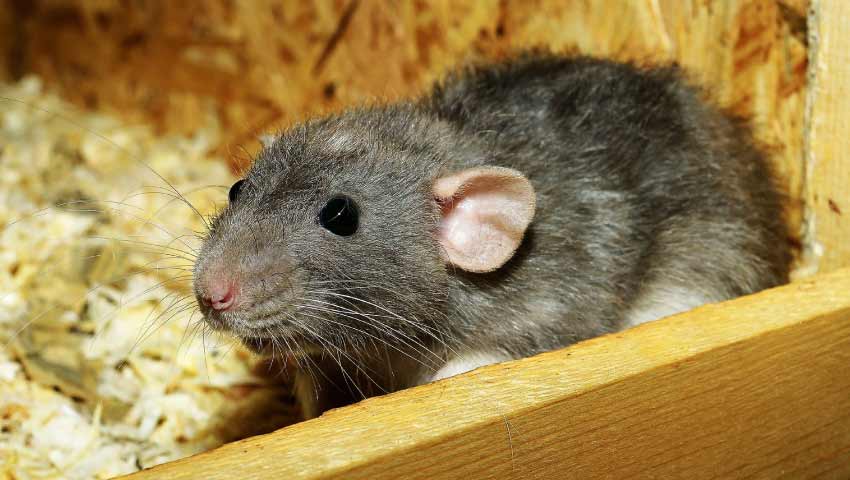
Natural rat control: rat near a home where entry points need sealing
Natural rat control starts with sealing gaps and removing food, water, and shelter.


Step 3: Reduce Water and Shelter

  • Fix leaky faucets, pipes, and outdoor spigots, and empty standing water.
  • Clear indoor clutter, especially stacks of boxes, paper, and fabric that could become nesting material.
  • Remove leaf piles and deep mulch near the house, as the EPA recommends.
  • The CDC advises moving woodpiles 100 feet or more from your home and raising the wood at least 1 foot off the ground.
  • Keep grass and shrubs within 100 feet of your home well-trimmed.

If your dog likes to dig up garden beds, our guide on stopping a dog from digging in the garden can help you keep the yard tidy.

Step 4: Use Traps Responsibly

For natural rat control without poison, traps are the main tool. The CDC says traditional snap traps are recommended to reduce rodent populations. It advises against glue traps and live traps, because they can scare rodents into urinating, which raises the risk of spreading illness.

How to set snap traps

  • Use rat-sized snap traps; mouse traps are too small.
  • Bait with a small amount of chunky peanut butter, which the CDC suggests.
  • Place traps on the floor against a wall, with the baited end touching the wall to form a “T.”
  • Set them in closed areas, such as behind appliances and at the back of cabinets.
  • Check traps daily and dispose of dead rodents right away.
  • Keep trapping until you stop catching rodents.
  • Follow all instructions on the product label.

Pet safety first: Both the CDC and EPA say to keep traps and baits out of reach of children and pets. Use enclosed trap boxes or areas pets can’t get into, like a closed cabinet or a room they never enter. A snap trap can injure a curious nose or paw.

Popular “Natural” Remedies: What the Evidence Says

Many websites promote natural rat control products and home remedies. Here’s how the common ones stack up.

Remedy Is it reliable on its own? Pet considerations
Peppermint oil No; we found no strong evidence it controls rats Concentrated essential oils can be risky for pets, especially cats
Ultrasonic devices No; the FTC has warned sellers about unsupported claims Ask your vet if you keep small pets like rodents or rabbits
Ammonia No reliable evidence Harsh fumes; never mix with bleach
Dryer sheets, mothballs, other DIY smells No reliable evidence Pets may chew or swallow them; mothballs can be toxic if swallowed

The FTC has sent warning letters to more than 60 manufacturers and retailers of ultrasonic pest-control devices, reminding them that claims to eliminate rodents must be backed by competent and reliable scientific evidence. Earlier FTC complaints argued that rodents become accustomed to ultrasound.

Unsafe Practices to Avoid

Natural rat control should never put your family or pets at risk. Avoid:

  • Mixing household chemicals, such as bleach and ammonia, which can create dangerous fumes
  • Homemade poisons or “recipes” found online
  • Scattering toxic substances like mothballs around the home or yard
  • Loose poison bait anywhere pets, children, or wildlife could reach it. The EPA says to use only tamper-resistant bait stations and follow all label directions if poison is used at all.
  • Glue traps, which the CDC advises against

Protecting Your Pets During Rat Control

Rodenticides and pets

The ASPCA warns that the same ingredients that attract rodents to poison bait can also attract cats and dogs, and that rodenticide poisoning can cause bleeding, kidney failure, seizures, or death. Pets may also be exposed by eating a rodent that has eaten poison.

If your pet may have eaten rat poison

Don’t wait for symptoms. The AVMA says immediate action is needed if any amount is eaten or suspected. Contact your veterinarian or a 24/7 emergency animal hospital right away, or call the ASPCA Animal Poison Control Center at (888) 426-4435 or the Pet Poison Helpline at (855) 764-7661 (a consultation fee may apply). Bring the product packaging if you can.

Wild rats and dead rodents

Don’t let pets catch, play with, or eat wild rats or dead rodents. Keep pets away from areas with droppings or nests until they’ve been cleaned up properly. If your pet has caught or eaten a rat, call your vet for advice.

Essential oils and pets

The ASPCA advises not to give or apply highly concentrated oils to pets, notes that cats may be more sensitive because they groom themselves, and says to keep diffusers out of pets’ reach. Don’t use oils as rat repellents around animals without your veterinarian’s guidance.

How to Clean Up After Rats Safely

The CDC lists leptospirosis, rat-bite fever, salmonellosis, and hantavirus among the diseases rodents can spread. It explains that people mainly get sick by breathing in contaminated air, which is why cleanup method matters. Repellents don’t make an infested area safe; proper cleanup does.

  1. Ventilate. Open doors and windows for 30 minutes before cleaning, and keep pets out.
  2. Don’t sweep or vacuum urine, droppings, or nesting material. This can stir contaminated particles into the air.
  3. Wear rubber or plastic gloves.
  4. Disinfect. Spray droppings and nests with a disinfectant or a fresh bleach solution of 1.5 cups of bleach per gallon of water (1 part bleach to 9 parts water). Let it soak for 5 minutes, or as long as the disinfectant label says.
  5. Wipe up with paper towels and throw them in a covered trash can.
  6. Bag dead rodents and used traps in a sealed plastic bag, then a second sealed bag, and put them in a covered trash can.
  7. Wash your hands with soap and warm water after removing your gloves.

Follow the CDC’s complete instructions for larger cleanups, and talk to a healthcare provider if you become ill after contact with rodents.

When to Call a Pest-Control Professional

DIY natural rat control has limits. Call a qualified pest-management professional if:

  • Rats keep appearing after you’ve sealed entry points and trapped
  • Rats are in walls, attics, crawl spaces, or other places you can’t reach
  • There’s heavy contamination or a large nest
  • Rodents have gotten into heating and cooling ducts, which the CDC says calls for a professional rodent exterminating service

Ask any professional how they’ll protect your pets, and request non-poison methods where possible.

Example Scenario (illustrative)

Lena in Texas finds droppings near her dog’s food bin in the garage. She moves the kibble into a metal can with a tight lid, stops leaving the bowl out overnight, and seals a gap by the water heater with steel wool and caulk. She sets rat-sized snap traps inside a locked storage cabinet her dog can’t open, then cleans the droppings using the CDC’s bleach-soak method. This is an illustration, not a real case.

Natural Rat Control: FAQs

What is the most effective natural rat control method?

Removing food, water, and shelter, and sealing entry points with gnaw-resistant materials. The CDC pairs this with snap traps placed out of reach of pets and children.

Does peppermint oil keep rats away?

We found no strong evidence that peppermint oil reliably keeps rats away. Don’t rely on it as a stand-alone solution, and avoid using concentrated oils around pets without your vet’s guidance.

How can I keep rats out of my house without harming pets?

Seal gaps, store pet food in sealed containers, don’t leave bowls out overnight, and use snap traps inside enclosures or areas pets can’t reach. Avoid loose poison bait.

Do ultrasonic rat repellents work?

They aren’t a reliable stand-alone solution. The FTC has warned sellers that claims to eliminate rodents must be backed by reliable scientific evidence.

Are natural rat repellents safe for dogs and cats?

Not automatically. Concentrated essential oils can be risky for pets, especially cats, and items like mothballs are toxic. Ask your vet before using any repellent around animals.

How should I clean rat droppings safely?

Ventilate for 30 minutes, wear gloves, and don’t sweep or vacuum. Soak droppings with disinfectant or a 1-to-9 bleach solution for 5 minutes, wipe with paper towels, and wash your hands.

When should I call a pest-control professional?

Call a professional if rats keep returning, are in walls or other hard-to-reach places, have caused heavy contamination, or have gotten into your heating and cooling ducts.

Final Verdict: Natural Rat Control for Pet Households

The best natural rat control isn’t a scent or a gadget. It’s sealing entry points, removing food, water, and shelter, and using snap traps where pets and children can’t reach them. Clean up droppings the CDC way, and if your pet may have touched rat poison, call your vet right away.

Your next steps

  1. Walk around your home this week and list every gap you find.
  2. Move pet food into sealed, rodent-resistant containers.
  3. Browse more home and safety guides in our dogs section and cats section.

Share your pet-safe pest tips with our community on Facebook.

About the author

Written and reviewed by the Pets Store Home Editorial Team: pet owners and animal lovers who check every guide against trusted US veterinary, public-health, and animal-welfare sources. This article is general information, not a substitute for professional veterinary or pest-control advice.

How we checked this guide: We followed rodent-control and cleanup guidance from the CDC and EPA, pet-poisoning guidance from the AVMA and ASPCA, and the FTC’s warnings on ultrasonic devices. We review this article every 12 months, or sooner if guidance changes.

Last reviewed: October 2026

How to Build Muscle on a Dog with Food

How to Build Muscle on a Dog with Food

How to Build Muscle on a Dog with Food: 7 Essential Safe Steps (2026)

How do you build muscle on a dog with food? Feed a complete and balanced diet with enough high-quality protein and calories for your dog’s life stage, add regular strength exercise, and track muscle with your vet. Food supplies the building blocks, but muscle only grows when the body is asked to work.

Many owners notice a thin back end, a bony spine or a dog that has lost its strength, and want to fix it at the food bowl. This guide explains how to build muscle on a dog with food safely: how to check muscle first, how much protein dogs need, which foods help, which to avoid, and how to pair meals with exercise.

Key takeaways

  • Food alone does not build muscle; protein, calories and exercise work together.
  • AAFCO minimums are 18% protein (dry matter) for adult dogs and 22.5% for puppies.
  • Vets grade muscle separately from fat, and an overweight dog can still be losing muscle.
  • Treats and toppers should stay under 10% of daily calories.
  • Sudden muscle loss needs a vet visit, because illness can be the cause.

How to Build Muscle on a Dog with Food: The Short Answer

If you want to know how to build muscle on a dog with food, start by being clear about what the bowl can and cannot do. Protein provides amino acids, the raw material for muscle, and calories fuel the work. Exercise is the signal that tells the body to build.

What food can do What food cannot do
Supply the 10 essential amino acids dogs need Build muscle without regular exercise
Provide enough calories so protein is used for repair, not just energy Fix muscle loss caused by an untreated illness
Keep body fat in a healthy range Change a dog’s natural build or breed type
Support recovery after activity Work faster with “extra” protein beyond what the dog uses

Source for essential amino acids and protein use: Merck Veterinary Manual.

The Merck Veterinary Manual notes that when a diet is short on fat or carbohydrate, dogs burn dietary protein for energy instead. That is why a dog that is underfed overall may stay thin even on a high-protein food.

7 steps at a glance

  1. Get a vet check with a body and muscle condition score.
  2. Rule out illness if muscle loss is new or fast.
  3. Feed a complete and balanced diet for your dog’s life stage.
  4. Compare protein on a dry matter basis.
  5. Adjust calories to reach an ideal body condition.
  6. Add safe protein toppers, kept under 10% of calories.
  7. Add daily strength exercise and track progress every 4 weeks.

Pet Care Tip: Take a side-on and a top-down photo of your dog today in the same spot and light. Repeat every four weeks. Photos show slow muscle changes far better than memory.

How to build muscle on a dog with food: a brown and white Border Collie eating from a bowl
Learning how to build muscle on a dog with food starts with a complete and balanced diet in the right amount. Photo: Ayla Verschueren / Unsplash.

Check Your Dog’s Muscle Condition First

Before you work out how to build muscle on a dog with food, find out whether your dog really needs more muscle. Many vets use a muscle condition score from the World Small Animal Veterinary Association (WSAVA). The WSAVA muscle condition chart asks vets to look at and feel four areas: the spine, the shoulder blades, the skull and the wings of the hip bones.

WSAVA grade What it can mean for feeding
Normal muscle Keep the current diet and activity; no need to push protein
Mild loss Review diet and exercise with your vet
Moderate loss Vet exam and tests first, then a feeding plan
Severe loss See your vet promptly; illness must be ruled out

Grades from the WSAVA chart. The feeding notes are our general guidance; your vet’s advice comes first.

One point surprises many owners. WSAVA notes that overweight animals can still have significant muscle loss, because fat hides it. Muscle score and body condition score do not always move together, so a heavy dog may need fewer calories but more muscle-building activity.

Rule out illness before you bulk up a dog

Muscle loss is not always about diet. PetMD, in an article by a veterinarian, explains that kidney disease, cancer, diabetes, heart failure, arthritis and Cushing’s disease can all worsen muscle loss. Disease-related wasting, called cachexia, needs treatment of the cause. Age-related loss, called sarcopenia, is diagnosed only after a vet’s exam and blood work come back normal.

How Much Protein Does a Dog Need?

The Merck Veterinary Manual lists 10 essential amino acids that dogs must get from food. It also gives the AAFCO minimums used for US dog food labels: at least 18% protein on a dry matter basis for adult maintenance, and at least 22.5% for growth and reproduction. Needs vary with age, activity, health and protein quality.

Reading the label: dry matter math

Labels show protein “as fed,” including water, so wet and dry foods are hard to compare. To compare fairly, divide the protein percentage by the dry part of the food (100 minus the moisture percentage):

Food Label protein Moisture Dry matter protein
Example kibble 27% 10% 27 ÷ 90 = 30%
Example canned food 8% 78% 8 ÷ 22 = 36%

Illustrative numbers. Use the guaranteed analysis on your own dog’s food.

The canned food looks lower in protein on the label but is actually higher once water is removed. Any food labeled complete and balanced for your dog’s life stage must meet the AAFCO minimums, so the bigger questions are usually total calories, protein quality and exercise. If you want a plan built around your dog, our guide to personalized dog nutrition plans walks through the options.

Best Foods to Build Muscle on a Dog

The base of any plan for how to build muscle on a dog with food is a complete and balanced diet that carries an AAFCO nutritional adequacy statement for your dog’s life stage. Whole-food toppers can add extra protein, but they should top up a balanced meal, not replace it.

Protein topper How to serve it safely
Chicken or turkey breast Cooked, plain, skinless and boneless
Eggs Fully cooked, with no butter, oil or salt
Lean ground beef Cooked through and drained of fat
White fish or salmon Cooked, deboned and unseasoned

Check with your vet first if your dog has kidney disease, a history of pancreatitis or food allergies, or eats a prescription diet.

Keep extras small. WSAVA advises that treats should always make up less than 10% of a dog’s daily calories. Toppers count toward that limit, so a large serving of chicken can unbalance the diet over time.

Foods to avoid when adding protein

The ASPCA warns that raw or undercooked meat can carry Salmonella and E. coli, raw eggs can interfere with vitamin absorption, and bones can injure or block the gut. High-fat foods may lead to pancreatitis. Onions, garlic, grapes, raisins and xylitol are toxic to dogs, so never use seasoned leftovers as toppers.

If your dog eats something toxic: Call your vet, the ASPCA Animal Poison Control Center at (888) 426-4435, or the Pet Poison Helpline at (855) 764-7661. A consultation fee may apply. For collapse or seizures, go to a 24/7 emergency animal hospital.

Best dog food to gain weight and muscle

For a dog that is both thin and under-muscled, how to build muscle on a dog with food comes down to calories as much as protein. Look for a complete and balanced food that is more calorie-dense, so your dog gets more energy without a much bigger meal. Performance or “sport” formulas are often higher in calories, protein and fat. Check the calories per cup or can on the label, switch foods gradually, usually over about a week, and weigh your dog every two weeks.

Protein powders and muscle supplements made for people are not a shortcut. Some may contain sweeteners such as xylitol or other additives that are unsafe for dogs. Ask your vet before giving any supplement, including joint products or omega-3 fatty acids. You can find more feeding guides in our Pet Food Center.

Signs the feeding plan is working

  • Your vet’s muscle score improves, or stops getting worse, over the spine, shoulders and hips.
  • Your dog has more stamina on walks and recovers faster.
  • Weight and body condition stay in the ideal range, not climbing with fat.

Pair Food With the Right Exercise

Exercise is the half of how to build muscle on a dog with food that many owners skip. The AKC advises getting your vet’s approval before any conditioning program. Its conditioning exercises include:

  • Puppy push-ups: sit to down and back to sit, or add a stand for more challenge.
  • Figure eights: walking around two objects, moving them closer over time.
  • Balance work: starting on a steady surface and moving to cushions or a wobble board.
  • Step stool walk: front paws on a stool while the back legs walk around it.

For general fitness, the AKC FIT DOG program suggests walking 30 minutes five times a week, or 15 minutes ten times a week for seniors and beginners. Avoid hard exercise right after a big meal.

Senior dogs and puppies

Older dogs often lose muscle in the back legs first. PetMD notes that a higher-protein diet and paced, low-impact exercise such as walking or swimming help preserve muscle. Puppies are different: the AKC advises avoiding jumping or extended balancing until bones finish growing. Feed a growth diet and let normal play do the work.

Example Scenario (illustrative)

Renee in Tucson notices her 9-year-old Lab mix has a bony back end. She searches how to build muscle on a dog with food and is tempted to double his kibble. Her vet scores him as overweight with mild muscle loss and runs blood work, which is normal. Together they cut his calories slightly, move him to a senior food with more protein, add cooked egg as a small topper, and start daily sit-to-stands and early-morning walks before the desert heat.

Your 4-week muscle tracker

  1. Week 1: vet check, body and muscle scores, weight and photos.
  2. Week 2: confirm the food, calories per day and topper amount.
  3. Week 3: add 5–10 minutes of conditioning exercises most days.
  4. Week 4: reweigh, retake photos and compare with week 1.
Common mistake Why it matters Better approach
Doubling food portions Extra calories without exercise add fat Adjust calories with your vet and add activity
Big homemade toppers They can unbalance a complete diet Keep extras under 10% of calories
Human protein powders Some may contain unsafe additives Ask your vet before any supplement
Ignoring sudden muscle loss Illness may be the cause Book a vet exam and blood work

What most owners get wrong

Many owners think the answer to how to build muscle on a dog with food is simply “more protein.” Complete and balanced diets must already meet protein minimums. The real gaps are usually too little activity, too many calories as fat, or an illness nobody has checked for.

How to Build Muscle on a Dog with Food: FAQs

Can you build muscle on a dog with food alone?

Not really. Food supplies protein and energy, but muscle grows in response to regular exercise. The two work together.

What food builds muscle in dogs?

A complete and balanced diet for your dog’s life stage, with small amounts of cooked lean meat, cooked eggs or fish as toppers, kept under 10% of daily calories.

How much protein does a dog need?

AAFCO minimums are 18% protein on a dry matter basis for adult dogs and 22.5% for puppies. Needs vary with age, activity and health.

Are raw eggs good for building dog muscle?

No. The ASPCA warns that raw eggs can interfere with vitamin absorption and raw foods can carry bacteria. Serve eggs fully cooked and plain.

Why is my senior dog losing muscle in the back legs?

Age-related muscle loss often shows in the back legs first, but illnesses such as kidney disease or diabetes can cause it too. Ask your vet for an exam and blood work.

How long does it take to build muscle on a dog?

It varies by age, health and activity. Track weight, photos and your vet’s muscle score every few weeks rather than expecting quick changes.

Final Verdict: How to Build Muscle on a Dog with Food

If you are still asking how to build muscle on a dog with food, the safest plan is simple: check muscle with your vet, feed a complete and balanced diet with enough protein and calories, keep toppers under 10%, and add daily strength exercise. Avoid raw meat, raw eggs, bones and human supplements, and track progress every few weeks.

Your next steps

  1. Ask your vet for a body and muscle condition score at the next visit.
  2. Build a plan with our personalized dog nutrition guide.
  3. Explore more care guides in our Dogs section.

Share your dog’s fitness progress with other pet parents on our Pets Store Home Facebook page.

About the author: Written and reviewed by the Pets Store Home Editorial Team, a group of pet owners and animal lovers who check every guide against trusted US veterinary and animal-welfare sources. This article is general information, not a substitute for professional veterinary advice. Always talk to your veterinarian about your own pet’s health.

How we checked this guide: Protein requirements and AAFCO minimums come from the Merck Veterinary Manual. Muscle condition scoring and the treat limit come from WSAVA. Food safety warnings come from the ASPCA, exercise guidance from the AKC, and muscle-loss causes from a veterinarian-written PetMD article. We review this article every 12 months, or sooner if guidance changes.

Last reviewed: October 2026. Sources: Merck Veterinary Manual, WSAVA, ASPCA, AKC, PetMD.

Memorial Stones for Dogs UK

Memorial Stones for Dogs UK

Memorial Stones for Dogs: 9 Meaningful Ideas, Materials and Wording (2026)

Memorial stones for dogs are engraved or decorated stones, markers and plaques that honor a dog who has died. They can sit in your yard or garden, mark a grave or rest indoors on a shelf. The right one depends on where it will go, how long you want it to last and what you’d like it to say.

Losing a dog is losing family. This guide walks through the main types of stone, nine ideas, wording that feels personal, and how to place and care for a memorial so it lasts.

Grieving is normal. If the loss feels heavy, talk to people who knew your dog, or call the Cornell Pet Loss Support Hotline at 607-218-7457, staffed by veterinary students. Hours vary, so call for current times.

Key takeaways

  • A memorial stone doesn’t need a grave; it can go in a yard or garden, on a patio or indoors.
  • Granite is a durable outdoor choice; marble is softer and more porous, so it weathers faster.
  • Keep wording short: name, years and one line that sounds like your dog.
  • Check your state and local rules before any home burial.
  • Clean stones gently with water and a soft brush, never with bleach or acids.

Memorial Stones for Dogs: The Short Answer

Most memorial stones for dogs fall into three groups: engraved garden stones, flat grave markers and small indoor keepsakes. The AKC points out that a pet memorial doesn’t have to be a large statue, and that a plaque can hang in your home instead of going in the ground. Start with where you want to see it, then choose the material and the words.

If you’re remembering a cat or more than one pet, our guide to pet memorial garden stones for the family dog and cat covers shared memorials.

Types of Memorial Stones for Dogs

Material Best for Weather and durability Personalization
Granite Outdoor garden stones and grave markers Hard and long-lasting outdoors Deep engraving, photos, color fill
Slate Garden plaques and markers Dense, but thin pieces can chip at the edges Crisp engraving, natural gray tones
Marble Sheltered or indoor memorials Softer and more porous than granite, so it weathers faster outside Fine detail, classic look
Resin or cast stone Budget garden markers Light; color may fade in strong sun over time Molded designs and printed text
Concrete DIY paw print stepping stones Sturdy when sealed; can crack in hard freezes Handprints, paw prints, embedded tiles
River rock Painted memorial pebbles Paint needs a clear outdoor sealer Hand-painted names and portraits

The marble-versus-granite comparison comes from the National Park Service. Other notes are general guidance, so ask the maker about the specific stone.

Memorial stones for dogs in a garden: smooth stones among green plants with a single red tulip
A quiet corner of the yard is a natural home for memorial stones for dogs. Photo: Michael Li / Pexels.

9 Memorial Stone Ideas for Dogs

These memorial stones for dogs range from simple DIY projects to professionally engraved pieces. Pick the one that fits your space and the way you want to remember your dog.

1. Engraved granite garden stone

A classic choice: your dog’s name and years cut into a natural-shaped granite stone. It sits among plants or beside a path, and granite generally stands up well to rain, snow and sun.

2. Flat grave marker

If your dog is buried at home or in a pet cemetery, a flat marker lies level with the ground, so you can mow around it. Ask a pet cemetery about its rules on size and material first.

3. Paw print stepping stone

Press your dog’s clay paw print, or a cast of it, into a concrete stepping stone. Some in-home vets include a clay paw print impression as part of their end-of-life visit, which you can use as a mold. Our guide to in-home pet euthanasia costs explains what those visits can include.

4. Hand-painted river rock

Paint your dog’s portrait, name or favorite toy on a smooth river rock. It’s a gentle project for children and a good way to talk about the loss together. Finish with a clear outdoor sealer.

5. Photo memorial stone

Some makers set a weather-resistant ceramic photo into a granite or slate stone. Choose a clear, well-lit photo where your dog’s face fills most of the frame.

6. Stone with an urn compartment

Some memorial stones have a sealed space for a small urn or a portion of ashes. Ask how it’s sealed and whether it’s rated for outdoor use.

7. Indoor keepsake stone or plaque

A small polished stone or wall plaque works for apartments or homes without a yard. Place it near your dog’s favorite window or bed.

8. Engraved brick at a shelter or rescue

Some animal shelters raise funds by selling engraved bricks or pavers for a memorial path. Your dog’s name helps other dogs, and you have a place to visit.

9. Memorial planter or bench stone

Combine a stone with plants or a seat: a carved planter with flowers, or a stone bench in the spot where your dog liked to lie in the sun.

Memorial stones for dogs: a flat gray stone grave marker set level in green grass beside a small stone figure
Flat markers sit level with the lawn, a practical style of memorial stones for dogs. Photo: RDNE Stock project / Pexels.

What to Write on Memorial Stones for Dogs

The AKC notes that there are no prescribed rituals for mourning a pet, and the same goes for wording. The best words on memorial stones for dogs usually sound like the family talking: short, warm and specific to your dog.

Tone Example wording
Simple Max • 2012–2026
Loving Forever our good boy
Playful Still chasing squirrels somewhere
Grateful Thank you for every walk
Peaceful Rest easy, sweet girl
Loyal Faithful friend, gentle heart
Home Home is where your paw prints are

Read the line out loud. If it makes you smile or think of your dog right away, it’s the right one. Our guide to personalized garden stone memorials has more wording ideas and layout tips.

Should you include dates or a nickname?

It’s a personal choice. Years add a sense of history, especially on a grave marker, while a stone with just a name and one line can feel timeless. Nicknames often mean more to the family than a formal name, so some owners include both, such as “Maximilian ‘Max’.” If space is tight, the name your dog answered to matters most.

Before you approve the engraving proof

  1. Check the spelling of your dog’s name, and any nickname.
  2. Confirm the years, or decide whether to leave dates off.
  3. Make sure the text is large enough to read from where you’ll stand.
  4. Ask about color fill, since dark letters on dark stone can be hard to read.
  5. Look at a printed proof at real size, not just on a phone screen.

Example scenario (illustrative)

Nicole in Boise wanted memorial stones for dogs that her kids could help with. The family ordered one granite stone for the garden reading “Biscuit • Forever our good girl,” and each child painted a river rock to sit beside it. When the proof arrived, they caught a typo in the dates before engraving.

Memorial stones for dogs DIY: smooth river stones hand-painted with colorful patterns
Hand-painted river rocks are a gentle DIY take on memorial stones for dogs. Photo: Klub Boks / Pexels.

How to Place and Care for a Memorial Stone

Placement: dig a shallow bed slightly larger than the stone, add a layer of gravel or sand for drainage, and level it before setting the stone. A flat marker should sit flush with the soil so it’s easy to mow around.

Marking a grave: check your state and local rules before any home burial. Euthanasia drugs can remain in the body, and the product warning reported by the AVMA says they are toxic to wildlife and calls for deep burial so scavengers can’t reach the remains. A heavy stone on top can add another layer of protection.

Cleaning: the National Park Service uses soft, natural bristle scrub brushes and a pH-neutral cleaner with no salts, bleach or acids on stone monuments. It warns that high-pressure water can damage stone, so rinse gently with a hose or bucket instead.

Plants make a memorial feel alive. Our guides to memorial plants for pets and pet memorial garden ideas show what grows well around a stone.

Mistakes to Avoid

  • Choosing marble for an exposed spot. It’s softer and more porous than granite, so it weathers faster outdoors.
  • Cramming in too many words. Small lettering is hard to read and may wear away sooner.
  • Skipping the base. A stone set straight on soil can sink or tilt after heavy rain.
  • Scrubbing with bleach or a wire brush. Harsh cleaning can stain or scratch the surface.
  • Rushing the decision. There’s no deadline. Some families wait weeks or months before ordering.

Pet Care Tip: If you have other dogs, let them sniff the new memorial spot on a calm walk. Keeping their routine steady helps the whole household adjust.

Memorial Stones for Dogs: FAQs

What is the best stone for a dog memorial?

Granite is a common choice for outdoor memorial stones because it is hard and holds engraving well. The National Park Service notes that marble is softer and more porous than granite, so it weathers faster outside. Resin and cast stone are lighter, lower-cost options.

What should I write on my dog’s memorial stone?

Many families keep it short: your dog’s name, the years they lived and one line that sounds like them, such as “Forever our good boy” or “Run free, Max.” Shorter wording is easier to read from a distance.

Can I put a memorial stone in my yard?

Yes. A memorial stone can sit anywhere in your yard, with or without a grave beneath it. If you plan a home burial, check your state and local rules first.

Where should I place a dog memorial stone?

Choose a spot your dog loved, such as a sunny corner or a favorite path, where you will see it often. Set it on a level bed of gravel or sand so it stays straight and drains well.

How do I clean a memorial stone?

Use plain water, a soft natural-bristle brush and, if needed, a pH-neutral cleaner. The National Park Service advises against bleach, acids and high-pressure water, which can damage stone.

Can a memorial stone hold my dog’s ashes?

Some memorial stones have a hidden compartment or a sealed space for a small urn. Ask the maker how it is sealed and whether it is designed for outdoor use.

Are there memorial stones for dogs that don’t need a garden?

Yes. Small engraved stones and plaques work indoors on a shelf or desk. The AKC notes that a memorial plaque can hang in your home rather than going in the ground.

Final Verdict: Choosing Memorial Stones for Dogs

The best memorial stones for dogs match the place they’ll live and the dog they honor. Choose granite for a long-lasting outdoor stone, or a painted rock or indoor plaque for a personal touch. Keep the wording short, proofread before engraving, and clean the stone gently.

Your next steps

  1. Pick the spot first, then choose a material that suits it from the table above.
  2. Draft two or three wording options and read them aloud with your family.
  3. Find more remembrance ideas in our pets section.

Our Facebook community is a kind place to share your dog’s memorial.

About the author — Written and reviewed by the Pets Store Home Editorial Team: pet owners and animal lovers who check every guide against trusted US veterinary and animal-welfare sources. This article is general information, not professional advice.

How we checked this guide: Memorial ideas draw on the American Kennel Club; stone weathering and cleaning guidance on the National Park Service; burial safety on the AVMA; and paw print keepsakes on Lap of Love. Wording examples are our own. We review this article every 12 months, or sooner if guidance changes.

Last reviewed: October 2026.

Sources

Tracking Dog Training: How to Teach Your Dog to Follow a Scent Trail

Tracking Dog Training: How to Teach Your Dog to Follow a Scent Trail

Tracking Dog Training: A Step-by-Step Guide to Teaching Your Dog to Follow a Scent Trail (2026)

What is tracking dog training? Tracking dog training teaches a dog to follow the path a person walked by scent and find items they dropped. Start with a short, straight, food-baited track in an open field, then slowly add length, turns and time. Any healthy dog can learn it, and AKC titles start with the Tracking Dog (TD) test.

Tracking turns your dog’s strongest sense into a calm, focused outdoor activity. This guide walks through how tracking dog training works, what gear you need, a step-by-step plan from the first track to test-ready, the AKC title levels, common problems and how tracking differs from other scent sports.

Key takeaways

  • Tracking dog training builds on a dog’s natural scenting ability, so any breed can take part.
  • The AKC requires a harness and a 20- to 40-foot lead, and the dog is never off lead in a test.
  • Start with a short, straight, food-baited track, then add one challenge at a time.
  • An AKC TD track is 440 to 500 yards, aged 30 minutes to two hours, with three to five turns.
  • A dog must be certified by an AKC tracking judge before entering its first TD test.
  • Earning TD, TDX and VST makes a dog a Champion Tracker (CT).

Tracking Dog Training: The Short Answer

In the sport of tracking, a dog follows a path laid earlier by a person called the tracklayer and finds articles, such as a glove, dropped along the way. According to the American Kennel Club, the dog works on a harness and a 20- to 40-foot lead, is never off lead and has no time limit while it is working. A dog that goes off track and cannot recover fails.

Question Answer
Which dogs can track? Any breed, including mixed breeds
Minimum age for AKC tests 6 months
Gear Harness, 20- to 40-foot lead, flags, articles, treats
Where to practice Open grassy field without roads, ditches or woods
First test Tracking Dog (TD), after judge certification
How many passes for a title? One successful track

Based on AKC tracking pages, read October 25, 2026; treats are our addition to the AKC gear list. Check the current AKC Tracking Regulations before entering a test.

Tracking dog training: a tan and black dog in a green harness on grass
A comfortable harness and an open grassy field are the starting points for tracking. Photo: Jackson Jost / Unsplash.

How a Dog’s Nose Makes Tracking Possible

Dogs are built for this work. As PBS NOVA reports, dogs have up to 300 million olfactory receptors compared with about 6 million in people. The part of a dog’s brain devoted to smell is, proportionally, about 40 times larger than ours, and researchers estimate their sense of smell is 10,000 to 100,000 times as strong.

NOVA also explains that inhaled air splits into separate paths for smelling and breathing, and exhaled air leaves through the side slits of the nose in a way that helps draw in fresh scent. That design helps a dog keep sampling scent steadily while it works a track.

Tracking vs. scent work

Tracking and scent work both use the nose, but they are different sports. In tracking, the dog follows one person’s path over the ground to find dropped articles. In AKC Scent Work, dogs search for hidden odors, such as birch, anise, clove and cypress oils, in containers, interiors, exteriors and buried hides, then alert their handler.

Feature Tracking Scent Work
Target A person’s path and dropped articles Hidden essential-oil odors
Setting Mostly open fields; urban surfaces at higher levels Containers, rooms, outdoor areas, buried hides
Equipment Harness and long lead Varies by search
Finish Dog finds the article at the end Dog alerts the handler to the hide

Tracking details from the AKC tracking page; Scent Work details from AKC Scent Work 101. The “equipment” row is our summary.

Gear You Need for Tracking Dog Training

The AKC lists a harness, a 20- to 40-foot lead, flags to mark the track and an open grassy area as the basics. A Canine Partners training tip by tracker Sue Kotlarek adds that dogs must wear a non-restrictive harness at tests.

  • Harness: Choose one that lets the shoulders move freely, since your dog is likely to pull steadily.
  • Long line: A 20- to 40-foot lead lets your dog work ahead while you follow.
  • Flags: Mark the start and each turn so you know where the track goes.
  • Articles: TD uses a glove or wallet at the end; TDX uses four different articles, and VST uses one each of leather, cloth, plastic and metal.
  • High-value treats: Small, soft pieces your dog loves.
  • Water and a notebook: Water for your dog, and notes on track length, age, weather and results.

Pet Care Tip: Put the harness on only for tracking. Some handlers find their dog soon learns that “harness on” means “nose down,” which helps it settle into work at the start flag.

Tracking Dog Training Step by Step

Good tracking dog training changes only one thing at a time: length, turns, age or terrain. If your dog struggles, go back a step. The plan below combines AKC guidance with common tracking methods; adjust the pace to your dog.

  1. Play a “find it” game. Sue Kotlarek’s AKC Canine Partners tip suggests having someone hold your dog while you place a toy or food about 15 feet away, then sending your dog to find it. Add distance each day.
  2. Lay a short straight track. Walk a short line in a grassy field, marking the start with a flag. Put a treat in every other footstep, as the AKC tip describes, and leave a glove with a jackpot reward at the end.
  3. Run it on harness. Bring your dog to the start, let it sniff and follow behind on the long line. Praise quietly and celebrate at the glove.
  4. Space out the food. Once your dog understands, move treats to about every 10th footstep, then much farther apart, as the AKC tip recommends. Keep the reward at the glove.
  5. Add length. Make tracks gradually longer while keeping them straight.
  6. Add one turn. Introduce a single turn, mark it with a flag and keep the rest of the track easy.
  7. Age the track. Wait a little longer between laying the track and running it. TD tracks are aged 30 minutes to two hours.
  8. Use other tracklayers. Have a friend lay tracks so your dog learns to follow anyone’s scent, not just yours.
  9. Practice blind tracks. Have someone else lay a track you have not seen, as in a test. Trust your dog and watch its body language.

How long should sessions be?

Short, successful sessions are better than long, frustrating ones. Run only a track or two at a time, and stop while your dog is still keen. Avoid the hottest part of the day, bring water, and stop if your dog seems tired or overheated. Cornell’s Riney Canine Health Center lists heatstroke risks and warning signs worth knowing before working dogs outdoors.

Reading your dog on the track

Learn what your dog looks like when it is on the track: nose down, steady pace, line tight. Note how it acts when it loses scent, such as circling, lifting its head or slowing. Those signs tell you when to stop and let your dog work, and when it has found the track again.

AKC Tracking Titles and Test Requirements

According to the AKC’s getting-started page, one successful track earns a title, unlike sports that need several qualifying runs. Dogs must be at least 6 months old, and any breed with an AKC number, including a Canine Partners number for mixed breeds, can enter.

Title Length Track age Turns and features
TD (Tracking Dog) 440–500 yards 30 min–2 hours 3–5 turns; one article at the end
TDU (Tracking Dog Urban) 400–500 yards 30 min–2 hours 3–5 turns; vegetated and non-vegetated surfaces
TDX (Tracking Dog Excellent) 800–1,000 yards 3–5 hours 5–7 turns; cross tracks and obstacles
VST (Variable Surface Tracking) 600–800 yards 3–5 hours 4–8 turns; at least three surfaces
CT (Champion Tracker) Awarded to dogs that earn TD, TDX and VST

TD and TDX figures and the VST track age come from the AKC; VST length, turns and surfaces and the TDU details come from the AKC summary by the Bulldog Club of America. TDU is optional and not required for other tests. Confirm in the current AKC Tracking Regulations.

Before your first TD test, the AKC requires your dog to be certified by an AKC-approved or provisional tracking judge, and the certification form goes in with your entry. A local tracking club can help you arrange this.

Common Tracking Dog Training Problems and Fixes

Problem Likely cause Try this
Dog wanders off the start Unsure where the track begins Use a clear start flag and food in the first steps
Overshoots turns Moving too fast Place food just after the turn; slow your own pace
Air-sniffs or grazes Track too hard or too old Go back to a shorter, fresher track
Loses interest Sessions too long or rewards too small Shorter tracks and a bigger jackpot at the glove
Handler pulls the dog off Handler “knows” the track Run blind tracks laid by someone else

Troubleshooting ideas are our editorial guidance based on common tracking practice, not AKC rules.

When to call a vet right away: Stop training and contact your vet if your dog shows heavy panting that does not ease, weakness, collapse, vomiting, limping, cut pads or tick bites with swelling. For possible heatstroke, follow Cornell’s heatstroke guidance, cool your dog and head to the nearest vet or 24/7 emergency animal hospital.

7 questions to ask before starting tracking

  1. Is my dog healthy enough for long walks on uneven ground?
  2. Does my vet have any concerns about heat, joints or weight?
  3. Is there an AKC tracking club or mentor near me?
  4. Where can I find an open field I am allowed to use?
  5. Which harness fits my dog without rubbing?
  6. Does my dog have an AKC or Canine Partners number?
  7. Who can lay tracks for me so I can practice blind?

Example Scenario (illustrative)

Priya in Columbus starts tracking dog training with her mixed-breed rescue, Juno. She begins with a toy 15 feet away, then short straight tracks with treats in every other step. Over several months she adds turns, ages the tracks and asks club members to lay blind tracks. Juno passes her certification track and enters her first TD test.

Common mistake Why it matters Better approach
Adding length and turns at once Too big a jump Change one thing at a time
Using a collar instead of a harness Pressure on the neck Use a non-restrictive harness
Training in midday heat Heat stress risk Track early or late in the day
Only laying your own tracks Tests use strangers’ tracks Recruit other tracklayers

What most owners get wrong

Many owners think tracking dog training is about teaching the dog to smell. Your dog already knows how. The real work is teaching yourself to read your dog, laying fair tracks and building difficulty slowly so your dog keeps succeeding.

Tracking Dog Training FAQs

What age can a dog start tracking?

Puppies can play simple “find it” games early. For AKC tests, dogs must be at least 6 months old.

Can mixed-breed dogs earn tracking titles?

Yes. The AKC accepts mixed breeds with a Canine Partners number, and the AKC tip notes All-Americans have been allowed in tracking tests since 2014.

How long does tracking dog training take?

There is no set timeline. It depends on your dog, your practice schedule and how quickly you add difficulty. A local tracking club or mentor can help you judge when your dog is ready for certification.

What leash length is used for tracking?

The AKC describes a 20- to 40-foot lead attached to a harness.

Do I need certification before a TD test?

Yes. An AKC-approved or provisional judge must certify your dog, and the form goes with your entry.

What is a Champion Tracker?

A Champion Tracker (CT) is a dog that has earned the TD, TDX and VST titles.

Is tracking the same as scent work?

No. Tracking follows a person’s path; AKC Scent Work involves searching for hidden essential-oil odors.

Final Verdict: Is Tracking Dog Training Worth It?

Tracking dog training gives almost any dog a rewarding outdoor job. Start with short, straight, food-baited tracks, add one challenge at a time and learn to read your dog. When you are ready, find an AKC club, get your dog certified and aim for the TD title, with TDX, VST and Champion Tracker as long-term goals.

Your next steps

  1. Find a nearby club through the AKC tracking getting-started page.
  2. Know the warning signs of a tired dog in our guide to why a dog walks slow and looks weak.
  3. Explore working breeds such as the Irish Wolfhound German Shepherd mix, or browse our Dogs section.

Share your dog’s tracking progress on our Pets Store Home Facebook page.

About the author: Written and reviewed by the Pets Store Home Editorial Team, a group of dog owners and animal lovers who check every guide against trusted US sources. This article is general information. Ask your vet before starting any new physical activity, and follow the current AKC Tracking Regulations for tests.

How we checked this guide: Test rules, gear, eligibility, certification and title levels come from AKC tracking pages and an AKC Canine Partners training tip, with TDU and VST details cross-checked against the Bulldog Club of America’s AKC summary. Dog olfaction figures come from PBS NOVA, and Scent Work details from the AKC.

Heat safety guidance points to Cornell’s Riney Canine Health Center. Step order and troubleshooting tips are editorial guidance based on common tracking practice. We review this article every 12 months, or sooner if AKC rules change.

Last reviewed: October 2026.