
What are the most affectionate pets? For many households, dogs, cats, rabbits, guinea pigs, rats, and companion birds such as budgies and cockatiels can all form close, friendly bonds with their people. Still, no species or breed comes with a guarantee. How affectionate an animal becomes depends on the individual, its early socialization, its health, its home, and how gently it’s handled.
Think of this as a practical guide, not a scientific ranking. For each animal, we explain how it may show social bonding, what it needs from you every day, and which homes it may suit. That way, you can choose from the most affectionate pets with your lifestyle and the animal’s welfare both in mind.
Key takeaways
- Affection varies from one animal to the next, even within the same species or breed.
- Animals show social bonds in different ways: staying close, following you, nuzzling, vocalizing, or playing.
- A pet that dislikes being picked up isn’t unloving. Rabbits, for example, can find being picked up frightening.
- Rabbits, guinea pigs, and rats are social animals that often do best with a companion of their own kind.
- Small pets aren’t automatically low-maintenance or ideal for young children. An adult should always be the main caretaker.
- Meeting an individual animal, and asking about its history, is the best way to judge whether it fits your home.
In this guide
What Makes the Most Affectionate Pets? How Animals Show a Bond
The ASPCA recognizes the human/companion animal bond as a relationship that benefits both people and animals, provided pets are kept appropriately and cared for carefully. That bond looks different from species to species. Common signs include:
- Seeking closeness: following you from room to room, or choosing to sit or curl up near you.
- Gentle contact: cats may rub or nuzzle against you, and the House Rabbit Society notes many rabbits will nuzzle and lick their handlers.
- Vocalizing: guinea pigs chirp, squeak, and make a purr-like tooth-chatter, while budgies and cockatiels often whistle and chatter.
- Play and interaction: inviting games, coming when called, or learning simple tricks.
Personality varies widely between individuals. Early experiences, socialization, health, environment, and handling all shape how comfortable an animal feels with people. A shy animal may become more relaxed with time, while another may always prefer to stay close without being held.
That second animal isn’t unloving. Rabbits and guinea pigs are prey animals, and the House Rabbit Society notes that being picked up can frighten a rabbit. Pets that bond with their owners often show it on their own terms, so let the animal choose how close to come.
Most Affectionate Pets at a Glance
This table is a starting point for comparing affectionate companion animals. It describes tendencies, not promises, and every animal needs a vet who treats its species.
| Animal | How affection may show | Social needs | Care level | May suit |
|---|---|---|---|---|
| Dog | Following you, seeking contact, play | Daily company; may become bored if left alone all day | High: exercise, training, vet care | People who are home enough for walks and training |
| Cat | Rubbing, nuzzling, curling up beside you | Often prefers short, frequent interactions | Moderate: litter box, play, vet care | Homes happy to let the cat set the pace |
| Rabbit | Nuzzling, licking, staying near you | Highly social; hours of daily exercise outside the enclosure | High: indoor space, specialized vet care | Adult-led homes with room to roam indoors |
| Guinea pig | Chirps, tooth-chatter, “popcorning” | Often does well in pairs or small groups | Moderate: unlimited hay, daily vitamin C | Homes able to keep at least two |
| Rat | Interactive play, coming when called | Usually happier with another rat | Moderate; lifespan of 2 to 3 years | Families ready for a short lifespan |
| Budgie | Perching on a finger, chattering, some enjoy head scratches | Flock bird; pairs or groups worth considering | Moderate: toys, out-of-cage time, avian vet | Patient owners who enjoy chatter |
| Cockatiel | Whistling, seeking your company | Daily out-of-cage time and attention | Moderate; often 10 to 14 years | Families wanting a gentle bird |
| Horse | Calm interest in familiar people; strong bonds with other horses | Highly social; needs contact with other horses | Very high: land or boarding, forage, hoof care | Experienced owners with major time and budget |
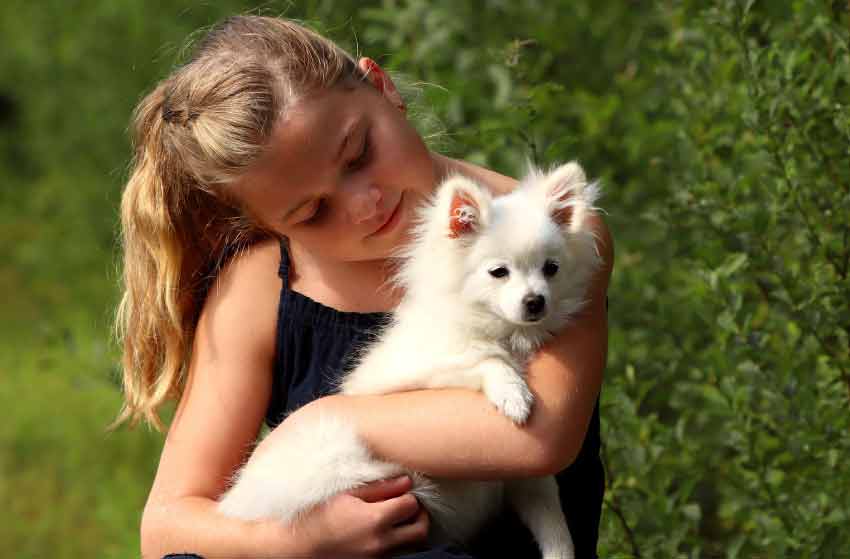
Dogs: Loyal Companions That Need Daily Time
Dogs are often the first animal people picture among the most affectionate pets, and many do seek out their people, follow them around the house, and enjoy shared play and walks. That closeness comes with real daily commitments.
- Time and company: the AVMA warns that any dog can become bored and potentially destructive if left alone all day. Plan for walks, play, training, and help on long workdays.
- Choosing an individual: the AVMA suggests looking for a dog that is active, friendly, inquisitive, and not afraid of you. It also notes that older dogs are often already house-trained and usually adapt well to a new home.
- Respecting space: the ASPCA lists hugging, kissing, reaching over a dog, and disturbing it while it rests among situations some dogs find threatening. A dog that loves company may still dislike tight hugs.
Breed tendencies can guide your research, but they don’t guarantee personality. Our guide to choosing a dog that fits your lifestyle walks through time, space, and budget, and our tips on socializing a shy or fearful puppy help a young dog grow more confident.
Cats: Affection on Their Own Terms
Cats are sometimes labeled aloof, yet many enjoy close contact with familiar people. Cat Friendly Homes notes that cats may nuzzle or rub against you, lick your arm, or curl up beside you when they want attention.
- Let the cat approach: most cats prefer being petted on the head and neck, and many dislike having their feet touched.
- Keep sessions short: cats often prefer short, frequent interactions. Long petting can overstimulate some cats, who may nip or swat to say they’ve had enough.
- Kitten or adult: Cornell’s Feline Health Center points out that an adult cat’s personality is already established, while kittens are curious, playful, and energetic.
For people happy to let the cat set the pace, a cat can be one of the most affectionate pets in the home. Cats still need daily play, a clean litter box, a scratching post, and a vet check soon after they come home. Browse our cat care guides for more.
Small Pets That Can Be Among the Most Affectionate Pets
Rabbits, guinea pigs, and rats can be wonderfully sociable, but they aren’t starter pets that look after themselves. Each needs daily care, the right housing, and a vet experienced with its species.
Rabbits
The House Rabbit Society describes rabbits as highly social animals who thrive on attention. Many nuzzle and lick their people, while others stay shyer. Key needs include:
- Indoor housing with plenty of family interaction, plus several hours of daily exercise outside the enclosure
- Unlimited grass hay, such as timothy, as the core of the diet
- Spaying or neutering by a vet experienced with rabbits
- A long commitment: well-cared-for indoor rabbits can live 7 to 10+ years
The society says only adults should lift a rabbit, and rabbits are generally a poor match for children under 7. Learn more in our rabbit guides.
Guinea pigs
The Merck Veterinary Manual calls guinea pigs usually gentle, social, and often vocal, and says they rarely bite when handled calmly. Handling from a young age helps them become comfortable being held. They need:
- At least one companion: they often do well in pairs or small groups of the same sex, or with a vet-neutered partner
- Unlimited grass hay and a daily source of vitamin C, because guinea pigs can’t produce their own
- Protection from dogs, cats, and ferrets, which can seriously injure them
- A comfortable room, around 65–75°F (18–24°C)
With a lifespan of about 5 to 8 years, they’re a multi-year commitment. See our guinea pig care guides.
Rats
Rats surprise many people. VCA describes them as intelligent, inquisitive, interactive, and social, and says rats socialized early and handled gently are often affectionate and rarely bite unless provoked. Some learn to come when called. Keep in mind:
- Rats are usually happier with another rat as a playmate.
- They tend to be nocturnal but are active for periods during the day.
- They love to chew and are skilled escape artists, so they need chew toys and a secure cage.
- Life expectancy is 2 to 3 years, which is worth explaining to children in advance.
Pet Care Tip: With small pets, sit on the floor and let the animal come to you. Offering a favorite food from your open hand can help build trust, and it’s gentler than reaching in and scooping it up.
Budgies and Cockatiels: Social Birds for Patient Owners
Companion birds can be some of the most affectionate pets for people who enjoy daily interaction and don’t mind some noise. They bond through time, gentle training, and routine rather than cuddling.
Budgies (parakeets)
VCA describes budgies as generally very social, gentle, and affectionate. With time and effort they can be finger-trained, and some enjoy head scratches. Young or hand-raised birds are often easier to tame than older or parent-raised birds.
- LafeberVet lists a typical lifespan of 7 to 15 years and suggests considering pairs or groups, since budgies are flock birds.
- An all-seed diet lacks key nutrients, so ask an avian vet about a balanced diet.
- Provide safe toys, daily out-of-cage time, and twice-yearly vet checkups, as VCA recommends.
Cockatiels
VCA calls cockatiels graceful, gentle, and generally quiet birds, and notes they are wonderful whistlers. A single cockatiel given plenty of attention may bond closely with its human family.
- Lifespan is often 10 to 14 years, and some live much longer.
- A commercially formulated pellet should form the base of the diet, with vegetables and some fruit as extras and seed as an occasional treat.
- Daily time out of the cage helps prevent boredom.
Children should handle any bird only with an adult present. Explore more in our bird care guides.
Horses: Strong Bonds, Substantial Care
Some people look to horses for companionship, but horses are not household pets. The Merck Veterinary Manual explains that horses are highly social animals that need contact with others, form friendships with other horses, and can develop problems when isolated.
- Space and company: plan for pasture turnout or boarding, plus at least one compatible equine companion.
- Diet: University of Minnesota Extension says forage should make up at least 50% of a horse’s diet, and an average adult needs about 2% of its body weight in feed daily.
- Routine care: most horses need hoof trims every five weeks to three months, plus an annual veterinary exam and core vaccines.
Owning a horse takes significant time, money, and experience. Riding lessons or volunteering at a stable can help you learn before committing.
Why we left out exotic “cuddly” animals: earlier versions of this page listed animals such as primates, foxes, and slow lorises. Wild and exotic species have highly specialized needs, they are often poorly suited to life as household pets, and ownership rules vary by state and local area. Always check your state and local rules before considering any exotic animal.
How to Choose Among the Most Affectionate Pets
The best pets for companionship are the ones whose needs you can meet every day. Use this checklist before you commit:
- Meet the individual. Spend time with the animal before adoption or purchase whenever possible, and watch how it responds to you.
- Ask about its history. Shelters, rescues, and responsible breeders can often tell you how the animal reacts to handling, children, and other pets.
- Consider an adult. An adult animal’s personality is already established, so it’s easier to judge compatibility. The AVMA notes older dogs often adapt very well to a new home.
- Be honest about time. Factor in work hours, daily interaction, exercise, grooming, and housing.
- Budget for care. Include food, supplies, routine and emergency vet visits, and a vet who treats the species.
- Check your housing. Read your lease or HOA rules, and see our guide to pets for apartment living if space is tight.
Affection never replaces training, enrichment, health care, and clear boundaries. A loving dog still needs manners, and a friendly rabbit still needs hay and safe space to run.
Example Scenario (illustrative)
Priya, who works from home in Ohio, wants one of the most cuddly pets she can find and leans toward a kitten. At a local shelter, staff introduce her to a 4-year-old cat known for sitting beside volunteers and enjoying gentle head scratches. Because the cat’s personality is already clear, Priya can see how it behaves before adopting. She gives the cat a quiet room and two weeks to settle, letting it approach her first.
Common mistakes when choosing a cuddly pet
| Mistake | Why it matters | Better approach |
|---|---|---|
| Choosing by species or breed reputation alone | Personality varies between individuals | Meet the animal and ask about its history |
| Buying a small pet as a child’s “easy” first pet | Small pets need daily, specialized care | Make an adult the primary caretaker |
| Keeping a social species alone | Guinea pigs and rats often do better with companions | Plan for a compatible pair from the start |
| Expecting instant cuddles | New animals need time to settle | Let the pet set the pace and start interactions |
Building Trust With a New Pet
Even the friendliest animal needs time to feel safe in a new home. These steps help any pet settle in:
- Start quiet: give the animal a calm space with food, water, and a hiding spot, and keep visitors to a minimum at first.
- Let it come to you: sit at the animal’s level and wait for it to approach. Cat Friendly Homes advises letting cats initiate contact rather than forcing petting.
- Read body language: the ASPCA notes that dogs rarely bite without some type of warning, such as going still and rigid, growling, or showing teeth. In cats, a tense body, dilated pupils, or ears pulled back suggest it’s time to stop.
- Always allow retreat: the ASPCA explains that a fearful dog may bite if cornered or trapped. Every pet should have a safe place to escape interaction.
- Keep routines steady: regular feeding, play, and quiet times help animals learn what to expect.
- Book a vet visit: a sudden change in behavior can have a medical cause, so check with your vet if a pet becomes withdrawn or irritable.
Children and pets
The AVMA says children need an adult who is willing and available to supervise a pet’s daily care. Teach children to stroke gently, never grab or chase, and leave a pet alone when it walks away or hides. VCA notes that rats should never be left unsupervised with small children, and the House Rabbit Society says only adults should lift a rabbit.
Most Affectionate Pets: FAQs
What are some of the most affectionate pets?
Dogs, cats, rabbits, guinea pigs, rats, budgies, and cockatiels can all form close bonds with people. Affection varies by individual, early socialization, health, and handling, so meeting the specific animal matters more than its species.
Are cats or dogs more affectionate?
Neither is always more affectionate. Many dogs seek frequent contact and shared activities, while many cats prefer short, frequent interactions on their own terms. The individual animal’s personality matters more than whether it’s a cat or a dog.
Which pets bond closely with their owners?
Dogs, cats, rabbits, rats, and companion birds such as budgies and cockatiels often bond with people who spend consistent, gentle time with them. Social small animals usually also need a companion of their own species.
Are small pets affectionate?
Many can be. Rabbits may nuzzle their people, and rats socialized early are often affectionate. However, small pets need daily, specialized care, aren’t automatically suited to young children, and may dislike being picked up.
How can you build trust with a new pet?
Give the pet a quiet space and time to settle, let it approach you, keep routines steady, and watch its body language. Always let it retreat, and never force handling.
What should you consider before choosing a cuddly pet?
Consider your daily schedule, space, budget, household members, and the animal’s social and care needs. Meet the individual animal, ask about its history, and remember that a cuddly pet still needs training, enrichment, and veterinary care.
Is an adult animal a good choice for a cuddly pet?
Often, yes. An adult’s personality is already established, so you can see how it responds to people before adopting. Shelters and rescues can share what they know about its behavior.
Can an affectionate pet become a therapy animal?
Some can. VCA notes that most therapy pets are dogs, though cats, rabbits, guinea pigs, and horses can also be candidates. They must be calm, well trained, healthy, and comfortable with handling. Therapy pets are not service animals.
Final Verdict: Choosing the Most Affectionate Pets for Your Home
The most affectionate pets aren’t defined by species alone. Dogs, cats, rabbits, guinea pigs, rats, budgies, and cockatiels can all become loving companions when their daily needs are met and they’re allowed to set the pace. Meet the individual, plan for its care, and give it time to trust you.
Your next steps
- Make a shortlist of two or three animals whose needs fit your schedule, space, and budget.
- Visit a local shelter or rescue and ask to meet adult animals as well as young ones.
- Read more species guides in our pet care section.
Tell us how your pet shows affection in our community on Facebook.
About the author
Written and reviewed by the Pets Store Home Editorial Team: pet owners and animal lovers who check every guide against trusted US veterinary and animal-welfare sources. This article is general information, not a substitute for professional veterinary advice. Always talk to your veterinarian about your own pet’s health.
How we checked this guide: We used the AVMA, the ASPCA, VCA Animal Hospitals, the Merck Veterinary Manual, the House Rabbit Society, Cat Friendly Homes, Cornell Feline Health Center, LafeberVet, and University of Minnesota Extension. We review this article every 12 months, or sooner if guidance changes.
Last reviewed: October 2026
Sources
- AVMA – Selecting a Pet Dog (accessed Oct 2026)
- ASPCA – The Human/Companion Animal Bond (accessed Oct 2026)
- ASPCA – Aggression in Dogs (accessed Oct 2026)
- VCA Animal Hospitals – Therapy Pets (accessed Oct 2026)
- VCA – Owning Pet Rats (accessed Oct 2026)
- VCA – Budgies: General Information (accessed Oct 2026)
- VCA – Cockatiels: General Information (accessed Oct 2026)
- Cat Friendly Homes – Cat Affection (accessed Oct 2026)
- Cornell Feline Health Center – Choosing and Caring for Your New Cat (accessed Oct 2026)
- House Rabbit Society – How to Care for a Pet Rabbit and Rabbits and Children (accessed Oct 2026)
- Merck Veterinary Manual – Guinea Pigs and Diet for a Guinea Pig (accessed Oct 2026)
- Merck Veterinary Manual – Behavior Problems in Horses (accessed Oct 2026)
- LafeberVet – Basic Information Sheet: Parakeet (accessed Oct 2026)
- University of Minnesota Extension – Caring for Horses on a Budget (accessed Oct 2026)
[…] Which foreign pets are legal in Washington State? […]