
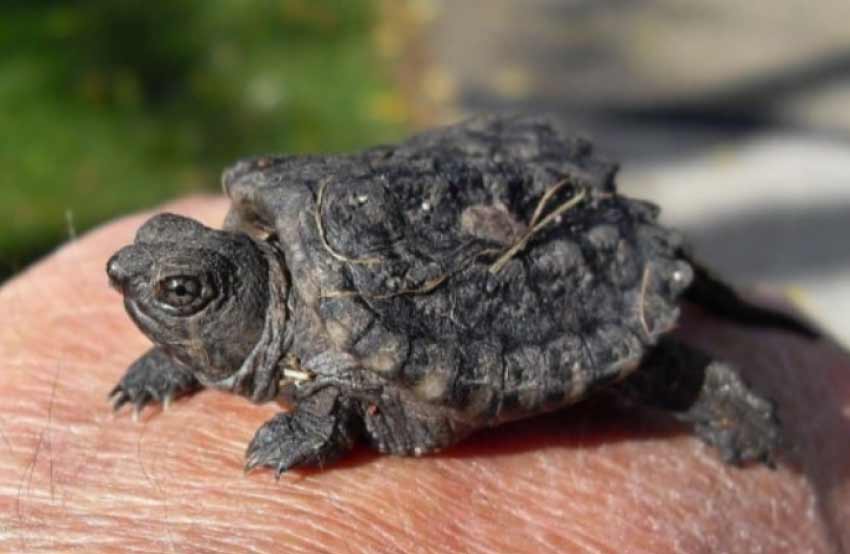
Are Alligator Snapping Turtles Endangered?
Quick answer: Yes, alligator snapping turtles are considered at risk. The IUCN lists the species as Vulnerable, and the U.S. Fish and Wildlife Service has proposed listing it as Threatened under the Endangered Species Act after decades of overharvesting, bycatch losses, and habitat decline. A closely related species, the Suwannee alligator snapping turtle, was formally listed as Threatened in 2024.
Key Takeaways
- The IUCN classifies the alligator snapping turtle as Vulnerable, and the U.S. Fish and Wildlife Service has proposed a Threatened listing under the Endangered Species Act.
- Historic commercial harvesting in the 1960s and 1970s devastated populations, and surveys decades later showed some rivers still hadn’t recovered.
- The species doesn’t reach sexual maturity until 11 to 21 years old, which makes populations especially slow to bounce back from over-harvesting.
- Current range spans 12 states, down from a historic 14, with the species now extremely rare or possibly locally extinct in Kansas and Indiana.
- Federal hatcheries are actively breeding and releasing alligator snapping turtles to rebuild wild populations in several states.
Why Trust This Guide?
This guide is based on official conservation assessments and species status information from the U.S. Fish and Wildlife Service and the IUCN Red List regarding the alligator snapping turtle’s population status, threats, and ongoing recovery efforts.
Are Alligator Snapping Turtles Endangered? The Current Status
The alligator snapping turtle (Macrochelys temminckii) is not currently listed as endangered under the U.S. Endangered Species Act, but its situation is serious enough that it has drawn sustained federal and international conservation attention. The IUCN Red List classifies the species as Vulnerable, one step below Endangered on that scale, reflecting a clear and ongoing population decline across its range.
At the federal level in the United States, the U.S. Fish and Wildlife Service proposed listing the alligator snapping turtle as Threatened under the Endangered Species Act, along with a special 4(d) rule to guide its protection, following a thorough Species Status Assessment showing populations in decline and expected to keep declining. That review found that legal and illegal harvest, drowning from fishing bycatch, hook ingestion, habitat alteration, and nest predation are all actively affecting the species’ future viability. A closely related population, the Suwannee alligator snapping turtle – found only in the Suwannee River basin of Georgia and Florida – was formally listed as Threatened in 2024, becoming the first of the two to receive final federal protection.
The species is also listed under the Convention on International Trade in Endangered Species (CITES), an international agreement that regulates cross-border trade in wildlife to prevent it from threatening a species’ survival. This reflects concern not just about domestic population declines, but about international demand for turtle meat and the exotic pet trade.
Why Alligator Snapping Turtle Populations Have Declined
The single biggest driver of historic decline was commercial harvesting, which peaked in the late 1960s and 1970s. At the height of this period, harvesters were pulling three to four tons of alligator snapping turtles per day from Georgia’s Flint River alone – a volume that devastated the local population. Commercial harvest of the species is now illegal in every state within its range, but the damage from that era was severe enough that a survey conducted 22 years after harvesting ended in the Flint River found the population still hadn’t recovered.
Recreational harvest continues to this day in Louisiana and Mississippi under certain restrictions, though it’s prohibited everywhere else the species occurs. Illegal harvest and poaching remain an ongoing concern as well, driven by global demand for turtle meat and, increasingly, the exotic pet trade – in one notable case, three men were convicted after illegally collecting 60 large alligator snapping turtles in a single year and transporting them across state lines in violation of the Lacey Act, a federal law against trafficking in illegally taken wildlife.
Beyond direct harvest, incidental harm from fishing and recreational boating takes a steady toll. Alligator snapping turtles face real risk from accidental capture, swallowing fishhooks, drowning after becoming caught on trotlines or limb-lines (unattended fishing lines strung across waterways or hung from branches), entanglement in discarded fishing line, and injuries from boat propeller strikes. Because these turtles can live for many decades, losing breeding-age adults to these incidental causes has an outsized long-term impact on population recovery.
Alligator Snapping Turtle vs. Common Snapping Turtle
One detail that sometimes complicates both public awareness and enforcement efforts is that the alligator snapping turtle is often confused with the common snapping turtle, a related but distinct and much more abundant species. Both belong to the broader snapping turtle family Chelydridae, but the alligator snapping turtle is easily distinguished by its far larger size, its three prominent rows of raised, spiked ridges running down its shell, and its overall prehistoric, almost dinosaur-like appearance, complete with a large head and pointed, fleshy projections around its eyes.
The common snapping turtle, by contrast, has a smoother, less pronounced shell and a much wider, more stable population across North America, and it is not considered a species of conservation concern. This distinction matters practically, since regulations around harvest, possession, and transport can differ significantly between the two species, and misidentification – whether accidental or convenient – has occasionally been a factor in illegal harvest cases involving the more vulnerable alligator snapping turtle.
Why This Species Is So Slow to Recover
Alligator snapping turtles have a life history that makes them unusually vulnerable to sustained population pressure, even compared to other long-lived reptiles. They don’t reach sexual maturity until somewhere between 11 and 21 years of age, meaning a turtle removed from the population before reaching breeding age never has the chance to reproduce at all, and even natural adult mortality removes decades of potential future reproduction in a single event.
Once mature, a female typically produces only one clutch of eggs per year, ranging from roughly 8 to 52 eggs depending on the individual – a modest output compared to other turtle species covered in our loggerhead sea turtle facts guide, which lay far larger clutches. That’s a modest reproductive output for a species facing this many external pressures, and it’s compounded by low survival odds for young turtles even under favorable conditions – nests and hatchlings face predation from raccoons, opossums, bobcats, and river otters, along with the invasive red imported fire ant. An introduced parasitic insect, the phorid fly, has also been documented laying eggs in alligator snapping turtle nests, with its larvae damaging eggs and killing hatchlings, though the overall scale of this particular threat is still not fully understood.
This combination of late maturity, modest annual reproduction, and high early-life mortality means that once a population is significantly reduced, it can take many decades of stable, favorable conditions to recover – which is exactly what researchers observed in the Flint River more than two decades after commercial harvest there ended.
Habitat Threats Beyond Direct Harvest
Changes to freshwater habitat, both natural and human-caused, present an ongoing challenge across the species’ range. Dredging, logging that removes submerged wood the turtles use for cover and structure, shoreline erosion, and broader changes to near-shore freshwater environments all degrade the habitat these turtles depend on. Climate change adds further pressure by shifting water levels and weather patterns in ways that can compound these existing habitat issues.
Agricultural and urban runoff introduces pollution into the rivers, streams, and swamps that make up the species’ preferred habitat, while water level changes can force turtles out of their aquatic environment entirely. When that happens, alligator snapping turtles moving across dry land become far more vulnerable to predators, vehicle strikes, and human encounters than they would be in their normal underwater habitat, where their size, camouflage, and stillness make them well protected.
Where Alligator Snapping Turtles Are Found Today
Historically, alligator snapping turtles ranged across 14 states: Alabama, Arkansas, Florida, Georgia, Illinois, Indiana, Kansas, Kentucky, Louisiana, Missouri, Mississippi, Oklahoma, Tennessee, and Texas. Today, the species persists in 12 of those states, having become extremely rare – and possibly locally extinct – in Kansas and Indiana, representing a real contraction at the edges of its historic range even as more central populations continue to be actively managed and monitored.
Within its range, the species favors large rivers and deeper water, along with streams, canals, lakes, and swamps that offer high forest canopy cover and structural features like tree root masses, stumps, and submerged trees to hide among. Seasonal habitat use shifts as well, with turtles favoring shallower areas in winter and moving to deeper water during summer, while hatchlings stick to shallow, vegetated, well-canopied areas that offer more protection while they’re most vulnerable.
Recovery Efforts Underway
Federal and state agencies are actively working to rebuild alligator snapping turtle populations through captive breeding and habitat restoration. The Tishomingo National Fish Hatchery in Oklahoma began a captive breeding program back in 1999 specifically to produce head-started alligator snapping turtles – juveniles raised in captivity past their most vulnerable early years before being released – for reintroduction into the wild. The Natchitoches National Fish Hatchery in Louisiana runs a similar head-start program.
Turtles raised through these programs have been released into waterways in Southern Illinois, Oklahoma, Louisiana, and Kansas, aiming to bolster wild populations in areas where the species has struggled or become locally rare. Head-starting is a particularly useful strategy for a species like this one, since it addresses the exact vulnerability that makes recovery so slow in the wild: the long stretch between hatching and reaching an age where survival odds improve significantly.
Habitat restoration and improvement efforts complement these breeding programs, aiming to address some of the environmental degradation – dredging impacts, lost submerged structure, and shoreline erosion among them – that has made parts of the species’ range less hospitable over time.
What This Means If You Encounter One in the Wild
If you come across an alligator snapping turtle in the wild, the most helpful thing you can do for the species is to leave it undisturbed and avoid attempting to move, handle, or relocate it – these are powerful, potentially dangerous animals with a strong bite, and unnecessary handling adds stress that isn’t good for an already vulnerable population. If you’re fishing in an area where alligator snapping turtles occur, checking trotlines and limb-lines regularly, and avoiding leaving unattended fishing gear in the water for extended periods, meaningfully reduces the incidental bycatch risk that continues to affect the species.
If you suspect someone is illegally harvesting or trafficking alligator snapping turtles, the U.S. Fish and Wildlife Service maintains a wildlife trafficking tip line, and reports can potentially lead to a financial reward if they help resolve a case. Given how much illegal harvest for the meat and pet trade has contributed to the species’ decline, this kind of reporting plays a real role in enforcement.
Alligator Snapping Turtles as Pets
Because of their protected or regulated status in most of their range, owning an alligator snapping turtle as a pet is heavily restricted or outright illegal in many states, and interstate transport of wild-caught individuals can violate federal law. Anyone considering keeping one should check both state wildlife regulations and any applicable federal rules before acquiring one, and should strongly favor captive-bred individuals from a legitimate, permitted source over wild-caught turtles, given the ongoing conservation concerns.
It’s also worth noting that alligator snapping turtles grow extremely large – males can reach up to 249 pounds and nearly 29 inches in shell length – and can live for many decades, with the oldest documented captive individual reaching 80 years old. Their jaw strength is formidable as well; see our breakdown of alligator snapping turtle bite force for exact PSI figures. This makes them a serious, long-term commitment requiring substantial tank or pond space, well beyond what most casual reptile keepers are prepared to provide.
How Alligator Snapping Turtles Hunt and Live
Part of what makes the alligator snapping turtle such a distinctive animal – and part of why it draws so much conservation attention – is its unusual hunting strategy. It’s the only turtle species known to use a specialized part of its body as a lure to attract prey. The turtle lies motionless on the riverbed and slowly opens its jaws over the course of one to two minutes, revealing a small, pink, worm-like projection on its tongue. As the lure wriggles, curious fish and other small animals move in to investigate, and the turtle’s powerful jaws snap shut the moment prey comes within striking distance.
This sit-and-wait hunting style means alligator snapping turtles rely heavily on camouflage and stillness rather than active pursuit. Their deep brown, ridged shells often develop algae growth that further blends them into the murky riverbeds, canals, and swamps they inhabit, making them easy to overlook even in shallow water. Their diet is broad and opportunistic once prey does approach, including fish, crayfish, mollusks, smaller turtles, insects, nutria, snakes, birds, and some vegetation – a much more carnivorous diet than species like box turtles, whose varied feeding needs lean more heavily on plant matter.
Adult alligator snapping turtles have essentially no natural predators aside from humans, a reflection of both their size and their formidable jaw strength. This apex position within their ecosystem is part of what makes the species’ historic population crash so significant – removing a long-lived top predator at this scale from freshwater ecosystems across the Southeast and Midwest has ripple effects on the fish and other prey populations these turtles help regulate.
The Bottom Line
Alligator snapping turtles are not currently listed as endangered, but they are considered Vulnerable by the IUCN and have been proposed for Threatened status under the U.S. Endangered Species Act, with a closely related population already listed. Decades of overharvesting, ongoing bycatch losses, habitat degradation, and the species’ naturally slow reproductive cycle have combined to put sustained pressure on wild populations. Active recovery efforts, including captive breeding and habitat restoration, are underway, but full recovery in heavily affected areas is likely to take many more decades given how slowly this species reproduces and matures.
FAQ: Alligator Snapping Turtles and Conservation Status
Are alligator snapping turtles endangered? They’re not federally listed as endangered, but the IUCN classifies them as Vulnerable, and a Threatened listing under the U.S. Endangered Species Act has been proposed.
Why did alligator snapping turtle populations decline so much? Decades of commercial overharvesting in the mid-20th century, combined with ongoing bycatch losses, illegal poaching, and habitat degradation, drove significant declines.
Is it legal to catch an alligator snapping turtle? Commercial harvest is illegal everywhere within the species’ range; limited recreational harvest is still legal only in Louisiana and Mississippi, with restrictions.
How long do alligator snapping turtles live? They can live for many decades – the oldest documented captive individual reached 80 years old, and wild individuals may live even longer.
Why do alligator snapping turtles take so long to recover from population declines? They don’t reach sexual maturity until 11 to 21 years old and produce only one clutch of eggs per year, so lost breeding-age adults represent a major, slow-to-replace loss.
What states are alligator snapping turtles found in today? Twelve states across the Southeast, Midwest, and Southwest, down from a historic 14; they’re now extremely rare or possibly locally extinct in Kansas and Indiana.
What is being done to help alligator snapping turtle populations recover? Federal hatcheries in Oklahoma and Louisiana run captive breeding and head-start programs, releasing juvenile turtles into several states, alongside habitat restoration efforts.
Can you legally own an alligator snapping turtle as a pet? It’s heavily restricted or illegal in many states; anyone considering it should check state and federal regulations and strongly favor legally captive-bred individuals.
What is the Suwannee alligator snapping turtle, and is it different? It’s a closely related but separate species found only in the Suwannee River basin of Georgia and Florida, formally listed as Threatened under the Endangered Species Act in 2024.
What should I do if I find an alligator snapping turtle in the wild? Leave it undisturbed – avoid handling or attempting to move it, since these are powerful animals and unnecessary handling adds stress to an already vulnerable species.
Conservation challenges aren’t unique to freshwater turtles – marine species face their own set of pressures too. Our guide to loggerhead sea turtle diet covers how foraging habitat loss and marine debris affect a very different turtle species.


[…] Which foreign pets are legal in Washington State? […]