
pet friendly hotels that allow large dogs no fee

pet friendly hotels that allow large dogs no fee

pet friendly hotels that allow large dogs no fee

Travelling with a large dog shouldn’t mean choosing between a comfortable hotel and an unexpected £25-a-night surprise on your bill. Across the UK, a growing number of hotels — from countryside coaching inns to city-centre chains — now welcome big dogs without charging a nightly fee, provided you know where to look and what questions to ask before you book.

The catch is that “pet-friendly” and “no fee” don’t always mean the same thing. Some hotels waive the fee but cap weight well below what most people would call a large dog. Others charge a refundable deposit instead of a fee, which can feel the same at checkout but works very differently if your dog behaves. This guide breaks down exactly how UK hotels price, size-limit, and manage large-dog stays, and names specific properties with source-checked policy details rather than generic marketing copy.

The single most important distinction in this guide: a £0 pet fee does not automatically mean £0 deposit or £0 liability. UK hotels mix and match three separate things:

  • Pet fee — a charge, refundable or not, simply for bringing your dog.
  • Damage deposit — separate from any pet fee, held against damage and returned if there’s none.
  • Damage liability — even where both fee and deposit are £0, you can still be billed afterwards for genuine damage or excessive cleaning.

A hotel advertised as “dogs stay free” can still invoice you for a chewed cushion. Check a specific hotel’s position on all three before assuming a stay is genuinely cost-free.

Quick Answer: Yes — a number of UK hotels, including independent country properties, pubs-with-rooms, and select chain hotels, allow large dogs (roughly 18kg+) with no nightly pet fee. Many still apply a refundable damage deposit of £10–£50, and house rules around furniture and unattended dogs are close to universal. See the source-checked hotel table below for specific examples rather than a general claim.

Key Takeaways

  • “No fee,” “no deposit,” and “no damage liability” are three different things — confirm all three before booking, not just whether a fee is charged.
  • Among the properties checked for this guide, weight limits for free or low-cost stays most often fell between 18kg and 30kg — this reflects the sample reviewed, not a full market survey, so always confirm with the property.
  • Breed-specific restrictions were uncommon in the properties reviewed, but very few UK hotels publish a breed policy in writing either way — you have to ask.
  • Dog-free areas (restaurants, spas, some lounges) were common across the properties reviewed.
  • A phone call or email confirming your dog’s exact weight and breed before arrival avoids the most common check-in disappointments.

In this guide: What counts as a large dog · How UK pet fees actually work · UK hotels checked for this guide, with sources · Dog-free areas and house rules · Number of dogs, age and behaviour rules · Deposits, cleaning charges and cancellations · Comparison table · Booking checklist · FAQs

What Counts as a “Large Dog” at a UK Hotel?

There’s no official UK hotel-industry classification for dog size — the brackets below are a planning tool for this guide, built from the weight limits that individual properties happened to publish, not an industry standard. UK hotels rarely use breed to define “large”; when they do publish a cutoff, it’s almost always by weight. For planning purposes, three brackets show up repeatedly in the properties reviewed:

  • Medium: up to roughly 10–18kg (Cocker Spaniels, Beagles, Border Collies)
  • Large: roughly 18–30kg (Labradors, Golden Retrievers, Boxers, German Shepherds)
  • Extra-large/giant: 30kg+ (Great Danes, Newfoundlands, Mastiffs, Bernese Mountain Dogs)

Most “no fee, large dogs welcome” claims found in this research applied at or below the top of the large bracket (up to ~30kg). Giant-breed owners should always confirm directly — several properties that advertise as dog-friendly still ask giant breeds to book ground-floor or specific “dog rooms” for practical reasons like door widths and furniture weight limits, not fee reasons.

Pet Care Tip: Weigh your dog before you travel and keep a note (or a vet printout) on your phone. Front desk staff sometimes estimate weight by eye, and having a real number avoids an awkward reclassification at check-in.
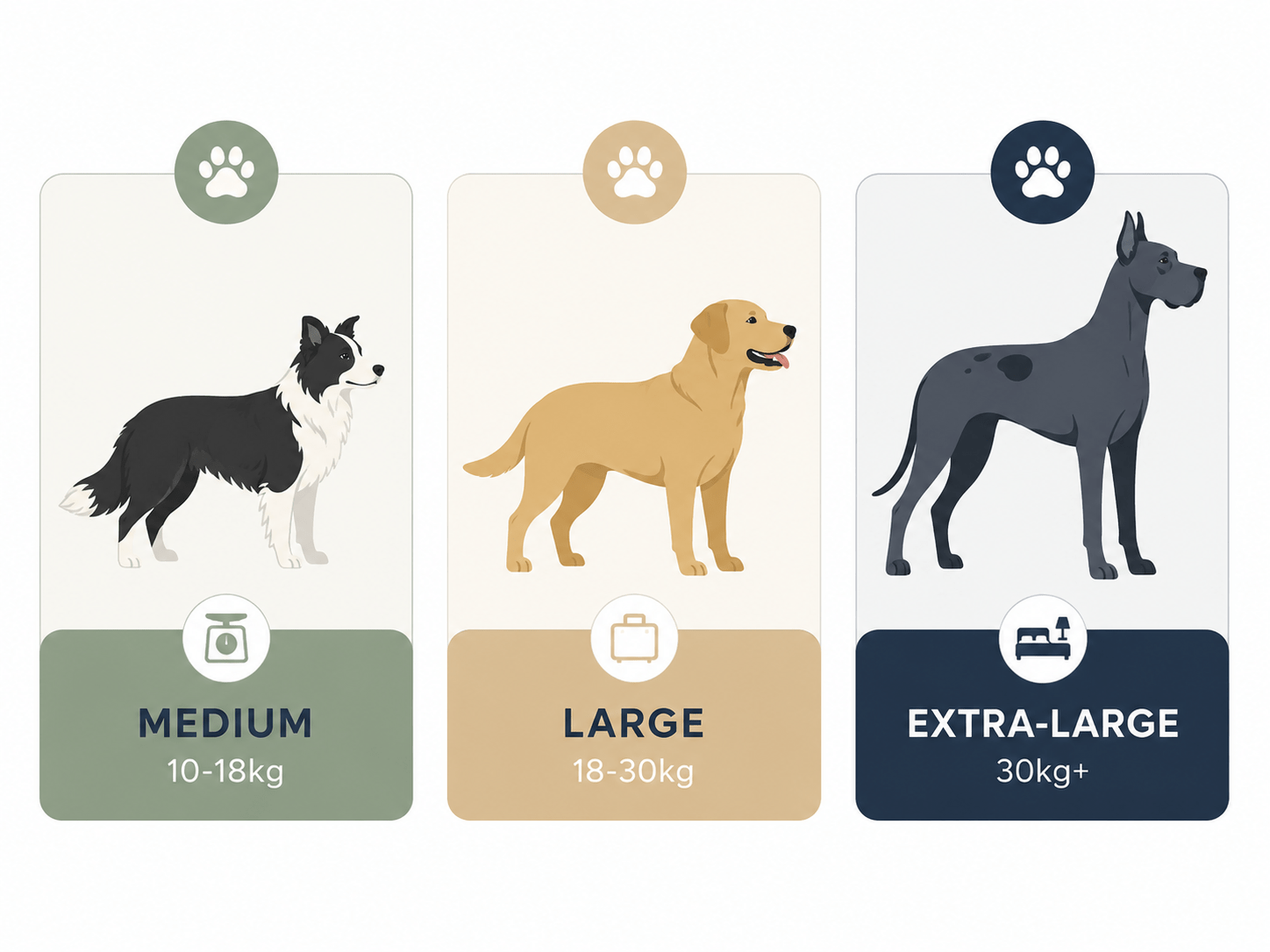
large dog friendly hotels UK

How UK Hotel Pet Fees Actually Work

There isn’t one industry standard — UK hotels tend to fall into four pricing models:

  1. Genuinely free — no fee, no deposit, dog stays as a guest. Most common at independent country hotels and pub-with-rooms properties that see dogs as part of their brand identity.
  2. Refundable deposit — typically £25–£50, returned at checkout if there’s no damage. This is often marketed loosely as “pet friendly” even though money changes hands upfront.
  3. Flat nightly fee — commonly £10–£35 per dog per night, sometimes covering a welcome pack (bed, bowls, treats).
  4. Fee waived above a threshold stay — some properties drop the fee for stays of 3+ nights or for loyalty-programme members.

The nightly-fee model is the one most likely to catch large-dog owners out, because per-night fees are sometimes scaled to dog size even when the headline marketing says “dogs stay free.”

Pet Care Tip: Ask specifically: “Is there any charge — fee or deposit — for a dog over [your dog’s weight] kg?” Generic questions like “are you pet friendly?” almost always get a yes, regardless of the fine print.

UK Hotels Where Large Dogs Can Stay Without a Pet Fee

The table below lists specific UK properties named in the sources checked for this guide, with the large-dog limit, fee, deposit, and dog-free areas as reported by each source. “Not stated” means the source didn’t publish that detail — not that no policy exists. Every figure here needs re-confirming directly with the hotel before you rely on it. Pet policy is set at property level, changes often, and none of these entries have been independently verified with the hotels themselves for this article.

Hotel

Location

Large-dog limit (as reported)

Pet fee

Deposit

Dog-free areas

Source

Checked

Ace Hotel Shoreditch

London

Not stated

£0 — fee reportedly scrapped

Not stated

Not stated

Time Out London

Sept 2026

Aloft London Excel

London

Up to 18kg

£0 — no surcharge reported

Not stated

Not stated

Time Out London

Sept 2026

B+B Belgravia

London

Not stated (more than one dog allowed)

Not stated

£50, refundable

Not stated

Time Out London

Sept 2026

Novotel (London property)

London

Not stated

£10/night

Not stated

Bars, restaurants

Time Out London

Sept 2026

St Pancras Renaissance

London

Up to 10kg — below this guide’s “large” bracket

£50

Not stated

Not stated

Time Out London

Sept 2026

Cliveden House

Berkshire

Up to two dogs per room; size not stated

£35/dog/night

Not stated

Spa, restaurant

The Hotel Guru

Sept 2026

The Grove

Hertfordshire

Under 30kg

Not stated

Not stated

Not stated

The Hotel Guru

Sept 2026

The Balmoral

Edinburgh

Under ~9kg/20lbs — below this guide’s “large” bracket

Not stated

Not stated

Not stated

Hotelgift

Sept 2026

Pen-y-Gwryd Hotel

Snowdonia, Wales

Not stated

£5/day

Not stated

Not stated

A Lady of Leisure

Sept 2026

Kimpton Charlotte Square Hotel

Edinburgh

Up to ~35kg/77lbs

Not stated

Not stated

Not stated

BringFido

Sept 2026

Grovefield House Hotel by Uno

Buckinghamshire

Not stated

£10/pet/night

Not stated

Not stated

BringFido

Sept 2026

What this table actually shows: very few of the properties with published data combine a stated large-dog weight allowance with a confirmed £0 fee. Aloft London Excel (18kg, £0 reported) is the closest match found. Kimpton Charlotte Square publishes a generous 35kg limit but no fee figure to confirm it’s free.

Ace Hotel Shoreditch has reportedly scrapped its fee but doesn’t publish a weight limit either way. That gap is itself a useful finding: readers specifically chasing “large dog plus zero fee” should expect to call ahead to regional independent hotels and pubs-with-rooms rather than rely on any single published list — this one included.

Beyond these named examples, three broader patterns held up across the sources reviewed, though none is a guarantee at any specific property:

  • Pub-with-rooms and coaching inns were the most consistently fee-free category for dogs of any size, often because the pub itself already allows dogs downstairs.
  • Countryside and coastal hotels marketed around walking holidays (Lake District, Yorkshire, Devon, Wales, Scotland) more often waived fees entirely in the sources reviewed, since dog owners are their core audience rather than an add-on market.
  • Loyalty-tier waivers — a few larger chains reportedly drop the pet fee for members of their top loyalty tier, worth checking if you already hold hotel points.

Because individual hotel policies change often — and are usually set at property level even within a chain — treat this table and this guide as a starting point, and always verify current terms directly with the property before booking.

Dog-Free Areas and House Rules to Expect

Even the most generous no-fee policy comes with boundaries. Across nearly every UK hotel reviewed for this guide, three restrictions were near-universal:

  • Dogs are not permitted in restaurants, bars, or spa areas (some make exceptions for outdoor terraces).
  • Dogs must not be left unattended in the room, or must be crated if they are.
  • Dogs are not allowed on beds or soft furnishings unless the room comes with a designated “dog bed” or throw.

Large dogs sometimes face an additional practical rule: being assigned ground-floor or garden-facing rooms rather than upper floors, particularly in older buildings without lifts.

Number of Dogs, Age Requirements, and Behaviour Policies

Most properties cap bookings at one or two dogs per room without extra approval; beyond that, you’ll typically need to call ahead. Age requirements are inconsistently published — where they do exist, “one year or older” is the most common minimum, aimed at excluding untrained puppies rather than penalising large breeds specifically.

Behaviour expectations are rarely written down in detail but are consistently enforced in practice: dogs are expected to be house-trained, non-aggressive around other guests and dogs, and quiet enough not to disturb neighbouring rooms. Hotels reserve the right to charge for excessive noise complaints or damage even under a “no fee” policy — the fee waiver covers the pet’s presence, not its behaviour.

Pet Care Tip: If your large dog is reactive to strangers or other dogs, request a room near a side entrance or stairwell rather than the main lobby route — most hotels will accommodate this if you ask at booking rather than at check-in.

Cleaning Charges, Deposits, and Cancellation Policies

This is the least transparent part of UK hotel pet policy, and none of the sources checked for this guide published a full breakdown:

  • Cleaning charges for excessive shedding, odour, or accidents appear, based on the properties reviewed, to be reserved for genuinely damaged rooms rather than routine dog hair — but the threshold is set by housekeeping case-by-case, not a published rate card.
  • Damage deposits, where charged (see B+B Belgravia’s £50 example above), are typically pre-authorised on a card and returned if no issues are found. None of the sources checked stated an exact release timeframe, so ask the property directly rather than assuming a standard window.
  • Cancellation policies for pet bookings appeared, in the properties reviewed, to generally mirror the hotel’s standard room cancellation policy — always confirm this in writing, since a small number of properties tie non-refundable rates to dog bookings specifically to discourage last-minute cancellations.

Practical Examples

Aloft London Excel — the closest match to “large dog, no fee” found in this research: no surcharge reported for the bed and treats provided, and dogs up to 18kg are explicitly accepted — just at the lower edge of the “large” bracket used in this guide. A reminder that even a genuinely free policy can carry an unstated weight ceiling worth checking before booking a bigger breed.

Ace Hotel Shoreditch — fee scrapped, weight limit unpublished: Time Out reports the hotel previously charged £25 and has since dropped it, with no published weight limit either way. A large-dog owner should call ahead to confirm the change applies regardless of size, rather than assuming it from the fee removal alone.

B+B Belgravia — deposit, not fee: no flat pet fee reported, but a £50 refundable deposit, with more than one dog allowed. A real-world illustration of “no fee” not meaning “no money changes hands” — the deposit is only returned if there’s no damage.

Common Mistakes When Booking With a Large Dog

  1. Trusting the word “pet-friendly” alone — it says nothing about fees, weight limits, or deposits.
  2. Not disclosing your dog’s actual weight — arriving with a 35kg dog after describing it as “medium” risks a room reassignment or fee at check-in.
  3. Assuming no-fee means no rules — deposits for damage can still apply even when there’s no flat pet fee.
  4. Booking a top-floor or lift-only room without checking accessibility for a large or anxious dog.
  5. Skipping the pre-arrival call — email confirmations get lost; a phone call the day before travel catches last-minute policy exceptions.

Editor’s Insights

  • Properties that publish a specific weight limit (rather than vague “large dogs welcome” language) generally read as more reliable, because it signals the policy has actually been thought through operationally.
  • Loyalty programme tiers are an underused lever for waiving pet fees — worth checking before assuming a fee is fixed.
  • Independent country hotels with a dedicated “dog-friendly” page (rather than a single mention among general amenities) tended to have clearer, more specific policies among the properties reviewed for this guide.
  • If a hotel’s website doesn’t mention a maximum number of dogs, assume two is the practical ceiling and confirm before booking three or more.

dog friendly hotels no deposit

Decision Framework: Is This Hotel Right for Your Large Dog?

  1. Does the property state a weight limit, and does your dog fall comfortably under it?
  2. Is the “no fee” claim a true waiver, or a refundable deposit in disguise?
  3. Are dog-free areas (restaurant, spa) workable for your trip, or do you need somewhere with a dog-friendly dining option?
  4. Is the room type (ground floor, garden access) suitable for a large or anxious dog?
  5. Have you confirmed the policy directly with the property within the last few weeks, given how often these terms change?

No-Fee vs Fee-Charging Hotels: Quick Comparison

Policy Type

Typical Cost

Weight Limit Common?

Best For

Genuinely free

£0

Rarely stated

Owners prioritising cost certainty

Refundable deposit

£25–£50 (returned)

Sometimes

Well-behaved dogs, short stays

Flat nightly fee

£10–£35/night

Occasionally

Hotels bundling a welcome pack

Fee waived on loyalty tier

£0 (members only)

Chain-dependent

Existing hotel loyalty members

Pre-Booking Checklist

  • Confirmed weight limit (if any) in writing
  • Confirmed whether “no fee” means no deposit, or deposit-only
  • Asked about maximum number of dogs per room
  • Checked which areas of the hotel are dog-free
  • Confirmed cancellation terms for the specific rate booked
  • Requested a ground-floor or accessible room if needed

Travel Day Packing Checklist

  • Proof of vaccination/vet contact details
  • Portable water and food bowls
  • Familiar bed or blanket to reduce anxiety in a new room
  • Lead, harness, and a spare in case one is misplaced
  • Waste bags and a portable stain-remover for accidents
  • Recent photo of your dog on your phone, in case of separation

FAQ

Do UK hotels really let large dogs stay for free? 

Some do — see the source-checked table above for specific examples — but “free” more often means no nightly fee rather than no conditions at all. Deposits and weight caps are common even where the fee itself is £0.

What’s considered a “large dog” for hotel policies? 

There’s no official industry standard. For planning purposes, this guide treats roughly 18–30kg as the large-dog bracket, based on where most properties with a published weight limit set their cutoff — always check the specific hotel’s own figure.

Will I be charged if my dog sheds or has an accident? 

Possibly, but the properties reviewed suggest this is reserved for damage beyond normal wear rather than routine shedding — the exact threshold is judged case-by-case by housekeeping, not a fixed published rate.

Can I bring more than one large dog? 

Often yes, up to two (B+B Belgravia, for example, allows more than one), but always confirm — many hotels cap total pets per room without a call ahead.

Are certain breeds excluded even if size is fine? Not commonly stated in the properties reviewed for this guide, but very few UK hotels publish a breed policy in writing at all — ask directly rather than assuming none exists.

Do dog-friendly hotels allow dogs in the restaurant? Usually not — Novotel and Cliveden House, for example, exclude dogs from bars/restaurants and the spa/restaurant respectively — though some hotels allow dogs in bar areas or outdoor terraces even when the main restaurant is off-limits.

Is a refundable deposit the same as a pet fee? No — a fee is generally non-refundable and pays for the pet’s stay; a deposit (like B+B Belgravia’s £50) is returned if there’s no damage, so it can functionally cost nothing if your dog behaves.

How far in advance should I confirm a hotel’s pet policy? Ideally at booking, and again by phone 24–48 hours before arrival, since property-level policies can change and none of the figures in this guide are guaranteed current.

Sources & References

Property-specific facts (fees, deposits, weight limits) are attributed individually in the comparison table under “UK Hotels Where Large Dogs Can Stay Without a Pet Fee,” each with its own source and date checked. The general pattern-level observations elsewhere in this guide (dog-free areas being common, typical age minimums, and similar) draw on the sites below collectively rather than one specific claim each:

  • Cool Places — Dog Friendly Hotels in the UK
  • BringFido — Pet Friendly Hotels in the United Kingdom, London, and Manchester
  • Time Out London — The Best Pet-Friendly Hotels in London
  • PetsPyjamas — Dog-Friendly Hotels
  • Hotelgift — All You Need To Know About Dog Friendly Hotels in the UK
  • The Hotel Guru — Dog Friendly Hotels in the UK: The Ultimate Guide (2025)
  • A Lady of Leisure — Best Dog Friendly Hotels in the UK
  • TravelAwaits — 11 Hotels Where Dogs Stay Free

Note: individual hotel fees, deposits, and weight limits change frequently and are set at property level even within chains. None of the specific figures in this guide have been independently confirmed directly with the hotels themselves. Readers — and the editorial team before publishing — should verify current terms directly with each named property. [VERIFY] every specific figure against the hotel’s own current policy page prior to publishing.

Written and reviewed by the Pets Store Home editorial team. This article is for general planning purposes and is not a substitute for a hotel’s official policy — always confirm pet terms directly with the property before booking. Last reviewed: September 2026.

Conclusion

Finding a UK hotel that truly welcomes large dogs at no cost comes down to asking the right questions rather than trusting the phrase “pet-friendly” on its own. Weight limits, deposits dressed up as fees, and unwritten behaviour expectations are where most large-dog owners get caught out — not the booking process itself.

Confirm the policy type, your dog’s exact weight, and the house rules before you travel, and a genuinely fee-free stay is very achievable across the UK’s country hotels, pubs-with-rooms, and a growing list of chain properties. If you’ve found a hotel that handled your large dog especially well (or badly), it’s worth sharing in the comments to help other owners plan with confidence.
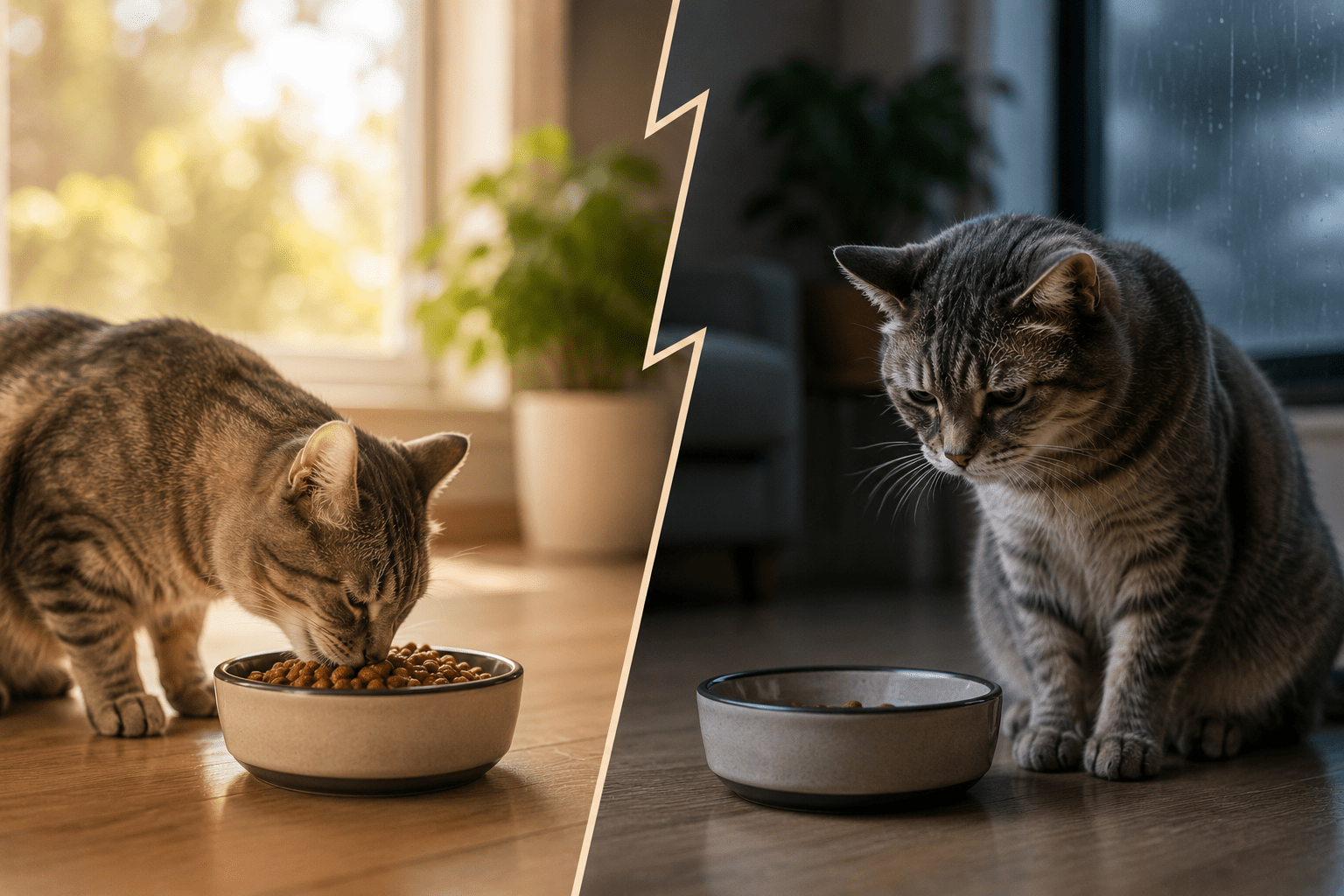
senior cat won’t eat dry food anymore

senior cat won’t eat dry food anymore

Senior Cat Won’t Eat Dry Food Anymore

Quick answer: A senior cat refusing dry food is usually driven by dental pain, a reduced sense of smell, or an underlying illness like kidney disease, rather than pure pickiness. Switching to a softer, more aromatic food while you investigate the cause is the safest first step.

Key Takeaways

  • Dental disease is one of the most common reasons older cats stop eating dry kibble, since crunching becomes painful.
  • A cat’s sense of smell drives appetite more than taste – illness or age-related decline can make dry food less appealing.
  • Sudden appetite loss in a senior cat, especially lasting more than 24-48 hours, warrants a vet visit rather than a wait-and-see approach.
  • Warming wet food or adding a small amount of low-sodium broth can make meals more enticing without a full diet overhaul.
  • Weight loss alongside reduced eating is a red flag for kidney disease, hyperthyroidism, or other conditions common in older cats.

Why Trust This Guide?

This guide draws on general veterinary guidance for feline geriatric care and common causes of appetite change in senior cats, focused on practical, safe first steps rather than a substitute for a vet exam when symptoms persist.

Last reviewed: September 2026

General information, not veterinary advice. A cat that has eaten nothing at all for 24 hours needs veterinary attention promptly — this is especially true for senior and overweight cats. If that describes your situation, contact your vet now rather than continuing to read.

There’s an important distinction to make first: a senior cat that’s gone off dry food specifically but is still eating wet food is a very different situation from a cat that has stopped eating altogether. The first is common and often manageable at home; the second is a genuine veterinary concern, particularly because cats — unlike most other pets — can develop a serious liver condition after even a short period of not eating at all.

Short version: dry food often loses its appeal to senior cats because of dental pain, a diminished sense of smell (dry food has less aroma than wet), and an instinctive pull toward more hydrating food as cats age — none of which is necessarily an emergency on its own. What matters most is whether your cat is still eating something, how suddenly the change happened, and whether any other symptoms are present.

Why Dry Food Specifically Loses Its Appeal

This is the part most general “cat not eating” advice skips over: senior cats often don’t lose interest in food broadly — they lose interest in dry food specifically, while still willingly eating wet food. That pattern itself is a clue, and it usually points to one or more of a few specific things.

Dental pain and kibble hardness. Hard, crunchy kibble requires more chewing force than soft wet food, and dental disease — extremely common in senior cats — makes that chewing genuinely painful. A cat with a sore tooth or inflamed gums will often keep eating soft food (which needs little chewing) while quietly avoiding the food that hurts to eat. Of the possible explanations, dental discomfort is generally the first one worth investigating, since it’s both common and directly treatable.

Diminished sense of smell. Cats rely heavily on smell to find food appealing, and that sense can decline somewhat with age. Wet food is simply more aromatic than dry kibble, so as a cat’s nose gets less sensitive, wet food keeps triggering appetite while drier, less pungent kibble increasingly doesn’t.

Softness and moisture. Wet food may become more appealing simply because it’s softer, more aromatic, and provides substantially more moisture than dry kibble — a combination that matters more as chewing comfort declines and hydration becomes more important with age. This doesn’t require assuming a cat consciously “knows” it needs more water; the food is just easier to eat and more appealing on its own terms.

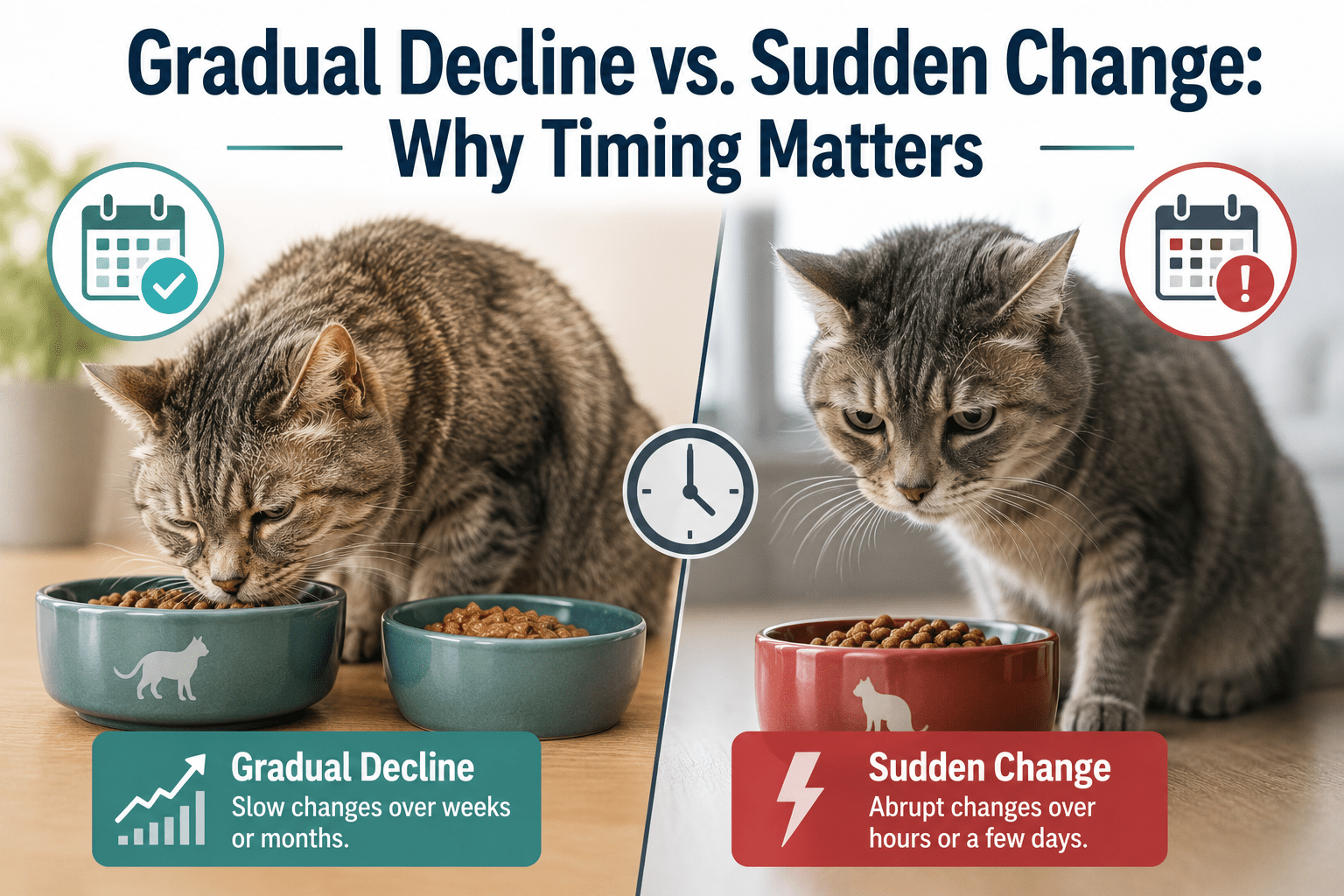
Gradual Decline vs. Sudden Change

Is This Actually a Problem?

Not automatically. If your cat is eating wet food well, maintaining its weight, drinking normally, and acting like itself otherwise, a preference shift away from dry food isn’t inherently something to fix. A full transition to a nutritionally complete wet food can be perfectly reasonable for many senior cats, particularly when chewing comfort or hydration is a concern — the important thing is that whatever your cat ends up eating is a complete and balanced food appropriate for its individual needs, not simply whether it’s wet or dry.

The situations that deserve more attention are: your cat eating meaningfully less overall (not just switching format), losing weight, or showing any other change in behavior or bathroom habits alongside the dry food refusal. Those combinations point toward something beyond simple preference.

Dental Disease: The Most Common Culprit

Dental disease is one of the single most common reasons senior cats go off dry food specifically, and it’s often under-recognized because cats are good at hiding pain. Watch for: picking up kibble and dropping it without eating it, chewing on one side of the mouth, drooling, pawing at the face, and noticeably bad or unusual breath odor.

Because dental disease is both common and treatable, it’s worth ruling out early rather than last — a dental exam is a reasonably quick way to confirm or rule out the most likely explanation before assuming something more complicated is going on.

Other Medical Causes Worth Ruling Out

Several conditions that become more common with age can reduce appetite generally, and dry food (requiring more effort to eat) is often the first casualty even when the underlying cause isn’t dental:

  • Kidney disease — often paired with increased thirst and urination alongside reduced appetite
  • Hyperthyroidism — can cause appetite changes alongside weight loss and increased activity or restlessness
  • Diabetes — associated with increased thirst, urination, and sometimes appetite changes
  • Gastrointestinal issues — nausea, inflammation, or hairball-related discomfort can make eating uncomfortable
  • Cancer — less common but a real possibility in older cats with unexplained appetite or weight change

None of these should be self-diagnosed from a list — the point of naming them is to make clear why a persistent or worsening pattern, rather than a one-off picky day, is worth an actual veterinary visit rather than months of trial and error with new foods.

Non-Medical Causes

Recipe or brand changes. Manufacturers change formulas more often than owners realize, and a cat that was eating a food happily for years can suddenly reject it after a recipe tweak that’s imperceptible to a person.

Bowl location and vision changes. Aging cats sometimes develop reduced vision, and a food bowl moved to a new spot — even slightly — can genuinely be harder for an older cat to find.

Environmental stress. New pets, houseguests, construction noise, or a disrupted routine can all suppress appetite in cats, and senior cats often tolerate change less easily than younger ones.

Simple boredom with the food. Some cats, especially ones fed the exact same kibble for years, appear to develop genuine flavor fatigue over time, independent of any health issue.

The Critical Warning: Hepatic Lipidosis

This is the single most important safety fact in this entire topic, and it’s worth being precise about the timing: unlike most animals, cats can develop a serious and potentially life-threatening liver condition called hepatic lipidosis (fatty liver disease) when they go without adequate food for an extended period — typically described as around three to four consecutive days of little or no eating, with overweight cats at meaningfully higher risk. Twenty-four hours without food isn’t generally when hepatic lipidosis itself sets in, but it is the point at which sustained appetite loss can start affecting an older cat’s health and is a reasonable threshold to seek veterinary advice rather than wait and see.

The mechanism behind hepatic lipidosis is that when a cat isn’t eating enough, its body starts breaking down fat stores for energy faster than the liver can process it, and fat accumulates in liver cells faster than the organ can handle. This is why “just wait and see if she eats when she’s hungry enough” is genuinely bad advice for a cat that has stopped eating meaningfully — cats don’t reliably self-correct the way some other animals might, and the health risk of prolonged fasting is real and time-sensitive.

To put the two thresholds together clearly: 24 hours of no food (or a couple of days of eating very little) is the point to call your vet and get a workup started, while several consecutive days of inadequate intake is where hepatic lipidosis risk becomes an especially serious concern — which is exactly why it’s worth acting on the earlier, more conservative threshold rather than waiting for the more severe one to become likely.

This is specifically about a cat eating little or nothing at all, not one that’s simply switched from dry to wet food while still eating normally — but it’s the reason any full food refusal in a cat, senior or not, deserves prompt attention rather than a wait-and-see approach.

Why Dry Food Specifically Loses Its Appeal

Gradual Decline vs. Sudden Change: Why Timing Matters

A slow, gradual shift away from dry food over weeks or months — especially without other symptoms — more often points toward the ordinary, less urgent explanations: dental wear, diminished smell, or a simple preference shift with age.

A sudden change — a cat that was eating dry food normally last week and refuses it entirely starting yesterday — is more likely to reflect an acute cause: a new dental pain flare, an infection, nausea, or another medical issue that started abruptly. Sudden changes deserve a faster response than gradual ones, even if neither is a full emergency on its own.

How to Transition to Wet Food the Right Way

If dental pain, diminished smell, or hydration needs are genuinely behind the shift, a full or partial move to wet food is often the right long-term answer rather than a workaround to fight against.

Introduce new wet food alongside — not instead of — whatever your cat is still willingly eating, gradually increasing the new food’s share over several days to a week or longer, depending on the cat, rather than swapping abruptly. Cats can be extremely resistant to sudden food changes, so a slower pace is often worth the patience. Offer it at room temperature or slightly warmed (never hot), since warming releases more aroma and makes food more appealing to a cat with a diminished sense of smell. If your cat is used to grazing on dry food throughout the day, plan for more frequent, smaller wet-food meals, since wet food doesn’t sit out safely the way dry food does.

Quick Fixes Worth Trying at Home

For a cat that’s eating less than ideal but isn’t in obvious distress, a few low-risk adjustments are worth trying alongside — not instead of — addressing the underlying cause:

Warm food slightly to increase its aroma. Add a small amount of low-sodium broth or the liquid from tuna packed in water to boost smell and moisture — only if your vet has no reason for your cat to avoid extra sodium or specific ingredients, since senior cats can have kidney disease, heart disease, or hypertension that make this worth checking first. Offer a texture variety — pâté, shredded, or minced — since preferences can shift with age or dental sensitivity. Reduce mealtime pressure by feeding in a quiet, low-traffic spot rather than hovering, which can add stress rather than help. Keep the feeding routine and bowl location consistent, especially if vision changes are a possibility.

Red Flags: When to See a Vet

Contact your vet if any of the following apply, rather than continuing to try home fixes:

  • Your cat has eaten nothing at all for 24 hours, or very little for 48 hours
  • The change happened suddenly rather than gradually
  • You notice weight loss, increased thirst or urination, vomiting, diarrhea, or lethargy
  • Your cat shows signs of dental pain — dropping food, drooling, bad breath, pawing at the mouth
  • Your cat is overweight and has reduced food intake noticeably, given the added hepatic lipidosis risk
  • The reduced eating continues for more than a few days despite trying reasonable adjustments at home

None of these guarantees something serious is happening, but each is a reasonable trigger to get a professional look rather than waiting to see if it resolves on its own.

Common Mistakes Owners Make

Assuming a cat will “eat when hungry enough” and waiting too long before seeking help, which carries real risk for cats specifically because of hepatic lipidosis.

Repeatedly switching brands or flavors without addressing a possible underlying cause like dental pain, which can turn into weeks of trial and error that never solves the actual problem.

Forcing or pressuring a cat to eat during meals, which often increases stress and can make the aversion worse rather than better.

Overlooking dental disease because a cat is still eating something — many cats with real dental pain continue eating soft food while quietly avoiding anything that requires chewing.

Not weighing the cat regularly enough to notice a gradual weight decline before it becomes significant.

Frequently Asked Questions

Is it normal for senior cats to prefer wet food over dry? 

Yes — this is a very common shift as cats age, often related to dental comfort, a diminished sense of smell, and hydration needs. It isn’t automatically a sign of a problem if your cat is still eating well overall.

How long can a cat go without eating before it’s an emergency? 

As a general guideline, no food at all for 24 hours (or significantly reduced eating for 48 hours) warrants a vet call — cats are at real risk of hepatic lipidosis with prolonged food refusal, more so than many other pets.

Should I just switch my senior cat to wet food permanently? 

For many senior cats, this is a completely reasonable and often beneficial choice, especially if dental comfort or hydration is a factor — but it’s worth ruling out a treatable medical cause first if the change was sudden or is paired with other symptoms.

Can dental disease really cause a cat to stop eating dry food while still eating wet food? 

Yes, this is one of the most common patterns — hard kibble requires more chewing force than soft wet food, so a cat with dental pain often continues eating what doesn’t hurt while avoiding what does.

My cat is still eating wet food fine — do I need to worry about the dry food refusal? 

Not urgently, as long as overall weight, energy, and behavior are normal. It’s still worth mentioning at your cat’s next routine vet visit, particularly to rule out dental disease.

Will warming up food or adding broth actually help? 

For many cats, yes — these tricks work by increasing a food’s aroma, which matters more as a cat’s sense of smell declines with age. They’re reasonable things to try alongside, not instead of, figuring out the underlying cause if the problem persists.

Remember

A senior cat going off dry food specifically, while still eating wet food and acting normally, is common and often reflects dental comfort, diminished smell, or a natural shift toward more hydrating food — not necessarily a crisis. What changes the calculus is a sudden onset, other symptoms, or reduced eating overall rather than just a format switch — and any cat eating little or nothing at all for 24 hours needs veterinary attention promptly, given the real risk of hepatic lipidosis in cats specifically.

Why Does My Dog Eat Grass and Throw Up

Why Does My Dog Eat Grass and Throw Up

Why Does My Dog Eat Grass and Throw Up?

Quick answer: Occasional grass-eating followed by vomiting is common and usually harmless in dogs – it’s often linked to mild stomach upset or simply normal foraging behavior. Frequent or persistent episodes, though, are worth mentioning to your vet since they can point to an underlying digestive issue.

Key Takeaways

  • Most dogs that eat grass show no signs of illness beforehand – it appears to be a normal behavior rather than a symptom on its own.
  • Vomiting after eating grass may simply be a mechanical response to the grass blades irritating the stomach lining.
  • Occasional grass-eating (a few times a month) is generally not a cause for concern in an otherwise healthy dog.
  • Frequent grass-eating paired with vomiting, lethargy, or appetite changes can signal gastritis, dietary intolerance, or other GI issues.
  • Providing a balanced diet and enough fiber can sometimes reduce grass-seeking behavior driven by nutritional gaps.

Why Trust This Guide?

This guide reflects widely observed veterinary behavior science on canine grass-eating (a behavior formally studied as “pica” when compulsive), balanced with practical guidance on when the behavior crosses from normal into a symptom worth investigating.

Last reviewed: September 2026

General information, not veterinary advice. If your dog’s grass-eating is frequent, sudden, or paired with other symptoms, talk to your vet.

The popular explanation — that dogs eat grass on purpose to make themselves vomit because they feel sick — doesn’t hold up well against the numbers. Research on the behavior consistently finds that fewer than a quarter of dogs actually vomit after eating grass, and only a small fraction show any sign of being unwell beforehand. Most grass eating has nothing to do with self-medicating at all.

Short version: most dogs eat grass because they simply like the taste or texture, out of boredom, or as leftover instinct from wild ancestors that ate plant matter along with prey — not as a deliberate attempt to throw up. When vomiting does follow, it’s usually incidental, caused by the grass blade’s texture irritating the throat, not the dog’s intent.

The Big Myth: “Self-Medicating” Isn’t What’s Actually Happening

The idea that dogs instinctively know grass will make them vomit, and eat it specifically for that reason, is one of the most repeated pieces of pet folklore — and one of the least supported by actual observation. Multiple behavioral studies looking at grass-eating episodes found that only a small minority of dogs showed any signs of illness (lethargy, existing nausea, reduced appetite) in the time before they started grazing. If grass eating were really a purposeful “cure,” you’d expect sick dogs to reach for it — but that’s not the pattern researchers have found.

The vomiting rate tells a similar story: less than 25% of dogs actually throw up after eating grass, and some research puts it closer to 1 in 10. If the behavior were a deliberate emetic strategy, vomiting would be the expected outcome nearly every time, not an occasional side effect.

None of this means a dog is never nauseated when it eats grass — sometimes it is, and grazing behavior can genuinely accompany an upset stomach. The key distinction is that grass eating usually isn’t caused by nausea, even though nausea can sometimes be present alongside it.

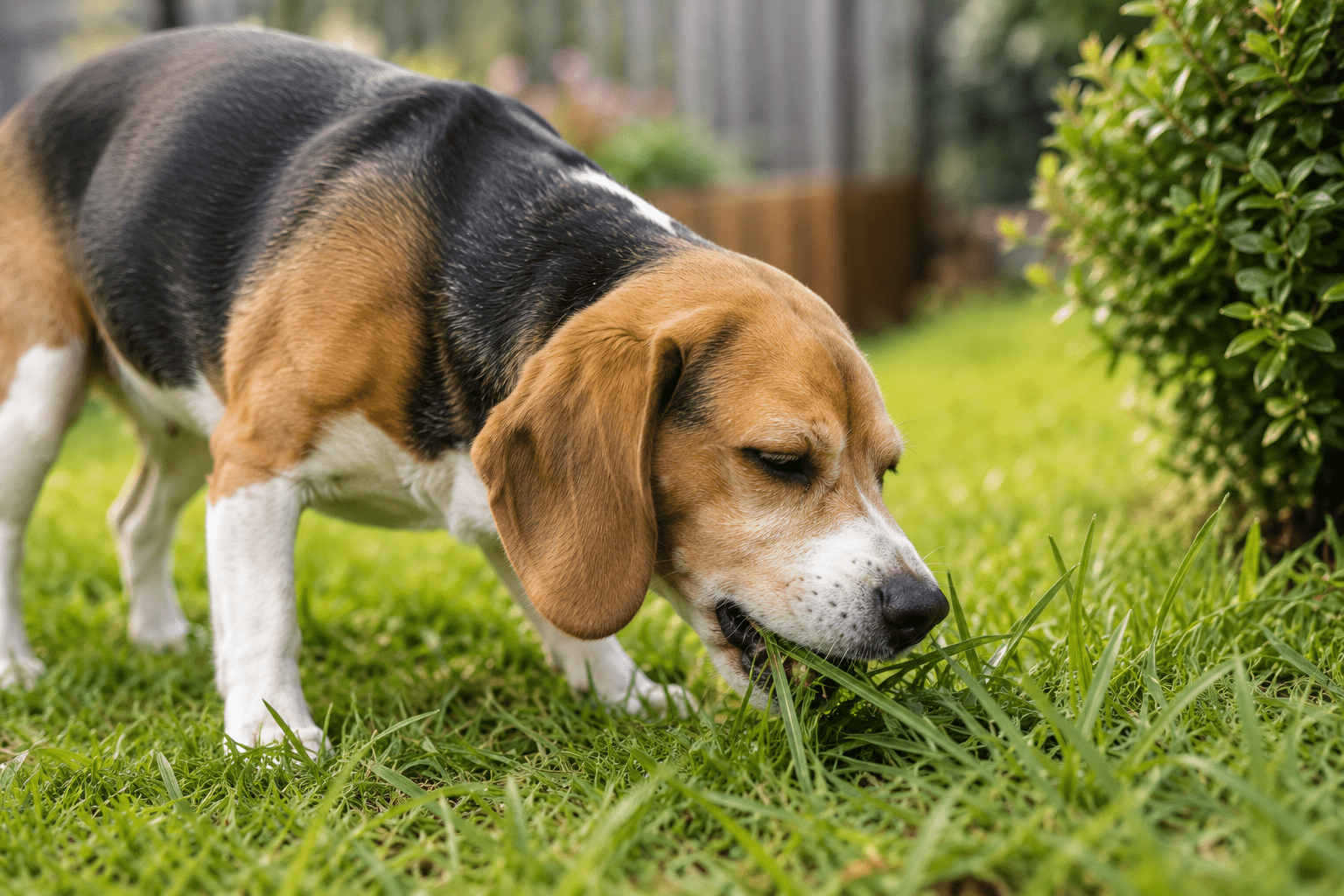
dog grass eating pica

What’s Actually Causing the Grass Eating

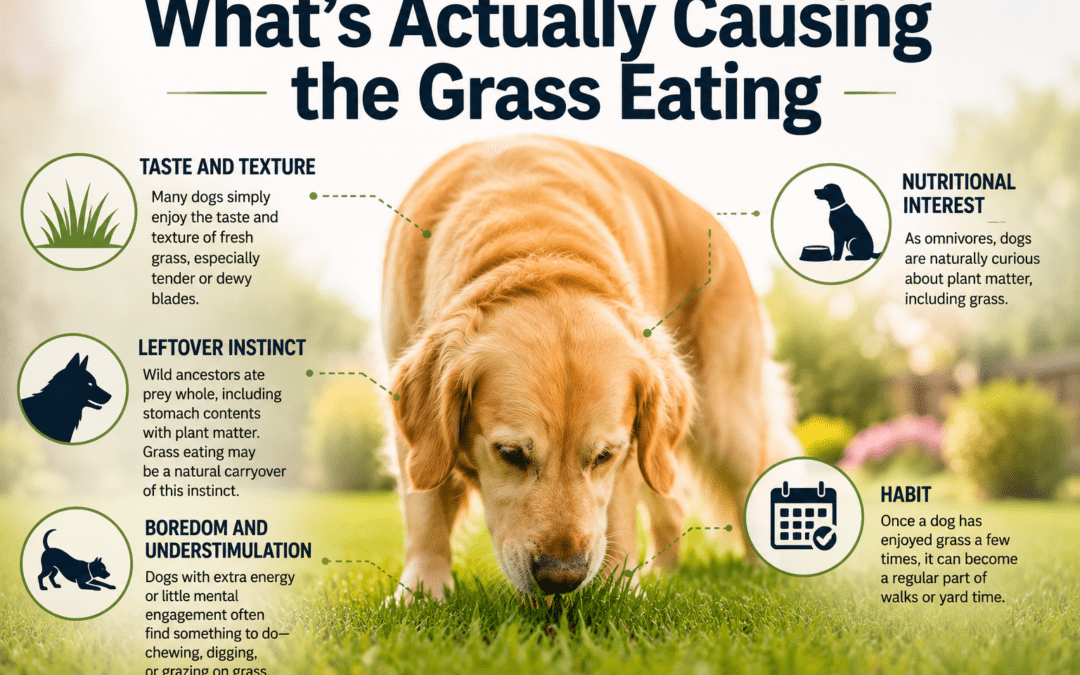
Taste and texture. For a lot of dogs, this is likely the simplest explanation — they seem to enjoy how grass tastes and feels, particularly fresh spring growth or grass with morning dew on it. Dogs are natural omnivores, not strict carnivores, so an interest in plant matter isn’t inherently unusual.

Leftover instinct. Wild canine ancestors ate prey whole, including the stomach contents of herbivorous animals — meaning partially digested plant matter was a routine part of their diet. Grass grazing in domestic dogs may simply be an echo of that inherited foraging behavior, rather than anything the dog is “deciding” to do for a specific purpose.

Boredom and understimulation. This shows up especially in puppies and younger dogs. A dog without enough physical activity or mental engagement will often find something to do with its mouth — chewing, digging, or grazing on grass are all common outlets for that extra energy.

Habit. Once a dog has grazed on grass a few times, it can simply become a routine part of walks or yard time, similar to any other repeated behavior that isn’t tied to a specific trigger anymore.

Why It Looks Like They’re Trying to Throw Up

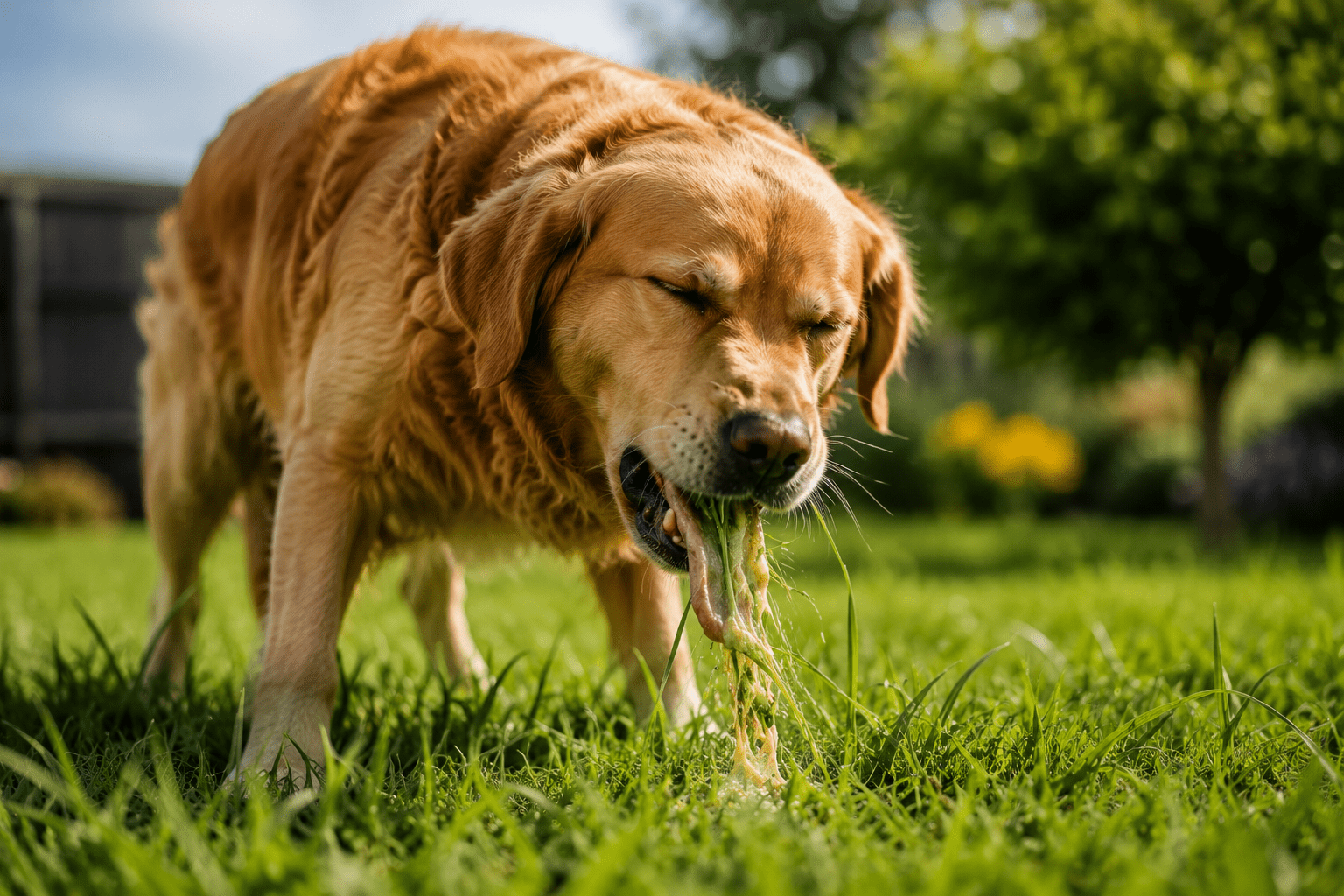
The sequence that convinces so many owners their dog is “self-medicating” is easy to misread: the dog eats grass, then vomits shortly after, and the timing looks purposeful. What’s more likely happening mechanically is that the grass blade itself — especially a long, coarse piece — physically irritates the back of the throat on the way down, triggering a gag reflex and vomiting as a direct physical response, not because the dog wanted to be sick.

This distinction matters because it explains why most dogs that graze on grass don’t vomit at all (no irritation occurs), while a smaller number do (irritation happens to trigger the reflex) — a pattern that fits incidental physical irritation far better than deliberate self-treatment.

Could It Be a Fiber or Nutritional Gap?

This is one of the more debated explanations, and the evidence is genuinely mixed rather than settled. Grass does contain fiber, and there are individual anecdotal cases — including reports of dogs stopping grass-eating entirely after being switched to a higher-fiber diet — that suggest a dietary link for at least some dogs. But broader research hasn’t established a strong, consistent connection between grass eating and diagnosable nutritional deficiencies, and dogs on complete, balanced commercial diets rarely have real fiber or nutrient gaps in the first place.

If your dog grazes frequently and you’re curious whether diet plays a role, this is worth raising with your vet rather than switching foods on your own — a diet change made to address a behavior that has nothing to do with diet won’t fix anything, and may not be necessary at all.

Is This Pica? How to Tell the Difference

Pica is a specific condition involving the compulsive eating of non-food items — items with no nutritional value at all, like rocks, fabric, or plastic — and it’s genuinely uncommon. Occasional grass grazing during a walk doesn’t meet that bar; grass is a plant, dogs are omnivores, and eating some of it periodically is well within normal behavior.

The distinction that actually matters is frequency and what else is being eaten. A dog that occasionally grazes on grass during walks is behaving normally. A dog that’s compulsively eating grass along with other clearly non-food items, or doing so to an extent that interferes with normal eating and behavior, is a different situation worth discussing with your vet.

Age and Pattern Differences

Grass eating tends to show up more in puppies and younger, higher-energy dogs, which lines up with boredom and instinct being bigger drivers at that life stage than any digestive explanation. It also tends to spike seasonally — spring grass, in particular, seems to draw more interest, possibly related to its taste, texture, or the dew that collects on it in the morning.

Neither pattern is a red flag on its own. A young dog grazing more than an older one, or grazing more in spring than winter, fits well within normal variation rather than signaling a problem.

Safety Risks Worth Knowing About

Grass itself is not toxic to dogs, but where it’s growing matters. Lawns and public grass areas treated with pesticides, herbicides, or chemical fertilizers can make grass eating genuinely risky, and soil can carry parasite eggs (such as roundworm or hookworm) that a grazing dog can pick up along with the grass.

Large quantities of grass eaten quickly can also pose a mechanical risk — undigested grass can occasionally contribute to an intestinal blockage in extreme cases, though this is uncommon with typical occasional grazing. It’s a bigger consideration for a dog that suddenly starts eating unusually large amounts.

What to Do Right After Your Dog Throws Up Grass

A single episode of grazing followed by vomiting, with your dog acting completely normal afterward — eating, drinking, playing — usually doesn’t need immediate action beyond keeping an eye on them for the rest of the day. Withhold food for a short period (an hour or so) to let the stomach settle, then offer a small amount of water and, if that stays down, a regular small meal.

Take note of what the vomit contains and how your dog behaves in the hours after — this is useful information if the same thing happens again or if you end up calling your vet. A single, isolated episode with a bright, normal, otherwise-healthy dog is very different from a repeated pattern or an episode paired with other symptoms.

dog eating grass and vomiting

Red Flags: When to See a Vet

Occasional grazing with occasional, mild vomiting in an otherwise healthy dog is common and not typically a concern on its own. Contact your vet if any of the following apply:

  • Grass eating and vomiting happen frequently, not just occasionally
  • Vomiting is paired with lethargy, diarrhea, reduced appetite, or your dog seeming genuinely unwell
  • Your dog eats an unusually large amount of grass in one sitting
  • The grass may have been treated with pesticides, herbicides, or other chemicals
  • The behavior appears suddenly after months or years of no interest in grass
  • You notice signs of pica — your dog eating other non-food items, not just grass

None of these individually confirms a serious problem, but any of them is a reasonable trigger to get a professional opinion rather than assuming it will resolve on its own.

How to Redirect the Behavior

If grazing seems tied to boredom, more consistent exercise and mental stimulation — longer walks, puzzle toys, more structured playtime — often reduces the behavior noticeably, since it removes the underlying reason the dog was looking for something to do.

Pet-safe grass planters (sometimes sold as “cat grass,” which dogs can eat too) offer a controlled, pesticide-free alternative if you’d rather your dog graze on something you know is clean than whatever’s growing in the yard or on a walking route. Keeping your own yard free of pesticides and herbicides, and steering walks away from areas that are obviously treated, addresses the safety side directly regardless of why the grazing is happening.

Common Mistakes Owners Make

Assuming every instance of grass eating means a dog is sick, and worrying unnecessarily about completely normal behavior.

Switching foods repeatedly trying to “fix” grazing, without evidence that diet is actually the driver for that particular dog.

Ignoring a genuine pattern change — a dog that suddenly starts grazing heavily after years of no interest deserves a look, even if a single episode wouldn’t.

Letting a dog graze on clearly treated lawns or roadside grass without checking whether pesticides or herbicides have been applied recently.

Not mentioning frequent grazing to the vet simply because it doesn’t feel like an emergency — it’s a reasonable thing to bring up at a routine visit even without urgency.

Frequently Asked Questions

Is it normal for dogs to eat grass? 

Yes — occasional grass eating is common and considered normal behavior in dogs, whether or not it’s followed by vomiting.

Should I stop my dog from eating grass? 

Not necessarily, as long as the grass is free of pesticides and herbicides and the behavior is occasional rather than constant. If you’re concerned about what’s in your local grass, redirecting to a pet-safe grass planter is a reasonable middle ground.

Does grass eating mean my dog has an upset stomach? 

Not usually — most dogs that graze on grass show no signs of being unwell beforehand. It’s possible for grazing to accompany nausea sometimes, but it isn’t the typical cause.

My dog never used to eat grass and now does it constantly — should I worry? 

A sudden, sustained change in behavior is worth mentioning to your vet, even without other symptoms, since it’s a pattern change rather than routine grazing.

Can grass eating hurt my dog? 

Occasional grazing on clean, untreated grass is generally safe. The real risks come from pesticide-treated grass, parasite-contaminated soil, or eating unusually large amounts, rather than grass itself.

Will a diet change stop my dog from eating grass? 

It might, for some dogs where a genuine fiber gap is playing a role, but there’s no strong evidence this works broadly. Talk to your vet before changing food specifically to address grazing.

Conclusion

Most grass eating isn’t a dog trying to make itself sick — it’s taste preference, instinct, boredom, or plain habit, and any vomiting that follows is usually incidental rather than the point. Occasional grazing in an otherwise healthy dog isn’t something to worry about; a sudden change in the pattern, frequent vomiting, other symptoms, or a large one-time intake are the things actually worth a vet visit.

best low protein dog food for kidney disease

best low protein dog food for kidney disease

Best Low Protein Dog Food for Kidney Disease

Quick answer: For dogs with kidney disease, a therapeutic low-protein, low-phosphorus diet prescribed or recommended by a vet is the standard approach – it reduces the workload on failing kidneys while still meeting the dog’s nutritional needs. Never restrict protein without veterinary guidance, since dogs still need adequate high-quality protein to avoid muscle loss.

Key Takeaways

  • Kidney-support diets aren’t just “low protein” – they’re specifically balanced for reduced phosphorus, controlled sodium, and added omega-3 fatty acids.
  • Protein quality matters as much as quantity; highly digestible protein sources reduce waste byproducts the kidneys have to filter.
  • Diet changes should be introduced gradually and ideally guided by bloodwork (BUN, creatinine, SDMA) tracked with your vet.
  • Prescription renal diets are formulated differently from over-the-counter “senior” or “sensitive” formulas, which are not a substitute.
  • Hydration support (wet food, water fountains) is just as important as protein levels for dogs with reduced kidney function.

Why Trust This Guide?

This guide is based on general veterinary nutrition principles for canine chronic kidney disease (CKD) management, intended as an educational starting point – any dietary change for a dog with diagnosed kidney disease should be made in partnership with your veterinarian.

Last reviewed: September 2026

This article is general information, not veterinary advice. Chronic kidney disease is staged and managed individually — always work with your vet before changing a diagnosed dog’s diet, especially before starting a prescription renal food.

“Low protein” is the phrase most people search for, but it’s not the full picture. Phosphorus restriction is one of the most important dietary considerations in managing kidney disease, but the goal is not to drive protein as low as possible. A properly formulated renal diet balances controlled phosphorus with adequate, high-quality protein, calories, and other nutrients according to the dog’s stage of chronic kidney disease (CKD) — not protein cut to the bare minimum. Getting this distinction right matters, because a diet that’s more restrictive than a dog’s actual stage calls for may leave it at greater risk of inadequate protein and calorie intake, and muscle loss, without a clear kidney-function benefit to match.

The Protein Myth: What Actually Matters

Protein itself isn’t the villain it’s sometimes made out to be. The idea that protein damages kidneys traces back to how vets have long managed dogs that already have kidney disease, not evidence that protein causes it in otherwise healthy dogs — research on aging dogs with normal kidney function hasn’t shown higher-protein diets accelerating decline.

At the same time, excessive protein restriction isn’t automatically the safer choice once a dog is diagnosed. Cutting protein far below what a dog needs can lead to muscle loss and poor body condition without a matching benefit to kidney function, especially in earlier disease stages.

Phosphorus restriction is where the research is clearer and more consistent: studies have found clinically meaningful benefits from phosphorus-restricted renal diets in dogs with kidney disease, including effects on disease progression and quality of life, and reducing phosphorus intake helps limit secondary complications — including disruption to parathyroid hormone regulation — that contribute to damage in progressive kidney disease.

Put together: protein isn’t inherently harmful, driving it as low as possible isn’t automatically beneficial, and phosphorus restriction is a major, well-supported part of renal diet management — with the right balance of all three depending on the dog’s specific CKD stage.

Kidney Disease Isn’t One Diet — It’s Staged

CKD staging is based on veterinary assessment — bloodwork (including markers like creatinine and SDMA), urine protein levels, blood pressure, and other clinical findings — most commonly organized using the IRIS (International Renal Interest Society) staging system that vets use to guide treatment and diet decisions. How aggressively a diet should restrict anything depends heavily on which stage a dog falls into, not on a single fixed rule.

In practice, that means a dog’s diet plan should account for: how early or advanced the disease is, current appetite and body weight, and muscle condition — all of which a vet evaluates together rather than reading off a single number. A dog in early-stage disease generally tolerates, and may not even need, the same level of dietary restriction as a dog with more advanced disease and elevated waste products in the blood.

This is exactly why a blanket “buy this low protein food” recommendation, without a vet’s input on staging, can do more harm than good. A dog started on a heavily restricted renal diet earlier than its stage calls for may be at greater risk of inadequate protein and calorie intake and muscle loss, while a dog with more advanced disease left on a regular maintenance diet may progress faster than it would have on a properly formulated renal food.

What a Well-Formulated Renal Diet Actually Looks Like

Protein: Renal diets generally provide controlled, moderate protein rather than extreme protein restriction, with emphasis on protein quality — highly digestible, a complete amino acid profile — and adequate calorie intake, so the dog isn’t relying on breaking down its own muscle for energy.

Phosphorus: Several veterinary nutrition sources point to phosphorus restriction as the most consistently supported dietary change for dogs with kidney disease, and it’s the piece most home cooks and casual product shoppers miss, since phosphorus content isn’t always obvious from a standard nutrition label.

Sodium: Sodium is generally controlled in renal diets, although its role is less strongly supported by direct evidence in dogs than phosphorus restriction — it’s treated as a reasonable precaution, and may be particularly relevant when blood pressure is a specific concern for a given dog.

Omega-3 fatty acids: Renal-support diets commonly include added EPA and DHA (fish-oil-derived fatty acids), which research links to reduced pressure within the kidney’s filtering structures and reduced protein loss in urine — one of the more clearly beneficial additions in a renal diet.

Moisture content: Wet renal food can help increase dietary moisture and may be useful for dogs that benefit from additional water intake. A dry renal diet can also be entirely appropriate if the dog eats it well and maintains adequate hydration on its own — moisture form is one factor to discuss with your vet, not a fixed rule.

Prescription vs. Over-the-Counter Options

Three widely used veterinary therapeutic renal diet ranges include Hill’s Prescription Diet k/d, Purina Pro Plan Veterinary Diets NF, and Royal Canin Veterinary Diet Renal Support. In the U.S., these diets are typically sold through veterinary-authorized channels and require veterinary authorization to purchase; exact requirements can vary by country. These are examples of established options, not a ranked “best,” since the right fit depends on your dog’s stage, bloodwork, and what the dog will actually eat.

Retail “low protein” or “senior kidney support” foods sold without veterinary authorization are a different category entirely. They aren’t necessarily formulated to the same phosphorus targets, and most haven’t gone through the same feeding trials as prescription renal diets. That doesn’t automatically make them unsuitable, but it does mean the label alone won’t tell you whether a given product actually matches what your dog’s specific stage of kidney disease calls for — this is a conversation for your vet, not a shelf comparison.

Comparing the Main Prescription Options

Diet

Formats available

Good to know

Hill’s Prescription Diet k/d

Wet and dry

Widely stocked through vet clinics and vet-authorized online pharmacies; multiple flavor options

Purina Pro Plan Veterinary Diets NF

Wet and dry

Available in multiple textures and formats, which can help when a dog is switched from one renal diet to another

Royal Canin Veterinary Diet Renal Support

Wet and dry, with sub-variants (Renal Support A, S, T)

Multiple formulations and textures exist specifically to work around palatability and flavor preference issues rather than a single fixed recipe

None of these is universally “the best” — vets often try a different one if a dog rejects the first, since acceptance matters as much as formulation when a dog won’t eat enough to maintain body weight. Exact nutrient targets vary by product and are adjusted periodically by the manufacturer, so treat any specific number you see elsewhere as a snapshot rather than fixed — the current guaranteed analysis on the product itself, discussed with your vet, is the reliable source.

Monitoring Progress After a Diet Change

Switching foods isn’t a one-time decision — it’s the start of an ongoing check-in process. Most vets recommend rechecking bloodwork (kidney values, phosphorus, and related markers) some weeks after a diet change to confirm the new food is having the intended effect, then periodically after that as the disease is monitored over time.

Body weight and muscle condition score are worth tracking between vet visits too — a dog steadily losing weight or visible muscle mass on a renal diet may be under-eating, over-restricted for its actual stage, or need the plan adjusted, and catching that early is easier than catching it months later at a routine appointment.

What actually matters in a kidney

Reading Labels: Why the Protein Percentage Isn’t Enough

Standard pet food labels list protein as a percentage on an “as fed” basis, which varies enormously between wet and dry food because of moisture content — comparing a canned food’s percentage directly to a kibble’s percentage without converting both to a dry matter basis will give you a misleading picture.

More importantly, phosphorus content — the factor with the strongest research backing for kidney disease — often isn’t printed on standard guaranteed analysis panels at all. Renal-specific diets typically disclose it because it’s central to the formulation; many regular adult or senior foods don’t list it clearly, which makes side-by-side comparison difficult without contacting the manufacturer or relying on a diet specifically designed and tested for renal support.

Protein percentage alone shouldn’t be used to select a renal diet — phosphorus content and overall formulation matter more than the number on the front of the bag.

Homemade Diets: What the Research Actually Found

Homemade renal diets are a common instinct for owners who want more control over ingredients, but the research on owner-created recipes is a serious caution flag. Published analyses of home-prepared, kidney-disease-specific dog recipes have found substantial nutritional deficiencies in many of them — commonly missing key nutrients or poorly balanced on phosphorus, calcium, or other minerals that matter specifically for kidney disease management.

If a homemade or fresh-cooked approach is something you want to pursue, the safer path is having a veterinary nutrition specialist (in the U.S., a board-certified veterinary nutritionist) formulate the recipe — some services offer this remotely — rather than adapting a general recipe found online. The margin for error with phosphorus and mineral balance is narrow enough that “close enough” isn’t reliably safe for a dog with reduced kidney function.

Helping a Picky or Nauseated Dog Eat the Right Food

Dogs with kidney disease sometimes feel nauseated as a symptom of the disease itself, which can make switching to any new food — even the right one — a real challenge, separate from simple pickiness.

Transition gradually over several weeks, adjusting the pace to the dog’s tolerance, gradually mixing the new food into the old rather than switching all at once. Approved low-phosphorus, low-sodium toppers (your vet can suggest safe options) can make a renal diet more appealing without undoing its formulation. For dogs whose disease itself is suppressing appetite, anti-nausea medication prescribed alongside the diet change is common and often makes a bigger difference than the food choice itself — this is worth raising with your vet rather than assuming the food is the problem.

Common Mistakes Owners Make

Buying a retail “low protein” food based on the percentage alone, without checking phosphorus content or getting a vet’s input on whether that level of restriction fits the dog’s actual disease stage.

Switching a newly diagnosed early-stage dog straight to a heavily restricted diet, causing unnecessary muscle loss when a more moderate approach may have been appropriate at that stage.

Assuming a homemade recipe found online is nutritionally complete simply because it avoids high-protein ingredients — phosphorus and mineral balance are the parts most home recipes get wrong.

Switching foods abruptly instead of transitioning gradually, which increases the odds of refusal or digestive upset on top of an already sensitive system.

Treating the diet change as a one-time decision rather than something to revisit with your vet as bloodwork and disease stage change over time.

When to Talk to Your Vet Right Away

Any diet change for a dog with diagnosed kidney disease should start with a conversation with your vet, not a product purchase — the right level of protein and phosphorus restriction depends on bloodwork your vet has that a food label can’t replace.

Contact your veterinarian promptly if your dog stops eating, repeatedly vomits, loses weight, becomes unusually lethargic, or develops a significant change in drinking or urination. Dogs with CKD can deteriorate when appetite, hydration, or body condition declines, so these changes shouldn’t be ignored or left to resolve on their own.

dog kidney disease diet

Frequently Asked Questions

Do I need a prescription for kidney-support dog food? 

Widely used veterinary therapeutic renal diets — Hill’s k/d, Purina NF, Royal Canin Renal Support among them — require veterinary authorization to purchase (in the U.S., this is a prescription; requirements can vary elsewhere). Some retail products are marketed for kidney support without that authorization, but they aren’t held to the same formulation and testing standard.

Is a small amount of protein restriction better than none? 

Not necessarily, and more isn’t automatically better either — the right level depends on your dog’s specific disease stage. This is a case where “more restriction is always safer” is a common but inaccurate assumption.

Can I just feed a senior dog food instead of a renal diet? 

Senior formulas aren’t formulated around phosphorus restriction the way renal diets are, so they’re not a reliable substitute once kidney disease is actually diagnosed, even if the protein percentage looks similar on the label.

Will changing my dog’s diet cure kidney disease? 

No — chronic kidney disease in dogs is a progressive condition, and diet is a management tool that can help slow progression and manage symptoms, not reverse existing kidney damage.

How do I get my dog to actually eat the new food? 

Transition gradually over several weeks at a pace the dog tolerates, ask your vet about approved toppers, and mention persistent refusal or nausea to your vet rather than assuming it’s simple pickiness — it may be a symptom worth treating directly. Maintaining adequate calorie intake matters too, so a renal diet the dog consistently refuses to eat may need to be reconsidered with your vet rather than pushed through.

Are grain-free or raw diets better for kidney disease? 

Neither grain-free status nor raw feeding addresses the phosphorus and protein-quality factors that actually matter for kidney disease management, and raw diets in particular carry additional food-safety risks that should be discussed with your veterinarian.

Conclusion

Getting a kidney-disease diet right comes down to three things, in order: first, the dog’s actual CKD stage, confirmed by your vet’s bloodwork; second, controlled phosphorus in a diet properly formulated for renal support; and third, adequate calories and high-quality protein that the dog will actually eat consistently, since a perfectly formulated diet a dog refuses doesn’t help it. Prescription renal diets from Hill’s, Purina, and Royal Canin are well-established examples that fit this approach — not a fixed ranking — and any diet change for a diagnosed dog should start with your vet rather than a product label comparison.

Weight management often goes hand in hand with kidney-friendly nutrition, since carrying extra weight puts additional strain on organs already working harder. Our guide to helping your dog lose weight safely covers how to set an appropriate calorie target alongside any prescription diet.

how to trim a cat’s nails without getting scratched

how to trim a cat’s nails without getting scratched

How to Trim a Cat’s Nails Without Getting Scratched

Quick answer: The key to trimming a cat’s nails without getting scratched is going slowly, restraining gently rather than forcibly, trimming only the sharp tip, and building up tolerance with short, positive sessions rather than trying to do all claws at once.

Key Takeaways

  • Trim only the translucent tip of the claw, well clear of the pink “quick,” which contains a blood vessel and nerve.
  • Wrapping your cat snugly in a towel (“purrito” method) can reduce struggling without needing to grip tightly.
  • Short sessions – even just one or two nails at a time – are far less stressful than trying to finish all claws in one sitting.
  • Treats and calm handling before, during, and after trimming help build positive associations over time.
  • If a cat is extremely resistant, a groomer or vet can trim nails safely, or show you hands-on technique.

Why Trust This Guide?

This guide follows widely recommended low-stress handling techniques used by veterinarians and professional groomers for feline nail care, prioritizing gradual desensitization over restraint-heavy methods.

Last reviewed: September 2026

Most scratches during a nail trim don’t happen because a cat is “mean” — they happen because the cat is scared, has been restrained too tightly, or has had one bad clipping experience that it now associates with the whole process. Fix the handling and the pacing, and the scratching problem usually fixes itself.

Short version: work in short, calm sessions of one or two nails at a time, support the cat’s body instead of pinning it down, watch for early stress signals before they escalate into a swat, and build up tolerance gradually rather than trying to finish all eighteen nails in one sitting.

Why Cats Scratch During Nail Trims

A scratch during a trim is almost always a fear response, not aggression. Cats associate having their paws held with vulnerability — paws are how they’d normally run from danger — so unfamiliar pressure on a paw can trigger a flight-or-fight reaction before the cat even registers what’s happening.

Past experience compounds this fast. A single trim that involved being pinned down, over-restrained, or accidentally nicked at the quick is often enough for a cat to remember “nail time” as something to escape from the next time clippers appear. That’s why the fix usually isn’t a better restraint trick — it’s changing what the cat expects to happen.

Recognizing this early matters more than any specific holding technique. A cat that’s already tense before you’ve touched a single paw needs a different approach than one that’s simply unfamiliar with the process.

What You’ll Need

Clipper type

Best for

Watch out for

Scissor-style

Most cats; precise, controlled cuts

Blades dull faster than guillotine style

Guillotine-style

Owners who want a clipper that stays sharp longer

Some cats dislike the sound of the blade sliding

Pliers-style

Thick or older cats’ nails

Bulkier to hold with one hand

Nail grinder

Gradual filing, smooth edges, no risk of a clean cut into the quick

The vibration and noise stress many cats more than clippers

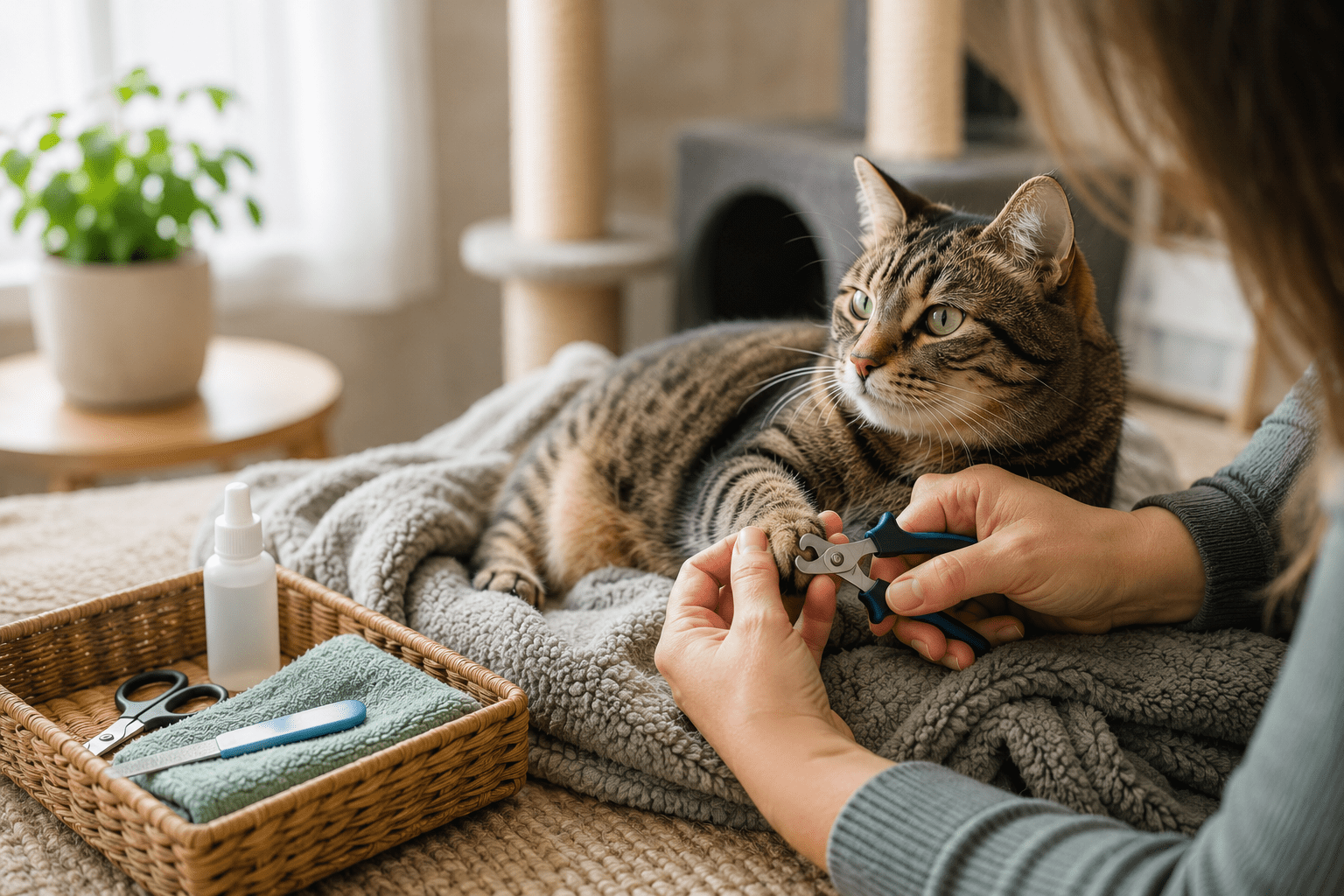
Beyond the clipper itself, keep styptic powder (or plain cornstarch or flour as a backup) within reach in case you nick the quick, a small non-slip towel for cats who feel safer wrapped, and a stash of high-value treats set aside specifically for nail sessions so they don’t lose their novelty.

how to calm a cat for nail trim

Understanding the Quick

The quick is the blood vessel and nerve bundle running through the center of each nail. Cutting into it hurts and bleeds — which is exactly why a cat that’s been nicked once becomes so much harder to trim afterward.

On light-colored nails, the quick is easy to spot as a pink or reddish core visible through the nail. On dark or black nails, it isn’t visible at all, which is the single biggest reason people either cut too conservatively (leaving nails too long) or too aggressively (hitting the quick by guessing). For nails you can’t see through, trim only the thin curved tip — the hook — and stop well before the nail changes from a flat cross-section to a rounder one, which is where the quick typically begins.

Step-by-Step: How to Trim Without Getting Scratched

  1. Pick a calm moment. Right after a meal or during a drowsy stretch works better than right after play, when the cat is still keyed up.
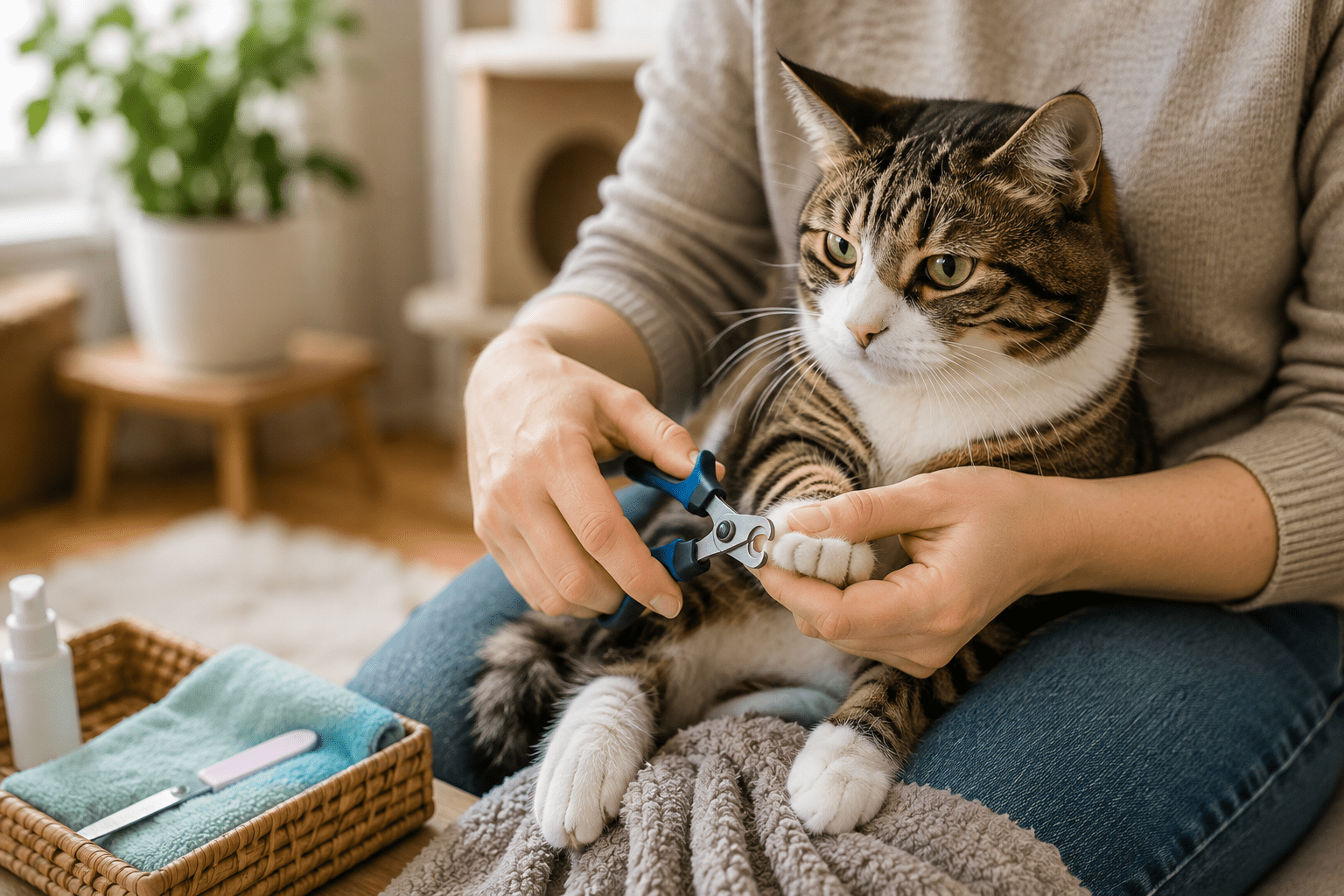
  2. Support, don’t pin. Hold your cat in your lap or the crook of your arm, facing the same direction as you, with your hand supporting rather than clamping the body.
  3. Extend one nail at a time. Press gently on the top of the paw and the pad underneath to expose the nail — this shouldn’t require any real force.
  4. Cut at a 45-degree angle. Trim only the sharp curved tip, well clear of the quick, in one clean motion rather than a slow squeeze.
  5. Release and reward immediately. A treat right after each nail (or even just an attempt) keeps the session building a positive association instead of just tolerating one.
  6. Watch for stress signals between nails. Tail flicking, ear flattening, low growling, or a stiffening body means it’s time to pause — not push through to “get it over with.”
  7. Stop before your cat wants to. Ending a session while your cat is still relatively calm, even after just two or three nails, teaches it that nail time ends on a good note rather than a struggle.

Doing all four paws in one sitting is a nice goal, not a requirement. Several short sessions across a day or two beats one long one that ends in a scratch.

Restraint Methods Compared

Cat temperament

Best restraint approach

Why it works

Relaxed, food-motivated

Lap hold with treats between nails

Minimal restraint keeps trust intact

Mildly anxious

Towel wrap (“purrito”) leaving one paw free at a time

Reduces the cat’s ability to bolt without full pinning

Very fearful or a first-timer

Trim only while genuinely drowsy or sleepy, one or two nails

Avoids triggering the fear response altogether

Strong or squirmy

Two-person approach, or a mesh grooming bag/hammock

Distributes handling so no single point of restraint has to be forceful

Senior cat

Extra-gentle joint support, shorter sessions

Older joints tire and ache faster, which reads as resistance

Matching the method to the cat, rather than defaulting to the same restraint every time, is usually what separates a scratch-free trim from a fight.

Building Tolerance Through Desensitization

For a cat that resists every attempt, the fastest long-term fix is training the cat to accept paw handling separately from actual trimming.

Start by simply touching and gently massaging one paw at a time during calm moments — not during a trim attempt — and reward with a treat the instant the cat allows it, even for a second or two. Repeat this daily until the paw touch itself stops triggering a reaction.

Once paw handling is tolerated, introduce the clippers without cutting anything: let the cat see and sniff them, click them near (not on) a paw so the sound becomes familiar, and reward again. Only after both steps are boring to the cat should you attempt an actual trim — starting with a single nail.

This process is faster in kittens, who haven’t yet built up a negative association, but it works at any age. It just takes longer with an adult cat that’s already had a bad experience or two.

The Two-Person Technique

For cats that won’t tolerate one person doing both the holding and the cutting, splitting the roles helps:

Person one holds and comforts the cat — talking softly, keeping the body supported, and gently extending one paw at a time without applying the clipper.

Person two handles only the clipper, moving quickly and decisively once a nail is extended rather than lining up the cut slowly, which tends to build anticipation and tension.

This works especially well for cats that associate one specific person with “bad things happening” — splitting the roles can reset that association over time.

Troubleshooting Common Scenarios

Nails are solid black and I can’t see the quick. Trim only the very tip — the thin hooked point — in small increments. Stop as soon as the cross-section of the cut nail changes from flat and chalky to slightly rounder or you see a faint dark dot in the center; that’s the quick approaching.

My cat won’t let me touch its paws at all, ever. Skip trimming entirely for now and start at the desensitization stage above — daily brief paw touches with no clipper involved, for as long as it takes.

My cat scratches every single time, no matter what I try. This usually means the fear response is happening before you’ve even started, often from a past bad experience. Try trimming only while the cat is genuinely asleep or extremely drowsy, one nail at most per attempt, or bring in a groomer or vet tech to reset the association with a calmer, more practiced handler.

I can only get one or two nails done before my cat is done. That’s a completely normal outcome, not a failure — finish the rest over the following days rather than forcing a full session.

Aftercare: Building a Better Next Time

What happens in the two minutes after a trim matters almost as much as the trim itself. End every session — successful or not — with a favorite treat, calm praise, and a bit of normal affection, so the overall memory of “nail time” skews positive even if a few nails didn’t get done.

Avoid immediately following a trim with anything else the cat dislikes (a bath, a vet carrier, medication) — stacking two stressful things back to back teaches the cat to dread the first one even more.

cat nail trimming tips

If You Get Scratched or Cut the Quick

If you nick the quick, stay calm — your cat will pick up on your reaction more than the injury itself. Apply gentle pressure with a clean cloth, then styptic powder, cornstarch, or plain flour to the tip to stop the bleeding, which usually takes under a minute. If bleeding continues past ten minutes, or the paw shows swelling or limping afterward, contact a veterinarian.

If you’re scratched, clean the area with soap and water. Cat scratches can occasionally cause infection (sometimes referred to as cat scratch disease), so watch for redness, swelling, or warmth around the scratch over the following days and see a doctor if any of those appear.

When to Stop and Call a Professional

Some cats are simply not safe to trim at home, and that’s not a training failure on your part. Consider a groomer or veterinary tech if your cat shows open-mouth breathing, prolonged yowling, or repeated attempts to bite rather than just swat, or if you’ve tried gradual desensitization for several weeks without any progress. A single professional session can also reset a bad association that’s hard to undo from the same person the cat already distrusts.

Common Mistakes to Avoid

Rushing to finish all four paws in one sitting instead of stopping while the cat is still calm.

Restraining too tightly out of fear of a scratch — tighter restraint almost always increases resistance rather than reducing it.

Trying to trim right after an exciting play session instead of during a naturally calm window.

Guessing at the quick on dark nails instead of trimming in small, conservative increments.

Skipping the reward step, which turns nail time into something purely tolerated rather than something the cat can build a neutral or positive association with.

Waiting until nails are visibly overgrown and curling before starting a trimming routine, which makes the first few sessions harder than they need to be.

Myths About Cat Nail Trimming

“Indoor cats don’t need their nails trimmed.” Indoor cats without much scratching-post wear often need trims more regularly than outdoor cats, since outdoor activity naturally files nails down.

“Declawing solves the scratching-during-trims problem.” Declawing is an amputation of part of the toe bone, not a nail-care technique, and doesn’t address the root cause of a cat’s fear response during handling.

“A struggling cat just needs to be held tighter.” Increased restraint typically raises stress and resistance rather than calming a cat down — loosening your hold and shortening the session usually works better than gripping harder.

“You have to finish all the nails in one sitting or start over.” There’s no reset button — partial sessions across several days accomplish the same thing without the stress of a marathon trim.

Frequently Asked Questions

How often should I trim my cat’s nails?

Most indoor cats need a trim every two to four weeks, kittens grow nails faster and may need weekly attention, and senior or less active cats sometimes need trims more often since they wear their nails down less through activity.

Are human nail clippers safe to use on cats?

Cat-specific clippers are strongly preferred — the curved blade design matches a cat’s nail shape and reduces the risk of splitting or crushing the nail, which is more likely with flat human clippers.

What if my cat only tolerates one paw before getting upset?

That’s fine — trim what you can, stop before the cat escalates, and finish the remaining paws over the next day or two.

Should I use a nail grinder instead of clippers?

Grinders remove the risk of a clean cut into the quick, but the vibration and noise are a dealbreaker for many cats. If your cat tolerates clippers better, there’s no need to switch.

Is it normal for my cat to bleed a little from a trim?

A small amount of bleeding from a nicked quick is common and usually stops within a minute with light pressure and styptic powder. Bleeding that continues past ten minutes, or a paw that seems painful afterward, is worth a call to your vet.

My cat used to tolerate trims and suddenly doesn’t anymore — why?

A recent bad experience (even something unrelated, like a vet visit around the same time) can reset a cat’s tolerance. Going back to short, reward-heavy desensitization sessions usually rebuilds it.

Finally

Most cats aren’t scratching out of aggression during a nail trim — they’re reacting to fear, restraint, or a bad past experience. Shorter sessions, gentler support instead of pinning, matching your restraint method to your cat’s temperament, and rewarding every attempt (successful or not) will get you further than any single clipper or hold technique. If a cat genuinely can’t be trimmed safely at home even with patience, a groomer or vet tech is a completely reasonable option, not a last resort.