Lykoi Cat (Wolf Cat): Breed Facts, Temperament, Cost & Care

Lykoi Cat (Wolf Cat): Breed Facts, Temperament, Cost & Care

Lykoi Cat (Wolf Cat): Breed Facts, Temperament, Cost & Care

The Lykoi cat, often called the wolf cat or werewolf cat, is a rare American breed with a sparse, salt-and-pepper coat that gives it a scruffy, wild look. That coat comes from a natural, recessive gene mutation found in domestic shorthair cats, not from any wolf ancestry. Underneath the spooky style is a curious, playful and people-focused companion.

Lykois usually weigh about 6 to 13 pounds and live around 12 to 15 years. Kittens from established breeders typically cost about $1,500 to $3,000. They need more skin care than most cats, including regular baths, ear cleaning and protection from sun and cold, and they are not hypoallergenic.

Before you buy: Lykois are rare, so scams are common. Meet the breeder (in person or by live video), see the kitten with its mother, and ask for registration papers and health records. Never send a deposit to a seller you can’t verify.

Key takeaways

  • The Lykoi is a domestic cat with a natural hair mutation; it has no wolf DNA.
  • Its patchy “roan” coat lacks an undercoat and goes through molting cycles.
  • Lykois are active, smart and loyal, often described as dog-like.
  • Expect monthly baths, weekly ear cleaning, and protection from sunburn and chills.
  • They are not hypoallergenic, despite their thin coat.

Lykoi Cat at a Glance

Trait Details
Other names Wolf cat, werewolf cat
Origin Virginia and Tennessee, 2010 to 2011
Recognition TICA championship breed (2017); CFA championship breed (2023)
Weight About 6 to 13 pounds; males are often larger
Lifespan About 12 to 15 years
Coat Sparse, roan (mixed white and colored hairs), no undercoat
Temperament Curious, active, loyal, playful, a bit shy with strangers
Kitten price About $1,500 to $3,000 from a breeder
Hypoallergenic? No

Lykoi Cat Origin: Where the Wolf Cat Came From

The breed began with a surprise. According to the Cat Fanciers’ Association, the first cats with this unusual coat turned up in Virginia in 2010, and a second, unrelated pair was found in Tennessee the following year. Breeders Johnny and Brittney Gobble and Patti Thomas worked with the cats, and the first intentionally bred Lykoi kitten was born in September 2011.

Before going further, the founders had the cats checked by veterinarians and geneticists to rule out disease as the cause of the patchy coat. Breeders then outcrossed to domestic shorthairs to widen the gene pool. The name “Lykoi” comes from the Greek word for wolves, a nod to the cat’s wolfish face and grizzled fur.

Is the Lykoi a recognized breed?

Yes. Breed histories report that The International Cat Association (TICA) accepted the Lykoi for registration in 2012 and granted it full championship status in 2017. CFA accepted the breed for registration in 2018 and advanced it to championship status in 2023, which means Lykois can now compete at shows run by both groups. Recognition also means breeders follow a written breed standard and keep registered pedigrees, which helps buyers check a kitten’s background.

Lykoi cat: 8-month-old male wolf cat with a black roan coat resting on a wicker chair
An 8-month-old male Lykoi showing the breed’s sparse, roan coat. Photo: steptacular / Wikimedia Commons, CC BY-SA 4.0.

Lykoi Cat Genetics: Why the Coat Looks Like a Werewolf

The Lykoi cat’s look comes from a form of hypotrichosis, meaning reduced hair growth. A 2020 study in the journal Genes, which drew on the 99 Lives cat genome project, traced the coat to loss-of-function variants in a gene called HR (hairless).

The team found six likely variants across 16 founder lines from the US, Canada and France. All act recessively: a kitten shows the Lykoi coat only when it inherits two faulty copies of the gene, either the same variant twice or two different ones.

That makes the Lykoi genetically different from other “bare” breeds. CFA notes that the gene is not related to any other known coat mutation, so a Lykoi isn’t a partly hairless Sphynx or a type of Rex. In the same study, skin samples showed fewer, smaller hair follicles than in regular shorthairs, and about 77% of follicle groups showed some degree of inflammation.

The roan coat and “wolfing out”

CFA describes the coat as guard hairs only, with no soft undercoat. Roaning, a mix of white and colored hairs, gives the salt-and-pepper look, and about half-and-half is considered ideal for showing. Kittens are born with normal-looking fur, and the roan pattern appears within a week or two.

Most Lykois molt heavily at least once, sometimes losing much of their coat before it grows back. Owners call this “wolfing out.” WebMD reports that molting can happen two to three times a year. The face, ears, legs and feet tend to stay sparsely haired, which creates the classic wolf mask.

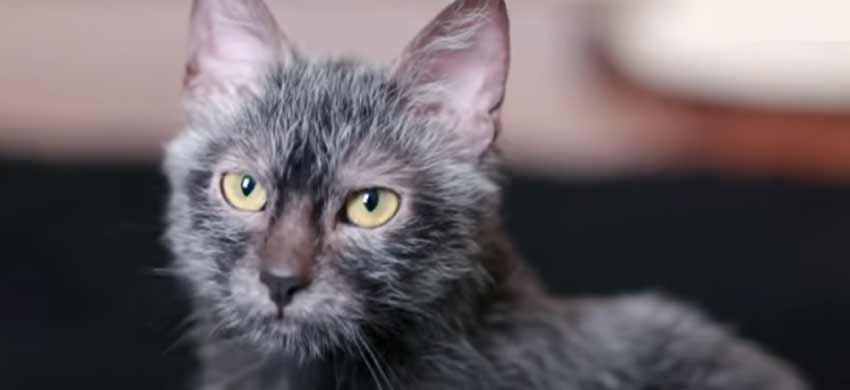
Lykoi cat face close-up showing the black roan wolf mask and gold eyes
Sparse hair around the eyes and muzzle creates the Lykoi’s “wolf mask.” Photo: Christine Auverdin Boulanger / Wikimedia Commons, CC BY-SA 4.0.

Lykoi Cat Temperament and Personality

Don’t let the werewolf face fool you. CFA describes the Lykoi as active, curious and intelligent, with a strong love of hunting games and a habit of seeking out their people. They can be cautious with new people or places at first, but once settled, they tend to bond closely with their family.

Many owners call the Lykoi cat dog-like. WebMD notes that some learn tricks or play fetch, and that they usually prefer play and exploring to long cuddle sessions on a lap. They are vocal enough to tell you what they want, especially if they feel ignored.

Who a Lykoi suits best

  • Great for: active homes, people who work from home, families with older kids who play gently, and owners who enjoy interactive toys.
  • Less ideal for: people who want a quiet lap cat, homes where the cat is alone all day, or anyone with cat allergies.
  • Other pets: a well-socialized Lykoi can live happily with cat-friendly dogs and other cats when introductions are slow and supervised.

Lykoi Cat Care and Grooming

A thin coat might sound low-maintenance, but Lykoi cat care is a bit more hands-on than for most breeds. Without a full coat to soak up skin oils, the skin, ears and nail beds can get greasy.

Skin and bathing

WebMD suggests bathing a Lykoi about once a month to remove oil and prevent blackheads. Use a gentle, cat-safe shampoo your breeder or vet recommends, since CFA advises against human shampoos. Start baths young so your kitten gets used to them, and dry your cat well afterward so it doesn’t get chilled.

Ears, nails, eyes and teeth

WebMD’s care routine for the breed covers these basics:

  • Ears: check and gently clean weekly, since oily wax builds up quickly.
  • Nails: trim about once a week, and wipe oily buildup from the nail beds.
  • Eyes: wipe away discharge daily with a soft, damp cloth.
  • Teeth: daily brushing with a cat toothpaste is ideal for preventing dental disease.
  • Brushing: Chewy’s vet-reviewed profile says a soft brush helps collect loose hair during molts.

Sun and cold protection

With so much exposed skin, a Lykoi can sunburn. CFA notes that sun exposure can damage the skin and speed up molting, so limit long naps in direct sunlight and ask your vet about a pet-safe sunscreen if your cat goes outside. Because there’s no undercoat, these cats also chill easily. Keep your Lykoi cat indoors, offer warm beds, and consider a cat sweater in a cold house.

Diet and exercise

Feed a complete and balanced cat food suited to your cat’s age, and measure portions to prevent weight gain. Lykois are energetic, so plan daily play with wand toys, puzzle feeders and climbing spaces. If you’re bringing home a kitten, our guide on how to litter train a kitten covers the first weeks.
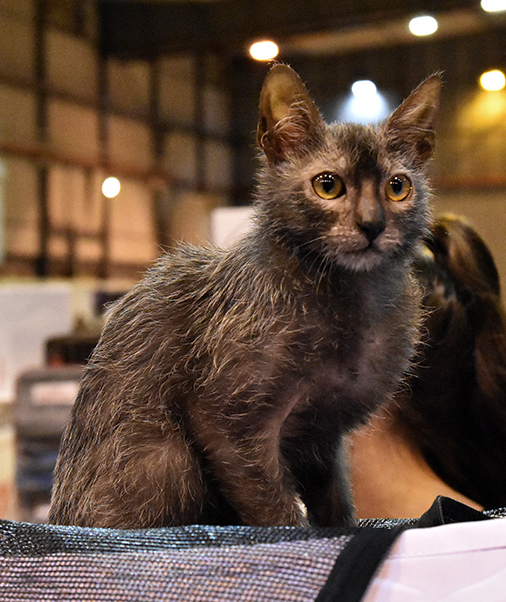
Lykoi cat care: black roan wolf cat sitting indoors on a chair
With no undercoat, Lykois do best indoors where it’s warm and out of strong sun. Photo: Christine Auverdin Boulanger / Wikimedia Commons, CC BY-SA 4.0.

Lykoi Cat Health and Lifespan

The Lykoi is a young breed, so long-term health data is limited. So far, CFA reports no breed-specific health problems. The 2020 genetics study also found no other health concerns beyond the sparse coat and the follicle inflammation linked to it. The authors did mention reports that some cats lose hair in cycles, possibly linked to hormones, which fits the molting owners see.

Chewy’s vet-reviewed breed profile lists a few skin-related concerns to watch for:

  • Ingrown hairs and cysts, especially during molting
  • Oily skin and blackheads if bathing is skipped
  • Sunburn and skin irritation from strong sun
  • Lymphocytic mural folliculitis, the immune-related follicle inflammation seen in the breed

WebMD estimates a lifespan of 10 to 15 years and Chewy 12 to 15, and Chewy notes some Lykois live into their late teens. Routine care still matters: yearly checkups, vaccines, parasite prevention, dental care and spaying or neutering. Book a vet visit if you notice red, crusty or swollen skin, a sudden change in behavior, or hair loss that doesn’t follow the usual molting pattern.

Lykoi Cat Cost: Price and Ongoing Expenses

Because the breed is so rare, a Lykoi cat is a big purchase. WebMD puts kittens from reputable breeders at about $1,500 to $2,500, while Chewy’s profile gives a range of $1,500 to $3,000. Show-quality kittens and those from sought-after lines may cost more, and retired breeding adults are sometimes cheaper.

Cost item What to expect
Kitten from a breeder About $1,500 to $3,000
Retired adult Often less; ask breeders
Transport or travel Varies; few breeders means you may need to travel
Starter supplies Litter box, carrier, warm beds, toys, cat-safe shampoo
Ongoing care Food, litter, vet visits, grooming products, pet insurance

How to find a reputable breeder

WebMD warns that the breed’s rarity attracts scammers, so check every seller carefully:

  • Look for breeders registered with TICA or CFA.
  • Visit, or at least do a live video call, and see the kitten with its mother.
  • Ask for health records, vaccination history and a written contract.
  • Expect questions about your home; good breeders screen buyers.
  • Walk away from sellers who only want wire transfers or gift cards.

Remember that the purchase price is only the start. A Lykoi’s skin needs mean you’ll buy cat-safe shampoo, ear cleaner and warm bedding on an ongoing basis, and a sweater may help in colder homes. Pet insurance is worth pricing early, since policies usually exclude problems that show up before coverage starts. Compare costs with other rare breeds in our guide to how much Bengal kittens cost.

Is a Lykoi Right for You?

Pros Cons
Unique, eye-catching look Expensive and hard to find
Playful, smart and trainable Needs regular baths and ear care
Loyal and people-focused Sensitive to sun and cold
Little shedding outside molts Not hypoallergenic; heavy molts can look alarming

If allergies are your main concern, a Lykoi isn’t the answer. WebMD notes the breed isn’t hypoallergenic because Lykois still have a coat and shed. Our guide to the Siberian cat for allergy sufferers explains what to know before choosing any breed.

Example scenario (illustrative)

Rachel in Portland, Oregon, fell for the breed after seeing a Lykoi at a TICA cat show. Before buying, she visited two registered breeders, met the parent cats and asked about molting. Her kitten, Wolfie, lost most of his coat at about a year old, but Rachel knew to expect it. She kept him indoors, bathed him monthly and cleaned his ears every week. His roan coat grew back within a few months.

Lykoi Cat FAQs

Is a Lykoi cat part wolf?

No. A Lykoi is a domestic cat. Its wolf-like look comes from a natural, recessive hair mutation, not from any wild ancestry.

How much does a Lykoi cost?

Kittens from reputable breeders usually cost about $1,500 to $3,000. Retired adults may cost less.

Are Lykois hypoallergenic?

No. They still have some coat, shed and produce allergens, so they aren’t a good choice for people with cat allergies.

Why is my Lykoi losing its hair?

Molting is normal for the breed, and many Lykois lose much of their coat at times before it regrows. See your vet if the skin looks red, crusty or sore.

How big does a Lykoi get?

Most weigh about 6 to 13 pounds, with males often larger than females.

Are Lykois good with kids and other pets?

Many can do well with respectful children and cat-friendly pets, especially when introduced slowly. They can be shy with strangers at first.

Final Verdict: Should You Get a Lykoi Cat?

A Lykoi cat is a fun, loyal and clever companion wrapped in a one-of-a-kind werewolf coat. It suits active, indoor homes that don’t mind monthly baths, weekly ear cleaning and protecting a cat from sun and cold. It isn’t hypoallergenic, and its rarity means a high price and a real risk of scams, so buy only from a verified, registered breeder.

Your next steps

  1. Check TICA or CFA breeder listings and plan to meet the kitten.
  2. Budget for the kitten, travel, warm bedding and skin-care supplies.
  3. Book a vet visit within the first week after bringing your Lykoi home.
  4. Explore more breed guides in our cat section.

Own a Lykoi? Share your wolf cat with other cat lovers in our Facebook community.

About the author — Written and reviewed by the Pets Store Home Editorial Team: pet owners and animal lovers who check every guide against trusted US veterinary, breed-registry and scientific sources. This article is general information, not a substitute for professional veterinary advice. Always talk to your veterinarian about your own cat’s health.

How we checked this guide: Breed history, coat and care details come from the Cat Fanciers’ Association; genetics from Buckley et al., Genes (2020); and size, lifespan, care and cost details from WebMD and Chewy’s breed profile reviewed by Jennifer Coates, DVM. We review it every 12 months.

Last reviewed: October 2026.

Sources

How much is a Persian cat?

How much is a Persian cat?

How much is a Persian cat? In the US, a pet-quality Persian kitten from a reputable breeder typically costs about $1,000 to $3,000, while show-quality kittens from proven lines often start around $3,500 and can pass $5,000. Adopting a Persian from a rescue usually costs about $75 to $600. Color, face type, pedigree and health testing all move the price.

Those are wide ranges, and the right number for you depends on where you buy, what you are buying and what comes with the kitten. This guide breaks the purchase price down by source, quality, color and face type, explains which extras are worth paying for, and shows how to spot a “bargain” that will cost you more later.

Before you pay a deposit: Prices vary by region and breeder, and the figures here are ranges from recent US price guides, not quotes. Always meet the kitten (in person or on a live video call), ask for health-testing paperwork, and never pay by gift card, wire transfer or crypto.

Key takeaways

  • Pet-quality Persian kittens from reputable US breeders usually run about $1,000 to $3,000.
  • Show and breeding-quality kittens often cost $3,500 to $5,000 or more.
  • Rescues and shelters typically charge about $75 to $600, often including vaccines and spay or neuter.
  • Rare colors and very flat faces tend to cost more; listings far below the norm are a red flag.
  • Grooming and health care mean the purchase price is only the start.

How Much Is a Persian Cat? The Short Answer

The honest answer to “how much is a Persian cat?” is: it depends on who is selling and what you are buying. A 2026 US price guide from Petful reports that most buyers pay between $1,200 and $3,000 for a pet-quality Persian kitten, and a January 2026 guide from Hepper gives a broader $1,000 to $5,000 for reputable breeders. Both put rescue adoption well under $1,000.

Persians are one of the most established pedigree breeds in the country. The Cat Fanciers’ Association (CFA) notes that they have been among its top ten breeds by registration, which means plenty of breeders, plenty of choice and a big spread in prices.

Pet Quality vs Show Quality

Breeders grade kittens by how closely they match the breed standard. A pet-quality kitten might have a slightly longer nose, a less ideal coat pattern or eye color, or a small cosmetic quirk. It can be just as healthy and loving, but it is usually sold on a spay or neuter contract. Show and breeding-quality kittens match the standard closely and may come with breeding rights, which is why they cost far more.

If you simply want a calm, affectionate companion, pet quality is the sensible choice.

How much is a Persian cat: a gray flat-faced Persian with copper eyes lying on a cushion against a black background
How much is a Persian cat like this flat-faced gray? Face type, color and pedigree all affect the price. Photo: Jeffry Surianto / Pexels.

Persian Cat Price by Source and Quality

Where you buy matters as much as what you buy. The table below combines ranges from the 2026 Petful and Hepper price guides. Treat them as a starting point; local prices can be higher or lower.

Source Typical US price What it usually includes
Rescue or shelter About $75 to $600 Often spay/neuter, vaccines, microchip; usually adult cats
Reputable breeder, pet quality About $1,000 to $3,000 Health-tested parents, vet check, spay/neuter contract
Reputable breeder, show or breeding quality About $3,500 to $5,000+ Proven lines, may include breeding rights
Backyard breeder or kitten mill Often advertised around $400 to $800 Little or no health testing; higher risk

How Much Is a Persian Cat to Adopt?

Adoption is the most affordable route and a kind one. Petful puts rescue fees at roughly $100 to $600, typically covering spay or neuter, vaccines and a microchip, and sometimes dental work and initial bloodwork. Hepper gives $75 to $500. Breed-specific Persian rescues and general shelters both list Persians, though you are more likely to find adults than kittens. With an adult, the coat, face and temperament are already known, which suits many households.

How Much Is a Persian Cat From a Breeder?

If you want a companion rather than a show cat, the pet-quality tier is where you will likely shop. Petful reports that kittens from proven show lines start around $3,500 and that top bloodlines or rare colors can reach $6,000 or more. The higher price reflects years of selective breeding, health screening of the parents and the time a good breeder spends socializing kittens before they leave home.

Pet Care Tip: Ask what the kitten price includes. A $2,200 kitten with a vet exam, first vaccines, deworming, a health guarantee and PKD-negative parents can be better value than a $1,200 kitten with none of those.

What Changes How Much a Persian Cat Costs?

Once you know roughly how much is a Persian cat in general, a handful of factors explain why two kittens in the same city can differ by thousands of dollars.

Color and Pattern

The CFA divides Persians into seven color divisions: solids, tabbies, silver and goldens, shaded and smokes, parti-colors, calicos and bi-colors, and Himalayans. Some colors command more than others. Petful’s 2026 guide gives these rough pet-tier figures:

Color group Typical pet-quality price
Standard colors (blue, black, red, classic tabby) About $1,200 to $1,800
Bicolor and particolor About $1,500 to $2,500
Chocolate or lilac About $2,500 to $4,500
White with odd eyes, chinchilla silver Often $500 to $1,500 above a standard color

These figures come from a single price guide, so use them to compare breeders rather than as fixed prices.

Face Type: Doll Face vs Flat Face

Persians range from the more traditional “doll face,” with a slightly longer nose, to the very flat “peke face” seen in show rings. Petful reports that flat-face kittens from top breeders often cost $500 to $1,500 more than doll-face littermates. Price isn’t the only consideration: the CFA itself acknowledges that past emphasis on refined features led to cats with smaller-than-average nostrils and breathing problems.

Pedigree, Health Testing and Location

Registered pedigrees, champion parents and documented health screening all raise the price; the health screening in particular is worth paying for. Region matters too: kittens near big cities or from in-demand catteries can cost more, and shipping or traveling to collect a kitten adds to the total.

Kitten or Adult: How Much Is a Persian Cat Once Grown?

Kittens carry the highest price tag. Adult Persians, whether from a rescue or a breeder rehoming a retired cat, are often cheaper, and some breeders may place retired adults for a modest fee. An adult also lets you see the finished coat, face and personality before you commit. Ask breeders whether they ever have adults available.

How much is a Persian cat to care for: a fluffy gray Persian with a flat face resting its paw on a concrete ledge
How much is a Persian cat to care for? Long coats and flat faces mean ongoing grooming and health costs, so budget beyond the kitten price. Photo: Ardalan Hamedani / Pexels.

How Much Is a Persian Cat to Keep? Health and Grooming Costs

The purchase price is a one-time cost; the coat and face are lifelong commitments. The CFA says owning a Persian calls for a serious commitment to regular grooming, with a steel comb essential to keep the coat free of mats. Many owners also pay for professional grooming. Hepper estimates monthly costs of roughly $315 to $430 once grooming, food, litter, insurance and routine care are included, though your own costs may be lower.

For a full line-by-line breakdown of food, litter, grooming and vet bills, see our companion guide to the total cost of owning a Persian cat.

Health Issues That Affect Long-Term Cost

  • Polycystic kidney disease (PKD): the Cornell Feline Health Center describes PKD as an inherited disorder occurring most frequently in Persian cats. Ask for proof that both parents tested negative.
  • Breathing and eye issues: very flat faces and narrow nostrils can lead to breathing trouble and, in some cats, tear staining. A vet visit before you buy, or soon after, is money well spent.
  • Grooming-related problems: mats can pull on the skin and hide irritation if the coat is not combed regularly.

How to Buy a Persian Kitten Safely

  1. Find breeders through registries. Start with CFA or TICA breeder listings rather than random classified ads.
  2. Ask for health records. Request PKD results for the parents, the kitten’s vet exam and vaccine record, and a written health guarantee.
  3. Meet the kitten. Visit in person or do a live video call. The Federal Trade Commission advises that if a seller won’t allow a visit or call, you should move on to someone else.
  4. Pay safely. The FTC warns that no legitimate seller will require gift cards, wire transfers or cryptocurrency.
  5. Get it in writing. A clear contract should cover price, health guarantee, spay or neuter terms and what happens if things don’t work out.

Common Mistakes Buyers Make

  • Chasing the cheapest listing: a $500 “Persian” with no papers or health testing can cost thousands in vet bills.
  • Paying a deposit to an unseen seller: a classic pet scam.
  • Choosing the flattest face for looks alone: consider breathing comfort first.
  • Forgetting the grooming budget: mats can become painful if the coat is neglected.

Example Scenario (illustrative): Jordan in Denver, Colorado, kept asking, “How much is a Persian cat, really?” One online ad offered a cream kitten for $650 with “papers to follow” and asked for a Zelle deposit. Jordan walked away and found a CFA-registered breeder charging $2,100 for a doll-face blue kitten with PKD-negative parents, first vaccines and a one-year health guarantee. Jordan also budgeted for a professional groom every couple of months.

How Much Is a Persian Cat? FAQs

Why are Persian cats so expensive?

Good breeders pay for health testing, registered breeding cats, vet care and socialization before kittens go home. Rare colors and show-quality features add more.

How much is a white Persian cat?

White Persians, especially those with odd-colored eyes, often cost more than standard colors. One 2026 guide puts the premium at about $500 to $1,500 above a standard-color kitten.

Is a doll-face Persian cheaper than a flat-face Persian?

Often, yes. Flat-face kittens from top breeders can cost $500 to $1,500 more than doll-face littermates, according to one 2026 price guide.

Can I find a Persian cat for free?

Occasionally through a rehoming, but rescues usually charge an adoption fee that covers vet care. Be cautious of “free” kittens that come with shipping or deposit demands.

Is a $500 Persian kitten a scam?

Not always, but prices far below the usual range often mean no health testing or a scam. Meet the kitten, check papers and never pay by gift card or wire.

Do Persian cats need professional grooming?

Not always, but the CFA says Persians need a serious commitment to regular grooming with a sturdy comb. Many owners combine home combing with occasional professional grooms to prevent mats.

Final Verdict: How Much Is a Persian Cat?

How much is a Persian cat? Expect about $1,000 to $3,000 for a healthy pet-quality kitten from a reputable US breeder, $3,500 or more for show quality, and roughly $75 to $600 to adopt. Pay for health testing and a guarantee rather than the flattest face or rarest color, and budget for lifelong grooming.

Your next steps

  1. Check your local shelters and Persian rescues before contacting breeders.
  2. Read our full Persian cost-of-ownership guide to plan your monthly budget.
  3. Compare another popular breed with our guide to Bengal kitten prices.

Bringing home a Persian? Share your fluffy newcomer with other pet parents on our Facebook community.

About the author — Written and reviewed by the Pets Store Home Editorial Team: pet owners and animal lovers who check every guide against trusted US veterinary and animal-welfare sources. This article is general information, not a substitute for professional veterinary advice. Prices vary; always confirm with the breeder or rescue.

How we checked this guide: We used the Cat Fanciers’ Association breed profile, the Cornell Feline Health Center, the Federal Trade Commission and 2026 US price guides from Petful and Hepper. Price ranges are approximate and drawn from those guides. We review this article every 12 months, or sooner if prices or guidance change.

Last reviewed: October 2026.

Sources

Persian cat cost

Persian cat cost

Persian Cat Cost in 2026: Kitten Price, First-Year Budget and Lifetime Costs

How much does a Persian cat cost? A pet-quality Persian kitten from a health-testing breeder usually costs about $1,500 to $3,500 in the US, while Persian rescues charge roughly $150 to $450. After that, Rover estimates about $850 to $4,400 a year for a typical adult cat, plus extra for the breed’s daily grooming and professional grooms.

The full Persian cat cost goes well beyond the purchase price. This guide breaks down kitten prices, what drives them, first-year setup, yearly running costs, Persian-specific expenses like grooming and kidney screening, and how to avoid paying for a scam.

Key takeaways

  • Persian cat cost from a health-testing breeder: about $1,500 to $3,500 for a pet kitten.
  • Show or breeding prospects usually cost more than pet kittens.
  • Persian-focused rescues typically charge about $150 to $450.
  • Rover estimates first-year costs for a cat at $705 to $2,960, not counting a breeder kitten.
  • Professional grooming can add about $390 to $1,300 a year for a Persian.
  • UC Davis offers a $47 DNA test for polycystic kidney disease (PKD1), and estimates over 37% of Persians have it.

Persian Cat Cost: The Short Answer

The ThePricer Persian cost guide, updated September 2026, puts a practical budget for a pet Persian from a health-testing breeder at $1,500 to $3,500, with current companion listings around $1,700 to $3,000. For ongoing care, Rover’s 2026 Cost of Cat Parenthood report estimates $70 to $305 a month for a typical cat.

Cost item Typical US range Source
Pet-quality kitten (breeder) $1,500–$3,500 ThePricer
Persian rescue adoption $150–$450 ThePricer
First-year cat costs (excluding purchase) $705–$2,960 Rover
Yearly adult cat costs $850–$4,400 Rover
Professional grooming per year $390–$1,300 ThePricer
Lifetime cat costs $10,785–$54,270 Rover

Rover’s figures are for cats in general, not Persians specifically. Prices vary by breeder, region and the cat’s health. Figures read October 25, 2026.

Persian cat cost: a gray Persian cat resting on a wooden surface
A Persian’s long coat and flat face add grooming and health costs beyond the kitten price. Photo: Ali Raoufian / Unsplash.

Persian Kitten Price: Breeder vs. Rescue

Where you get your cat makes a big difference to the up-front Persian cat cost. ThePricer’s September 2026 roundup of US sellers found these ranges:

Where you buy Price range What it usually includes
Health-testing breeder, pet quality $1,500–$3,500 Companion kitten; ask what the price covers
Current companion listings About $1,700–$3,000 Varies by breeder and color
Show or breeding prospect Higher than pet range Breeding or show rights
Persian-focused rescue About $150–$450 Fees often reflect vet care given before adoption

Ranges from ThePricer, which notes they are current examples rather than a national average. The “what it usually includes” column is our summary; always ask each seller.

A higher price does not guarantee a healthier cat. What matters most is what the breeder has already paid for, such as vaccinations, spay or neuter, registration and health screening, which ThePricer lists among its price factors.

What Affects Persian Cat Cost?

  • Pet vs. show or breeding rights: Kittens sold with breeding or show rights cost more than companion kittens.
  • Health screening: Breeders who test parents for inherited problems such as polycystic kidney disease have higher costs to cover.
  • Coat color and pattern: ThePricer lists coat color as a price factor. Gray (blue), black, white, cream and colorpoint (Himalayan-type) kittens may be priced differently by different breeders.
  • Pedigree: ThePricer lists lineage as a factor, so kittens from established show lines may cost more.
  • Age: ThePricer lists age as a factor; older kittens or retired adults may cost less.
  • Location: Prices vary by region and provider.
  • What is included: Vaccines, microchip, spay or neuter and registration paperwork all add value.

Do gray or black Persians cost more?

There is no reliable national price list by color. Gray Persians are often called “blue” by breeders, and each breeder sets its own prices for gray, black and other colors. Compare what is included, not just the color.

Pet Care Tip: Ask every breeder for a written list of what the price covers: vaccines, deworming, microchip, spay or neuter, registration, PKD test results for both parents and any health guarantee. Comparing lists side by side shows the real difference in Persian cat cost.

First-Year Persian Cat Cost

The first year includes one-time setup costs on top of everyday care. Rover estimates $705 to $2,960 in first-year upfront costs for a cat, excluding the price of a breeder kitten. Here is how that can look for a Persian:

First-year item Estimated cost Source
Supplies (bed, litter box, carrier, bowls, combs) $125–$500 ThePricer
Food and treats (per year) $320–$1,870 Rover
Litter $125–$580 Rover
Vet exam (kitten) $80–$200 Rover
Vaccines (kitten) $65–$155 Rover
Flea prevention $200–$310 Rover
Pet insurance (kitten) $120–$835 Rover
PKD1 DNA test (if not done by breeder) $47 UC Davis VGL

Rover’s figures are its kitten-to-adult yearly estimates for cats in general; ThePricer’s supplies range is for new-cat essentials. Spay or neuter and microchip costs vary by clinic and may already be included by a breeder or rescue.

Add the kitten price, and a realistic first-year Persian cat cost from a breeder often lands in the thousands. ThePricer’s own illustrative first-year scenario, using an $1,800 kitten, comes to about $3,500 to $5,500 or more.

Yearly and Lifetime Persian Cat Cost

After the first year, costs continue. Rover estimates $850 to $4,400 a year for an adult cat, or about $70 to $305 a month. Its kitten-to-adult breakdown includes food and treats ($320 to $1,870), litter ($125 to $580), medical and dental care ($145 to $900) and pet insurance ($120 to $835).

Some costs climb in the senior years. Rover’s senior estimates rise to $155 to $395 for vet exams, $580 to $1,335 for medical and dental care and $540 to $1,140 for insurance. Rover notes that overall senior costs can drop by up to 16%, but late-stage care can add up to $4,740 a year.

For insurance specifically, the North American Pet Health Insurance Association (NAPHIA) reports that the average US accident-and-illness premium for cats was $386.47 a year, or $32.21 a month, in 2024. Premiums for a specific breed and age can differ.

Over a full life, Rover estimates total cat costs of $10,785 to $54,270. Persians may sit toward the higher end because of grooming and breed-linked health care.

Persian-Specific Costs to Budget For

Grooming

Persians need daily care. WebMD’s Persian guide advises combing daily with a metal comb, wiping around the eyes to manage tear stains and trimming nails every 2 to 3 weeks. ThePricer puts a professional groom at about $60 to $150 per session, or $390 to $1,300 a year depending on whether you book every 6 or 8 weeks.

Polycystic kidney disease screening

The UC Davis Veterinary Genetics Laboratory estimates that over 37% of Persians have the PKD1 gene change and offers a cheek-swab DNA test for $47. Cornell’s Feline Health Center explains that PKD is inherited, can lead to kidney failure and is usually noticed around age seven, and says carriers should not be bred. Ask any breeder for both parents’ PKD results.

Flat-face and eye care

WebMD notes that Persians can have brachycephalic syndrome, which causes noisy breathing and trouble with exercise or heat, and the inherited eye disease progressive retinal atrophy. These conditions can mean extra vet visits, so budget an emergency fund or insurance.

When to call a vet right away: Call promptly if your Persian has labored or open-mouth breathing, collapses after activity or heat, squints or paws at an eye, drinks and urinates much more than usual, stops eating or vomits repeatedly. If your vet is closed, call a 24/7 emergency animal hospital.

How to Lower Persian Cat Cost Without Cutting Corners

  1. Consider a Persian rescue. Rescue fees of about $150 to $450 are far below breeder prices, and some include basic vet care.
  2. Learn to groom at home. Daily combing, as WebMD recommends, may help you book professional grooms less often.
  3. Compare insurance early. Many policies exclude pre-existing conditions, so enrolling while your kitten is young and healthy may give broader coverage. Read each policy’s terms.
  4. Keep a vet fund. Set aside money each month for unexpected care.
  5. Avoid scams. AARP warns that prices far below normal, refusing in-person meetings, payment by wire or gift card and repeated “shipping fees” are common pet-scam signs.

7 questions to ask a Persian breeder

  1. What does the price include?
  2. Can I see both parents’ PKD test results?
  3. Can I visit or video-call to meet the kitten and parents?
  4. Has the kitten seen a vet and had vaccines?
  5. Is spay or neuter required or included?
  6. Is there a written health guarantee?
  7. Will you take the cat back if I cannot keep it?

Example Scenario (illustrative)

Rachel in Charlotte researches Persian cat cost before choosing a pet. A breeder quotes $2,400 for a gray kitten with vaccines, a microchip and parents’ PKD results. She budgets about $150 a month for food, litter and insurance, plus a groom every eight weeks, and sets aside $50 a month as a vet fund.

Common mistake Why it matters Better approach
Budgeting only the kitten price Yearly costs can exceed it Plan first-year and monthly costs
Skipping PKD results Inherited kidney disease is common in Persians Ask for both parents’ tests
Paying by wire or gift card Common scam sign Use a credit card; meet first
Ignoring grooming Mats can need costly professional removal Comb daily

What most owners get wrong

Many buyers focus on the kitten price and treat it as the Persian cat cost. In reality, a Persian is a long-term commitment with daily grooming and breed-linked health needs. The cheapest kitten can become the most expensive cat if health screening was skipped.

Persian Cat Cost FAQs

How much is a Persian kitten?

A pet-quality Persian kitten from a health-testing breeder usually costs about $1,500 to $3,500 in the US.

How much does it cost to adopt a Persian cat?

Persian-focused rescues often charge about $150 to $450, and some fees include basic vet care.

What is the monthly Persian cat cost?

Rover estimates $70 to $305 a month for a typical cat. Persians may need more for grooming.

Why are Persian cats so expensive?

Responsible breeders pay for health testing, vet care and registration, and Persians need ongoing grooming and breed-linked health care.

Is pet insurance worth it for a Persian?

It can help with breed-linked conditions. NAPHIA reports the average US cat accident-and-illness premium was $32.21 a month in 2024.

How much is a Persian cat PKD test?

The UC Davis Veterinary Genetics Laboratory charges $47 for a single PKD1 test.

How much does Persian grooming cost?

ThePricer estimates $60 to $150 per professional session, or about $390 to $1,300 a year.

Final Verdict: Persian Cat Cost

The Persian cat cost starts at about $1,500 to $3,500 for a pet kitten from a health-testing breeder, or $150 to $450 through a rescue. Then plan for Rover’s estimate of $850 to $4,400 a year for a typical cat, plus grooming and possible breed-linked vet care. Ask for PKD results, avoid too-good-to-be-true deals, and budget for the long term.

Your next steps

  1. Write a monthly budget before you contact breeders.
  2. Learn early warning signs in our guide to signs your cat is in pain but hiding it.
  3. Compare long-haired breeds in our Norwegian Forest Cat vs. Maine Coon price guide, or browse our Cats section.

Share your Persian budgeting tips on our Pets Store Home Facebook page.

About the author: Written and reviewed by the Pets Store Home Editorial Team, a group of pet owners and animal lovers who check every guide against current US price data and veterinary sources. This article is general information, not financial or veterinary advice. Prices change, so confirm current costs with breeders, rescues and your vet.

How we checked this guide: Kitten, rescue, grooming and supply prices come from ThePricer’s September 2026 Persian guide. Monthly, yearly, first-year and lifetime cat costs come from Rover’s 2026 Cost of Cat Parenthood report, and insurance averages from NAPHIA.

PKD data and test pricing come from the UC Davis Veterinary Genetics Laboratory and Cornell’s Feline Health Center, grooming and health notes from WebMD, and scam warnings from AARP. Rover’s figures are for cats in general. We review this article every 12 months, or sooner if prices change.

Last reviewed: October 2026.

Himalayan Persian Cat: Breed Facts, Genetics & Price Guide

Himalayan Persian Cat: Breed Facts, Genetics & Price Guide

Himalayan Persian Cat: Essential Breed, Health and Price Guide (2026)

What is a Himalayan Persian cat? It is a long-haired, flat-faced Persian with Siamese-style colorpoint markings and blue eyes. The Cat Fanciers’ Association treats it as a color division of the Persian, not a separate mix. Expect a calm lap cat that needs daily brushing and screening for inherited kidney disease.

Maybe you have seen one on a rescue page and fallen for the cream coat and sapphire eyes. Or you are weighing a breeder’s deposit and want to know what you are really signing up for. This guide covers where the breed came from, how the points form, daily care, health risks and realistic US costs.

Key takeaways

  • The Himalayan is a pointed Persian. The CFA merged the two breeds in 1984 and now shows the Himalayan as a division of the Persian.
  • Adults usually weigh 9 to 12 lbs (4 to 5.4 kg), and VCA lists a lifespan of 15 to 18 years.
  • The long coat needs brushing every day, and the face needs a daily wipe to limit tear staining.
  • Polycystic kidney disease (PKD) runs in Persian lines. Ask for both parents’ DNA results.
  • Recent US breeder listings range from about $850 to $3,000. Specialist rescues charge roughly $275 to $450.

What Is a Himalayan Persian Cat?

A Himalayan Persian cat combines the Persian’s body, coat and face with the pointed color pattern of the Siamese. Many people search for it as the “Himalayan domestic cat,” and pet listings often call it a “Himalayan Persian mix.” That label is misleading today. After decades of breeding back to Persians, the VCA breed profile notes, the Cat Fanciers’ Association folded the Himalayan into the Persian breed in 1984 as a separate division.

Trait Himalayan Persian cat at a glance
Weight About 9–12 lbs (4–5.4 kg)
Lifespan 15–18 years (VCA)
Body Cobby, heavy-boned, short thick legs
Coat Long, thick and fine; white or cream body with darker points
Eyes Large, round and blue
Energy Low to moderate; prefers the floor to high shelves
Grooming Daily brushing and face cleaning
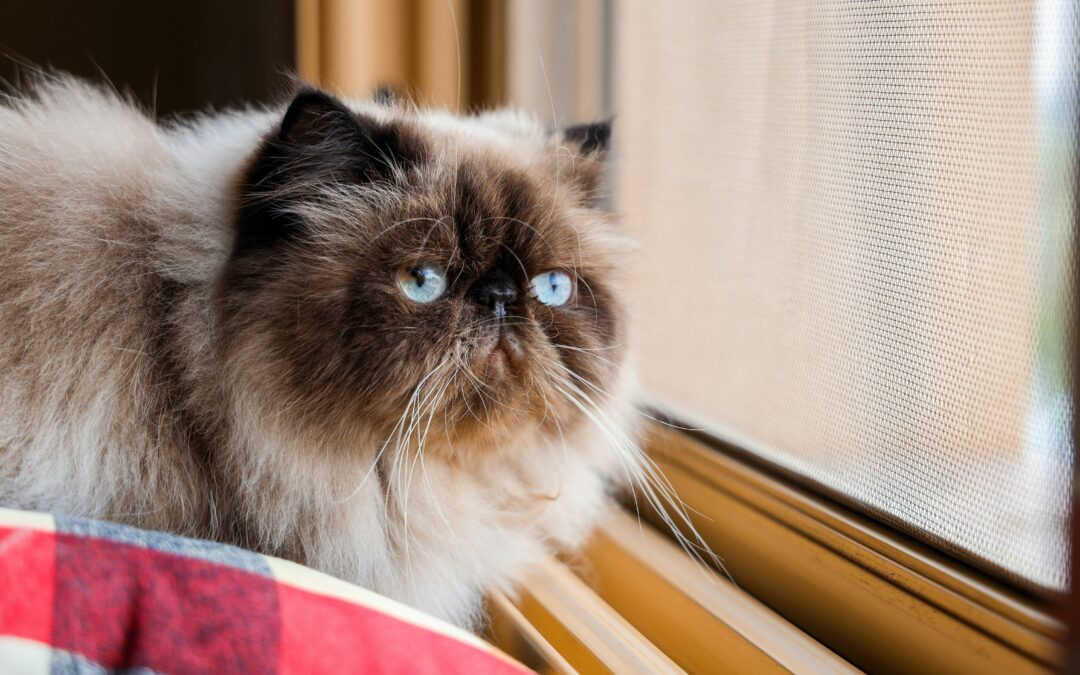
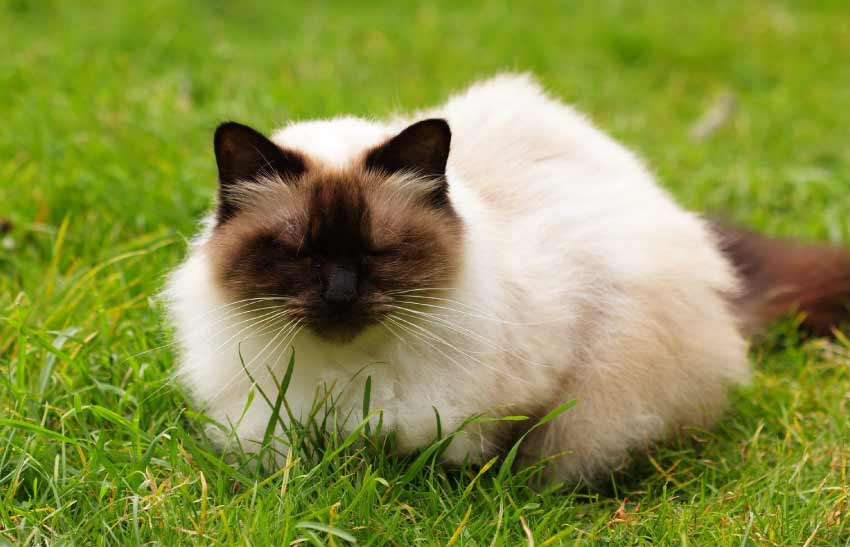
Himalayan Persian cat with a cream coat, darker colorpoint face and blue eyes
A Himalayan Persian cat pairs a Persian’s long coat and round face with Siamese-style points.

How the Himalayan Breed Was Created

The Himalayan Persian cat exists because breeders wanted Siamese markings on a Persian coat. According to VCA, a British breeder, Brian Sterling-Webb, spent about ten years building a longhaired colorpoint line that gained recognition in Britain in 1955. In the US, California breeder Marguerita Goforth asked the CFA to accept her cats, and recognition followed in 1957.

The first Himalayan grand champion in CFA was crowned in 1966. A CFA history article explains that breeders kept crossing back to Persians through the 1970s to improve head and body type. By 1984 the two were so alike that the CFA board moved the Himalayan into a division of the Persian, even though both breed councils had voted against it.

Colorpoint Genetics: Where the Points Come From

The darker face, ears, paws and tail come from a change in one gene. The UC Davis Veterinary Genetics Laboratory explains that the TYR gene makes an enzyme needed for pigment. In pointed cats, a variant called Siamese colorpoint (cs) makes that enzyme temperature-sensitive. Pigment fades in warm parts of the body and shows on the cooler extremities.

The trait is autosomal recessive. A kitten needs a colorpoint copy from both parents to show points, which is why two pointed parents produce pointed kittens. A solid Persian can still carry one hidden copy. UC Davis includes the Himalayan in its list of breeds suited to this test.

Blue point Himalayan cat and other point colors

The blue point Himalayan cat, with soft gray-blue points on a bluish-white body, was among the first colors accepted. The CFA article lists the history of each shade:

Point color Look CFA history
Seal point Deep brown points, fawn to cream body Accepted 1957
Blue point Gray-blue points, cool white body Accepted 1957
Chocolate point Warm milk-chocolate points Accepted 1957
Lilac point Pale pinkish-gray points Accepted 1957
Flame and tortie point Red-orange or mottled points Added 1964
Cream and blue-cream point Dilute versions of flame and tortie Recognized dilutes
Lynx point Tabby-striped points Recognized pattern

Pet Care Tip: Point color can change the price at some catteries, but it tells you nothing about a kitten’s health. Choose the kitten with the best health paperwork, then enjoy whatever shade comes with it.

Himalayan Persian Cat Personality

VCA describes the breed as gentle, quiet and sweet-tempered, a little more active than a Persian but calmer than a Siamese. Most Himalayans enjoy short play sessions, then settle into a warm lap. They are rarely loud, tend to be polite with visitors and usually get along with other cats and dogs after a careful introduction.

Expect a floor-level companion. Himalayans generally prefer low perches to tall cat trees, so a wide, sturdy bed near a sunny window suits them well. The CFA article adds that many like to “help” with whatever their people are doing, which often means sitting on your paperwork.

Himalayan vs. Persian vs. Siamese

Trait Himalayan Solid Persian Siamese
Coat Long, pointed Long, many colors Short, pointed
Face Flat, round Flat, round Long, wedge-shaped
Activity Moderate Low High
Grooming Daily Daily Weekly

Activity ranking based on VCA’s comparison of the three breeds.

Grooming a Himalayan Persian Cat: Daily Care Plan

Grooming is the biggest daily commitment of owning a Himalayan Persian cat. VCA advises brushing every day to stop tangles and mats, plus a daily face wipe with a damp washcloth to prevent tear staining. The CFA notes that many catteries also bathe weekly, so well-raised kittens often accept handling calmly.

How often Task Why it matters
Daily Brush to the skin with a wide-tooth comb Mats form fast behind ears, armpits and belly
Daily Wipe eye corners and face folds Limits tear staining and damp skin
Weekly Check the rear end for clumped fur Keeps the litter area clean and comfortable
Every 2–4 weeks Trim nails; bathe if your vet or groomer advises Reduces oil build-up and snagging

If a mat does form, work it loose gently with your fingers and a comb. Never cut a mat with scissors, because cat skin tents up into the mat and is easy to slice. A groomer or your vet can shave out tight mats safely.

A shallow, wide food bowl helps flat-faced cats reach their food. Some owners find a low-entry litter box easier for heavily coated cats too. For the cost side of coat care, our Persian cat cost breakdown includes grooming tools and salon visits.

Health Risks to Know

When to call a vet: Open-mouth breathing, blue or gray gums, straining in the litter box, or a cat that stops eating needs a veterinarian or a 24/7 emergency animal hospital right away.

Polycystic kidney disease (PKD)

The Cornell Feline Health Center says PKD causes fluid-filled cysts in the kidneys that can lead to kidney failure. It is most common in Persians and also seen in Himalayans. A genetic test shows whether a cat carries the gene, and Cornell advises that carriers should not be bred. There is no cure, but diet, fluids and medication can help manage it.

Eyes, tear staining and face folds

On a short face, tears tend to spill onto the fur, and VCA recommends a daily wipe with a damp cloth to prevent staining. A little clear tearing is usually handled by that routine. Call your vet if the discharge turns yellow or green, if your cat squints or paws at an eye, or if the skin in the facial folds looks red or smells.

Breathing and the flat face

The University of Illinois College of Veterinary Medicine lists Persians, Himalayans and Exotic Shorthairs among increasingly flat-faced breeds. Researchers there found such cats were more likely to show sneezing, coughing, nasal discharge and difficulty chewing. Narrow nostrils can be widened surgically in some cats. Keep your cat lean and indoors on hot, humid days.

Owner brushing a Himalayan Persian cat's long coat with a wide-tooth comb
Brushing a Himalayan Persian cat down to the skin every day keeps mats from forming. Photo: [Photographer] / Pexels.

Himalayan Persian Cat Price and First-Year Costs

There is no national price list, but a September 2026 ThePricer review of US listings found Himalayan Persian cat kittens priced from about $850 to $3,000. The same review lists Persian and Himalayan Cat Rescue adoption fees of $275 to $450. Prices vary by pedigree, region and what the breeder includes.

Expense Approximate cost (USD)
Kitten from a breeder $850–$3,000
Rescue adoption $275–$450
Pet insurance, accident and illness About $435 a year (2025 US cat average, NAPHIA)
Professional grooming (optional) About $240–$900 a year (ThePricer estimate)

Compare these figures with our guide to how much a Persian cat costs, since solid and pointed Persians often come from the same catteries.

Before you pay a deposit: 6 questions for a breeder or rescue

  1. Can I see PKD DNA results for both parents?
  2. Has the Himalayan kitten had a vet exam, first vaccines and deworming?
  3. Can I see the kitten’s nostrils and face up close on a video call or visit?
  4. How has the kitten been handled for brushing, bathing and nail trims?
  5. What does the price include, and is there a written health guarantee?
  6. Will you take the cat back at any age if I cannot keep it?

Example Scenario (illustrative)

Priya, a nurse in Columbus, Ohio, finds a seal point Himalayan Persian cat listed at $1,200. Before paying, she asks for PKD DNA results on both parents and the kitten’s vet records. The breeder sends only the mother’s test. Priya keeps looking and adopts a two-year-old blue point from a breed rescue for $350, with a vet check already done.

Common mistake Effect on the cat How to avoid it
Brushing only the top coat Painful mats near the skin Comb down to the skin daily
Skipping PKD paperwork Risk of inherited kidney disease Ask for both parents’ DNA results
Choosing the flattest face More breathing and chewing trouble Favor open nostrils and a moderate face
Ignoring eye discharge Skin irritation in face folds Wipe daily; see a vet if it changes

What most owners get wrong

Many buyers assume a “Himalayan Persian mix” is hardier than a purebred Persian. In practice, it shares the same coat, face shape and PKD risk. Judge each kitten by its health testing and facial structure, not by the label. Our guide to cat nose shapes explains why a more open nose can matter.

Himalayan Persian Cat FAQs

Is a Himalayan Persian cat a mixed breed?

Not anymore. It began as a Persian and Siamese cross, but the CFA has shown the Himalayan as a division of the Persian breed since 1984.

How big do Himalayan cats get?

Most adults weigh about 9 to 12 pounds, with a short, stocky, heavy-boned body.

How long do Himalayan cats live?

VCA lists a lifespan of 15 to 18 years. Indoor living, a healthy weight and regular vet checks give the best chance of reaching it.

Are Himalayan cats good for first-time owners?

They suit calm homes well, but only if you can commit to daily grooming. Their gentle nature makes them easy companions once the routine is set.

What is a blue point Himalayan cat?

It is a Himalayan with gray-blue points on its face, ears, paws and tail and a bluish-white body. Blue point was one of the first four colors the CFA accepted in 1957.

Do Himalayan cats shed a lot?

Yes, they shed steadily because of the long, thick coat. Daily brushing removes loose hair before it ends up on furniture or forms mats.

Final Verdict: Is a Himalayan Persian Cat Right for You?

A Himalayan Persian cat suits a calm home that enjoys a quiet, affectionate lap cat and can brush every single day. Budget around $850 to $3,000 from a breeder, or less through a breed rescue. Insist on PKD testing, favor a moderate face, and you gain a gentle companion for many years.

Your next steps

  1. Explore more breed and care guides in our Cats section.
  2. Plan your budget with our Persian cat cost guide.
  3. Before any deposit, ask for PKD results on both parents and a vet record for the kitten.

Share your Himalayan photos and questions with other pet parents on our Pets Store Home Facebook page.

About the author: Written and reviewed by the Pets Store Home Editorial Team, a group of pet owners and animal lovers who check every guide against trusted US veterinary and animal-welfare sources. This article is general information, not a substitute for professional veterinary advice. Always talk to your veterinarian about your own pet’s health.

How we checked this guide: Breed history, size, lifespan and care come from VCA and the Cat Fanciers’ Association. Genetics come from the UC Davis Veterinary Genetics Laboratory, PKD from the Cornell Feline Health Center, and flat-face research from the University of Illinois. Costs come from NAPHIA and a September 2026 review of US listings. We review this article every 12 months, or sooner if guidance changes.

Last reviewed: October 2026. Sources: VCA, CFA, UC Davis VGL, Cornell Feline Health Center, University of Illinois, NAPHIA, ThePricer.

Alligator Snapping Turtle Bite Force PSI & Newtons

Alligator Snapping Turtle Bite Force PSI & Newtons

Quick Answer: Alligator snapping turtles have one of the strongest bites among freshwater turtles, with estimates placing their bite force at roughly 158-1000+ newtons (about 35-227 psi) depending on the study and turtle size, powerful enough to snap through bone or a human finger.

Key Takeaways

  • Bite force estimates vary by study but consistently rank among the strongest of freshwater turtles.
  • Their beak-like jaw is built for crushing shellfish and bone.
  • Size and age of the turtle significantly affect bite strength.
  • This bite force is a key reason they should never be handled casually.
  • Despite the strength, they aren’t typically aggressive toward humans unless provoked or cornered.

Why Trust This Guide?

This guide is researched and written by the Pets Store Home editorial team, drawing on general veterinary and animal-care information. It’s intended as general information; consult your vet for advice specific to your pet.

Alligator Snapping Turtle bite force

The alligator snapping turtle has a jaw of incredible force and has been hailed as a legendary fish-catcher by a U.S. fisherman. It lures passing fish with its tongue appendage and snaps its jaws as fast as the speed of light. 

Other prey items include mollusks, crayfish, worms, amphibians, aquatic plants, and decaying carcasses. Despite their formidable jaws, alligator snapping turtles can also eat other turtles and small alligators.

The bite force of an alligator turtle is as high as two hundred and twenty-six newtons. This force is enormous, and an alligator snapping turtle’s bite could send a human to the hospital if it were to bite the person. 

These creatures are stronger than humans, and their bite force is higher. Hence, keeping a distance is the best way to avoid a snapping turtle attack.


What is Bite Force?

The bite force is the amount of force an animal can exert with its jaws when biting down. It is usually measured in pounds per square inch (psi) or newtons (N). The bite force is influenced by several factors, including the size and shape of an animal’s jaw, the strength of its muscles, and the structure of its teeth or beak.

The bite force is important for many animals because it allows them to catch and eat prey, defend themselves against predators, and break down tough materials like bones or shells. Animals with stronger bite forces are often better adapted to their environment and have a competitive advantage over those with weaker bite forces.

Measuring bite force can be challenging and requires specialized equipment, such as force sensors, to accurately measure the force exerted by an animal’s jaws. Bite force can also vary depending on an animal’s age, sex, and physical condition. Nonetheless, bite force measurements provide valuable information for understanding animals’ feeding ecology and behavior.


How big is Alligator snapping turtles?

Alligator snapping turtles are larger than the common snapping turtle and are the largest freshwater turtles in the western hemisphere. One recorded alligator snapper weighed 183 kg (403 lb), and a monstrous four hundred and thirty-three-pounder was caught in Kansas during the Great Depression. Both species generally avoid contact with humans and will try to evade human contact.

A human should never approach a snapper without proper training. A trained professional should handle the animal and never attempt to pick up a turtle. If it is caught, you should immediately release the hand or finger. Do not try to tear the turtle’s mouth open. Otherwise, the bite will cause infection. If you’re ever in a situation where an alligator snaps your hand or finger, remember to get help immediately.

The force of an alligator snapping turtle bite is usually less than a teaspoon, and the maximum strength of the bite is approximately ten pounds. Snapping turtles can be aggressive both on and off the land. The turtle’s jaws can crush hard bones, but they are unprotected on land. A human who tries to handle a snapping turtle in captivity can suffer severe injuries.

The alligator snapping turtle’s head and body are large and heavy. Their head is made up of three rows of large, spiky scales. The carapace is covered in algae, making the turtle more difficult to spot.

The alligator snapping turtle jaws size

The alligator snapping turtle has jaws as large as a human hand and an incredible amount of force. Its beak is a major part of this incredible bite strength. The beak can tear flesh and kill its prey. This bite force may be the most frightening part of its attack. The bite force of an alligator snapping turtle is 1,200 pounds per square inch.

A snapping turtle can cause serious injury to humans, and some states have banned the practice of collecting them from the wild. While alligator snapping turtles are not endangered, some myths exist about their aggression. Unlike crocodiles, alligator snapping turtles are not prone to attacking humans. However, a 1000-pound alligator snapping turtle’s jaws are strong, and it’s best to never approach an alligator in the wild.

Despite their large size and fearsome jaws, alligator snapping turtles can survive in extremely cold weather. Some alligator snapping turtles can spend the winter months active under ice. Because alligator snapping turtles can reach huge sizes, you should ensure a large outdoor area and a non-meat diet to avoid being attacked.

Alligator Snapping Turtle Bite Force PSI & Newtons


The alligator snapping turtle has one of the strongest bites of any animal, with a bite force that can exert over 1000 pounds per square inch (psi) or 4,448 newtons (N). To put this into perspective, the average human bite force is only about 160 psi or 712 N.

It’s worth noting that measuring an animal’s bite force can be difficult, and there can be variations in the reported values depending on the method of measurement and the individual animal being tested. 

However, studies have consistently found that the alligator snapping turtle has one of the strongest bites in the animal kingdom.

The strength of the alligator snapping turtle’s bite is partly due to its unique anatomy. They have a large, muscular tongue that they can use to lure prey close to their mouth. 

When the prey gets close enough, the turtle will snap its jaws shut with incredible force, using the sharp beak to deliver a crushing bite.

Alligator snapping turtles are considered a threatened species due to habitat loss, overhunting, and collection for the pet trade. 

They are also sometimes hunted for meat, considered a delicacy in some parts of the world. Conservation efforts are underway to protect these turtles and help their populations recover.


Alligator snapping turtles’ lifespan

Alligator snapping turtles can reach sexual maturity between eleven and thirteen. In captivity, their lifespan is between 20 and 70 years. While they do not have natural enemies, humans have hunted them for their carapaces and meat. Their long lifespan results from their comparatively low reproduction rate and habitat destruction. While the species can be found in captivity, most live for only 20 to 70 years.

While the alligator snapping turtle’s body weight is much higher than a human’s, its bite force is still significantly lower than the strength of an alligator’s jaws. That is why the bite force of an alligator snapping turtle is incredibly hard to determine, and an expert is required to evaluate the severity of an attack. While alligator snapping turtles were once considered extinct in the United States, they are now found worldwide.


Alligator snapping turtle bite force vs crocodile

An alligator snapping turtle is a massive freshwater reptile that resembles a crocodile but is actually a little smaller than a crocodile. Its jaws can crush fruit, broom handles, and human fingers, and they can deliver up to 1,550 N of force. Alligator snapping turtles typically feed on carrion and self-acquired prey, but they can also catch whatever they see swimming by.

A common snapping turtle’s bite force is between 208 and 216 Newtons, which is much lower than the average adult human bite force. It can break a human finger, but will not be able to sever an arm. Snapping turtles are also smaller than crocodiles, so their bite force is not as strong. Still, the bite force of an alligator snapping turtle can be very damaging to human beings.

While alligators are not aggressive, they can break up their prey, destroying it completely. Turtle shells are a much weaker material than alligator jaws, and an adult alligator can exert nearly three times that force. If you compare these two species, you will see that alligators are far more powerful than crocodiles.

Crocodile Compare with Black piranha

A black piranha has 450 PSI of bite force. But an alligator snapping turtle can snap off a finger with only one bite, despite its tiny size. However, if the crocodile were to attack a human, it would likely kill the person. If the bite force is greater than a crocodile’s, it would be easier to kill a human.

Alligators are big enough to kill small American alligators. In the wild, alligators can grow to be more than two feet long and weigh more than a thousand pounds. They can also crush turtle shells with their jaws, making them impossible for the turtle to escape. A crocodile’s jaws have pressure receptors in the dome and are transparent in comparison to an alligator’s. Crocodiles can osmoregulate in more salinity than a gator, but their habitats are similar. They tend to live in marshes and swamps, while alligators prefer lakes and low-flow rivers.

Alligator snapping turtle feeding.

The Alligator Snapping Turtle is a versatile reptile that eats various types of food. While they prefer to feed on fish, they will also eat clams, frogs, snakes, aquatic plants, and berries. In addition, you can feed the Alligator Snapping Turtle pellets and live minnows or worms to help provide a varied diet.
You can also use small containers, such as a shot glass, medicine cup, or bottle cap, to feed your turtle. Fill the container with food until it is complete. Do not overfeed your turtle. This can cause pyramiding, and your turtle may not get enough food.
It would be best if you feed your turtle once a day or every other day, depending on its size. Feeding an adult turtle requires more food than a hatchling or juvenile turtle. A good rule of thumb is to provide your turtle half with the amount it usually eats in a single day.
The Alligator Snapping Turtle is one of the giant freshwater turtles in North America. The male Alligator Snapping Turtle can weigh as much as 175 pounds and is nearly two feet long. It has a scaly shell and powerful jaws. These reptiles are not very tame and don’t like people pointing at them, so be sure to keep your distance when handling them.

That bite force exists for a reason: alligator snapping turtles are ambush predators that rely on powerful, precise strikes to catch prey. Unfortunately, this same species faces real conservation concerns today. Our guide to whether alligator snapping turtles are endangered covers population declines and ongoing recovery efforts.