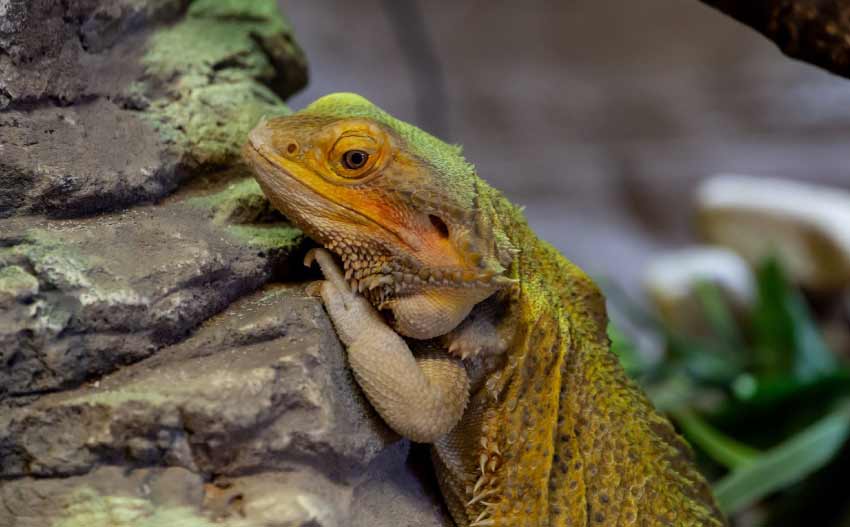
What Fruits Can Bearded Dragons Eat? Safe Options & Tips

What Fruits Can Bearded Dragons Eat? Safe Options & Tips

What fruits can bearded dragons eat? Bearded dragons can eat a range of fruits, including apples, bananas, strawberries, blueberries, papaya, mango, melon, pears, peaches, apricots, figs, and grapes, but only as small, occasional treats. Fruit is not a staple. A healthy bearded dragon diet is built mainly on appropriate leafy greens and vegetables plus suitable feeder insects, with the balance depending on the dragon’s age.

This guide lists the fruits veterinary sources name as suitable, explains how much fruit to offer, how to prepare it, which foods to avoid or treat with caution, and when to call an exotic-animal veterinarian.

Key takeaways

  • Fruit should be a treat. NC State’s veterinary hospital says no more than 5% of an adult dragon’s diet should be fruit.
  • VCA describes fruit as 10–20% of the plant portion of the diet, which is a different measure from a share of the whole diet.
  • Fruit is high in sugar and low in minerals, so it shouldn’t replace greens, vegetables, or insects.
  • Wash fruit, remove pits, hard seeds, and cores, cut it small, and remove uneaten food before it spoils.
  • Avoid avocado as a precaution, and ask an exotic-animal vet about any food you’re unsure of.
  • UVB lighting and proper calcium nutrition matter far more to your dragon’s health than any single fruit.

What Fruits Can Bearded Dragons Eat? The Treat List

The table below lists fruits that US veterinary sources name as suitable for bearded dragons. “Suitable” means acceptable in small, occasional amounts, not equally nutritious or right for frequent feeding.

Fruit Named as suitable by Notes
Apples NC State, VCA Remove the core and seeds; cut small
Bananas NC State, VCA, PetMD Sweet; keep portions small
Strawberries VCA, PetMD Remove the green top; chop
Blueberries and raspberries PetMD (blueberries); VCA (raspberries) Cut larger berries in half
Papaya NC State, PetMD Remove the skin and seeds
Mango NC State, VCA Remove the skin and pit
Melons, including cantaloupe NC State, VCA, PetMD (“melon”) Remove the rind and seeds
Watermelon NC State Mostly water and sugar; remove the rind and seeds
Pears VCA Remove the core and seeds
Peaches and apricots NC State, VCA Always remove the pit
Figs NC State, VCA Sweet; small pieces only
Grapes VCA Cut into small pieces; raisins are dried and more concentrated in sugar

VCA’s list also includes dates, guava, kiwi, star fruit, and tomato. Because every fruit is relatively high in sugar and low in minerals, rotate small amounts of different fruits rather than offering one favorite often.

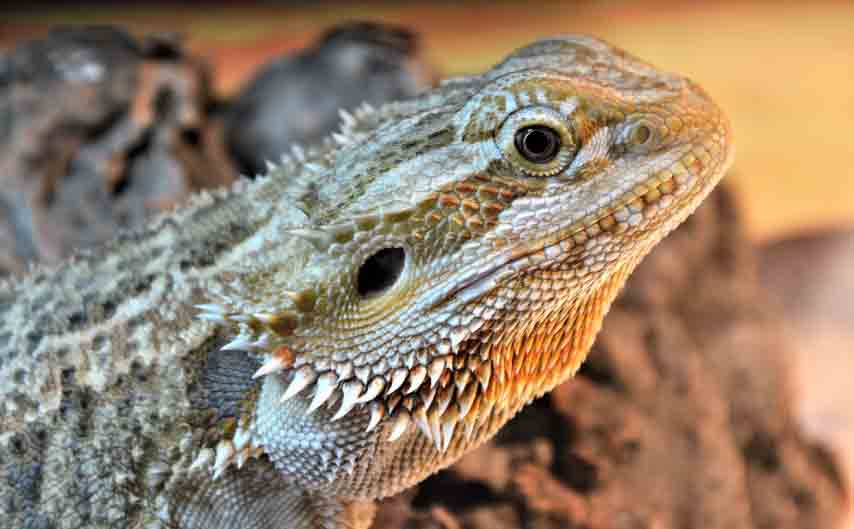
What fruits can bearded dragons eat: bearded dragon with small pieces of fruit
What fruits can bearded dragons eat? Small, occasional pieces of fruit, alongside a diet built on greens and insects.


How Much Fruit Can a Bearded Dragon Eat?

Knowing what fruits can bearded dragons eat is only half the answer. Portion matters just as much. All the veterinary sources agree that fruit should be a small part of the diet, but they describe it in different ways:

Source Fruit guidance What the figure refers to
NC State Veterinary Hospital No more than 5% The adult dragon’s total diet
PetMD (Sean Perry, DVM) No more than 5% The adult dragon’s total diet
VCA Animal Hospitals 10–20%, as a treat only The plant portion of the diet only

These figures aren’t interchangeable. A share of the plant portion is a different measure from a share of the whole diet, so compare like with like. NC State’s adult guideline, for example, is 50% dark leafy greens, 20% vegetables, 25% animal matter, and no more than 5% fruit. When in doubt, follow the more conservative figure.

There’s no single portion size or schedule that suits every dragon. Age, health, body condition, and the rest of the diet all affect what’s appropriate. Fruit should never be a daily staple, and your exotic-animal veterinarian can tell you what’s right for your dragon.

How to Prepare Fruit Safely

  1. Wash fresh produce thoroughly. VCA advises washing all produce before feeding.
  2. Remove inedible parts. Take out pits, hard seeds, cores, stems, and tough rinds where they apply. Preparation differs by fruit; not every fruit needs peeling, but pitted fruits always need the pit removed.
  3. Cut it small. Chop fruit into small, manageable pieces. VCA recommends chopping produce finely.
  4. Mix it in. VCA suggests mixing foods so your dragon doesn’t pick out only its favorite. A few small fruit pieces mixed into a salad of greens works well.
  5. Use a shallow, clean dish that won’t tip easily.
  6. Remove uneaten fresh food before it spoils.
  7. Introduce new foods one at a time in small amounts, and watch your dragon’s appetite and droppings afterward.

Tip: Fresh fruit is easiest to portion. Dried fruits such as raisins and dates are more concentrated in sugar, so use them even more sparingly.

For the foods that should make up most of the plant portion, see our guide to what vegetables bearded dragons can eat.

Fruits and Foods to Avoid or Treat With Caution

Part of answering what fruits can bearded dragons eat is knowing what to skip. Not every “no” means the same thing. Some foods are known or suspected to be harmful, while others are simply poor choices nutritionally or should be limited.

Food Category Why
Fireflies Never feed VCA says they are generally toxic to lizards
Avocado Avoid as a precaution Contains persin, which harms some animals; research in bearded dragons is limited and no safe amount is known
Wild-caught insects Avoid NC State and VCA warn of parasites and pesticide or fertilizer exposure
Dog food, cat food, raw meat, eggs, rabbit food Avoid PetMD lists these as foods to avoid
Spinach, Swiss chard, beet greens Limit VCA says their oxalates can block calcium absorption
Cabbage, kale, mustard greens Use with caution VCA notes goitrogens can affect thyroid function
Citrus, rhubarb, and other foods not on the lists above Ask your vet first The veterinary sources we reviewed don’t list them as suitable; check with an exotic-animal vet before offering

For avocado, Chewy’s vet-reviewed guide explains that persin is linked to poisoning in several species, but it isn’t known how bearded dragons react, so the safest choice is to skip it. If you’re unsure about any food, don’t guess. Ask a qualified exotic-animal veterinarian.

Fruit, Sugar, Calcium, and Overall Nutrition

NC State notes that fruit should be limited because of its high sugar content, and VCA adds that fruit is low in minerals. One small piece won’t harm a healthy dragon, but if fruit regularly fills up a dragon, it can crowd out the greens, vegetables, and insects that supply the nutrients it needs.

  • Calcium: NC State calls calcium essential. Insects are high in phosphorus relative to calcium, which is why gut-loading insects and dusting them with calcium powder are commonly recommended.
  • UVB lighting: NC State explains that dragons need heat and UVB light to make vitamin D3, which supports bone health. It advises replacing UVB bulbs every 6 months, even if they still light up.
  • Supplements: VCA warns that over-supplementation, especially with vitamin D3, is a common problem. Ask your vet which products to use and how often. Our guide to calcium supplements with D3 covers what to discuss.
  • Water: NC State recommends a shallow dish of fresh water, changed daily.

Does a Bearded Dragon’s Diet Change With Age?

Yes. VCA explains that young dragons are mainly insect eaters, while adults are more herbivorous. PetMD gives these general proportions:

Life stage Insects Vegetables and greens Fruit
Juvenile About 70% About 20–30% Small amounts
Adult About 20–30% About 70–80% No more than 5%

Fruit should never replace the insects a growing juvenile needs for protein, or the greens and vegetables an adult needs every day. NC State’s bearded dragon care guide and your vet can help you adjust the balance as your dragon grows.

When to Contact a Veterinarian

Contact an exotic-animal veterinarian if your bearded dragon has:

  • Persistent appetite changes, or an adult that stops eating for more than 1–2 days (NC State’s guidance)
  • Weight loss
  • Diarrhea, abnormal stools, or no droppings
  • Lethargy or weakness
  • Any other symptom that worries you

One symptom alone doesn’t point to a specific condition, so let your vet examine your dragon rather than changing its diet on a guess. Bring notes on what it has eaten recently, including any new fruit. Behavior changes can also be a sign of stress; our guide to signs a bearded dragon is stressed explains what to watch for.

What Fruits Can Bearded Dragons Eat? FAQs

What fruits can bearded dragons eat?

Veterinary sources name apples, bananas, strawberries, blueberries, raspberries, papaya, mango, melons, watermelon, pears, peaches, apricots, figs, and grapes as suitable occasional treats. Fruit should stay a small part of the diet.

Can bearded dragons eat strawberries?

Yes, as a treat. VCA and PetMD both list strawberries. Wash them, remove the green top, and chop them into small pieces.

Can bearded dragons eat bananas?

Yes, in small amounts. NC State, VCA, and PetMD all list banana. It’s sweet, so keep the portion small and occasional.

Can bearded dragons eat apples?

Yes. NC State and VCA list apples. Remove the core and seeds, and cut the flesh into small pieces.

Can bearded dragons eat blueberries?

Yes. PetMD lists blueberries among suitable fruits. Cut larger berries in half and offer only a few as an occasional treat.

Can bearded dragons eat mango or papaya?

Yes. NC State lists both, and PetMD lists papaya. Remove the skin, seeds, and mango pit, and offer small pieces.

Can bearded dragons eat watermelon?

Yes, occasionally. NC State lists watermelon. It’s mostly water and sugar, so remove the rind and seeds and keep portions small.

How often should bearded dragons eat fruit?

There’s no single schedule for every dragon. NC State and PetMD say fruit should be no more than 5% of an adult’s diet, so treat it as an occasional extra, never a daily staple. Ask your vet what suits your dragon.

Can baby bearded dragons eat fruit?

Only in small amounts. PetMD says juveniles need about 70% insects, with small amounts of fruit. Fruit should never replace the insects a young dragon needs to grow.

What foods should bearded dragons avoid?

Never feed fireflies. Avoid avocado as a precaution, wild-caught insects, and dog or cat food. Limit spinach, Swiss chard, and beet greens. Check with an exotic-animal vet before offering anything you’re unsure of.

Final Verdict: What Fruits Can Bearded Dragons Eat?

So, what fruits can bearded dragons eat? Many common ones, including apples, berries, banana, papaya, mango, melon, pears, peaches, apricots, figs, and grapes, but only as small, occasional treats. Build your dragon’s diet around greens, vegetables, and the right insects for its age, keep its UVB lighting and calcium on track, and ask an exotic-animal vet before adding anything you’re unsure of.

Your next steps

  1. Check that fruit is only a small extra in your dragon’s weekly menu.
  2. Plan the daily plant portion with our vegetable guide.
  3. Note when your UVB bulb was last replaced.
  4. Explore more care guides in our bearded dragons section.

Share your bearded dragon’s favorite treat with our community on Facebook.

About the author

Written and reviewed by the Pets Store Home Editorial Team: pet owners and animal lovers who check every guide against trusted US veterinary and animal-welfare sources. This article is general information, not a substitute for professional veterinary advice. Always talk to your veterinarian about your own pet’s health.

How we checked this guide: We used NC State Veterinary Hospital’s bearded dragon feeding and care guides, VCA Animal Hospitals’ feeding guide (Gregory Rich, DVM; Laurie Hess, DVM; Rick Axelson, DVM), PetMD’s guide by Sean Perry, DVM, and Chewy’s vet-reviewed avocado guide. We review this article every 12 months, or sooner if guidance changes.

Last reviewed: October 2026

What vegetables can bearded dragons eat? Top 10 List

What vegetables can bearded dragons eat? Top 10 List

Quick Answer: Bearded dragons can safely eat a range of vegetables daily, including collard greens, butternut squash, bell peppers, green beans, and shredded carrots, with leafy greens like collards and mustard greens forming the healthiest daily base of their diet.

Key Takeaways

  • Leafy greens, like collard, mustard, and turnip greens, should form the bulk of daily vegetables.
  • Squash and bell peppers add variety and nutrients in moderation.
  • Avoid vegetables high in oxalates, like spinach, as a regular staple.
  • Always chop vegetables to a size appropriate for the dragon’s age.
  • Dust vegetables with calcium powder as recommended by a reptile vet.

Why Trust This Guide?

This guide is researched and written by the Pets Store Home editorial team, drawing on general veterinary and animal-care information. It’s intended as general information; consult your vet for advice specific to your pet.

What vegetables can bearded dragons eat?

In this article, we’ll discuss the types of vegetables that bearded dragons can eat and provide some recipes to get you started.

Here are some of the vegetables that bearded dragons can eat:

Celery
Carrots
Zucchini
Cucumbers
Green beans
Bananas
Apple sauce
Thinly sliced apples
Pineapple chunks
Frozen fruit bars or ice cream. Some of the vegetables that bearded dragons can’t eat are:

Grapes
Oranges
Kiwifruit
Honeydews
Applesauce

Bearded Dragons

How long can bearded dragons go without food?

Bearded dragons can go several days without food, but they should be fed a small amount every day. A good diet for bearded dragons includes fresh vegetables and fruit, insects, and small prey.

How do I know if my bearded dragon is healthy?

You can check the health of your bearded dragon by examining his skin, eyes, mouth, and claws. If he has any injuries or parasites, you will see them. Bearded dragons also produce a musky scent when they are sick or injured.

Bearded Dragons

How do I give my bearded dragon a bath?

Bearded dragons need a bath about every two weeks. To give your dragon a bath, pour about an inch of hot water into the tub and add about a cup of room-temperature water. Add enough shampoo to cover the dragon’s body. You can also use a vegetable wash or soap. Soak your dragon for about 10 minutes, then rinse him off. To well dry him completely.

How do I clean my bearded dragon’s home?

You should clean your bearded dragon’s home every two weeks. To clean the home, first remove all of the furniture and any other objects that the dragon can climb on or crawl under.

What fruits can bearded dragons eat?

Below is a list of vegetables that bearded dragons can eat:

Asparagus
Banana
Broccoli
Cabbage
Carrot
Celery
Cucumber
Garlic
Green beans
Kale
Lettuce (Iceberg, romaine, etc.)
Mango
Melon
Pineapple
Potato

Bearded dragon owners should be aware that some vegetables may not be safe for their dragon to eat due to their particular dietary needs or health. For example, grapes are high in sugar and could be harmful to bearded dragons if they are not consumed in moderation. Owners should also be aware that some vegetables contain toxins which could harm their dragon if ingested in high quantities.

How often do bearded dragons eat?

You can feed them fresh or dry food every day.

How much do bearded dragons weigh?

Bearded dragons typically weigh between 2 and 4 pounds.

Do bearded dragons get along with other pets?

Bearded dragons do best when they are the only pet in the home. However, they can get along well with other reptiles if they are introduced gradually.

How often do bearded dragons need to be bathed?

Bearded dragons should be bathed once a week, but they can go longer between baths if their coat is clean and dry.

Are bearded dragons good with kids?

Bearded dragons are generally good with kids, but they should be supervised when they are young so that they do not get harmed.

Do bearded dragons make good pets?

Bearded dragons make good pets if they are given enough space and are handled gently.

Vegetables for bearded dragons

Some vegetables that can be eaten by bearded dragons include carrots, celery, cucumbers, zucchini, and squash.

Bearded dragons also eat insects, spiders, and small reptiles.

Bearded dragons also eat live insects, small mammals, and bird eggs.

Some recommended vegetables for bearded dragons include:

Carrots
Celery
Cucumbers
Zucchini Squash

Squash Live insects (insect larvae, pupae, and adults)
Small mammals (e.g., mice, gerbils, rats)
Bird eggs

What greens can bearded dragons eat?

There are a few vegetables that can be eaten by bearded dragons, but it is important to be aware of their safe consumption levels. Some of the most common vegetables that can be consumed by bearded dragons include: lettuce, kale, collard greens, spinach, and cucumbers.

While these vegetables are all okay to eat, it is always best to check with a vet before giving them to your dragon as some may have high levels of toxins that can potentially harm them. Additionally, some bearded dragons may have a sensitivity to some of the ingredients found in these plants so it is important to test out different varieties until you find one that your dragon seems to enjoy.

Bearded dragons also enjoy insects and other small animals, so make sure to provide them with a variety of food items to keep them amused and healthy!

What kind of water should bearded dragons drink?

Bearded dragons should drink a water that is pH balanced and has a low amount of chlorine. How often should bearded dragons be fed?

Bearded dragons should be fed a variety of insects, small pieces of meat, and vegetation every day.

Is bearded dragon sex okay                                 

Bearded dragons are known to be sexually active, but it is important to be cautious when handling them as they may become defensive.

Best greens for bearded dragons   

Some favorites include: broccoli, kale, collard greens, mustard greens, peas, carrots, apples, oranges and grapefruit. There are many different types of vegetables that can be fed to bearded dragons, so it is important to research which ones are safe for them to eat.

Some additional greens that can be fed to bearded dragons include: watercress, arugula, Swiss chard, romaine lettuce, dandelion greens and birch leaves.

Always be sure to read the ingredients list on any vegetables or fruits that are fed to your bearded dragon, as some can contain harmful chemicals that can be harmful to them.

Bearded dragon owners should also make sure to provide a variety of fresh water sources, as dragons need plenty of moisture to keep their skin healthy and their gums moist.

Some additional tips for feeding bearded dragons include:

– Add vegetables and fruits to the dragon’s regular diet gradually over a period of several weeks to avoid causing any stomach upset.

– Let the dragon graze on its food instead of trying to force it to eat by hand.

– Avoid feeding the dragon sugary treats or drinks, as these can add unnecessary sugar to their diet and lead to obesity.

Do bearded dragons drink water?

Bearded dragons do not need to drink water like other reptiles. A small amount of moisture found in their diet is all they need.

Bearded dragons in captivity are typically supplied with a water dish and occasionally a moistened paper towel.

How much water should a bearded dragon drink

Bearded dragons in captivity typically only need a small amount of moisture, usually found in their diet. How often should a bearded dragon drink?

Bearded dragons in captivity usually only need to drink water occasionally, and should not be kept constantly wet.

If your bearded dragon does not seem to be getting enough water, try offering a small amount of fruit or vegetable juice mixed with water as a supplementary drink.

Baby bearded dragon

What do baby bearded dragons eat?

Vegetables can be a great food for baby bearded dragons. In fact, many vegetables are great for all reptiles. Here are a few suggestions of vegetables that can be fed to baby bearded dragons: carrots, cucumbers, green beans, peas, apples, oranges, and grapes. Be sure to give your baby bearded dragon plenty of fresh water and insects to eat too!

Please note that baby bearded dragons should not be given any meat or meat products.

Baby bearded dragon habitat

A baby bearded dragon’s habitat should consist of a large, shallow bowl filled with a layer of fresh sand. The bowl should also have a shedding rock or two for the lizard to hide under and a heat source (i.e. a warm basking light) positioned so that the reptile can regulate its body temperature. A hiding spot should be provided for the lizard to escape from bright light and drafts. Finally, water dishes should be placed in several different locations throughout the habitat to provide moisture and hydration.

Baby bearded dragon care

A baby bearded dragon’s enclosure should be at least 12 inches by 12 inches by 24 inches, and the reptile should have plenty of space to swing its legs and romp.

Diet is only part of good bearded dragon care. If your dragon has started pacing or scratching repeatedly at the glass, it is worth reading about bearded dragon glass surfing, a common stress behavior with several identifiable causes and fixes.

Rounding Out the Diet With Fruit

Vegetables and greens should make up the bulk of a bearded dragon’s plant-based diet, but fruit still has a place as an occasional treat. Our guide to what fruits bearded dragons can eat covers which fruits are genuinely safe in moderation, which ones (like citrus and avocado) to avoid entirely, and how much fruit is too much.

Watch Sugar and Calcium Balance in Fruit Too

Vegetables should be the daily staple, but fruit still shows up in most feeding routines as an occasional treat. Our guide on what fruits bearded dragons can safely eat covers which fruits are fine in moderation, which to avoid entirely (oranges and avocado included), and how often to offer them.

Which Dog Should You Choose? A Lifestyle-Based Guide

Which Dog Should You Choose? A Lifestyle-Based Guide

Which dog should you choose? The best answer starts with your life, not a breed list. The American Kennel Club says the right match is a dog that suits your lifestyle, activity level, and living conditions. That means being honest about your time, energy, home, budget, and household, then meeting individual dogs whose needs fit. Breed tendencies can guide your research, but every dog is an individual, and a mixed-breed or adult shelter dog can be just as good a match as a puppy.

This guide shows how to choose a dog step by step: lifestyle, home, size and energy, temperament, grooming, puppy versus adult, health, cost, and where to find a dog responsibly.

Key takeaways

  • Match the dog’s exercise, grooming, and training needs to the time you actually have.
  • Size doesn’t reliably predict energy, according to the Merck Veterinary Manual.
  • No breed is guaranteed to be good with every child; adult supervision is essential.
  • The AKC says there are no 100% hypoallergenic dogs.
  • Puppies need extra time for house-training, socialization, and supervision.
  • Budget for food, vet care, training, grooming, supplies, boarding, and emergencies.
  • Adopt from a reputable shelter or rescue, or buy from a responsible breeder, and never choose on impulse.

Which Dog Should You Choose? Start With These Questions

Before you look at breeds, answer these honestly. Your answers point you toward the right kind of dog.

  1. How much time can I spend each day on walks, play, and training?
  2. How long will the dog be alone on a typical day?
  3. Do I rent or own, and do my lease, HOA, or local rules limit dogs?
  4. Who lives in my home, including children, older adults, and other pets?
  5. Does anyone in the household have allergies?
  6. How much grooming and shedding can I handle?
  7. What can I afford monthly, and for unexpected vet bills?
  8. Who will care for the dog when I travel?
  9. How might my housing, work, or family change over the dog’s lifetime?

Lifestyle and Activity Level

Your daily routine is the biggest factor in answering “which dog should you choose?” The AKC notes that active owners may want a dog that can keep up on hikes or long walks, while less active owners may be happier with a calmer dog. Petco adds that a slow breed may struggle to keep up with a jogger, and a high-energy breed can overwhelm an inactive owner.

Time alone matters too. The AVMA warns that any dog left alone all day without exercise or social contact can become bored and destructive, and Petco suggests a family that’s away most of the day may not be ready for a dog yet. If you work long hours, plan for a dog walker, daycare, or a lower-energy adult dog, and think about who will help when you travel.

Home and Living Arrangements

Where you live also matters when you ask, “which dog should you choose?” It affects how you’ll meet a dog’s needs.

  • Rentals and rules: the AVMA suggests checking whether building, town, or state rules limit the number or types of pets. Read your lease or HOA rules before you commit.
  • Apartments: the AVMA notes large or high-energy dogs may be harder to keep in apartments, but the AKC says living space matters less than whether the dog’s exercise needs are met. Petco notes Beagles are known for barking, which may not suit close neighbors.
  • Yards: Merck says large and very active dogs often do best with a fenced yard. Petco notes digging breeds such as hounds, terriers, Dachshunds, and Beagles may not suit a carefully kept garden.
  • Outdoor access: every dog needs regular trips outside for elimination and exercise.
  • Climate: Merck notes thick-coated dogs can struggle in hot climates, and short-coated dogs may have trouble in the cold.

Size and Energy Are Not the Same Thing

It’s easy to assume a small dog needs little exercise and a big dog needs a lot. The Merck Veterinary Manual cautions that size doesn’t reliably predict activity level, and notes that working breeds often need a job to stay out of trouble. Some small breeds are very energetic, and some large dogs are calm indoors. It can also be hard to predict how big a mixed-breed puppy will grow.

When choosing a dog breed, look up its typical exercise needs, not just its adult size, and ask the shelter or breeder about the individual dog’s energy level.

Which dog should you choose: dog owner spending time with a dog
Which dog should you choose? Start with your time, home, and household, then meet individual dogs.

Temperament, Children, and Other Pets

An individual dog’s temperament matters more than its breed label. Merck lists positive signs such as an active, friendly, curious nature, and warns about timidity or aggression.

Choosing a family dog

  • No breed is automatically safe with every child. Merck says training and supervision are essential, and that children and infants should never be left alone with a dog.
  • Consider size and play style. Petco notes very large, playful dogs can knock over small children, and quick, small dogs can trip older adults. Merck adds that small, active dogs may not tolerate rough play.
  • Ask about history. Merck notes an adult dog used to a child-free home may react poorly to a new child.
  • Teach children to approach gently, let the dog come to them, and leave it alone while it eats or rests.
  • Adults stay in charge. The AVMA says an adult must be willing, able, and available to supervise daily care, even when children help.

Other pets

Ask how the dog behaves with other dogs, cats, or small animals, and plan slow, supervised introductions. If you’re bringing home an adult rescue, our guide to crate training an adult rescue dog can help with the first weeks.

Which Dog Should You Choose as a First-Time Owner?

First-time owners often do best with a dog whose energy, grooming, and training needs are moderate and predictable, and with plenty of support from a trainer, vet, or shelter. Expect to invest time in daily routines, house-training, socialization, and positive training classes. An adult dog with a known temperament can be a good option, and Petco reminds readers not to assume an adult is already trained.

Grooming and Shedding

  • All dogs need grooming, including nail trims, Petco notes.
  • Coat type matters. Petco says long coats need regular brushing, short coats are easier to maintain, double-coated breeds shed seasonally, and single-coated breeds shed less heavily.
  • No dog is allergy-proof. The AKC states that there are no 100% hypoallergenic dogs, breeds, or mixes, though some coats produce less dander. If anyone has allergies, spend time with the specific dog first and talk to a doctor.

Puppy or Adult Dog?

Consideration Puppy Adult dog
Training Needs house-training, socialization, and obedience training The AVMA says often already housetrained and knows basic commands, but don’t assume
Supervision More frequent feeding and close supervision May need time to settle into a new home
Personality Still developing Easier to observe; ask about known behavior and health history
Vet care Early vaccination series and preventive care Exam soon after adoption; bring prior records

Choosing a Dog Breed: Examples by Need

These examples show how breed tendencies line up with common needs. They’re a starting point for research, not a guarantee. Individual dogs vary, and mixed-breed dogs can fit any of these profiles.

If you want or need… Breeds sources mention Keep in mind
A very active partner Border Collie, Australian Shepherd (Petco); Border Collie for agility, Papillon as a smaller option (AKC) High exercise and mental stimulation needs every day
A family-oriented dog Labrador Retriever (AKC: family-friendly, moderate exercise, little grooming) Sheds; still needs training and supervision with kids
Less shedding Poodles, Maltese, many terriers (Petco: single-coated, shed less) Not allergy-proof; coats may need regular professional grooming
Minimal brushing Short-coated breeds (Petco: easier to maintain) Still need nail trims and may shed
A long, flowing coat Yorkshire Terrier, Lhasa Apso, Collie (Petco) More grooming time or grooming costs
A quieter home Research breeds known for less barking Petco notes Beagles are known for barking; read our guide on Beagle shedding and care

The AKC suggests reading breed pages, contacting breed clubs, and attending events to learn more, and offers a “Find a Match” tool. Then meet individual dogs and ask about their known behavior and needs.

Health and Breed-Related Considerations

Health is a key part of answering “which dog should you choose?”, especially with purebreds.

  • Research known health risks for any breed you’re considering.
  • Merck suggests asking breeders whether the parents were tested for breed-specific diseases, such as hip dysplasia, and requesting health and vaccination records.
  • The AVMA notes large-breed dogs generally live shorter lives than smaller dogs.
  • Ask your veterinarian which screening and preventive care your future dog will need. If you’re considering a flat-faced breed, our Pug guide explains breathing and heat concerns.

Budget and Long-Term Responsibility

The AVMA notes that the purchase or adoption price is only the first expense. Plan for:

  • Quality food and treats
  • Routine veterinary care and preventive medications
  • Training classes
  • Grooming, supplies, and toys
  • Licensing, boarding, or pet sitting
  • Emergency veterinary care; the AVMA notes pet insurance can help with unexpected bills

Costs vary widely by dog size, coat type, health, and where you live, so get local estimates from your vet and groomers before deciding.

Adoption and Responsible Breeders

  • Shelters and rescues: the AVMA and Petco note that shelters and rescue groups have both mixed-breed and purebred dogs, and breed-specific rescues exist. Good shelters should help match a dog to your family. The AKC advises caution with rescues that charge very high fees or sell dogs online.
  • Responsible breeders: visit, meet at least one parent, and ask about temperament, socialization, and health testing. The AVMA notes the parents’ temperaments are often good indicators of a puppy’s future temperament.
  • Do your homework: Merck warns that some pet stores source from puppy mills. Ask why a dog is available and about any known health or behavior issues.
  • Avoid impulse decisions: the AVMA advises against impulse purchases and dogs given as surprise gifts.

If you’re drawn to a particular breed, adoption guides such as our page on Akita adoption can help you understand that breed’s needs first.

What about zodiac dog matches? Matching a dog to your star sign can be a fun conversation starter, but it isn’t a reliable way to answer “which dog should you choose?” Exercise needs, temperament, grooming, health, and your daily life are what make a good match.

Think Long Term

A dog may be part of your life for many years. Before you decide, consider how a move, a new job, a new baby, retirement, or a change in finances could affect your ability to care for the dog. Choosing a dog that fits both your life now and your likely future helps prevent hard decisions later.

Once your dog comes home, the AVMA recommends scheduling a veterinary exam as soon as possible and bringing any records you received. Our guide to the benefits of owning a pet covers what else to plan for.

Which Dog Should You Choose? FAQs

Which dog should you choose as a first-time owner?

Look for an individual dog with moderate exercise, grooming, and training needs that fit your schedule. An adult dog with a known temperament can be a good choice. Plan for training classes and support.

How do you choose a dog for an apartment?

Focus on exercise needs and noise, not just size. The AKC says living space matters less than meeting a dog’s exercise needs. Check your lease and building rules first.

Should you adopt an adult dog or get a puppy?

Puppies need more time for house-training, socialization, and supervision. The AVMA notes adult dogs are often housetrained and know basic commands, but every dog needs time to settle in.

What should you consider before choosing a family dog?

Consider the dog’s temperament, size, and play style, plus your children’s ages. No breed is guaranteed safe with every child, so always supervise and teach kids to interact respectfully.

How much time and money does dog ownership require?

Expect daily time for exercise, feeding, training, and grooming. Costs include food, vet care, preventive medications, training, grooming, supplies, boarding, and emergencies. They vary by dog and location.

How can you tell whether a dog fits your lifestyle?

Compare the dog’s exercise, grooming, and training needs with your real schedule and home. Spend time with the individual dog, and ask the shelter or breeder about its known behavior.

Are there hypoallergenic dog breeds?

The AKC says no dog is 100% hypoallergenic. Some breeds produce less dander, but allergy sufferers should spend time with a specific dog before committing.

Is a mixed-breed dog a good choice?

Yes. Mixed-breed dogs can make wonderful companions. The AKC notes their traits can be less predictable, so spend time with the dog before deciding.

Final Verdict: Which Dog Should You Choose?

So, which dog should you choose? The one whose needs match your time, home, household, and budget, and whose individual temperament you’ve seen for yourself. Use breed tendencies to narrow your search, consider adult shelter dogs and mixed breeds alongside puppies, ask plenty of questions, and plan for the long term. The best dog for your lifestyle is the one you can care for well for its whole life.

Your next steps

  1. Answer the nine questions at the top of this guide.
  2. Check your lease, HOA, and local pet rules.
  3. Visit local shelters, rescues, or responsible breeders and meet individual dogs.
  4. Browse breed and care guides in our dogs section.

Tell us how you chose your dog on Facebook.

About the author

Written and reviewed by the Pets Store Home Editorial Team: pet owners and animal lovers who check every guide against trusted US veterinary and dog-welfare sources. This article is general information, not a substitute for advice from your veterinarian or a qualified trainer.

How we checked this guide: We used the AVMA’s guide to selecting a pet dog, the Merck Veterinary Manual (Natalie Antinoff, DVM, DABVP), AKC guidance by Dr. Jerry Klein and AKC staff, and Petco’s guide reviewed by Whitney Miller, DVM. We review this article every 12 months.

Last reviewed: October 2026

Tiger Stripe Brindle Pitbull Mix | Light | Red Blue | Reverse Puppy

Tiger Stripe Brindle Pitbull Mix | Light | Red Blue | Reverse Puppy

Quick Answer: Tiger stripe (brindle) Pitbulls have a coat pattern of dark stripes over a lighter base color, caused by a specific gene rather than being a separate breed, and the pattern can appear in various base colors like red, blue, or fawn depending on the dog’s genetics.

Key Takeaways

  • Brindle is a coat pattern, not a distinct breed or bloodline.
  • Stripe intensity and base color vary widely between individual dogs.
  • ‘Reverse brindle’ refers to a coat where the darker color dominates over lighter stripes.
  • Coat pattern doesn’t affect temperament or health.
  • Price can vary based on how striking or rare the specific brindle pattern is.

Why Trust This Guide?

This guide is researched and written by the Pets Store Home editorial team, drawing on general pet-care and industry information. It’s intended as general information; consult a vet or specialist for advice specific to your pet or situation.

Tiger stripe brindle pitbull

This dog is a very popular breed.  It was first bred in France in the 13th century and it was then exported to England where it became an important part of the English dog breeding program.

Tiger stripes are very rare in this breed and you can only find them on some rarer types like “Black Tiger”, “Black & White Tiger” or even “Black & White Tiger”. The color pattern of this breed is also very exclusive, as it has a striping pattern along its entire body, from its nose to its tail. The striping pattern makes this breed appear more majestic than other breeds with solid colors. This dog can be found all over Europe, Asia, Africa and America but especially.

Tiger stripe brindle pitbull

Brindle Pitbull

The brindle pitbull has a history that dates back to the 1800s in America. It was originally bred as a hunting dog, but now it is used for many different purposes such as being a family pet and for therapy.

The brindle pitbull is known to have many characteristics including loyalty, companionship and being able to withstand any type of weather. The brindle pitbull was originally bred in America as a hunting dog. The brindle pitbull is one of these colors that is created when they are crossbred with the American Staffordshire terrier and the English bulldog. The brindle pitbull is an active, energetic dog that needs to be taken out on long walks or runs often. They will do well in a home with a yard for them to use their energy and play in. All types of people can adopt these dogs, as they are known for being a loving, gentle and obedient pet.

Blue brindle pitbull

The Blue Brindle Pitbull has a blue brindle coat with a white chest and muzzle, which is unusual among dogs. The Blue Brindle Pitbull is known for its loyalty and companionship. They are not aggressive, but they will protect their family members if needed. .Blue Brindle Pitbulls are not usually used for hunting or fighting. The Blue Brindle Pitbull is a fairly large dog with a medium length coat and an undercoat. The Blue Brindle has dark eyes, which they usually have almond shaped but sometimes round as well. Blue Brindle Pitbulls are predisposed to deafness, deafness being the second most common disease among this breed. The Blue Brindle Pitbull’s lifespan is usually 8-10 years.

The Blue Brindle Pitbull has an average weight of 35 pounds and is 63-67 inches at the shoulder. They have some similarities to their parent breeds, but also have some differences.

Brindle pitbull puppy

Brindle pitbull puppies are not that common. They also have a tendency to be more aggressive than other breeds.

Brief history

Brindle Pitbulls were first seen in 18th century England. The Brindle Pitbull was first seen by British settlers in the United States during the 1800s when they were bred with Bull Terriers and Mastiffs to create a new breed of dog that was considered polite and well-mannered. Brindle Pitbulls are now commonly found in the U.S., Canada, and England.

Temperament

Brindle Pitbulls are brave, confident, territorial and have plenty of energy.

There are three color patterns:

Brindle, Black Brindle, and Harlequin. Most of the time they will have a large amount of white patching on their back sides.Brindle Pitbulls have a characteristic “bristly” coat that is long, coarse, and wiry with a white patched backside.

Famous Brindle Pitbulls

Bruno the Great Brindle Pitbull from the movie Ace Ventura: Pet Detective.The Australian Brindle Pitbull on “Dancing with the Stars” Season 21. Pit bull mix , the dog’s name is Bentley.

Reverse brindle pitbull

The breed was created by crossing two dogs: the American Staffordshire Terrier with the Rhodesian Ridgeback. The result is a dog that has many traits from all three breeds. The American Staffordshire Terriers also make an excellent addition to a dog’s family because they are friendly, intelligent and easy to train. They make wonderful watchdogs, as well. Due to their size and strength, a shepherd or shepherd-type dog is not recommended for heavy duty work like search and rescue work or herding sheep on the farm. For these types of jobs, the American Staffordshire terrier is not considered an ideal breed. However, they are great in hunting and other active roles. The American Staffordshire terrier is a friendly breed that loves to play and be with family members. These dogs make excellent pets for children who can handle strong-willed dogs because of their large size.

Red brindle pitbull

This is the story of a red brindle pitbull. He grew up with his owner and became an English bulldog. But then he was sold to a Russian couple who did not know how to treat him properly.

The dog got sick and developed skin problems, so they brought him back to Russia where he died of old age. After that, the family decided that it would be better if they could get rid of the dog and start again with another one. This time they decided on a black pitbull named “Kolya”. When Kolya came home, his owner recognized his face on the first day and called him “the famous red brindle pitbull”. and his friends started calling him “Koly-the-famous” or simply, Koly. In the 1970s, a new breed of Pitbulls appeared called “cob-bulls”. They were very small and hilly (like the American Pit Bull Terrier). These small dogs were used as guard dogs in many places mainly mine fields Unsafe.

Light brindle pitbull

Most people who have seen pitbulls in person will tell you that they are friendly and playful dogs, but they are fierce when they need to defend themselves or their family members. There are many different pitbulls on the market today and they have different names that are often used to describe them. These names include Doberman, Bulldog, German Shepherd Dog, and the most common, it is not so important what the actual name of the breed. The only thing that matters is that you know what type of dog it is and what to expect from them. It should have muscular thighs and a stocky body with thick neck.

The muzzle and face should be muscular, round in shape and medium sized. They should have short legs and short to moderate necks. The chest is broad with a deep abdomen for holding the stomach’s content. The breed may have a smooth coat or one that is spotted with patches of white on the body, head, and feet. Their eyes are brown or hazel. They are of medium size and have a short, thick body. They weigh anywhere from 15 to 100 pounds depending on the female and the breed they are sired by.

Black brindle pitbull    

Pitbulls are known for their great power. They are very strong and aggressive dogs with a lot of stamina. Pitbulls have been used as working dogs since the beginning of history and they were used to pull carts or haul heavy loads on the battlefield. This is one of the basic attributes that you need to get in order to become a Pitbull breeder. Because these dogs are protective they need very powerful and strong families that can provide them with enough training and guidance so that they grow up properly. It is therefore very important that the family not only knows how to train a dog but also how to effectively deal with problems.

What are the signs of a vicious or aggressive behavior? The way in which an aggressive dog behaves is often very subtle. The signs may vary from behavior to behavior, but they all have one common feature – aggressive aggression is accompanied by an Unsafe and Unnecessary Act (not of self-defense) and an Institutionalized Situation (the avoidance behavior). In this situation, the aggressive act is not unnecessary. Let’s look at these three ways of making a “bad” choice: They do not recognize the value of something that they are willing to sacrifice for the sake.

Red nose brindle pitbull

A red nose brindle pitbull is a dog breed with a red nose and one black eye. The name originates from the fact that the breed was originally bred in England to be used as a blood donor for the Red Cross.

The Pit Bull Terrier is famous for its bulldog like appearance, which includes a short, square head and short muzzle. It has short legs and thick, muscular body. It also has a long neck and strong body muscles that help it to stand up on its hind legs when it’s being walked or jumping up on objects like fences or posts. The breed is very strong, which makes it very useful for pulling loads such as logs or hay bales out of the barns in order to get them into the house more easily. The Pit Bull Terrier also has a very calm, loving temperament that makes it a good family companion.

The Pit Bull Terrier is adorable and playful but can be stubborn, especially when it comes to chasing after the cat or dog who took away his food dish or toy. The Pit Bull Terrier needs lots of training and exercise for proper health. It also needs regular dental care.

Brindle pitbull mix

Brindle pitbull mix is a dog breed. This dog was first bred in England in the 1700s. The Brindle pitbull mix has become popular as a companion dog due to its gentle nature, friendly demeanor and its ability to be trained easily by owners.

This dog originated from England around the 1300s and it was used for hunting and guarding purposes during the Middle Ages. It was also used as an animal companion by royalty in Europe during this period which led to its popularity among royalty around Europe.

It is believed that this breed became famous when King Edward III of England introduced it to his court in 1340s . It was named after the royal family because of its white color. As per the statistics, there were about 3 million dogs in 1970 and rose to about 8 million dogs as of now. This breed is considered as one of the sturdiest pets and it is ideal for guarding or travelling with family members.

Blue nose brindle pitbull

It was originally bred to be an all-purpose farm dog that could also be used as a hunting dog.

Pitbulls were originally bred for fighting, but today they are more commonly used as livestock dogs or as guard dogs. When Pitbulls were originally bred for fighting, today they are more commonly used as livestock dogs or as guard dogs. They are also popular with children due to their cute appearance and friendly personality. Temperament Pitbulls are generally good tempered dogs. However, they can be aggressive if provoked, which is when their natural protective instincts can kick in .“Wild dogs will attack when provoked,” says Dr. David Mech, director of the Center for Animals at Michigan State University. “If you have a dog or cat that is aggressive to other animals or people, it is important to let it off the leash and not to try to control its behavior.

Reverse brindle blue brindle pitbull

This dog is a cross between a pitbull and a blue merle. The dog has a blue color on the body, and the head and tail are blue. This dog has been used in breeding for many years. This dog is a very active, athletic dog.

Specifications:

Female Date of Birth January, 2009 Color Blue Gender Female Size Medium Weight 60 pounds (27,8 kg) Height 36 inches (89 cm) Spay no yes.

Health:

Vets warn that this hybrid breed is prone to inbreeding, and so should not be bred alone. Condition report The dog has been fully vaccinated, microchipped and has been spayed. This dog is a pitbull-blue merle mix.The colors on the head and body are blue (including white) with some patches of red hair present on the nose, around the eyes, forehead and in patches on the muzzle. This dog has very few white hairs (none on her eye or forehead) and three small black hairs in the ears. The color of the fur is more blue than red, but there are some hints of black in some places, which is not so obvious with a closer look at these areas.

The color of this dog’s hair is quite unusual in comparison with other dogs, but it seems to be a good thing. He is not as dark as some other albino dogs and his color is not so noticeable either, because of the little amount of black in most areas. This dog is definitely pretty and he looks even better than he actually does.

Brindle pitbull terrier

Brindle pitbull terriers are popular for their strength and speed, but some people say that they are not very intelligent. , and therefore, not suitable for working in a police or military force. Why is Brindle Pitbull Terrier Important? The pitbull is an ancient breed that has been popular for hunting bears, deer, foxes and other animals. The breed was originally bred to hunt rabbits and other small animals. Because of this, they were also used to hunt dangerous animals such as deer, bears and foxes. Pit bulls were also said to be very intelligent dogs that could work as a family pet. In the 1920s and 1930s, pitbull terriers became popular pets because they are so good at hunting small animals and are very fast. This is why some people believe that the breed is not suitable for military or police work because it is a very aggressive dog.

White brindle pitbull

This article is about the white brindle pitbull. It is one of the most popular dogs in America because of its beauty and its large size. The white brindle pitbulls are not as popular as the other colors of pitbulls. They are very even in size and they look very beautiful. The white brindle dog is one of the most popular dogs in America because people like its long hair and its long legs.  Many people think that the white dog is a toy breed because its legs are so short. Some people think that the white brindle pitbull looks like a miniature horse.

There are many different colors of this dog breed and more than 50 different colors have been found in this mix. Some red, buff, and black versions of this dog have been created as well as some colors that are not colors at all but looks like colors. There are white versions of pitbulls and these dogs do look quite beautiful. This dog is a very popular breed in the USA and people have to deal with some arguments about this dog breed.

Fawn brindle pitbull     

Popular breed of dog is Fawn brindle pitbull. It is a very calm, friendly and intelligent dog. It has a short, compact body with a long neck and short legs. The color of this breed varies from black to brown or gray.

The Fawn brindle pitbullis usually used as a family pet and companion but can be used as an aggressive guard dog too. Their physical appearance makes them very hard to tame and train but their intelligence makes them more manageable than other breeds of dogs. They are very loyal to the owners who take good care of them. They are known for their gentle nature which makes them good pets for children too.  Cats are the most popular pets among people who want to keep them as house pets. Cats love cuddling and playing together with humans which makes them the best pet for children.

Blue brindle pitbull puppy

Blue brindle pitbull puppy is a popular breed of dog. This dog has a dark blue color and is also known as the “Blue” or “Aqua Blue” Pitbull. The blue color is caused by the combination of several colors, such as red and white, which gives this dog its unique look. It is an excellent companion for people who love dogs, especially those who have a lot of time on their hands.

The first step in choosing colors for your pet’s coat is to know what colors you want to use and how you want your pet to look when he/she grows up. You can use any type of paint or ink that you like; it doesn’t matter if it’s acrylic or water based. It’s all about the style of your pet and what he/she looks like. Just remember that dogs prefer natural colors and cats prefer pastels, so choose the right color according to their breed as well. While you’re at it, take a look at our gallery of products which are very useful in finding colors that are right for your pet. How To Choose The Right Colors For Your Pet’s CoatIf you’re using water-based paints, you need to think about the color range and how they will look on your pet when he/she grows up.

Grey brindle pitbull

Grey brindle pitbull. Pitbulls are the most popular breed in the United States.  Grey brindle pitbull have a history of being used as hunting dogs and fighting dogs. However, today they are mostly used for petting, obedience training, therapy and security purposes. .Grey brindle pitbulls are known for being extremely energetic and active dogs. While they like to play, they are more likely to be seen running around than sleeping. Grey brindle pitbulls love the outdoors and will chase other animals, but not so much that a dog has trouble obtaining food outside. Due to this fact, Grey brindle pitbull do best in an active home. Grey brindle pitbulls need a lot of exercise, as they love to run and play.

They also need to be kept away from other dogs and cats, as this can make them more aggressive towards them. Because of their energy levels and willfulness, you should not only take appropriate safety precautions when around your dog but also keep it away from other pets. They also do best on an empty stomach, as this will help them recover faster after a long run. Grey brindle pitbulls are usually very gentle with children and other animals, but they will not be aggressive towards them if they get out of hand. Many people prefer to think of Grey brindle pitbull s as “work”.

Brindle pitbull boxer mix

Brindle pitbull boxer mix is a dog breed. This breed is named after the brindle color. The brindle color is distinctive and has been used as a mark of nobility or royalty for centuries. It also symbolizes strength, ferocity and endurance.

The Brindle Pitbull boxer mix is one of the most popular dogs in the world. This breed was developed over many years by crossing several breeds to create this unique dog with its own characteristics, such as: Brindle/Blond Pitbull mix is a dog breed. This breed was developed to be brindle with black and blond coloring. This breed is also known as the “Blonde Pitbull” due to its similarity with the breed of the same name. Some people consider the color of this dog’s hair to be a recessive trait, while others suggest that it is an inherent characteristic.

Brindle Breed Facts:

This rare breed was created in 1883 by crossing several different breeds such as the Pitbull Terrier and any other dog with a coat that was not black and white.

History:

The American Kennel Club (AKC) first recognized the Brindle Breed in 1884. They were originally used by farmers in America to hunt and protect livestock from predators. During this time, these dogs had a small head, thin build, and flat faces with long noses for scenting blood to attract prey and avoid predators.The Brindle is a dog breed with a varied history and not just used in Western America. They are found throughout the world and have been bred for thousands of years in many different regions, including: Ireland, Scotland, Germany and Scandinavian countries, Asia, the Americas (including Mexico), Australia and New Zealand.

Brindle pitbull lab mix

In the last decade, Brindle pitbull lab mix have become popular in the pet industry. They are intelligent, beautiful and very active. It’s not a surprise that they have become a favorite among dog lovers.

Brindle pitbull lab mix are a mix of brindle and white dogs with black patches on their coats (called “brindled”). They are also called “black lab” or “black labrador” due to the black patches on their coats. Brindle pitbull can be either male or female but they rarely have mixed-sex puppies because of their complex mating system. Brindle pitbull lab mix are generally healthier than brindle dogs but they may have more health problems than pure white pets. They tend to be more resistant to ear infections and can sometimes develop them despite regular dental surgery. Because of their coat pattern, parents of male brindle pitbull puppies may be prone to skin problems including patellar luxation (kne es too high on the leg). This may be prevented by spaying or neutering the puppy.The brindle coloration is not a breed specific characteristic and it can appear in white dogs as well as black. Some people say “brindled” is a breed-specific name but it’s considered more a meaning than a breed name.

Treeing tennessee brindle pitbull mix

A treeing tennessee brindle pitbull mix is a dog that has been bred to be a working dog. The treeing tennessee brindle pitbull mix is one of the most popular breed of dogs for training. The treeing tennessee brindle pitbull mix has a good amount of stamina and endurance, which makes it an ideal candidate for the sport of agility trials.The treeing tennessee brindle pitbull mix is also one of the most intelligent breeds. It does well on most obedience and agility trials and can be trained for a large number of different sports that require physical agility.

This breed is known for its intelligence, which makes it an ideal choice for dog training programs and training classes. The treeing tennessee brindle pitbull mix is also known for its loyalty, which makes it an excellent choice for family pets. It will not be aggressive towards visitors or other dogs and will also be very loyal to its owners as well. It does best with low energy levels and a calm, gentle temperament but can sometimes need some extra attention when it gets excited. It is not a very entertaining pet and will often sit quietly in a lot of the time but it can jump up at you when startled. Shedding and droppings are substantial, though does not over groove so waste must be dealt with regularly and both it’s fur and hide needs regular trimming.

Brindle pitbull price

In this article, we will discuss the pricing issue of Brindle pitbull. It is known for its intelligence and great stamina. It has been used as a livestock guardian for centuries but it can also be used as a pet dog. A big Brindle pitbull can cost around $6,000 to $8,000 but the puppies cost less. A small Brindle pitbull can cost around $3,200 to $3,600 while a puppy who is 1 year old will cost you around $2,400 and a 2 year-old dog will cost around $2,800.The Brindle pitbulls are not only majestic and beautiful but also smart and mature. These dogs are smart enough to be trained very well as they know what is good for them.

Female brindle pitbull

Female brindle pitbull is a breed of dog which has been developed for the purpose of hunting. The breed is known as a member of the dog family and can be found in many parts of Europe, Africa and Asia.

It was used to hunt wild animals such as pheasant, deer and boar. It is also used to hunt live prey such as foxes, rabbits and other small animals. It was bred by combining the characteristics of hunting dogs with those of working dogs such as working dogs. The male version is called “tiger” while female version is called “barking dog”. In Chinese tradition, this kind of dog was considered to be a guardian spirit for children who are born with bad luck or who are abandoned by their parents and are left to be raised by the dog itself.The breed is considered to be a challenging one for other dogs and owners, as it is usually very protective of its children. Because of its hunting ability, many brindle pitbulls become expert in tracking animals with great accuracy.

Dark brindle pitbull

Dark brindle pitbull is a dog breed which has been around since the 15th century. A brindle pitbull is a dog breed that has a black face and ears. However, it does not have any distinctive markings on its face or other parts of its body. A brindle pitbull has a black color to its coat and the rest of its body which looks similar to the color of leather or canvas. It can be an attractive dog with a beautiful black and white head. Its weight can vary from 17 to 34 pounds. A brindle pitbull has a smooth coat which gives the breed its name, but it does not have any guard hair or tufts on its body as well. There are no distinctive markings on this dog breed.

A brindle pitbull can have a white face, white body and black nose. Physical Characteristics of the Pit Bull Breed:A brindle pitbull is made up of muscular legs and strong back muscles which are more developed than the legs of other breeds. It has small to large sized paws that are compacted

Brindle pitbull mastiff

It was originally bred to hunt and guard livestock, but it is also very popular for its ability to protect people from predators.

Brindle pitbull mastiffs were initially used for hunting and guarding livestock, but they have since been used as guard dogs too. In fact, some even became famous as dogs that helped people in their personal lives. , by taking care of children. These American dogs are extremely intelligent and adaptable, making them the perfect breed for dog guardianship. However, they’re also very rare, so if you want a perfect American guard dog that will protect your family without costing you money – get this beloved breed. The American Pit Bull Terrier originates from a dog that was bred from the English bull terriers and Irish terriers. Although these dogs were originally used for hunting, they became one of the most favored dog breeds for companionship and protection too.

Chocolate brindle pitbull

Chocolate brindle pitbull is a very popular dog breed. It originated from the Czech Republic, but it has been widely spread around the world.

It is a very popular dog breed which can be found in many countries including USA, Canada, Australia, and UK. People love to own this dog because they are very kind and friendly towards humans. They are very intelligent and can easily learn new tricks as well as behave like a typical pet dog without any problems. This makes them good pets for children and families alike.

Prague black pitbull

Prague black pitbull is a type of dog that is not just good for hunting, but also for guarding and as a pet. China is one of the countries that has the biggest number of these dogs, and they are known as the “Jianhou”. They have a long coat which makes them hard to spot when they are out in public. It is made up of long hairs, which makes it very durable. The coat has a black color pattern or even a combination of colors including white or gray with black hair mixed in between.

Full black pitbull

Full Black pitbull originally bred to fight in the ring and was used as an aggressive animal by American soldiers during World War I. The breed’s popularity increased in the 1950s when it was featured on television shows like ‘Gunsmoke’, ‘Bonanza’, ‘Rawhide’, ‘Have Gun Will Travel’ and ‘Bonanza Rodeo’. The breed has since become one of America’s favorite pets due to its protective nature and playful personality. They both have broad heads with small, deep stop’s, but the bulldog has a more pointed muzzle and a deeper stop. The American bulldog’s body is sturdy and muscular; it is considered one of the most powerful dogs in America.

Panther black pitbull price

Panther black pitbull is a medium-sized dog. It has been used as an example of how to train dogs for police work, search and rescue, therapy work, military use, and other forms of service work. They can be used in many different types of jobs such as service dogs for people with disabilities, police dogs for search and rescue missions or military dogs for war patrols, or even for war games. The tail of this dog is very short compared to other breeds such as the American Bulldog or German Shepherd Dog. This dog should never be allowed near children or animals that are living in a group. A black pitbull has very strong jaws and can easily rip off the head of an animal in seconds if it sees it as prey.

Easy, Low-Maintenance Pets: The Best Options for Beginners

Easy, Low-Maintenance Pets: The Best Options for Beginners

Easy, Low-Maintenance Pets for Beginners: A First-Time Owner’s Guide (2026)

What are the best low-maintenance pets for beginners? Good first pets are a betta fish, leopard gecko, corn snake, a pair of pet rats, a pair of guinea pigs or an adult indoor cat. Each has simple daily care once set up correctly. For a beginner, the hard part is the first setup and the first month.

Most “easy pet” lists stop at naming animals. This guide is built for first-time owners. It explains how to choose, what to buy before day one, what your weekly routine will look like, and the beginner mistakes that make easy pets hard. If you have never kept a pet before, start here.

Key takeaways

  • The six best low-maintenance pets for beginners are a betta fish, leopard gecko, corn snake, pet rats, guinea pigs and an adult cat.
  • Set up the tank, cage or litter area before the animal comes home.
  • A new fish tank must “cycle” for several weeks before it is fully safe.
  • Rats and guinea pigs are social and do best in pairs.
  • Reptiles can carry Salmonella; the CDC does not recommend them for homes with children under 5.
  • Find a vet who treats your chosen species before you buy.

Low-Maintenance Pets for Beginners: Quick Comparison

Pet Setup difficulty Biggest beginner pitfall Typical lifespan
Betta fish Moderate (tank must cycle) Using a bowl with no heater or filter 3–5 years
Leopard gecko Moderate (heat setup) Unsafe heat sources or no calcium 10–15 years
Corn snake Moderate (heat, secure lid) A lid that is not escape-proof 15–20+ years
Pet rats (pair) Easy Keeping one rat alone 2–3 years
Guinea pigs (pair) Easy to moderate Too small a cage; no daily vitamin C 6–9 years
Adult indoor cat Easy Skipping a scratching post Many years

Setup ratings and pitfalls are our editorial judgment based on the care guides linked below; lifespans come from those sources.

Low-maintenance pets for beginners: two guinea pigs eating a carrot
Guinea pigs do best in pairs, which makes them a gentle, social first pet. Photo: Bonnie Kittle / Unsplash.

How to Choose Your First Low-Maintenance Pet

The best low-maintenance pets for beginners fit your real life, not your ideal week. Work through these four steps before you shop.

  1. Count your minutes. Be honest about how much time you have on a busy weekday, not a quiet Sunday.
  2. Decide how hands-on you want to be. Rats, guinea pigs and cats enjoy interaction. Fish and snakes are mostly for watching.
  3. Check the commitment. Rats live about 2 to 3 years; a corn snake can live 20 years. Pick a lifespan that fits your plans.
  4. Check your home. Confirm your lease allows the pet, measure the space for an adult-size enclosure, and find a vet who treats the species.

If you are choosing for a child, read our guide on the best pets for kids at each age, and remember that an adult should stay the main caregiver.

6 Best Low-Maintenance Pets for Beginners

1. Betta fish

What you need on day one: A Chewy betta care sheet lists a tank of at least 5 gallons, a heater to hold 76–81°F and a filter, and says bettas live about 3 to 5 years. You will also want a water conditioner for tap water and a test kit.

Beginner tip: Aqueon explains that a new tank needs several weeks to grow the bacteria that remove toxic ammonia and nitrite, and that running a tank for a day or two does not count. Feed lightly and test the water while it cycles.

2. Leopard gecko

What you need on day one: VCA Animal Hospitals says one gecko can live in a 10-gallon tank with a screen top, kept around the mid-80s °F, with nights around 70°F. It advises against hot rocks, which can burn. Geckos can live 10 to 15 years.

Beginner tip: Adults eat live insects 2 to 3 times a week. VCA recommends dusting insects with calcium powder and feeding the insects well for at least 24 hours first.

3. Corn snake

What you need on day one: The Phoenix Herpetological Society recommends an adult enclosure of at least 36 x 18 x 18 inches, a basking spot of 85–90°F and a cool side of 72–78°F. Corn snakes typically reach 4 to 5 feet and live 15 to 20 years or more.

Beginner tip: The society calls corn snakes escape artists, so a locking lid is essential. Adults eat thawed rodents every 7 to 14 days, which makes weekly care very light.

4. Pet rats

What you need on day one: A roomy cage, safe chew items and a second rat. VCA veterinarians say rats are usually happier with another rat, chew constantly and are skilled escape artists. They live about 2 to 3 years.

Beginner tip: VCA notes that rats socialized young and handled gently rarely bite and can learn to come when called. Short, gentle daily handling sessions help build trust.

5. Guinea pigs

What you need on day one: A Seattle Animal Shelter care sheet recommends at least 10 square feet for two guinea pigs, a hide box, and a daily vitamin C source, since guinea pigs cannot make their own. They live about 6 to 9 years.

Beginner tip: Guinea pigs are herd animals, and the Seattle care sheet notes that introductions can take time. Adopting a bonded pair is often easier than adding a companion later.

6. Adult indoor cat

What you need on day one: The ASPCA recommends a litter box scooped daily and washed weekly, a sturdy scratching post at least three feet tall, regular brushing, nail trims every two to three weeks and a yearly vet exam. It also advises keeping cats indoors.

Beginner tip: Shelter staff can often tell you about an adult cat’s personality, which takes some guesswork out of your first pet.

Want more options? Our guide to easy pets to take care of compares 10 pets by daily effort, including budgies, hamsters and tarantulas.

Your First-Month Plan

Even low-maintenance pets for beginners need a gentle start while they settle in. Use this simple plan for your first four weeks.

When What to do
Before day one Buy the full adult-size setup, run heat or filters, find a vet
Week 1 Let the pet settle; handle little; check food, water and temperature daily; book a first vet visit
Week 2 Start a simple daily and weekly routine; write it down
Week 3 Begin short, calm handling sessions for social pets
Week 4 Review your routine; ask your vet about anything that still worries you

A general beginner timeline. Follow your vet’s advice for your species.

Pet Care Tip: Take photos of your setup and keep a simple log of feeding, temperatures and anything unusual. At the first vet visit, these notes help the vet spot problems a beginner might miss.

Common Mistakes With Low-Maintenance Pets for Beginners

Common mistake Why it matters Better approach
Buying the pet before the setup Animals end up in temporary, unsafe housing Set up first, then bring the pet home
Adding fish to a brand-new tank Ammonia can build up before bacteria grow Cycle the tank and test the water
Keeping social pets alone Rats and guinea pigs need company Adopt a bonded pair
Guessing at temperatures Reptiles depend on correct heat Use thermometers and a thermostat
Choosing a rabbit or goldfish as “easy” Both need much more space and care than expected Start with a pet from this list

On that last point, the House Rabbit Society says rabbits need about as much care as dogs and cats and that there is no such thing as a “starter pet,” while a Chewy goldfish guide says adult goldfish need at least a 30-gallon tank.

Health and Safety for First-Time Owners

The CDC says reptiles can carry Salmonella even when they look healthy, and does not recommend them for homes with children under 5, adults 65 and older, or people with weakened immune systems. Wash hands with soap and water after touching any pet or its habitat, and keep cages and cleaning gear out of the kitchen.

When to call a vet right away: Labored breathing, bleeding, sudden weakness, a small mammal that stops eating for more than a day, or a reptile that stops eating or moving for an unusual time needs prompt care. If your vet is closed, call a 24/7 emergency animal hospital that treats your type of pet.

7 questions to ask before you bring your first pet home

  1. Is the full adult-size setup ready and running?
  2. Do I know what and how often to feed?
  3. Do I have a thermometer or water test kit if needed?
  4. Have I found a vet who treats this species?
  5. Who will care for the pet if I travel?
  6. Does my lease or landlord allow this pet?
  7. Am I ready for its full lifespan?

Example Scenario (illustrative)

Maya, a college student in Columbus, has never owned a pet. She sets up a heated, filtered 5-gallon tank, cycles it for several weeks while testing the water, then adds a betta. A month later, her routine takes a few minutes a day, and she is confident enough to plan a second tank.

What most owners get wrong

Many first-time owners think low-maintenance pets for beginners need no learning. In reality, every pet has a short learning curve: water chemistry, heat, diet or social needs. Spend a week reading and setting up before the animal arrives, and the “low-maintenance” part comes naturally.

Low-Maintenance Pets for Beginners FAQs

What is the best first pet for a beginner?

A betta fish or a pair of rats suits most beginners. Bettas need little daily time; rats are easy to bond with and have a short commitment.

Which low-maintenance pets for beginners are good for kids?

Rats and guinea pigs suit older children with adult supervision. The CDC advises against reptiles for children under 5.

Is a leopard gecko a good beginner reptile?

Yes, for many people. VCA notes they live well in a 10-gallon tank with safe heat, but they need live insects and can live 10 to 15 years.

How long does it take to set up a fish tank?

Aqueon says cycling can take several weeks to months. Plan for this before buying fish.

Is a cat a good first pet?

An adult indoor cat can be. It needs daily feeding and litter scooping, a scratching post and yearly vet visits, but no walks.

Should beginners get a rabbit?

The House Rabbit Society advises against treating rabbits as starter pets, as they need about as much care as dogs and cats.

How much time do low-maintenance pets for beginners need each day?

Often just a few minutes for feeding and a quick check, plus a longer weekly clean. Social pets such as rats and guinea pigs also need daily handling or playtime.

Final Verdict: Low-Maintenance Pets for Beginners

The best low-maintenance pets for beginners are a betta fish, leopard gecko, corn snake, pet rats, guinea pigs or an adult indoor cat. Set up fully before the pet arrives, follow a simple first-month plan, find a vet early, and pick a lifespan you can commit to. Do that, and your first pet should be easy.

Your next steps

  1. Pick one pet and write a shopping list for its full setup.
  2. Compare more options in our guide to pets for apartments.
  3. Explore more small-pet guides in our Other Pets section.

Ask other first-time owners for tips on our Pets Store Home Facebook page.

About the author: Written and reviewed by the Pets Store Home Editorial Team, a group of pet owners and animal lovers who check every guide against trusted US veterinary, public-health and animal-welfare sources. This article is general information, not a substitute for professional veterinary advice. Always talk to your veterinarian about your own pet’s health.

How we checked this guide: Care figures come from VCA Animal Hospitals (leopard geckos, rats), the ASPCA (cats), the Seattle Animal Shelter (guinea pigs), the Phoenix Herpetological Society (corn snakes), the House Rabbit Society (rabbits), Aqueon (tank cycling), and Chewy care guides (bettas, goldfish). Health advice comes from the CDC. Setup ratings and the first-month plan are our editorial guidance. We review this article every 12 months, or sooner if guidance changes.

Last reviewed: October 2026.