
Can Chinchillas Eat Carrots-Strawberries-Apples-Bananas

Can Chinchillas Eat Carrots-Strawberries-Apples-Bananas

Can Chinchillas Eat Carrots and Strawberries? Safe Treat Sizes and Foods to Avoid (2026)

Can chinchillas eat carrots? Yes, as a tiny, occasional treat. Carrots and fresh strawberries are both sweet, so a chinchilla should get only a small piece once or twice a week. Unlimited grass hay must stay the main food. Skip dried fruit, raisins, nuts and seeds, and add any new treat slowly to protect your chinchilla’s sensitive gut.

This guide answers “can chinchillas eat carrots” and “can chinchillas eat strawberries” in detail: how much to give, how often, how to prepare them, what to avoid and how treats fit into a healthy chinchilla diet.

Key takeaways

  • Can chinchillas eat carrots? Yes, in small pieces, as an occasional treat.
  • Fresh strawberries are also okay in tiny amounts, with the green top removed.
  • Lafeber Vet advises keeping fruit under 1 teaspoon a day, and all produce and treats under 10% of the diet.
  • Chewy’s DVM-reviewed care sheet suggests treats only once or twice a week.
  • Hay should make up most of the diet, with only 1 to 2 tablespoons of pellets daily.
  • Avoid raisins, dried fruit, nuts, seeds, bananas and sugary chinchilla treats.

Can Chinchillas Eat Carrots and Strawberries? The Short Answer

Yes, with strict limits. Lafeber Vet’s chinchilla nutrition guide lists carrots as an acceptable treat in small pieces, and PetMD (Sandra C. Mitchell, DVM) says treats should be small amounts of green vegetables or fresh fruit. Lafeber also explains that a chinchilla’s digestive system is not designed for high-sugar or high-fat foods.

Question Carrots Strawberries
Safe? Yes, as a treat Yes, as a treat
Serving size A small piece about the size of your fingertip A small sliver
How often Once or twice a week Once or twice a week
Preparation Wash, peel if not organic, cut small Wash, remove the green top, cut small
Dried version? Not recommended Not recommended
Young chinchillas? Ask your vet first Ask your vet first

Frequency from Chewy’s DVM-reviewed care sheet, which names carrot pieces among its treats (we apply the same limit to strawberries); serving sizes and preparation steps are our editorial guidance within Lafeber Vet’s under-1-teaspoon fruit limit. Not a veterinary prescription.

Can chinchillas eat carrots: a gray chinchilla sitting on a person's hand
Chinchillas need a hay-based diet, so carrots and strawberries should stay tiny treats. Photo: Nyusha Svoboda / Unsplash.

Can Chinchillas Eat Carrots Safely?

Yes. Carrots are crunchy and many chinchillas enjoy them, but they are sweet compared with hay. Lafeber Vet lists carrots as an acceptable treat when cut into small pieces, and Chewy’s chinchilla care sheet, reviewed by Ivan Alfonso, DVM, includes small pieces of carrot among treats to offer once or twice a week.

How to prepare carrots

  1. Choose fresh carrots. Pick firm carrots with no soft or moldy spots.
  2. Wash well. Rinse under plain running water, as the FDA advises for produce. Chewy also warns against anything treated with pesticides, so peeling non-organic carrots is a sensible extra step.
  3. Cut a small piece. A piece about the size of your fingertip is plenty.
  4. Serve plain. No cooking, seasoning or glazes.
  5. Remove leftovers. Take away any uneaten carrot within a few hours.

Can chinchillas eat carrot tops?

Carrot tops are leafy rather than sugary, but they are not on the Lafeber Vet green list. If you want to offer greens, start with options Lafeber names, such as romaine lettuce, red leaf lettuce, cilantro, basil, Swiss chard and watercress, and ask your vet before adding others.

Can Chinchillas Eat Strawberries?

Yes, in very small amounts. Strawberries are fresh fruit, and PetMD’s DVM-written guidance allows small amounts of fresh fruit as treats. Because fruit is sugary, Lafeber Vet recommends keeping fruits under 1 teaspoon per day. In practice, a thin sliver of strawberry once or twice a week fits well within that limit.

  • Wash and dry the berry first.
  • Remove the green top and any soft spots.
  • Cut a sliver no bigger than your fingertip.
  • Skip dried, frozen-sweetened or jam forms. PetMD and Chewy both advise avoiding dried or dehydrated fruit.

Pet Care Tip: Use a tiny carrot or strawberry piece as a hand-feeding reward, which can help build trust. Sit low, stay calm and let your chinchilla come to you, then offer the treat from your fingertips.

How Much Carrot and Strawberry Can Chinchillas Eat?

Vet sources agree that treats must stay small, though they word it differently:

Source Treat or produce guidance
Lafeber Vet Produce and treats under 10% of the diet; fruits under 1 teaspoon a day
Chewy (reviewed by Ivan Alfonso, DVM) Treats once or twice a week; no more than 10% of the diet
Purdue Veterinary Medicine Treats no more than 10% of daily intake, about 1 tablespoon a day
Merck Veterinary Manual (Laurie Hess, DVM) About 1 teaspoon of fresh vegetables daily

Because these limits differ, we suggest following the most cautious one, Lafeber Vet’s under-1-teaspoon fruit limit, combined with Chewy’s once-or-twice-a-week schedule. Ask your vet about your own chinchilla.

When owners ask “can chinchillas eat carrots every day,” the safest answer is no. Rotate treats instead, for example a carrot piece one week and a strawberry sliver the next, and never give several sugary treats on the same day.

Introduce new treats slowly

Lafeber Vet warns that rich foods, too much produce or sudden diet changes can cause stomach upset and diarrhea, and Purdue notes that abrupt diet changes can lead to loss of appetite or intestinal problems. Give one new food at a time in a tiny amount, then watch your chinchilla’s droppings and appetite for a day or two before offering it again.

Signs a treat did not agree with your chinchilla

Even when the answer to “can chinchillas eat strawberries” is yes, every chinchilla is different. After a new treat, check for soft or fewer droppings, a smaller appetite, a bloated belly or unusual quietness. VCA veterinarians note that diarrhea is a sign of an underlying problem, often linked to sudden diet changes or a diet too low in fiber or too high in carbohydrates.

If you see mild soft droppings, stop all treats and offer only hay, pellets and water while you call your vet for advice. Do not try home remedies or human medicines. If your chinchilla stops eating or seems weak, treat it as urgent.

Can Chinchillas Eat Apples, Bananas and Other Treats?

Once you know the answer to “can chinchillas eat carrots,” the next question is usually which other treats are safe. Here is how common options compare:

Treat Okay? Note
Apple Small pieces Chewy lists small apple pieces; PetMD mentions apple sticks for chewing
Rose hips and petals Yes On Chewy’s treat list
Dandelion leaves, hibiscus leaves Yes On Chewy’s treat list
Banana No Lafeber Vet lists bananas to avoid
Raisins and dried fruit No Chewy and PetMD advise avoiding them
Nuts and seeds No Chewy calls them too fatty; PetMD advises avoiding them

Some guides, including Purdue’s article and Lafeber Vet’s nutrition sheet, still list raisins, dried fruit or nuts as small treats. DVM-reviewed sources from PetMD and Chewy advise avoiding them, so we follow the more cautious advice.

Foods Chinchillas Should Not Eat

  • Sugary or fatty foods: Chewy lists seeds, nuts, dried foods and fruit mixes as too fatty and sugary, plus chocolate, caffeine, alcohol, raisins and high-fat foods.
  • Vegetables to avoid: Lafeber Vet lists leeks, chives, onion, asparagus, avocado, peas, cabbage, corn, spinach and rhubarb.
  • Other treats: Lafeber Vet also advises avoiding yogurt drops, sunflower seeds and peanuts.
  • Toxic wood: Purdue warns that cedar, plum, redwood and cherry wood are toxic, so choose safe chews.

Where Carrots and Strawberries Fit in a Chinchilla Diet

Hay comes first. Lafeber Vet recommends grass hay as about 75% to 80% of the diet, and the Merck Veterinary Manual explains that chewing hay wears down a chinchilla’s constantly growing teeth. VCA veterinarians add that chinchillas that do not eat enough hay can develop sharp dental spurs and misaligned teeth. So, can chinchillas eat carrots as part of a balanced diet? Only as a small extra on top of hay, never in place of it.

Food Role in the diet
Timothy or orchard grass hay Unlimited, every day
Plain chinchilla pellets 1 to 2 tablespoons a day (Lafeber Vet, Purdue)
Fresh greens About 1 teaspoon a day (Merck)
Carrots, strawberries, apple Tiny treats once or twice a week
Fresh water Always available, ideally from a sipper bottle (Chewy)

Lafeber Vet advises against alfalfa hay for adults and against using rabbit, hamster or guinea pig pellets for chinchillas.

When to call a vet right away: VCA veterinarians call GI stasis potentially life-threatening. Call your vet promptly if your chinchilla stops eating, passes fewer or no droppings, has diarrhea, a swollen belly, drooling or weight loss, or seems weak or lethargic. If your vet is closed, call a 24/7 emergency animal hospital that sees exotic pets.

7 questions to ask your vet about chinchilla treats

  1. Is my chinchilla at a healthy weight?
  2. How many treats a week are right for my chinchilla?
  3. Which fresh greens are best to offer?
  4. Is my pellet brand and amount right?
  5. Are my chinchilla’s teeth healthy?
  6. What do normal droppings look like?
  7. When can a young chinchilla start treats?

Example Scenario (illustrative)

Ava in Phoenix wonders “can chinchillas eat carrots?” after her chinchilla, Mochi, sniffs at her lunch. She checks with her exotic vet, then offers a fingertip-sized carrot piece on Saturday. Mochi’s droppings stay normal, so Ava now rotates a carrot piece one week and a strawberry sliver the next, while keeping hay unlimited.

Common mistake Why it matters Better approach
Giving treats daily Too much sugar for a sensitive gut Once or twice a week
Buying fruit-and-seed chinchilla mixes Fatty and sugary Plain hay-based pellets
Offering raisins Concentrated sugar A tiny fresh piece instead
Changing the diet suddenly Can upset digestion Introduce one food slowly

What most owners get wrong

Many owners ask “can chinchillas eat carrots?” and then treat carrots like a daily snack. Lafeber Vet notes that a chinchilla’s digestive system is not designed for high-sugar foods. Think of carrots and strawberries as a weekly reward, not part of the menu, and let hay do the real work.

Can Chinchillas Eat Carrots? FAQs

Can chinchillas eat carrots every day?

It is best not to. Chewy suggests treats only once or twice a week.

Can chinchillas eat dried carrots?

Dried foods concentrate sugar, and Chewy and PetMD advise avoiding dried fruit and similar dried treats. Fresh pieces are a safer choice.

Can chinchillas eat strawberry leaves?

It is safest to remove the green top. Chewy’s treat list includes some leaves, such as dandelion and blackberry, but not strawberry tops.

Can chinchillas eat bananas?

Lafeber Vet lists bananas as a food to avoid.

Are raisins safe for chinchillas?

Sources disagree. Some guides list raisins as a small treat, but Chewy’s DVM-reviewed care sheet lists them as a food to avoid, so skipping them is the safer choice.

How long do chinchillas live?

PetMD says pet chinchillas often live 10 to 15 years. A hay-based diet with few sugary treats supports a long, healthy life.

What should a chinchilla eat every day?

Unlimited grass hay, 1 to 2 tablespoons of plain chinchilla pellets, a small amount of approved greens and fresh water.

Final Verdict: Can Chinchillas Eat Carrots and Strawberries?

Can chinchillas eat carrots? Yes, and strawberries too, but only as tiny treats once or twice a week. Wash them, cut a fingertip-sized piece, and keep fruit under 1 teaspoon a day. Make unlimited hay the main food, avoid raisins, nuts, seeds and bananas, and call your vet if your chinchilla stops eating.

Your next steps

  1. Check that your chinchilla always has fresh hay and water.
  2. Keep gerbils too? Read whether gerbils can eat strawberries.
  3. Compare guinea pig treats in can guinea pigs eat strawberries and bananas, or browse our Other Pets section.

Share your chinchilla’s favorite treats on our Pets Store Home Facebook page.

About the author: Written and reviewed by the Pets Store Home Editorial Team, a group of pet owners and animal lovers who check every guide against trusted veterinary sources. This article is general information, not a substitute for professional veterinary advice. Always talk to a vet who treats chinchillas about your own pet’s diet.

How we checked this guide: Treat limits, safe and unsafe foods and diet proportions come from Lafeber Vet, a DVM-reviewed Chewy care sheet, Purdue Veterinary Medicine and the Merck Veterinary Manual. Lifespan and treat guidance come from PetMD (Sandra C. Mitchell, DVM), and dental and GI warnings from VCA veterinarians.

Where sources disagree, such as on raisins and dried fruit, we follow the more cautious advice. Serving sizes are editorial guidance, not a prescription. We review this article every 12 months, or sooner if guidance changes.

Last reviewed: October 2026.

Do French Bulldogs Shed a Lot? Coat Type, Shedding & Grooming Guide

Do French Bulldogs Shed a Lot? Coat Type, Shedding & Grooming Guide

Do French Bulldogs Shed a Lot? Coat Type, Shedding & Grooming Guide

Do French Bulldogs shed a lot? No. Most Frenchies are light-to-moderate shedders. Their short, smooth coat drops a small amount of hair all year, with a mild increase for some dogs in spring and fall. A weekly brush with a rubber mitt or medium-bristle brush usually keeps loose hair under control. Sudden bald patches, red skin or constant scratching aren’t normal shedding, so call your vet if you see them.

You will find short hairs on your couch and clothes, but nothing like the fur drifts a Husky leaves behind. This guide covers how the Frenchie coat works, seasonal changes, shedding versus hair loss, and a simple grooming routine.

See your vet if: your French Bulldog has bald or thinning patches, red, scaly or smelly skin, pus-filled bumps, constant scratching, licking or chewing, or loses a lot of hair at once. These signs point to a skin, allergy, parasite or hormone problem rather than normal shedding.

Key takeaways

  • US vet and breed sources rate Frenchie shedding from minimal to moderate, never heavy.
  • The coat is short and smooth, so hair loss is steady and low rather than seasonal “coat blowing.”
  • Weekly brushing and a bath every one to two months suit most Frenchies.
  • No dog breed is truly hypoallergenic, and that includes French Bulldogs.
  • Skin folds, ears and nails need more regular attention than the coat itself.

Do French Bulldogs Shed a Lot? The Short Answer

Ask three trusted US sources “do French Bulldogs shed a lot?” and you’ll get three slightly different words, but none call the breed a heavy shedder.

Source How it describes Frenchie shedding Brushing advice
American Kennel Club (AKC) Sheds minimally Weekly, medium-bristle brush or rubber mitt
PetMD (vet-written) Average shedder Weekly
WebMD (medically reviewed) Sheds a moderate amount Grooming “not complicated”

The AKC says the Frenchie’s coat sheds minimally and doesn’t need a lot of grooming, while WebMD’s reviewed breed guide says Frenchies shed a moderate amount. The difference likely comes down to the individual dog, plus diet, health and season.

Do French Bulldogs shed a lot: fawn French Bulldog lying on a hardwood floor indoors
Short fawn hairs show up most on dark floors and fabrics, even though Frenchies are light shedders. Photo: David Kanigan / Pexels.

French Bulldog Coat Type: Short, Smooth and Fine

The French Bulldog has a short, fine, smooth coat that lies close to the body. It’s usually described as a single coat, meaning it lacks the thick, woolly undercoat that breeds such as Huskies and Golden Retrievers grow for insulation.

That matters because the undercoat is where most heavy shedding comes from. The AKC explains that double-coated breeds tend to shed year-round, with big peaks in spring and fall as they swap winter and summer coats. A Frenchie has far less hair to swap.

Short hair has a catch, though. The stiff, fine hairs weave into upholstery and clothing and can be harder to pick off than soft fur. That’s one reason owners keep asking “do French Bulldogs shed a lot?” despite the breed’s light-shedding reputation. Whether you have a fawn, brindle or brown Frenchie, color isn’t known to change shedding; it mainly changes where hair shows. For rare colors, see our guides to the full-grown blue merle French Bulldog and merle French Bulldog prices.

How Much Do French Bulldogs Shed Through the Year?

When people ask “do French Bulldogs shed a lot?” they’re often thinking about seasons. For most Frenchies, shedding is a gentle, year-round trickle. Many owners notice a small rise in spring and fall. The AKC links these seasonal shifts to hormonal responses to day length and temperature, and says a shedding season usually lasts from a few weeks to a couple of months. Indoor dogs with steady heating and lighting may shed more evenly all year.

Time of year What you may notice Grooming tweak
Spring Mild increase as the coat thins for warmer weather Brush two or three times a week for a few weeks
Fall Possible small rise as days shorten Brush a little more often; check for patchy loss
Winter Usually low; dry indoor heat can dull the coat Avoid over-bathing; watch the flanks for bald areas

Seasonal flank alopecia: a Frenchie-specific winter quirk

Some French Bulldogs lose hair in neat, matching patches on both sides of the body in fall or winter. This isn’t heavy shedding. VCA’s veterinarians describe it as seasonal flank alopecia and name French Bulldogs among the breeds it commonly affects. The bare skin may look darker than usual, and the hair typically regrows in spring.

VCA says the condition is cosmetic, but have your vet check any patchy hair loss first, because thyroid disease, allergies, mange and infections can look similar.

Do French Bulldogs shed a lot in winter: black and white Frenchie lying by a fireplace
Dry indoor heat in winter can leave a Frenchie’s skin and coat dull, so go easy on baths. Photo: Alex Kviatkouski / Pexels.

What Makes a French Bulldog Shed More?

If your answer to “do French Bulldogs shed a lot?” has suddenly become “mine does,” something has probably changed. These are the usual reasons for extra French Bulldog shedding.

Cause Clues What to do
Puppy coat change Softer puppy hair usually gives way to the adult coat within the first year Normal; brush gently a little more often
Allergies Itchy skin, paw licking, red belly, ear trouble Vet visit; allergies are managed, not cured
Fleas, ticks or mites Scratching, scabs, thinning near the tail or face Vet-recommended parasite prevention
Hormone disorders Thin coat, weight gain, low energy (hypothyroidism, Cushing’s disease) Blood tests at your vet
Skin infections Red, scaly or smelly patches; ring-shaped bald spots Vet diagnosis and treatment
Diet and stress Dull, dry coat; extra shedding after a move or vet trip Complete, balanced food; calm routine
Over-bathing Dry, flaky skin and a brittle coat Space baths out; use a mild dog shampoo

Allergies deserve special mention. WebMD and PetMD both flag skin allergies as a common Frenchie problem, and PetMD notes that allergic dogs may need medicated baths more often. Constant scratching can pull out far more hair than normal shedding. The AKC also warns that bathing too often can dry out the skin and coat.

Normal shedding or hair loss? When to call the vet

Normal shedding is even and leaves healthy skin underneath, which is why “do French Bulldogs shed a lot?” is a different question from “why is my Frenchie going bald?” Hair loss, which vets call alopecia, often leaves thin or bare patches. The AKC lists infections, allergies, parasites and hormone disorders among the main causes, and says to consult your veterinarian if your dog loses too much hair at once. Book a visit for bald spots, redness, pus-filled bumps, bleeding, odor or scaly patches.

Do French Bulldogs Shed a Lot Compared With Other Breeds?

Context helps when you’re asking “do French Bulldogs shed a lot?” Compared with breeds that carry a thick undercoat, Frenchies shed far less. Compared with low-shedding curly coats, they shed more. The AKC notes that coat type largely decides how much a dog sheds, so treat these ratings as general.

Breed Coat Typical shedding Brushing
French Bulldog Short, smooth Light to moderate Weekly
Pug Short; some have an undercoat Often heavier than a Frenchie Several times a week
Beagle Short, dense Moderate Weekly or more
Golden Retriever Long, double Heavy, with seasonal peaks Several times a week
Poodle Curly, continuous growth Low (hair is trapped in curls) Frequent, plus clipping

Our guides on whether Golden Retrievers shed a lot and whether Beagles shed a lot add detail. For almost no hair, see our list of hairless dog breeds.

Are French Bulldogs Hypoallergenic?

No. Even if the answer to “do French Bulldogs shed a lot?” is “not much,” low shedding isn’t the same as low allergen. The American College of Allergy, Asthma and Immunology (ACAAI) says there are no consistent differences in allergens between breeds, including those that shed less fur. A Detroit study it cites found dog allergen in 94% of homes, with no meaningful gap between homes with “hypoallergenic” breeds and other dogs.

The proteins that trigger allergies come from a dog’s saliva, dander and urine, though hair can carry dander and pollen around your home. Tolerance varies by dog, not breed. If anyone in your home has dog allergies, ACAAI suggests talking to an allergist before bringing a puppy home.

French Bulldog Grooming Guide to Control Shedding

Because the answer to “do French Bulldogs shed a lot?” is mostly no, coat care takes only minutes a week. The face, ears and nails need more attention. Here’s a schedule based on AKC and vet guidance.

Task How often Tip
Brush the coat Weekly; more during spring and fall Rubber mitt, curry brush or medium-bristle brush
Wipe facial folds Daily or after meals Clean, then dry thoroughly
Clean ears Every week or two, and after water Wipe only the visible outer ear
Bath Every one to two months Mild dog shampoo; rinse and dry well
Trim nails When you hear clicking on hard floors Trim the tip only, avoiding the quick
Brush teeth Daily is ideal; a few times a week helps Dog toothpaste only

PetMD’s vet-written breed profile recommends weekly brushing and a bath every one or two months, with ear cleaning every week or two. For nails, our step-by-step guide on trimming a dog’s nails without cutting the quick walks you through it.

How to brush a French Bulldog in five minutes

  1. Pick a calm moment, with treats ready.
  2. Run a rubber mitt or curry brush against the direction of hair growth to loosen dead hair.
  3. Go back over the coat with the grain to lift the loose hair away.
  4. Finish with a damp cloth or grooming wipe to catch fine hairs and add shine.
  5. Check the skin for redness, fleas or bald spots.

Skip slicker brushes and sharp de-shedding blades; they’re made for thick undercoats and may irritate thin-coated skin.

Don’t forget the wrinkles

Deep facial folds trap warmth and moisture, which lets yeast and bacteria overgrow. Vetstreet’s vet-reviewed guide calls this skin fold dermatitis and notes that flat-faced breeds are prone to it and that extra weight makes it worse. Wipe the folds with a pet-safe product and dry them fully. Our wrinkle wipes guide covers what to look for in a wipe.

French Bulldog grooming: brindle Frenchie with facial wrinkles resting indoors in a red harness
A Frenchie’s facial folds need more regular care than its short coat. Photo: Kimy Moto / Pexels.

How to Keep Frenchie Hair Off Your Home

Do French Bulldogs shed a lot next to most breeds? No, but even a light shedder leaves hair behind. These habits help:

  • Use washable throws on your Frenchie’s favorite couch spot and wash them weekly.
  • Vacuum with a HEPA filter. ACAAI recommends high-efficiency vacuums and HEPA air cleaners for people with dog allergies.
  • Keep a rubber glove or lint roller handy. A damp rubber glove often lifts stiff, short hairs out of fabric.
  • Feed a complete, balanced diet. Ask your vet before adding supplements.

Example scenario (illustrative)

Ramon in Austin noticed fawn hairs all over his gray sofa and wondered, “Do French Bulldogs shed a lot, or is it just mine?” His Frenchie, Biscuit, had never been brushed. Ramon started a five-minute rubber-mitt brush every Sunday and put a washable throw on the couch. Within a month, he was picking up far less hair. When an itchy patch appeared on Biscuit’s belly that spring, Ramon booked a vet visit instead of brushing harder.

Do French Bulldogs Shed a Lot? FAQs

Do French Bulldogs shed a lot of hair?

No. Most Frenchies are light-to-moderate shedders. The AKC says the coat sheds minimally, while WebMD calls it moderate. Expect some short hairs on furniture year-round, with a small rise in spring and fall.

Do French Bulldogs have a double coat?

No. The French Bulldog has a short, smooth coat without the thick undercoat of breeds like Huskies, so it doesn’t “blow coat” in heavy seasonal bursts.

Do French Bulldog puppies shed?

Yes, a little. Puppies shed their softer baby coat as the adult coat grows in, usually within the first year. Gentle weekly brushing helps, and it gets your puppy used to grooming early.

How often should I bathe my French Bulldog?

PetMD suggests every one to two months. Bathing too often can dry out the skin, though dogs with allergies may need medicated baths more often if your vet recommends them.

Are French Bulldogs good for people with allergies?

Not reliably. ACAAI says no breed is truly hypoallergenic, because allergens come from saliva, dander and urine. Spend time with a Frenchie and talk to an allergist before committing.

Why is my French Bulldog suddenly shedding so much?

Common reasons include allergies, parasites, skin infections, hormone problems, stress or a poor diet. Bald patches, red skin or itching mean it’s time for a vet visit rather than more brushing.

Final Verdict: Do French Bulldogs Shed a Lot?

Do French Bulldogs shed a lot? Not really. Their short, smooth coat sheds lightly and steadily, with modest rises in spring and fall, and a weekly brush keeps most of it in check. Low shedding doesn’t mean hypoallergenic. Focus grooming on wrinkles, ears and nails, and call your vet about patchy hair loss or itchy, sore skin. For more on the breed, read can French Bulldogs swim?

Your next steps

  1. Set a weekly five-minute brushing slot and a daily fold wipe.
  2. Book a vet check if you see any of the red-flag signs above.
  3. Browse more breed and care guides in our dog section.

Got a Frenchie shedding question? Join other pet parents in our Facebook community.

About the author — Written and reviewed by the Pets Store Home Editorial Team: pet owners and animal lovers who check every guide against trusted US veterinary and animal-welfare sources. This article is general information, not a substitute for professional veterinary advice. Always talk to your veterinarian about your own pet’s health.

How we checked this guide: Shedding, coat and grooming information comes from the American Kennel Club, VCA Animal Hospitals’ veterinarians, PetMD (written by Melissa Boldan, DVM), WebMD (medically reviewed), Vetstreet (veterinarian-reviewed) and the American College of Allergy, Asthma and Immunology. We review it every 12 months.

Last reviewed: October 2026.

Sources

Can Guinea Pigs Eat Strawberries-Banana-Grapes and Apples with skin?

Can Guinea Pigs Eat Strawberries-Banana-Grapes and Apples with skin?

Can Guinea Pigs Eat Strawberries, Bananas, Grapes and Apples With Skin?

Can guinea pigs eat strawberries, bananas, grapes and apples? Yes, all four are safe as small, occasional treats. Offer a thumbnail-size piece of strawberry, one thin slice of banana, one seedless grape cut into quarters, or a half-inch cube of apple with the skin on and the seeds removed. Offer each fruit only once or twice a week, and no more than one fruit per day, because it’s high in sugar. Fruit should stay a tiny part of the diet next to unlimited hay, vitamin C-rich vegetables and guinea pig pellets.

This guide covers each fruit in detail, including strawberry tops, banana peels and apple skin, plus a sample weekly plan and the warning signs that mean fruit isn’t agreeing with your pet.

Call an exotic-animal vet promptly if: your guinea pig has diarrhea, stops eating or pooping, looks bloated or hunched, or seems unusually quiet after eating fruit. Guinea pigs can go downhill quickly when their gut slows down, so don’t wait to see if it passes.

Key takeaways

  • Strawberries, bananas, grapes and apples are all non-toxic to guinea pigs, but all are sugary treats.
  • Keep fruit to about 5% of the diet: one small piece of a single fruit, never a daily bowl.
  • Apple skin and grape skin are fine; apple seeds, cores and grape seeds are not.
  • Strawberry leaves and tops are a lower-sugar option than the berry itself.
  • Guinea pigs can’t make vitamin C, so their daily supply should come mainly from vegetables and fortified pellets, not fruit.

Can Guinea Pigs Eat Strawberries, Bananas, Grapes and Apples? Quick Answer

Here’s the short version for all four fruits. Portions are for one healthy adult guinea pig and are drawn from vet-written guides at PetMD and Chewy.

Fruit Safe? Portion How often Prep
Strawberries Yes, as a treat Thumbnail-size piece Once a week Wash; tops OK, remove hard stems
Bananas Yes, as a treat One thin slice Not daily Fresh and ripe; washed peel in small bits
Grapes Yes, as a treat One grape Once or twice a week Seedless, cut into halves or quarters
Apples Yes, as a treat ½-inch cube Up to twice a week Skin on; core and seeds out
Can guinea pigs eat strawberries: box of fresh strawberries, bananas, grapes and apples
All four fruits are safe for guinea pigs in tiny portions, but none should be an everyday food. Photo: Snappr / Pexels.

Why Fruit Is a Treat, Not a Staple

Guinea pigs are strict herbivores built to eat grass and hay all day. The Merck Veterinary Manual says the base of an adult’s diet should be high-quality grass hay, plus a small amount of guinea pig pellets and fresh produce, mostly leafy greens and low-sugar vegetables. The same guide lists berries, oranges, carrots and sugary treats among foods to avoid, which shows how cautious vets are about sugar.

Sugar matters because a guinea pig’s gut runs on fiber. Merck notes that a diet with too many sugars and too little fiber is linked to a dangerous slowdown of the gut. Too much fruit can also fill your pet up so it eats less hay, which guinea pigs need for healthy digestion and to wear down their constantly growing teeth.

Our guide on how long guinea pigs can go without hay explains why hay comes first. So when you ask “can guinea pigs eat strawberries?” or any other fruit, the real question is how much and how often.

Can Guinea Pigs Eat Strawberries?

Can guinea pigs eat strawberries safely? Yes, in very small amounts. Strawberries are non-toxic and contain some vitamin C, and the Merck Veterinary Manual’s pet-owner guide lists them among vitamin C-rich foods that can help prevent deficiency. Even so, they’re sweet, and Merck’s professional guide is stricter, listing berries among foods to avoid. That’s why strawberries belong firmly in the occasional-treat category, and why overweight guinea pigs may do better without them.

How many strawberries can a guinea pig eat?

Chewy’s vet-reviewed guide suggests a piece about the size of a thumbnail, no more than once a week for a healthy adult, with fruit making up no more than 5% of the daily diet. It also advises skipping strawberries for babies, overweight guinea pigs and those with health problems.

That’s a far smaller amount than most owners expect, so cut one berry into small pieces, share it between cage mates, and eat or refrigerate the rest rather than leaving it in the cage. If you’re wondering “can guinea pigs eat strawberries” as an everyday snack, the answer is no.

Can guinea pigs eat strawberry leaves and tops?

Yes. The green tops and leaves are safe once any tough stems are removed, and they contain much less sugar than the red fruit. Chewy’s guide notes the leaves are considered a better choice than the berry itself. Giving the top with just a sliver of fruit attached is an easy way to treat your pet without a sugar spike.

Always wash strawberries well, cut them into small pieces, and offer them fresh. Skip canned, frozen, dried and sugared strawberries, as well as strawberry yogurt or jam.

Can Guinea Pigs Eat Bananas?

If “can guinea pigs eat strawberries?” gets a cautious yes, bananas need even more care. They’re one of the sweetest fruits you can offer. PetMD’s veterinarian-written guide recommends one thin slice of banana as an occasional treat and warns that daily feeding can contribute to obesity, digestive upset and long-term metabolic problems. Bananas provide potassium and a little vitamin C, but PetMD stresses they shouldn’t be a main vitamin C source.

Can guinea pigs eat banana peels?

PetMD says the peel can be offered in moderation if the banana is washed first. Rinse it well to remove pesticide residue, and offer just a sliver. PetMD also advises against bananas for baby guinea pigs, since their digestive systems are more sensitive, and warns that frozen banana pieces can be a choking hazard.

Use fresh, ripe banana cut into a thin slice or small dice. Banana chips, banana bread and other processed banana snacks are off the menu.

Can guinea pigs eat strawberries: white and brown guinea pig eating chopped fruit and vegetables
Fresh produce is important for guinea pigs, but vegetables should make up most of it, with fruit as a small extra. Photo: Patrick / Pexels.

Can Guinea Pigs Eat Grapes?

Grapes are a common follow-up to “can guinea pigs eat strawberries?”, and the rules are similar. Unlike dogs, guinea pigs aren’t known to be poisoned by grapes. PetMD’s veterinarian-written guide says grapes are not considered toxic and recommends one grape per feeding, once or twice a week at most. The guide calls grapes relatively high in sugar and low in other nutrients, and suggests keeping fruit to about 5% of the diet.

  • Choose seedless grapes or remove the seeds, which can be a choking hazard.
  • Cut each grape into halves or quarters so it’s easier and safer to chew.
  • Leave the skin on. Red or green grape skin is fine and holds much of the fruit’s nutrients.
  • Skip raisins, grape juice and grape jelly. Dried and processed grape products pack much more sugar into each bite.

Can Guinea Pigs Eat Apples With Skin?

Yes, and the skin is actually a plus. PetMD’s veterinary guide says guinea pigs can safely eat apple skin, which adds fiber, and that peeling it removes some nutrients. Apples are still high in natural sugar, so PetMD suggests about one half-inch cube, up to twice a week.

Remove the core and seeds

Both PetMD and Chewy say to remove the seeds. Chewy’s guide notes that apple seeds contain traces of cyanide and can be a choking risk, so cut every piece away from the core. Wash the apple well, since the skin can carry pesticide residue. Any common apple variety is fine.

Avoid dried apple, sweetened applesauce, canned apples and apple pie filling. PetMD says plain cooked apple without sugar or spices is OK, but fresh is the better choice.

A Sample Weekly Fruit Plan for One Guinea Pig

Once you know the answer to “can guinea pigs eat strawberries?” and the other three fruits, the next step is spacing them out. The safest approach is to rotate fruits and never give more than one sweet treat per day. Here’s one way to spread the four fruits across a week while keeping total sugar low.

Day Treat
Monday Strawberry top with a thumbnail of fruit
Tuesday No fruit
Wednesday ½-inch cube of apple, skin on
Thursday No fruit
Friday One seedless grape, quartered
Saturday No fruit
Sunday One thin slice of banana (or skip)

This is an example, not a target. Many guinea pigs do perfectly well with fruit only once or twice a week, and overweight pets may need even less. Ask your vet if your guinea pig has a health condition. Fruit rules differ between species, so if you keep other small pets, see our guides on chinchillas and fruit and what rabbits can eat.

Guinea pig fruit portions: guinea pig peeking over a food bowl inside its cage
Serve fruit in a tiny portion alongside the regular bowl of pellets and plenty of hay. Photo: Gabi Soutto Mayor / Pexels.

How to Introduce New Fruit Safely

  1. Start with one fruit at a time. That way you’ll know which food caused any tummy upset.
  2. Offer a piece smaller than the usual portion for the first try.
  3. Watch the droppings for 24 hours. Soft or runny poop may mean that fruit, or that amount, isn’t suiting your pet.
  4. Remove leftovers within a few hours so fruit doesn’t spoil in the cage.
  5. Change the diet gradually. Merck advises making any diet change slowly.

Better Daily Sources of Vitamin C

The main reason owners ask “can guinea pigs eat strawberries?” is vitamin C. Guinea pigs can’t make their own, and Merck says adults need at least 10 mg per kilogram of body weight each day, and pregnant females about 30 mg/kg. A shortage can lead to scurvy, with signs such as a poor appetite, swollen joints, a rough coat, weakness and bleeding under the skin.

Fruit isn’t the best way to meet that need, because the sugar comes along with it. Merck points to vitamin C-fortified guinea pig pellets plus vegetables such as bell peppers, kale, parsley and broccoli. Our list of the safest vegetables for guinea pigs to eat daily shows how to build that daily salad. Don’t add vitamin C to the water bottle; Merck notes it breaks down quickly and can make the water taste unappealing.

Example scenario (illustrative)

Maya in Sacramento was giving her two guinea pigs, Mochi and Biscuit, a whole strawberry each most evenings because they squealed for it. When Biscuit’s droppings turned soft, she searched “can guinea pigs eat strawberries every day?” and cut back to a shared strawberry top once a week, plus a quartered grape or an apple cube on another day. She added more red bell pepper and romaine to their daily salad. Within a week, Biscuit’s droppings were firm again and both pigs were eating more hay.

Can Guinea Pigs Eat Strawberries and Other Fruit? FAQs

Can guinea pigs eat strawberries every day?

No. Strawberries are sugary, so vet-reviewed guidance suggests a thumbnail-size piece no more than once a week. Daily fruit can upset digestion and cut into hay intake.

Can guinea pigs eat apples with skin?

Yes. Apple skin is safe and adds fiber. Wash the apple, remove the core and seeds, and offer about a half-inch cube up to twice a week.

Are grapes toxic to guinea pigs?

No, grapes aren’t considered toxic to guinea pigs. Offer one seedless grape cut into quarters, once or twice a week at most, and skip raisins.

Can baby guinea pigs eat fruit?

It’s best to wait. Vet guides advise skipping bananas and strawberries for babies, whose digestive systems are more sensitive. Focus on hay, pellets and vegetables first.

Can I give my guinea pig two fruits on the same day?

It’s safer not to. Stick to one small fruit treat per day, and keep fruit-free days in between, so total sugar stays low.

What fruits should guinea pigs avoid?

Avoid dried, canned, sweetened and frozen fruit, fruit seeds and pits, and processed fruit snacks. Ask your vet before offering any fruit not covered in a trusted guide.

Final Verdict: Can Guinea Pigs Eat Strawberries, Bananas, Grapes and Apples?

Can guinea pigs eat strawberries, bananas, grapes and apples? Yes, all four are safe in tiny portions, each no more than once or twice a week. Leave the skin on apples and grapes, remove apple cores and all seeds, and try strawberry tops for a lower-sugar treat. Keep hay unlimited, rely on vegetables and fortified pellets for daily vitamin C, and call your vet if fruit causes soft droppings or a poor appetite.

Your next steps

  1. Pick one or two fruit days a week and stick to the portion table.
  2. Add a vitamin C-rich vegetable, such as red bell pepper, to the daily salad.
  3. Browse more small-pet guides in our other pets section.

What’s your guinea pig’s favorite treat? Share it in our Facebook community.

About the author — Written and reviewed by the Pets Store Home Editorial Team: pet owners and animal lovers who check every guide against trusted US veterinary and animal-welfare sources. This article is general information, not a substitute for professional veterinary advice. Always talk to your veterinarian about your own pet’s health.

How we checked this guide: Nutrition, portion and safety information comes from the Merck Veterinary Manual, PetMD (written by Lauren Jones, VMD, and Sandra C. Mitchell, DVM, DABVP) and Chewy (medically reviewed by Molly Price, DVM). We review it every 12 months.

Last reviewed: October 2026.

Sources

Are Hedgehogs Good Pets for Kids/Toddlers? Pros & Cons

Are Hedgehogs Good Pets for Kids/Toddlers? Pros & Cons

Quick Answer: Hedgehogs generally aren’t the best pet choice for young children or toddlers, since they’re solitary, easily stressed by handling, mostly nocturnal, and can bite or ball up defensively, making them better suited to older children or adults who can handle them calmly and consistently.

Key Takeaways

  • Hedgehogs are solitary and can become stressed by frequent or rough handling.
  • Their nocturnal nature means less activity during a young child’s waking hours.
  • Quills and defensive balling can make them tricky for toddlers to interact with safely.
  • Older children with parental supervision generally do better with hedgehogs than toddlers.
  • Consistent, gentle handling from a young age helps hedgehogs become more comfortable with people.

Why Trust This Guide?

This guide is researched and written by the Pets Store Home editorial team, drawing on general veterinary and animal-care information. It’s intended as general information; consult your vet for advice specific to your pet.

Are hedgehogs good pets for kids?

Are Hedgehogs Good Pets for Kids? it’s a common findings of all. Yes, hedgehogs are typically a good choice for young children, as they can be handled and handled frequently. While hedgehogs are most active when they are awake, they are also excellent nappers and require no special care to ensure a good night’s sleep. Here we should provide the solutions of your question Are Hedgehogs Good Pets for Kids?

Pros of having a hedgehog as a pet for kids

There are several pros to having a hedgehog as a pet for kids:

Low Maintenance: Hedgehogs are relatively low-maintenance pets, which makes them ideal for children who are not yet ready to care for more demanding pets. They are independent and do not require daily walks or grooming.

Unique: Hedgehogs are unusual and intriguing creatures that can be entertaining and educational for kids. They are nocturnal animals, meaning they are active at night, which can be exciting for kids to observe.

Quiet: As hedgehogs are often quiet creatures, they are perfect pets for families who reside in apartments or other confined spaces. They don’t meow, bark, or make other obtrusive noises that might annoy the neighbours.

Tactile: Hedgehogs are tactile animals that like to be held and petted. As they learn how to take care of their pet, this can aid kids in developing empathy and responsibility.

Long lifespan: Hedgehogs have a relatively long lifespan, meaning children can enjoy their company for many years. A hedgehog can live up to 5-7 years with proper care.

However, it is important to note that hedgehogs are unsuitable for all families and require a specific diet and habitat.

No allergies: Hedgehogs are hypoallergenic, meaning they do not produce dander or shed fur like other animals, making them a good choice for families with allergies.

Easy to house: Hedgehogs are small and do not require much space, making them easy to house in a small apartment or a house with limited outdoor space.

Teach responsibility: Owning a hedgehog can teach children responsibility, as they must provide food, water, and a clean habitat for their pets. It can also teach them about animal behaviour, biology, and conservation.

Affectionate: Hedgehogs can be affectionate pets and can form a bond with their owners. They often recognise their owners’ scent and will come out to greet them when they approach their habitat.

Low-cost: Hedgehogs are relatively low-cost pets and do not require expensive equipment or veterinary care. However, it is important to note that they require a specific diet and habitat, which can add to the cost of ownership.

It is important to consider the pros and cons of owning a hedgehog before getting one as a pet. They are unique and fascinating animals that can provide a lot of joy and entertainment but also require proper care and attention.

Active and playful: Hedgehogs are active and playful animals that enjoy exploring and playing with toys. They are curious and can be trained to do simple tricks like running through tunnels or jumping over small obstacles.

Easy to train: Hedgehogs are intelligent creatures that can be taught to use a litter box and comply with simple instructions. They may become simpler to care for and more pleasurable to be around.

Low odour: Hedgehogs have a low odour compared to other pets, making them a good choice for families sensitive to smells. They do not require frequent bathing, and their habitats can be easily cleaned with mild soap and water.

Unique appearance: Hedgehogs have a unique and adorable appearance, with their spines and round faces. They are often considered cute and charming pets, which can appeal to children.

Quiet companionship: Hedgehogs are quiet companions that can provide children with a sense of comfort and security. They do not make loud noises or demand constant attention but can be comforting to have around in the home.


Cons of having a hedgehog as a pet for kids

While there are many advantages to owning a hedgehog as a pet, there are also some cons to consider, particularly regarding children owning them. Here are some potential drawbacks:

Fragile: Hedgehogs are small, fragile animals that can be easily injured if not handled correctly. Children must be supervised when handling them, as rough handling or dropping them can cause serious harm.

Prickly spines: Hedgehogs have spines on their back that can be sharp and prickly, which can be uncomfortable or painful if not handled properly. Children need to be taught how to hold them correctly to avoid getting poked by their spines.

Nocturnal: As nocturnal animals, hedgehogs are often active at night, which may not be convenient for children who want to interact with them during the day. This can make it difficult to bond with them, as they may not be awake when children are.

Special diet: Hedgehogs have a specialised diet that consists mainly of insects and high-protein cat food. This can be challenging and expensive, and picky eater kids might need help finding it enticing. Possible health problems:

Potential health issues: Hedgehogs are susceptible to obesity, lung infections, and dental difficulties. Some ailments may need specialist veterinarian care, which can be expensive.

Short lifespan: While hedgehogs can live up to 5-7 years with proper care, their lifespan is relatively short compared to other pets, which can be difficult for children who may become attached to them.

Illegal in some areas: Hedgehogs are illegal to own in some areas, such as California, Georgia, and Hawaii. It’s important to check your local laws and regulations before considering getting a hedgehog as a pet.

While hedgehogs can make good pets for some families, they may not be suitable for all households, especially those with young children who need help understanding how to handle them properly or who may lose interest in caring for them over time. It’s important to weigh the pros and cons before making a decision.

Hibernation: Hedgehogs can enter a state of hibernation if they are kept in an environment that is too cold. This can be dangerous for their health, and they may require specialized care to bring them out of hibernation.

Habitat requirements: Hedgehogs require a specific habitat that includes a warm, dry area to sleep, an exercise wheel, and a hiding place. Setting up and maintaining this habitat can be time-consuming and costly.

Limited interaction: While hedgehogs can be affectionate pets, they may not be as interactive as other pets, such as dogs or cats. They may not enjoy being held or cuddled and prefer to explore independently.

Noisy wheel: Hedgehogs require an exercise wheel, which can be noisy if it is not well-maintained or in a bedroom. This can disturb children’s sleep and may require some adjustments to the habitat.

Not as trainable: While hedgehogs can use a litter box and respond to basic commands, they may not be as trainable as other pets, such as dogs. This can make it difficult to bond with them or engage in more complex interactions.

Not a cuddly pet: Hedgehogs are not known for being cuddly and may not enjoy being held or petted. Children looking for a pet to snuggle with may be disappointed with a hedgehog’s more independent nature.

Potential for biting: Hedgehogs may bite if they feel threatened or scared, which can be painful and potentially dangerous for children. Children must be taught how to handle them correctly to avoid being bitten.

Difficult to find a reputable breeder: It can be difficult to find a reputable breeder of hedgehogs, which can make it more challenging to find a healthy and well-socialized pet. This can also add to the cost of ownership if you need to travel long distances to find a reputable breeder.


Why are hedgehogs good pets for kids?

Hedgehogs can make good pets dog for kids or toddlers. They are tiny, simple to take care of, and love to play as well as call for extremely little space. They are also fascinating to see and also can be taught to do techniques. They can also be taught to do tricks, which makes them fun and entertaining pets for kids. Hedgehogs are friendly, gentle, quiet, and adorable. They are also inexpensive to keep.

Are Hedgehogs Good Pets

Reasons why hedgehogs make a good pet?

Some consider hedgehogs good pets because they are small and easy to care for. Hedgehogs are also considered to be relatively low-maintenance pets. There are other reasons as well to consider hedgehogs as a pet. Also, you should know that they are Hedgehogs Good Pets for Kids.

Hedgehogs do not damage the bedding in your home, nor do they destroy the carpeting or flooring underneath your home.

Do not jump up on people and bite them.

They don’t require the same type of exercise as other pets, so they are often not barking or jumping around during the day.

Don’t leave hair everywhere; they don’t stink up the house with their scent.

They are also quite amusing to watch and enjoy.

Relatively low maintenance. Like dogs, they require daily exercise and plenty of food.

Although hedgehogs are not guarded animals, they will not come to you and cuddle on the couch as a cat would.

So, hedgehogs can be considered pets in some ways but have unique needs and requirements. You will find these facts fascinating, too.

Some folks want to adopt a hedgehog, then go out and buy all the supplies and food for their new pet. Some people freak out about hedgehogs, completely freak out, and regret their decision. If you’re on the fence about whether or not you want a hedgehog as a pet, here are a few things to consider.

Hedgehogs only require a little attention and care.

A very intelligent, docile animal that requires human interaction to be happy.

You will not find hedgehogs at shelters or rescues.


Are Hedgehogs Good Pets

Do hedgehogs love their owners?

This inquiry has no conclusive solution, as each hedgehog has its character. However, numerous hedgehogs bond highly with their proprietors and can be very caring. Are Hedgehogs Good Pets for Kids? They may also be very protective of their owners, even approaching them at night if they hear strange noises. 

One person reports: “It saddens me that some hedgehogs are not allowed to show their love and affection. They should be in hoglets rather than a hedgehog’s pouch (a.k.a. cradle). In my opinion, the mother of all creatures should be free and active rather than tucked away inside some strange-smelling box. 

The only way to ensure a hedgehog feels comfortable is to give it the choice of environment.” These opinions are from people who care for their hedgehogs.

And people who want to know, are Hedgehogs Good Pets for Kids? Many want to keep the experience of owning a hedgehog private, so they expect quick action, and acquiring a hedgehog will be regarded as a success.

Are Hedgehogs Good Pets

Are hedgehogs good pets?

Are hedgehogs good pets with are Hedgehogs Good Pets for Kids? also is a common question for pet lovers. Before raising a pet, you need to know a lot about that pet. Make sure all information about your selected pets. Today we will discuss hedgehogs. Many people think hedgehogs are good pets. To know more about pets please read the article to increase your confidence. Also know are Hedgehogs Good Pets for Kids?

Are Hedgehogs Good Pets

 Pet hedgehogs

Pet hedgehogs are actually very interesting animals. They are related to both African porcupines and European hedgehogs. This means that they have quills like the former but hibernate in winter like the latter.

The scientific name for a hedgehog is “porcupine”, meaning ‘spiny pig’. The animal’s ability to roll itself into a ball can help it protect itself from predators most of the time at least. However, this doesn’t work against cars. Be careful on roads with these prickly friends around. Now the questions are hedgehogs good pets? Also the questions are Hedgehogs Good Pets for Kids?

Hedgehogs also have litters between 4-6 babies at a time. The largest litter ever recorded was 15 little hoglets born to one mother in England back in 1990. Somebody wants to know are hedgehogs good pets for kids?

Hedgehogs were introduced to New Zealand in the 1800s for hunters. Who wanted a better way to hunt sparrows and other birds? They soon became an introduced species. And unfortunately spread very quickly with little-to-no natural predators. Until the 1990’s when they discovered cats.

In fact, hedgehogs make great pets. However, they do require special care because of their unique features. I hope that after reading this article. You will have a better understanding of these interesting creatures. And your confusion, are hedgehogs good pets to solve.

Are Hedgehogs Good Pets

Why hedgehogs are good pets

Most pet lovers have a question: are hedgehogs good pets for kids? Hedgehogs are the only members of the suborder Erinaceomorpha. These creatures can make domestic pets. But they’re very specific. And not every hedgehog is good for a beginner (and even intermediate) hedgehog owner. Here’s what you need to know before you go out and buy one. Are Hedgehogs Good Pets for Kids?

If your goal is to own an exotic pet that will be less expensive than a cat or dog. Then look into hedgehogs. But do it carefully because their care requirements are so specific. That if you don’t meet them, your pet could die. Also, where you live might restrict how many you can keep. Because different states have different rules about keeping these animals as pets. Before you get a hedgehog as a pet. Be aware that they are nocturnal for the most part. This means that if you want to play with one during the day. You’re going to have to get up very early or stay up very late. They will let you know when they want attention though. Because they’ll start making yelping noises. Are Hedgehogs Good Pets for Kids?

Decide as Exotic Pet

If you do decide to get a hedgehog as your exotic pet. Make sure it comes from a reputable breeder. And not someone who’s trying to sell them at flea markets or in parking lots. You should also make sure that it’s healthy by checking its eyes, nose. And general conditions before paying for it. Also, ask about their diet. Because this is an important thing to consider when getting a hedgehog for a pet. It’s an animal that doesn’t eat much. So you’ll want to be sure that it isn’t just eating food because you haven’t eaten in three days. Hope you understand that are hedgehogs good pets for kids ?

Are Hedgehogs Good Pets

What are hedgehogs good for

If your state allows it, you might want to think about buying two hedgehogs at once. Are Hedgehogs Good Pets for Kids? If one dies, then you’ll still have another one around while you’re waiting for the other to give birth. And if they do reproduce while living together. Hopefully, their offspring will become pets. Instead of being released into the wild or sold as food. However, make sure that both are healthy before bringing them home together. Because even if they get along when the female is pregnant. Sometimes things can change after she gives birth and has to take care of her offspring. Are Hedgehogs Good Pets for Kids?

The last thing that you need to consider before getting a hedgehog as your pet is the cost of its food. These animals are insectivores. This means they eat insects along with some vegetation, but they don’t eat much. They will only need about one-third of cups of food per week. And their main diet should be crickets or mealworms. That has been bought from a pet shop specializing in exotic pets. So if having an exotic pet appeals to you but you’re not sure if a hedgehog is for you. Please confirm what it takes to take care of. Are Hedgehogs Good Pets for Kids?

Are Hedgehogs Good Pets

Hedgehogs pet care

The first thing you need to do to keep up with your hedgehog’s diet is to weigh him once a week in grams on a digital scale. This task will be a little more difficult. If your hedgehog is not tame yet. So it might take some time for you to figure out how much he actually weighs when he curls up into a ball. The reason you need to keep track of his weight is. So that you can make sure he gets enough food as well as the correct amount of food throughout the day. Are Hedgehogs Good Pets for Kids?

Hedgehogs should eat about 70-90 grams per day. If your hedgehog weighs in at 450 grams. Then divide 450 by 24 hours and you will get 18,75. This means that this hedgehog needs about 18 and a half grams of food per hour for each hour he is awake. Assuming he sleeps 10 hours out of the day. That means that you would only feed him 1/4 cup worth of dry cat or dog food. It depends on what type your hedgehog prefers every 8 hours. As far as frequency goes, I feed my hedgehogs every 8 hours around the clock. This way they can’t ever get too hungry and they won’t feel a need to hoard their food either. Are Hedgehogs Good Pets for Kids?

Hedgehogs

Hedgehogs Food & Diet

For a basic diet, hedgehogs can use Hartz brand cat food which is 18% protein and 5% fat for this particular example. If you have an overweight hedgehog who needs to lose some weight. You will need to decrease the amount of food that he eats per day by about 20%. So if your 450-gram hedgehog needs 1/2 cup worth of dry food in his bowl at all times. But you know that he is getting too chubby. Then simply give him only 1/4 cup worth of dry food once every 12 hours or every 8 hours. Like I mentioned in the paragraph above are Hedgehogs Good Pets for Kids?

I know this may seem like it would be too little food to give your hedgehog. But if you take into consideration that hedgehogs are supposed to eat about 90 grams worth of food each day. Then 1/4 cup is actually quite a large amount for them. Also, keep in mind that hedgehogs should not be overweight. Because they find themselves with an overabundance of fat reserves on their body. Which can lead to many diseases down the road such as diabetes and heart disease, among others.

A great way to make sure you are feeding your hedgehog correctly is by taking him out of his cage. At least once per day so he can run around free-range while you watch him. Are Hedgehogs Good Pets for Kids?

Hedgehogs

Can you have a hedgehog as a pet in the UK?

Are you thinking about getting a pet hedgehog? Awesome! Hedgehogs make great pets, they are low-maintenance and super cute. However, there are some things you should be aware of. Before taking on this new responsibility. So read carefully before making your decision. And think are Hedgehogs Good Pets for Kids?

These creatures were once wild animals roaming the English countryside. But as the popularity of keeping them as pets grew. More and more people started breeding them for that purpose. This has helped decrease the amount of poaching going on in England. However, it unfortunately also meant that. Many owners do not know how to properly care for these amazing beasts.

If you want to bring a little prickly friend into your life then this article is for you. We have outlined everything so that you can decide if a hedgehog is the right pet for you. And we have also included some helpful tips and tricks to ensure your new friend lives a long and happy life.

Are Hedgehogs Legal To Own As Pets In The Uk?

Yes, however, there are some exceptions. So before you go out and buy one it is important that you understand what these are. You may find this surprising. But hedgehogs can actually be illegal in some places. Such as California (USA) because they pose an environmental threat. This means it is up to each state to decide whether owning a hedgehog is legal or not. There are other states where it will depend on whether your local city allows them, eg: Virginia Beach in Hampton Roads only allows keeping reptiles. Are Hedgehogs Good Pets for Kids?

There are also exceptions in the UK where hedgehogs are banned. So before you go out and buy one check with your local authorities to make sure they are actually legal in your area. When you have decided that a hedgehog is legal to own in your area. Then you will need to get permission from whoever owns the property. if it’s not your home because some landlords do not allow animals on their premises.

Opinion

As of writing this article, hedgehogs are legal throughout England, Scotland, Wales, and Northern Ireland although each country has different rules about how many hedgies you can keep at one time. In England for instance there is no limit on how many you can keep whereas Scotland only allows you to keep up to 3. So if you plan on getting more than three hedgehogs. Then it would be best to look into getting a pet license because right now that is the only way to legally have more.

You can find out exactly what these rules are for each country here, however. If you are reading this article from outside of the UK it is important to check with your own countries laws first. Are Hedgehogs Good Pets for Kids?

What Age Hedgehog Can I Get?

Usually, breeders will not sell hedgehogs under 8 weeks old. Because they are still very vulnerable at that age. And need time to grow stronger before being taken away from their mother. If you want one as a pet. Then the best idea is usually to get them at around 6 weeks old. Any younger than that and will still be too young/vulnerable. Are Hedgehogs Good Pets for Kids?

Do Different Colors Count As Separate Hedgehogs?

Yes, each different color/pattern is classed as a separate species. So if you wanted to for instance get an albino. White hedgehogs would count as two because they are different species. This is up to you. Whether you want more than one of the same species. Or if you want several. It is not usually advised to mix different species together.

Finally

We’ve tried to give you some ideas about this pet. To satisfy your confusion are hedgehogs good pets for kids? Hopefully, it will be convenient for you to make a decision now. We kindly request you to let us know what you think of our post and if you have any further comments on Hedgehog.

Types of Ferrets: Colors, Patterns & What They Really Mean

Types of Ferrets: Colors, Patterns & What They Really Mean

Types of Ferrets: Colors, Patterns & What “Type” Really Means

Search for “types of ferrets” and you’ll find lists that treat coat colors like they’re separate breeds, complete with made-up names and contradictory descriptions. The reality is simpler and more interesting: nearly every pet ferret on the planet is the same domesticated species, and what people call “types” almost always refers to coat color, pattern, or coat length — not breed. This guide sorts out the real classification system, corrects some persistent myths, and covers what actually matters when choosing and caring for a ferret.

Quick Answer

Nearly all pet ferrets are the same domesticated species, Mustela putorius furo, not separate breeds. What people call “types” of ferrets almost always refers to coat color (like sable, albino, or chocolate), pattern (like panda, blaze, or roan), or coat length (standard vs. the longer-haired Angora). Color and pattern don’t affect temperament or care needs, and none of this should be confused with the black-footed ferret, an endangered wild species that is illegal to keep as a pet.

Key Takeaways

  • Pet ferrets are one domesticated species (Mustela putorius furo), not multiple breeds.
  • The American Ferret Association recognizes eight official coat colors and around nine patterns — these describe appearance, not breed.
  • Angora ferrets are a coat-length variation with noticeably longer fur, requiring extra grooming.
  • Average lifespan is 6 to 10 years; adrenal disease and insulinoma are the two most common serious health issues.
  • Ferrets are illegal to own as pets in California and Hawaii, and banned within New York City despite being legal elsewhere in New York State.

In this article: One Species, Not Several Breeds · Official Colors and Patterns · Coat Length: Standard vs. Angora · Size, Lifespan & Physical Traits · A Brief History of the Domestic Ferret · Don’t Confuse Pet Ferrets With Black-Footed Ferrets · Where Ferrets Are (and Aren’t) Legal · Diet, Care & Common Health Issues · Choosing a Ferret · Common Mistakes · FAQ

Why Trust This Guide?

This guide is researched and written by the Pets Store Home editorial team, drawing on sources including the American Ferret Association, VCA Animal Hospitals, PetMD, and the Merck Veterinary Manual. It’s intended as general information; consult an exotic-animal veterinarian for advice specific to your ferret.

One Species, Not Several Breeds

Virtually every ferret sold as a pet in the United States belongs to a single domesticated species, Mustela putorius furo, descended from the European polecat. Unlike dogs, where centuries of selective breeding produced genuinely distinct breeds with different sizes, skull shapes, and temperaments, pet ferrets aren’t divided into recognized breeds by any major organization. What varies between individual ferrets is coat color, coat pattern, and coat length — cosmetic traits that don’t correspond to different breeds any more than a black Labrador and a yellow Labrador are different breeds of dog.

This matters because a lot of casual “types of ferrets” content treats color names and coat-length variations as if they were breeds with different origins, personalities, or care needs. They aren’t. A sable ferret and an albino ferret raised in similar conditions will, on average, need the same diet, the same veterinary care, and the same amount of playtime and socialization.

Official Colors and Patterns

The American Ferret Association (AFA), the primary breed and show organization for domestic ferrets in the US, recognizes eight official base coat colors and around nine patterns, used for show classification rather than breed distinction.

The eight recognized colors:

  • Sable — the most common pet ferret color: rich brown guard hairs over a lighter undercoat, often with a dark mask.
  • Black Sable — darker, blackish-brown guard hairs with a white or light undercoat.
  • Chocolate — warm brown fur, lighter than black sable, with brown eyes.
  • Cinnamon — a lighter reddish-brown, less common and harder to find than sable or chocolate.
  • Champagne — a diluted, pale version of chocolate, with a cream or white undercoat.
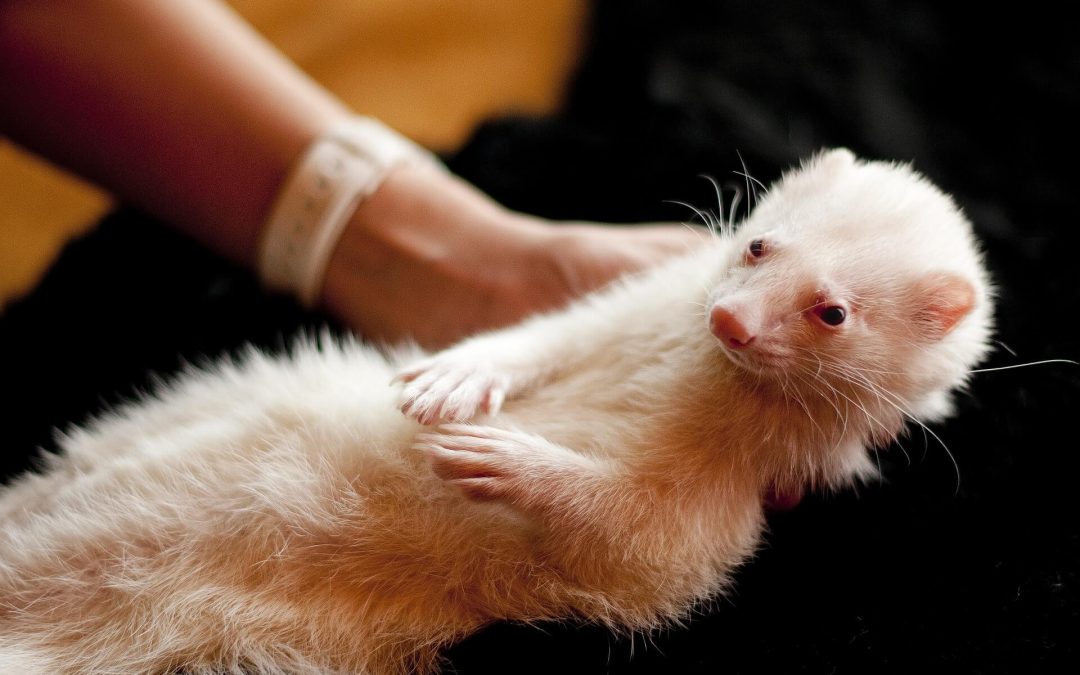
  • Albino — a true absence of pigment: solid white coat with pink or red eyes and a pink nose.
  • Dark-Eyed White (DEW) — white coat like an albino, but with dark eyes rather than pink or red ones.
  • Black — the darkest of the recognized colors, with jet-black guard hairs over a white or cream undercoat.

Common patterns layer on top of these base colors and describe how color and white fur are distributed, including panda (a fully white head with color elsewhere on the body), blaze (a white stripe running down the top of the head), roan (40–60% white guard hairs mixed through the coat), mitt (white feet, like a cat’s mitted pattern), and point or Siamese-style patterns (darker points on the face, feet, and tail against a lighter body).

Pet Care Tip: Coat color can shift somewhat with the seasons and as a ferret ages — a sable ferret’s coat is often noticeably darker in winter than in summer. This is normal and not a sign of a health problem.

Coat Length: Standard vs. Angora Ferrets

Nearly all pet ferrets have a “standard” short coat. Angora ferrets are a naturally occurring, recessive-gene variation with noticeably longer guard hairs, sometimes long enough to partially obscure the face, along with a longer-haired tail. Angoras are less common in the general pet trade and typically need more frequent brushing to prevent matting, but otherwise share the same care requirements as standard-coated ferrets. Coat length, like color, is not a breed distinction.

Size, Lifespan & Physical Traits

Ferrets are sexually dimorphic: adult males (hobs) typically weigh 2 to 4 pounds and measure around 15 to 20 inches including the tail, while females (jills) are noticeably smaller, usually 0.75 to 2 pounds and somewhat shorter in length. Both sexes have long, low-slung bodies, short legs, and a flexible spine that lets them turn around in tight spaces — a trait inherited from their polecat ancestors’ burrowing and hunting behavior.

The average pet ferret lives 6 to 10 years with good care. Spaying or neutering, along with regular veterinary checkups starting around age 2 to 3, meaningfully improves the odds of catching common age-related conditions early, since ferrets are prone to a handful of specific health problems covered in more detail below.

A Brief History of the Domestic Ferret

Ferrets were likely domesticated from the European polecat roughly 2,500 years ago, making them one of the older domesticated companion species, alongside dogs and cats. Historically, their primary job was “ferreting” — being sent down rabbit burrows to flush rabbits out for hunters, a practice that continued in parts of Europe well into the 20th century and gave the ferret its lasting reputation as a working animal rather than purely a companion pet. Modern pet ferrets in the US are almost universally captive-bred and sold already spayed or neutered and descented by the breeder, a departure from their working-animal origins that has shaped them into the companion animals seen in homes today.

Don’t Confuse Pet Ferrets With Black-Footed Ferrets

This is one of the more important distinctions missing from most casual ferret guides. The black-footed ferret (Mustela nigripes) is a separate species entirely — a wild North American animal, not a color variety of the domestic pet ferret. Black-footed ferrets are endangered, were once believed extinct in the wild, and exist today only through an intensive captive-breeding and reintroduction program run by the U.S. Fish and Wildlife Service. They are illegal to own as pets under federal law, and confusing them with domestic ferrets (which are legal in most US states) is a common source of misinformation online.

Where Ferrets Are (and Aren’t) Legal

Before bringing home a ferret of any color or pattern, it’s worth checking local law, since legality varies more than most new owners expect:

  • California — pet ferrets are illegal to import or possess, a law dating back to 1933, citing risk to native wildlife and agriculture.
  • Hawaii — pet ferrets are banned due to rabies and invasive-species concerns; penalties for illegal possession can include significant fines and jail time.
  • New York City — all five boroughs ban pet ferrets, even though they’re legal throughout the rest of New York State.
  • Other states and cities — most of the US allows pet ferrets without a permit, but some cities and counties have local restrictions or require licensing, so it’s worth checking municipal code in addition to state law.

Diet, Care & Common Health Issues

Ferrets are obligate carnivores with a short digestive tract, meaning they need a high-protein, high-fat, low-fiber diet — commercial ferret-specific kibble is the standard recommendation, since dog and cat food don’t match a ferret’s nutritional needs closely enough for regular feeding. Fresh water should always be available, and most ferrets do well with food accessible throughout the day given their fast metabolism.

Two conditions account for a large share of ferret veterinary visits in adulthood. Adrenal disease, caused by overproduction of sex hormones from the adrenal glands, affects a large proportion of ferrets by around age three and typically shows up as symmetrical hair loss, an itchy or thinning coat, and behavioral changes; it’s treatable with medication or surgery depending on severity. Insulinoma, a pancreatic tumor that overproduces insulin and causes dangerously low blood sugar, is also common in ferrets over two to three years old, with symptoms including lethargy, weakness, drooling, and in severe cases seizures. Both conditions are manageable with early veterinary intervention, which is the main reason regular checkups matter more for ferrets than their small size might suggest. Dental disease and heart disease round out the other conditions worth monitoring for as ferrets age.

Choosing a Ferret: What Color and Pattern Actually Mean for You

If you’re picking a ferret based on the guides that treat color as a personality trait, it’s worth resetting expectations: coat color and pattern are cosmetic, not behavioral. A sable ferret is not inherently calmer than an albino one, and a panda-patterned ferret isn’t rarer in temperament, only in coat appearance. What actually varies between individual ferrets is closer to what varies between individual dogs or cats of the same breed — personality shaped by early socialization, handling, and environment, not fur color. Choose based on which ferret you connect with in person, a reputable breeder or shelter’s health disclosures, and your own ability to meet a ferret’s care needs, rather than chasing a specific color as though it were a distinct type of pet.

Housing, Enrichment & Socialization

Ferrets are highly active and curious, and a cramped cage with little enrichment is one of the most common gaps between a ferret’s needs and how new owners actually set up their home. A multi-level cage with solid (not wire) flooring, hammocks, and tunnels gives a ferret room to climb and burrow, both natural behaviors carried over from their polecat ancestry. Daily supervised playtime outside the cage matters just as much as the cage setup itself — ferrets are social, playful animals that can become bored, destructive, or withdrawn without regular interaction and mental stimulation.

Ferret-proofing a play area is a real chore worth taking seriously: ferrets are notorious for squeezing into small gaps, chewing on soft rubber and foam (which can cause a life-threatening intestinal blockage if swallowed), and pulling small objects into hiding spots. Most experienced owners recommend keeping at least two ferrets together where possible, since they’re a highly social species that generally does better with companionship than living alone, though this depends on individual temperament and introduction process.

Common Mistakes New Ferret Owners Make

  • Assuming color or pattern indicates a separate breed. It doesn’t — all standard pet ferrets are the same species regardless of coat appearance.
  • Feeding dog or cat food as a regular diet. Ferrets need ferret-specific, high-protein food; other pet foods don’t meet their nutritional needs long-term.
  • Skipping veterinary checkups because a ferret “seems fine.” Adrenal disease and insulinoma often progress silently before symptoms become obvious.
  • Not checking local law before bringing a ferret home. California, Hawaii, and New York City all restrict or ban pet ferrets.
  • Confusing domestic ferrets with black-footed ferrets. They’re different species with entirely different legal status and conservation needs.

Editor’s Insights

  • If a ferret care guide lists “Whippet” or similarly invented names as ferret breeds, treat it skeptically — no major ferret organization recognizes breeds in the way dog kennel clubs do.
  • Angora ferrets, while uncommon, are a good option for owners who specifically want a longer coat and don’t mind the extra grooming time.
  • Pet insurance or a dedicated vet savings fund is worth considering given how common adrenal disease and insulinoma are in ferrets over three years old.

Frequently Asked Questions

How many types of ferrets are there?

There’s effectively one species of pet ferret, with eight officially recognized coat colors and around nine patterns describing appearance, plus a coat-length variation (Angora). These aren’t separate breeds.

Do different ferret colors have different personalities?

No. Coat color and pattern are cosmetic traits and don’t correlate with temperament, energy level, or care needs.

What is an Angora ferret?

An Angora is a domestic ferret with a naturally longer coat due to a recessive gene, requiring more frequent brushing than standard-coated ferrets but otherwise identical care.

Is a black-footed ferret the same as a pet ferret?

No. The black-footed ferret is a separate, endangered wild species native to North America and is illegal to keep as a pet. Pet ferrets are a different species entirely.

Where are ferrets illegal to own?

California and Hawaii ban pet ferrets statewide, and New York City bans them in all five boroughs despite ferrets being legal elsewhere in New York State.

How long do ferrets live?

The average pet ferret lives 6 to 10 years with proper diet, veterinary care, and spay/neuter.

What health problems are common in ferrets?

Adrenal disease and insulinoma are the two most common serious conditions in adult ferrets, both of which are more manageable with early detection through regular vet visits.

Can ferrets eat the same food as cats or dogs?

Not as a regular diet. Ferrets are obligate carnivores with different nutritional needs and should be fed a ferret-specific food.

For more on ferret care and choosing the right exotic pet, our guide to how long ferrets live as pets covers lifespan and cost in more depth, and our roundup of cuddly exotic pets can help you compare ferrets against other affectionate small pets. If you’re weighing legality before adopting, our guide to pets that are illegal in California covers ferrets and other restricted species in more detail.

Sources & References

  • American Ferret Association, “Ferret Color and Pattern Standards” — official color and pattern classifications
  • PetMD, “Ferret Colors, Markings, and Patterns” and “Adrenal Disease in Ferrets” — color standards, adrenal disease details
  • VCA Animal Hospitals, “Ferrets: Health Problems” — common ferret health conditions
  • Merck Veterinary Manual, “Endocrine Disorders of Ferrets” — adrenal disease and insulinoma clinical information
  • U.S. Fish and Wildlife Service, black-footed ferret recovery program information — distinction from domestic ferrets, conservation status
  • American Ferret Association, state-by-state legal status summary — California, Hawaii, and New York City restrictions


Written by the Pets Store Home editorial team and fact-checked against the veterinary and breed-association sources cited above. This article is for general educational information only and is not a substitute for professional veterinary advice. Consult an exotic-animal veterinarian for guidance specific to your ferret.

Last fact-checked: September 2026 — color and pattern standards, lifespan, health conditions, and state legality were checked against the published sources listed above.