cute bunny names

cute bunny names

Cute Bunny Names: 150+ Adorable Ideas for Girls, Boys and Bonded Pairs (2026)

What are some cute bunny names? Favorites include Clover, Biscuit, Daisy, Nibbles, Pudding, Hazel, Oreo and Bun Bun. Short, soft-sounding names with one or two syllables are easy for you to say and easy to pair with treats during training. Below you will find girl, boy, food, color, pair and funny names, plus tips for choosing.

Picking a name is one of the most fun parts of welcoming a rabbit home. This list of cute bunny names is grouped by style, so you can match a name to your rabbit’s looks, personality or favorite snack. We also explain how to test a name, why it helps to confirm your rabbit’s sex first, and how to teach a bunny to respond.

Key takeaways

  • The best cute bunny names are short, sweet and easy to say every day.
  • Young rabbits are hard to sex, so a vet check before naming can save a rename.
  • Rabbits can learn cues with clicker training and treats, per Rabbit.org.
  • Pet rabbits can live 8 to 12 years when spayed or neutered, per PetMD, so pick a name you will love long term.
  • Thumper and Bunny topped one large rabbit-name dataset, according to Vetstreet.

Top 20 Cute Bunny Names

If you want a quick shortlist, start here. These cute bunny names are short, gentle and work for almost any rabbit, from a tiny Netherland Dwarf to a giant lop. As general advice, say each one out loud a few times and see which feels natural.

Name Why it works
Clover A favorite rabbit plant and a lucky charm
Biscuit Warm, round and perfect for a tan bunny
Daisy Bright and cheerful for a playful doe
Nibbles Describes every bunny at snack time
Pudding Soft and sweet for a calm, cuddly rabbit
Hazel A gentle, earthy name for a brown coat
Oreo Classic choice for black and white bunnies
Bun Bun Playful, simple and very bunny
Pip Tiny name for a tiny rabbit
Willow Graceful and calm
Mochi Round, soft and squishy, like a cuddly bunny
Juniper Fresh and outdoorsy
Pepper Great for gray or speckled coats
Honey Sweet name for a golden rabbit
Scout Fits a curious explorer
Button Small, round and cute
Maple Cozy fall name for a red-brown bunny
Peanut Ideal for a small, lively rabbit
Luna Lovely for a white or silver bunny
Thumper A classic, famous for foot thumps

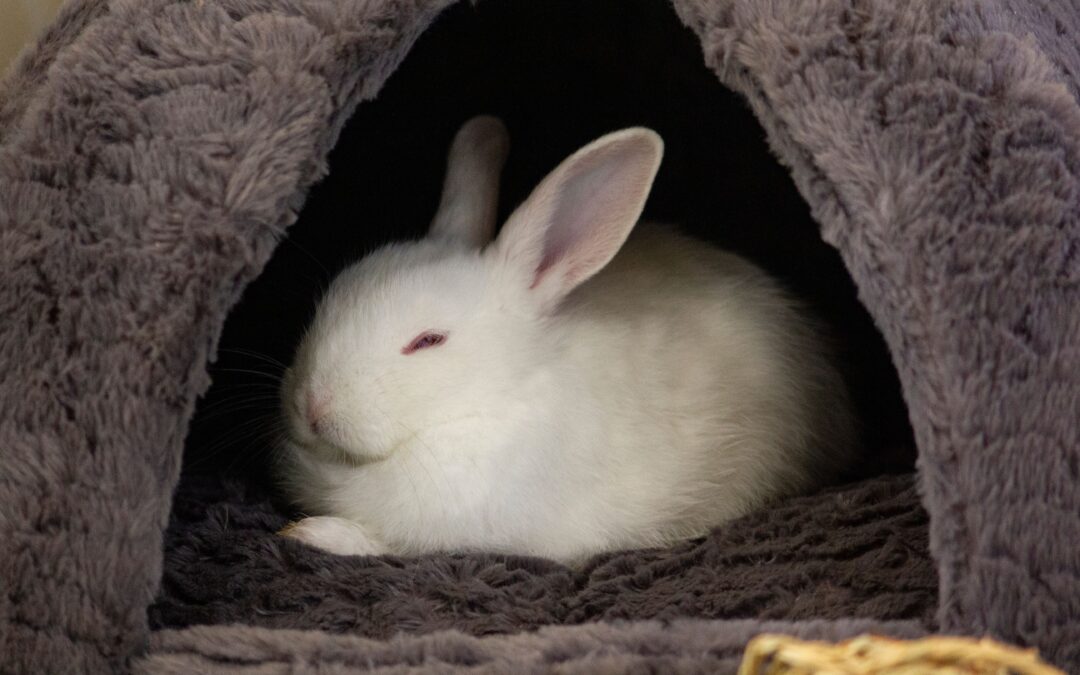
Cute bunny names guide: a small fluffy pet rabbit sitting on a soft blanket
Short, soft names suit most rabbits and are easy to use in training.

Female Rabbit Names: Sweet Ideas for Girls

These girl bunny names lean sweet, floral or whimsical, and any of them can join your list of cute bunny names for a doe. Many also work as gender-neutral picks if you are still waiting for a vet to confirm your rabbit’s sex.

Sweet and classic Floral and nature Whimsical
Bella Rosie Pixie
Lola Lily Twinkle
Coco Poppy Fable
Lucy Violet Sprinkle
Ruby Petal Dottie
Molly Fern Wren
Gracie Primrose Sunny
Ellie Blossom Cupcake
Penny Ivy Starla
Millie Marigold Fizzy

Cute Bunny Names for Boys

For a buck, try a classic name, an outdoorsy one or something a little cheeky. As general advice, pick a name that still fits when your rabbit grows from a tiny kit into a confident adult.

Classic Outdoorsy Cheeky
Charlie Rowan Bandit
Oliver Cedar Rascal
Milo Brook Ziggy
Teddy Moss Rocket
Jasper Aspen Dash
Benny Birch Bounce
Louie Forest Hopper
Winston Thistle Gizmo
Archie Clove Whiskers
Gus Sage Tater

Gender-Neutral Bunny Names

The UK animal welfare charity RSPCA notes that rabbits younger than 10 to 12 weeks don’t always have obvious genitals and advises getting them professionally checked if in doubt. Until then, gender-neutral cute bunny names are a safe choice: Clover, Pip, Mochi, Maple, Pepper, Bun Bun, Sunny, Biscuit, Juniper and Peanut all work for any rabbit.

Food-Inspired Cute Bunny Names

As general advice, food names make natural cute bunny names, because rabbits are so devoted to snack time. Oreo and CoCo even appear in Vetstreet’s popular-name data. Use these as names only, and do not feed a food just because it shares your rabbit’s name.

Veggie and herb Sweet treat Cozy food
Carrot Cookie Muffin
Basil Marshmallow Waffle
Parsley Truffle Dumpling
Radish Caramel Toast
Kale Jellybean Noodle
Cilantro Fudge Pancake
Turnip Cocoa Bagel
Pumpkin Sugar Nugget

PetMD, in an article by Melissa Witherell, DVM, recommends unlimited grass hay, fresh greens, a small amount of pellets and fresh water, with treats and fruit limited. A bunny named Cookie should still eat like a Clover. For safe veggie ideas, see our guide on what vegetables rabbits can eat.

Unique and Rare Bunny Names

Want pet rabbit names nobody else at the vet’s office has? Try Bramble, Quill, Tansy, Wisp, Fennel, Marlowe, Sorrel, Kiwi, Nimbus, Zephyr, Saffron or Thyme. As general advice, unusual names still work best when they are short and easy to say.

Cute Bunny Names by Color and Coat

Your rabbit’s coat is one of the easiest places to find a name. These groups match common colors and patterns.

Coat Name ideas
White or cream Snowball, Cotton, Pearl, Blizzard, Frost, Luna
Black Shadow, Midnight, Onyx, Licorice, Raven, Ink
Brown or tan Nutmeg, Hazel, Biscuit, Toffee, Mocha, Chestnut
Gray or silver Smokey, Pebble, Ash, Misty, Pepper, Storm
Orange or red Ginger, Maple, Rusty, Apricot, Amber, Copper
Spotted or patched Oreo, Domino, Patches, Freckles, Dotty, Pinto

Have a lop? Read our guide to the floppy eared bunny for breed and care details that might inspire a name too.

Cute Bunny Names for Bonded Pairs

Rabbit.org says rabbits “should not live in isolation” and do best with a bonded companion. If you adopt two, matching names make them even cuter. As general advice, choose names that sound different enough that you can call each rabbit clearly.

Pair Theme
Salt and Pepper Kitchen classics
Cookie and Cream Sweet treats
Peanut and Butter Snack duo
Sun and Moon Sky
Daisy and Clover Garden
Mac and Cheese Comfort food
Bean and Sprout Veggie patch
Biscuit and Gravy Breakfast

Two bonded pet rabbits sitting close together, ideas for cute bunny names for pairs
Bonded rabbits look even sweeter with matching names, like Salt and Pepper.

Funny and Pun Bunny Names

A little humor goes a long way. Try Hop Solo, Bunnicula, Hoppy Potter, Sir Hops-a-Lot, Hopscotch, Bunderful, Lettuce Leaf, Fluffernutter, Binky Bear or Count Fluffula. As general advice, save long joke names for nicknames and use a short version, like “Hops,” day to day.

Storybook Bunny Names

Classic stories are full of famous rabbits. Peter, Benjamin, Flopsy, Mopsy and Cottontail come from Beatrix Potter’s tales, Thumper is from Bambi, and Hazel and Fiver are rabbits from Watership Down. These names feel familiar and timeless.

How to Choose Cute Bunny Names That Stick

As general advice, short names for bunnies, with one or two syllables, are easiest to say, and a name that sounds different from common words like “no” helps avoid confusion. Rabbit.org, in a guide by Paige K Parsons, explains that rabbits can be clicker trained, quickly link the click with a reward and can then learn voice cues. Keep sessions “brief but frequent,” it says.

Tip Why it helps
Watch your rabbit for a few days Personality often suggests the perfect name (general advice)
Confirm the sex with a vet Young rabbits are hard to sex (RSPCA)
Keep it short Easier to use with cues and treats (general advice)
Say it out loud Make sure it sounds natural every day (general advice)
Think long term Spayed or neutered rabbits often live 8 to 12 years (PetMD)

Most Popular Rabbit Names

For real-world data, Vetstreet analyzed more than 56,000 rabbits in its database for names given in 2013. Thumper, Bunny, Oreo, Peter and Jack led the male list, while Bunny, Bella, Daisy, Oreo and Lola led the female list. The data is older, but it shows how often owners choose classic, cute bunny names.

Pet Care Tip: Our suggestion is to say your bunny’s name softly right before offering a small treat or a gentle head rub. Over time, your rabbit may start to connect the sound with good things.

When to call a vet right away: As general advice, a new bunny should see a rabbit-savvy vet for a checkup and sexing. Call a vet or a 24/7 emergency animal hospital at once if your rabbit stops eating or pooping, seems hunched or lethargic, or has trouble breathing, since rabbits can become seriously ill quickly.

7 questions to ask before you pick a name

  1. Has a vet confirmed my rabbit’s sex?
  2. Does the name fit my bunny’s color or personality?
  3. Is it short enough to use every day?
  4. Does it sound different from other pets’ names?
  5. Will I still like it in 10 years?
  6. Does it work with a bonded partner’s name?
  7. Can everyone in the family say it easily?

Example Scenario (illustrative)

Maya in Portland adopted a young gray rabbit and planned to call her Daisy. At the first vet visit, the vet confirmed he was a boy. Maya switched to Pepper, a name that suited his speckled coat, and began saying it before each evening treat. Within a few weeks, Pepper hopped over when he heard it.

Myth Fact
“Rabbits can’t learn anything.” Rabbits can be clicker trained and learn cues (Rabbit.org).
“You can easily sex a baby bunny.” Rabbits under 10 to 12 weeks may not show obvious genitals (RSPCA).
“Bunnies only live a few years.” Spayed or neutered rabbits often live 8 to 12 years (PetMD).
“A food name means they can eat that food.” A rabbit’s diet should be mostly hay (PetMD).

What most owners get wrong

In our experience, many new owners name a bunny on day one, before a vet confirms its sex, and end up with a “Daisy” who is a boy. Wait a few days, get a checkup, watch your rabbit’s personality and body language, and then choose. Our guide to rabbit aggressive behavior can help you read a new bunny’s moods. The name will fit far better.

Cute Bunny Names: FAQs

What is the cutest bunny name?

It depends on your rabbit, but short, soft names like Clover, Mochi, Biscuit, Daisy and Pip are sweet, easy favorites.

What are good female rabbit names?

Try Bella, Rosie, Lola, Poppy, Hazel, Ruby, Willow or Daisy for a sweet, classic feel.

What are good boy bunny names?

Charlie, Milo, Teddy, Jasper, Bandit, Oliver and Gus are friendly choices for a male rabbit.

Can rabbits learn their names?

Rabbits can learn cues with clicker training and treats, according to Rabbit.org. As general advice, use the name before rewards to build the link.

Should I wait to name my bunny?

As general advice, yes. The RSPCA says young rabbits can be hard to sex, so a vet check first can prevent a mismatch.

What were the most popular rabbit names?

In Vetstreet’s 2013 data, Thumper and Bunny topped the male and female lists.

What are good names for two bunnies?

Matching pairs like Salt and Pepper, Cookie and Cream, or Daisy and Clover are fun choices.

Final Verdict: Choosing Cute Bunny Names

The best cute bunny names are short, sweet and suited to your rabbit’s look and personality. Start with a shortlist, confirm your rabbit’s sex with a vet, and test a few names out loud. Pair the name with treats to help your bunny learn it. With a lifespan that often reaches 8 to 12 years, choose a name you will love saying for a long time.

Your next steps

  1. Pick three favorite names from this list.
  2. Book a rabbit-savvy vet checkup.
  3. Try each name for a day and keep the winner.

Share your bunny’s name on the Pets Store Home Facebook page, and find more care guides in our Rabbits section.

About the author: Written and reviewed by the Pets Store Home Editorial Team, pet owners who check every guide against trusted sources.

How we checked this guide: Name lists are our own original picks. Training facts come from Rabbit.org, sexing advice from the RSPCA, diet and lifespan from PetMD (Melissa Witherell, DVM), companionship guidance from Rabbit.org, and popular-name data from Vetstreet.

Where sources differ, such as lifespan, we give each figure: PetMD says 8 to 12 years for spayed or neutered rabbits, while Rabbit.org says 10 to 15 years with proper care. This guide was written in November 2026 and is reviewed every 12 months.

Last reviewed: November 2026.
border collie heeler mix

border collie heeler mix

Border Collie Heeler Mix: Size, Temperament, Health and Care (2026)

What is a Border Collie heeler mix? It is a cross between a Border Collie and an Australian Cattle Dog (blue or red heeler), often called a Border Heeler. Expect a medium-sized, very smart, high-energy herding dog of roughly 30 to 55 pounds that needs one to two hours of activity daily, plus training and mental work.

Both parents are working herders, so this cross is rarely a lap dog. A Border Collie heeler mix can be a brilliant partner for an active owner, a farm or dog sports, but it can struggle in a quiet home. This guide covers size, looks, temperament, exercise, health, grooming and who this mix suits best.

Key takeaways

  • A Border Collie heeler mix crosses a Border Collie with an Australian Cattle Dog.
  • Parents stand about 17 to 22 inches and weigh about 30 to 55 pounds, per PetMD.
  • Plan for one to two hours of exercise a day, plus training games.
  • Herding instincts can show up as chasing, circling or nipping at heels.
  • Ask about eye DNA tests and hearing (BAER) tests for both parents.

What Is a Border Collie Heeler Mix?

A Border Collie heeler mix has one Border Collie parent and one Australian Cattle Dog parent. “Heeler” is the common nickname for the Australian Cattle Dog, a breed developed to move cattle by nipping at their heels. As a crossbreed, the mix has no official breed standard, so each puppy can lean toward either parent in looks and personality.

PetMD, in an article by Tiffany Paul, DVM, describes Border Collies as highly intelligent, high-energy dogs that may try to herd children or other pets. PetMD, in an article by Veronica Higgs, DVM, describes Australian Cattle Dogs as intelligent, hard-working and protective, often bonding closely with one person and staying wary of strangers.

Trait Border Collie Australian Cattle Dog
Height 18 to 22 inches 17 to 20 inches
Weight 30 to 55 pounds 35 to 50 pounds
Lifespan 12 to 15 years Not stated by PetMD
Daily exercise One to two hours At least 45 minutes of running or jogging
Coat Medium-length double coat Short, dense double coat
With strangers Can be reserved Often wary

Source: PetMD breed profiles for the Border Collie (Tiffany Paul, DVM) and Australian Cattle Dog (Veronica Higgs, DVM).

Blue Heeler or Red Heeler Border Collie Mix?

PetMD explains that blue and red heelers are the same breed, the Australian Cattle Dog, simply in different coat colors. So a Border Collie blue heeler mix and a red heeler Border Collie mix are the same cross. As general advice, you may also see the names “Border Heeler,” “Border Collie cattle dog mix” or simply “blue heeler mix dog” on shelter listings.

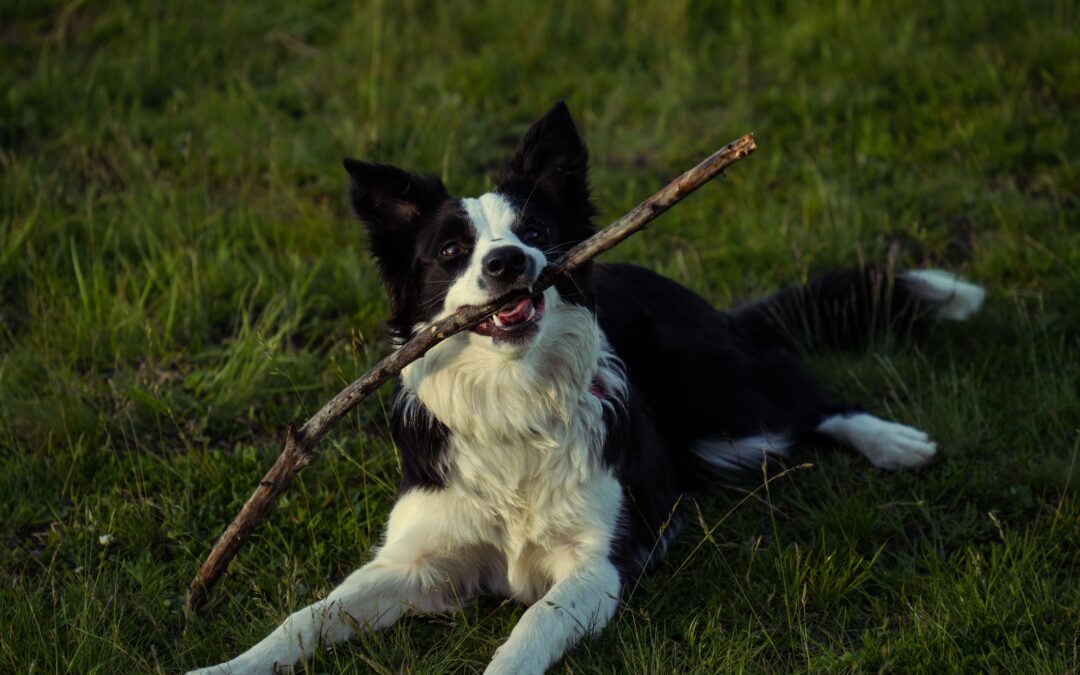
Border Collie heeler mix: a medium-sized herding dog with a speckled coat standing in a field
A Border Collie heeler mix blends two of the hardest-working herding breeds.

How Big Does a Border Heeler Get? Size and Appearance

There is no official size range for a Border Collie heeler mix, so the parents are your best guide. PetMD lists Border Collies at 18 to 22 inches and 30 to 55 pounds, and Australian Cattle Dogs at 17 to 20 inches and 35 to 50 pounds. Hepper estimates the mix at about 17 to 20 inches and 35 to 50 pounds. As general advice, individual dogs can fall outside that range.

As general advice, most Border Collie heeler mix dogs end up medium-sized and athletic, with males a little larger than females. Because both parents are similar in size, this cross tends to be more predictable than mixes of very different breeds.

Size measure Estimated range Source
Height About 17 to 20 inches Hepper estimate
Weight About 35 to 50 pounds Hepper estimate
Border Collie parent 18 to 22 in, 30 to 55 lb PetMD
Australian Cattle Dog parent 17 to 20 in, 35 to 50 lb PetMD

Mix estimates are not a breed standard. Individual dogs vary.

Coat Colors and Shedding

PetMD describes the Australian Cattle Dog’s coat as blue or red speckled, with a short, dense undercoat and a water-resistant outer coat. The Border Collie has a medium-length double coat. As general advice, a Border Collie heeler mix may show speckling, patches or a black and white Border Collie look, with a short to medium coat.

Both parents shed. PetMD says Border Collies shed year-round, more in spring and fall, and need brushing two to three times a week, while cattle dogs shed moderately to heavily and blow their undercoat twice a year. Cuteness describes these crosses as heavier-boned than a purebred Border Collie.

Border Collie and Australian Cattle Dog side by side, the two parent breeds of the Border Heeler
The Border Collie and the Australian Cattle Dog are the two parent breeds of this mix.

Border Collie Heeler Mix Temperament, Training and Exercise

As general advice, expect a clever, loyal and busy dog. PetMD says Border Collies are high-energy and may try to herd children or other pets. It says Australian Cattle Dogs are protective, wary of strangers and may nip or herd people, especially children, and that socialization helps curb nipping. A Border Collie heeler mix can inherit any of these traits.

Early socialization matters. The American Veterinary Society of Animal Behavior (AVSAB) says puppy classes can start at 7 to 8 weeks once a puppy has had a first set of vaccines, and that the key window for meeting new people, dogs and places runs until about 3 to 4 months. As general advice, keep introducing calm visitors, kids and other dogs well after that window closes.

Training a Border Collie Heeler Mix

Both PetMD profiles recommend positive reinforcement. PetMD notes that cattle dogs are very trainable but can be stubborn, and that Border Collies need early training and steady mental work to prevent destructive behavior. As general advice, teach a reliable “leave it,” a solid recall and a calm “settle,” and redirect nipping onto a toy instead of scolding.

Daily need Guidance Source
Exercise One to two hours (Border Collie); 45+ minutes of running (cattle dog) PetMD
Mental work Training games, puzzle toys, herding or agility PetMD, general advice
Living space Poor fit for apartments or small yards PetMD (cattle dog)
Kids May herd or nip; supervise and teach kids calm play PetMD
Strangers Can be reserved or wary; socialize early PetMD

Pet Care Tip: Our suggestion is to give your dog a “job” every day, such as fetching a specific toy by name, a short scent search or a beginner agility course. A herding mix with a purpose is usually calmer at home.

As general advice, a very active dog also needs the right food to fuel and maintain muscle. Read our guide on how to build muscle on a dog with food.

Border Collie Heeler Mix Health, Grooming and Lifespan

A mix can inherit health risks from both sides. PetMD lists hip dysplasia, epilepsy (usually starting around 2 to 5 years of age), collie eye anomaly, the MDR1 gene mutation, trapped neutrophil syndrome and neuronal ceroid lipofuscinosis for Border Collies. For Australian Cattle Dogs, PetMD lists heart conditions, eye defects including progressive retinal atrophy, inherited deafness and hip dysplasia.

The UC Davis Veterinary Genetics Laboratory says collie eye anomaly is an inherited eye disorder that ranges from no visible signs to blindness. It is autosomal recessive and testing is listed for both Border Collies and Australian Cattle Dogs. UC Davis says PRCD is a late-onset form of progressive retinal atrophy, that most affected dogs have noticeable vision loss by 4 years of age, and that the Australian Cattle Dog is a breed listed for testing.

Health issue Parent breed risk Source
Hip dysplasia Both PetMD
Collie eye anomaly Both (DNA test listed) PetMD, UC Davis
Progressive retinal atrophy (PRCD) Australian Cattle Dog PetMD, UC Davis
Congenital deafness Australian Cattle Dog PetMD, OFA
Epilepsy Border Collie PetMD
MDR1 gene mutation Border Collie PetMD
Trapped neutrophil syndrome Border Collie PetMD

A mix may inherit some, all or none of these risks.

Hearing Tests for Puppies

The Orthopedic Foundation for Animals (OFA) says the BAER test is the only accepted way to diagnose congenital deafness, can be done from 35 days of age and only needs to be done once. It adds that white in the coat raises the chance of deafness. As general advice, ask whether your puppy and both parents have BAER results, especially if the puppy has a lot of white.

Grooming and Lifespan

PetMD recommends brushing a Border Collie two to three times a week with a slicker brush, while cattle dogs benefit from daily brushing during shedding. PetMD gives Border Collies 12 to 15 years, and Hepper estimates 13 to 17 years for the mix, a non-vet figure. As general advice, plan for roughly 12 to 15 years with good care.

As general advice, a lean body helps protect the hips. If your dog needs to slim down, see our guide on how to help your dog lose weight.

When to call a vet right away: As general advice, call your vet or a 24/7 emergency animal hospital if your dog has a seizure lasting more than a few minutes or several in a row, sudden vision loss or bumping into things, limping that does not ease, or signs of a bad reaction after a new medication.

Curious about other heeler and herding mixes? Read our guides to the blue heeler and Corgi mix and the German Shepherd husky mix. Not sure what your rescue is? A dog DNA test can help.

7 questions to ask a breeder or rescue

  1. Can I meet both parents, or at least the mother?
  2. Do the parents have hip screening results?
  3. Were the parents DNA tested for collie eye anomaly and PRA?
  4. Do the puppy and parents have BAER hearing results?
  5. Was the Border Collie parent tested for MDR1?
  6. How does the dog react to kids, strangers and other pets?
  7. Will you take the dog back if it does not work out?

Example Scenario (illustrative)

Ryan in Boise adopted a 40-pound Border Heeler who nipped at his kids’ heels during backyard games. He swapped running games for fetch and tug, taught a “find it” scent game, and added a daily trail run. Within a few weeks, the nipping faded, and the dog settled on his mat in the evenings.

Myth Fact
“A big yard is enough exercise.” Border Collies need one to two hours of exercise a day (PetMD).
“Nipping means the dog is aggressive.” Cattle dogs may nip or herd, and socialization helps (PetMD).
“Blue and red heelers are different breeds.” Both are Australian Cattle Dogs in different colors (PetMD).
“Mixes can’t inherit eye disease.” Collie eye anomaly is inherited and listed for both parent breeds (UC Davis).

What most owners get wrong

In our experience, many owners give a herding mix plenty of running but little brain work. A tired body with a bored mind can still chew, herd and nip. Mix physical exercise with training, puzzles and short “jobs,” and most problem behaviors shrink.

Border Collie Heeler Mix: FAQs

What is a Border Collie heeler mix called?

It is often called a Border Heeler. You may also see Border Collie blue heeler mix or Border Collie cattle dog mix.

How big does a Border Heeler get?

Hepper estimates about 17 to 20 inches and 35 to 50 pounds. Both parents fall within roughly 17 to 22 inches and 30 to 55 pounds, per PetMD.

Are Border Heelers good family dogs?

They can be with active families, training and socialization. PetMD notes both parent breeds may try to herd or nip children, so supervise play.

How much exercise does a Border Heeler need?

PetMD recommends one to two hours a day for Border Collies and at least 45 minutes of running for cattle dogs.

Do Border Heelers shed?

Yes. PetMD says both parent breeds shed, with heavier seasonal shedding.

How long does a Border Collie heeler mix live?

PetMD gives Border Collies 12 to 15 years. Hepper, a non-vet source, estimates 13 to 17 years for the mix.

Can a Border Heeler live in an apartment?

As general advice, it is a poor fit. PetMD says cattle dogs do poorly in apartments or small yards.

Final Verdict: Is a Border Collie Heeler Mix Right for You?

A Border Collie heeler mix can be a loyal, brilliant and tireless companion, but it needs an active owner, one to two hours of exercise a day, daily mental work and early socialization to manage herding and nipping. Ask about eye, hip and hearing tests before you commit. If that fits your life, a Border Heeler can be an outstanding partner for adventures and dog sports.

Your next steps

  1. Meet adult dogs of both parent breeds.
  2. Ask for hip, eye DNA and BAER results.
  3. Plan daily exercise and a training class.

Share your Border Heeler on the Pets Store Home Facebook page, and find more breed guides in our Dogs section.

About the author: Written and reviewed by the Pets Store Home Editorial Team, pet owners who check every guide against trusted sources.

How we checked this guide: Parent breed traits and health come from PetMD profiles written by Tiffany Paul, DVM, and Veronica Higgs, DVM. Eye disease genetics come from UC Davis, hearing test guidance from the OFA, and socialization timing from AVSAB. Mix size and lifespan estimates come from Hepper and Cuteness.

Where sources differ, such as lifespan, we show each figure and its source. This guide was written in November 2026 and is reviewed every 12 months.

Last reviewed: November 2026.

rottweiler with german shepherd mix

rottweiler with german shepherd mix

Rottweiler with German Shepherd Mix: Size, Temperament, Health and Care (2026)

What is a Rottweiler with German Shepherd mix? It is a Rottweiler and German Shepherd cross, often called a Shepweiler. Expect a large, loyal dog of roughly 75 to 115 pounds that needs one to two hours of exercise daily, early socialization and checks for hip, bloat and spinal risks from both parents.

Both parent breeds are intelligent working dogs, so as general advice, this cross is often smart, devoted and protective. A Rottweiler with German Shepherd mix can be a wonderful family guardian in the right home, but it is a big commitment. This guide covers size, temperament, training, exercise, health, puppy care and who this mix suits best.

Key takeaways

  • A Rottweiler with German Shepherd mix is a large crossbreed, often called a Shepweiler.
  • Rottweilers weigh 80 to 135 pounds and German Shepherds 50 to 90 pounds, per PetMD.
  • Plan for at least 60 minutes to two hours of exercise a day.
  • Early, ongoing socialization is essential for a guardian-type dog.
  • Both parents carry joint risks, and German Shepherds can carry a gene linked to degenerative myelopathy.

What Is a Rottweiler with German Shepherd Mix?

A Rottweiler with German Shepherd mix has one Rottweiler parent and one German Shepherd parent, or a mix of both lines. As a crossbreed, it has no official breed standard. Each puppy can lean toward either parent in looks and personality, which is why it helps to know both breeds well.

PetMD, in an article by Heather Newett, MPH, DVM, describes Rottweilers as intelligent, eager-to-please working and guardian dogs that may bark at unfamiliar people. PetMD, in an article by Barri J. Morrison, DVM, describes German Shepherds as loyal, alert and gentle with family but often wary of strangers, with a strong prey drive.

Trait Rottweiler German Shepherd
Height 22 to 27 inches 22 to 26 inches
Weight 80 to 135 pounds 50 to 90 pounds
Lifespan About 9 to 10 years About 7 to 10 years
Daily exercise At least 60 minutes One to two hours
Coat Short; sheds year-round Double coat; sheds heavily year-round
With strangers May bark or be reserved Often wary

Source: PetMD breed profiles for the Rottweiler (Heather Newett, DVM) and German Shepherd (Barri J. Morrison, DVM).

Shepweiler, German Rottie or Rottweiler Shepherd Mix?

As general advice, these names all describe the same cross. “Shepweiler” is the most common nickname, but you may also see “German Rottie,” “Rottie Shepherd” or “German Shepherd Rottweiler mix” in listings and shelter records. None of them is an official breed name.

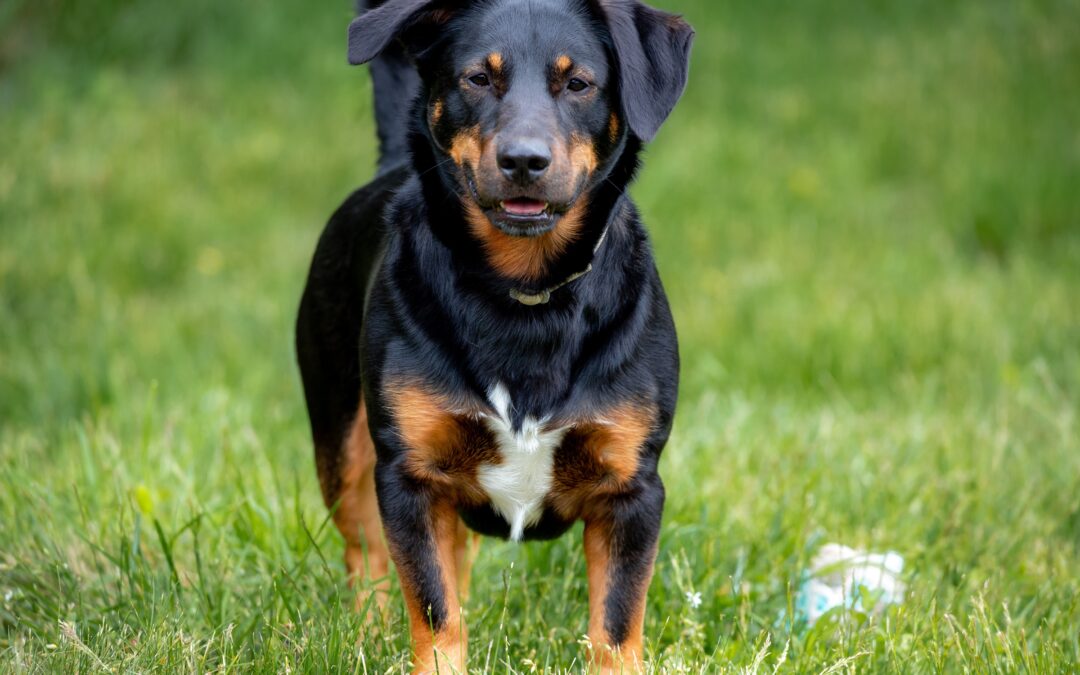
Rottweiler with German Shepherd mix: a large black and tan Shepweiler standing outdoors
A Shepweiler can have black and tan coloring, a shade both parent breeds often show.

How Big Does a Shepweiler Get? Size and Appearance

There is no official size range for a Rottweiler with German Shepherd mix, so the parents are the best guide. PetMD lists Rottweilers at 22 to 27 inches and 80 to 135 pounds, and German Shepherds at 22 to 26 inches and 50 to 90 pounds. K9 of Mine estimates that Shepweilers will likely weigh 75 to 115 pounds and stand 22 to 28 inches tall, noting that some dogs fall outside that range.

As general advice, a male Rottweiler with German Shepherd mix is usually larger than a female, and a puppy from a big Rottweiler parent may end up at the heavier end. If you love large dogs, see our guide to the biggest dog in the world.

Size measure Estimated range Source
Height About 22 to 28 inches K9 of Mine estimate
Weight About 75 to 115 pounds K9 of Mine estimate
Rottweiler parent 22 to 27 in, 80 to 135 lb PetMD
German Shepherd parent 22 to 26 in, 50 to 90 lb PetMD

Mix estimates are not a breed standard. Individual dogs vary.

Coat, Colors and Shedding

Both parents can be black and tan, so as general advice, many Shepweilers have similar coloring, and the coat can be short like a Rottweiler’s or a thicker double coat like a German Shepherd’s. PetMD says Rottweilers shed heavily year-round and need brushing weekly or more, while German Shepherds shed heavily all year, more in spring and fall, and benefit from daily brushing.

PetMD also notes that German Shepherds are not hypoallergenic. As general advice, expect plenty of hair with this mix whichever coat it inherits, and plan on regular brushing, nail trims and ear checks.

German Shepherd and Rottweiler side by side, the two parent breeds of the Shepweiler
The German Shepherd and the Rottweiler are the two parent breeds of this mix.

Rottweiler with German Shepherd Mix Temperament, Training and Exercise

As general advice, expect a loyal, intelligent and often protective dog. PetMD quotes the American Rottweiler Club, which says Rottweiler temperament ranges “from natural clowns, affectionate to almost everyone, to the very reserved one-person dog.” PetMD adds that German Shepherds suit experienced owners best and that breed accounts for “about 9% of a dog’s behavior,” so each dog is an individual.

Socialization matters most. The American Veterinary Society of Animal Behavior (AVSAB) says puppy classes can start at 7 to 8 weeks once a puppy has had a first set of vaccines, and that the key window for meeting new people, dogs and places runs until about 3 to 4 months. PetMD advises continuing socialization throughout a Rottweiler’s life.

Training a Rottweiler with German Shepherd Mix

Both PetMD profiles recommend positive reinforcement. Rottweilers learn quickly and are eager to please, while German Shepherds do well with consistency and obedience classes. As general advice, start training the day your puppy comes home, keep sessions short and fun, and focus on calm greetings, a reliable recall and loose-leash walking before the dog gets big and strong.

Daily need Guidance Source
Exercise At least 60 minutes (Rottweiler); one to two hours (German Shepherd) PetMD
Mental work Training games, puzzle toys, scent work PetMD, general advice
Socialization Start early and continue for life AVSAB, PetMD
Kids Often good with training; supervise and teach kids to be gentle PetMD
Small pets Use care; German Shepherds have a strong prey drive PetMD

Pet Care Tip: Our suggestion is to enroll in a positive-reinforcement puppy class as soon as your vet says it is safe. Meeting many friendly people and dogs early helps a guardian-type mix stay confident instead of reactive.

As general advice, a strong working-type dog also needs the right food to build and keep muscle. Read our guide on how to build muscle on a dog with food.

Rottweiler with German Shepherd Mix Health, Lifespan and Care

A mix can inherit health risks from both sides. PetMD lists obesity, hip and elbow dysplasia, cranial cruciate ligament rupture, osteosarcoma (bone cancer), bloat (GDV), entropion and subaortic stenosis (a heart condition) for Rottweilers. For German Shepherds, PetMD lists degenerative myelopathy, hip and elbow dysplasia, cancer, bloat, heart disease, exocrine pancreatic insufficiency (EPI), allergies and pannus.

The UC Davis Veterinary Genetics Laboratory explains that degenerative myelopathy is an inherited spinal cord disease, similar to ALS in people, that usually appears at 8 years or older. A DNA test for the SOD1 variant shows risk, though “not all DM/DM dogs will develop the disease.” German Shepherds are among the breeds with a reported link, and crossbred dogs have also been affected.

Health issue Parent breed risk Source
Hip and elbow dysplasia Both PetMD
Bloat (GDV) Both PetMD; Cornell notes large, deep-chested dogs are most at risk
Degenerative myelopathy German Shepherd PetMD, UC Davis
Osteosarcoma (bone cancer) Rottweiler PetMD
Subaortic stenosis Rottweiler PetMD
Cruciate ligament rupture Rottweiler PetMD
Exocrine pancreatic insufficiency German Shepherd PetMD

A mix may inherit some, all or none of these risks.

Bloat: A Large-Dog Emergency

Cornell University College of Veterinary Medicine says gastric dilatation-volvulus is a life-threatening emergency in which the stomach fills with gas and twists, and that large, deep-chested dogs are most at risk. It suggests two or more smaller meals a day, limiting activity after eating and avoiding raised food bowls. A preventive surgery called gastropexy greatly lowers the risk of twisting.

Lifespan and Puppy Feeding

PetMD puts Rottweiler lifespan at about 9 to 10 years and German Shepherds at about 7 to 10 years, while K9 of Mine says Shepweilers usually live 9 to 13 years. Because these sources differ, a realistic plan for a Rottweiler with German Shepherd mix is roughly 9 to 12 years. As general advice, keep your dog lean, since extra weight strains the joints. PetMD explains why large-breed puppies need food made for large breeds.

If your dog is carrying extra pounds, see our guide on how to help your dog lose weight.

When to call a vet right away: Go to your vet or a 24/7 emergency animal hospital at once if your dog retches without bringing anything up, has a swollen belly, drools, paces or collapses, since Cornell lists these as bloat signs. As general advice, also call promptly for sudden limping, dragging back paws or fainting.

One more practical point: as general advice, some landlords and insurers restrict large guardian breeds, so check your lease and policy first. The ASPCA opposes breed-specific laws and supports judging dogs on behavior. Curious about other mixes? Read our guides to the German Shepherd husky mix and the Siberian pitbull mix.

7 questions to ask a breeder or rescue

  1. Can I meet both parents, or at least the mother?
  2. Do the parents have hip and elbow screening results?
  3. Was the German Shepherd parent DNA tested for degenerative myelopathy?
  4. Has either parent had heart checks?
  5. How does the dog react to strangers and other dogs?
  6. What socialization has the puppy had so far?
  7. Will you take the dog back if it does not work out?

Example Scenario (illustrative)

Danielle in San Antonio adopted a 10-month-old, 70-pound Shepweiler who barked at every visitor. She started a positive-reinforcement class, asked friends to toss treats on arrival, and added two long walks and a sniff session each day. Within three months, he greeted guests calmly on cue, and her vet helped her set a feeding plan to keep him lean.

Myth Fact
“A Shepweiler is a ready-made guard dog.” Both breeds need early, lifelong socialization (PetMD, AVSAB).
“Mixed breeds don’t get inherited diseases.” Crossbred dogs have been affected by degenerative myelopathy (UC Davis).
“A big yard replaces walks.” Plan for 60 minutes to two hours of exercise a day (PetMD).
“One big meal a day is fine.” Cornell suggests two or more smaller meals to lower bloat risk.

What most owners get wrong

In our experience, many owners stop socializing once the puppy is past the cute stage. A large, protective dog that rarely meets new people can become wary as an adult. Keep introducing calm, positive experiences for life, and get help from a qualified trainer early if guarding behavior worries you.

Rottweiler with German Shepherd Mix: FAQs

What is a Rottweiler German Shepherd mix called?

It is most often called a Shepweiler. You may also see German Rottie or Rottie Shepherd.

How big does a Shepweiler get?

K9 of Mine estimates about 75 to 115 pounds and 22 to 28 inches tall, but individual dogs vary.

Are Shepweilers good family dogs?

They can be, with training and socialization. PetMD says both parent breeds are often good with children when well trained, with supervision.

How long does a Rottweiler German Shepherd mix live?

Sources differ: PetMD gives the parents 7 to 10 years, while K9 of Mine says Shepweilers usually live 9 to 13 years.

How much exercise does a Shepweiler need?

PetMD recommends at least 60 minutes a day for Rottweilers and one to two hours for German Shepherds.

Do Shepweilers shed a lot?

Yes. PetMD says both parent breeds shed heavily year-round, and German Shepherds are not hypoallergenic.

Is a Shepweiler good for first-time owners?

As general advice, it is better suited to experienced owners. PetMD says German Shepherds suit experienced owners best.

Final Verdict: Is a Rottweiler with German Shepherd Mix Right for You?

A Rottweiler with German Shepherd mix can be a loyal, smart and devoted family dog, but it is large, strong and naturally watchful. It needs an experienced owner, an hour or more of exercise a day, lifelong socialization and careful health planning for joints, bloat and spinal disease. If that fits your life, a Shepweiler can be an outstanding companion.

Your next steps

  1. Meet adult dogs of both parent breeds.
  2. Ask for hip, elbow and DM test results.
  3. Book a puppy class and check your lease and insurance.

Share your Shepweiler on the Pets Store Home Facebook page, and find more breed guides in our Dogs section.

About the author: Written and reviewed by the Pets Store Home Editorial Team, pet owners who check every guide against trusted sources.

How we checked this guide: Parent breed traits and health come from PetMD profiles written by Heather Newett, DVM, and Barri J. Morrison, DVM. Spinal disease genetics come from UC Davis, bloat guidance from Cornell, and socialization timing from AVSAB. Mix size and lifespan estimates come from K9 of Mine.

Where sources differ, such as lifespan, we show each figure and its source. This guide was written in November 2026 and is reviewed every 12 months.

Last reviewed: November 2026.

jack russell mix dog

jack russell mix dog

Jack Russell Mix Dog: Popular Mixes, Size, Temperament and Care (2026)

What is a Jack Russell mix dog? It is a cross between a Jack Russell Terrier and another breed, such as a Poodle, Chihuahua or Beagle. Many are small, smart and very energetic, with the Jack Russell’s strong prey drive. Size, coat and temperament vary with the other parent, so meet the dog and its parents before you commit.

Jack Russells are clever, bold and tireless, and as general advice, their mixed puppies often share those traits. A Jack Russell mix dog can be a fun, compact companion, but it is rarely a couch potato. This guide covers popular mixes, likely size, temperament, exercise, health and grooming, plus how to tell whether one fits your home.

Key takeaways

  • A Jack Russell mix dog blends a Jack Russell Terrier with another breed, so traits vary.
  • Purebred Jack Russells stand 10 to 15 inches and weigh about 13 to 17 pounds.
  • Expect high energy, a strong chase instinct, digging and barking.
  • No dog is 100% hypoallergenic, even if mixed with a Poodle.
  • Jack Russell parents can carry a gene for primary lens luxation, a painful eye disease.

What Is a Jack Russell Mix Dog?

A Jack Russell mix dog has one Jack Russell Terrier parent, or Jack Russell ancestry, plus another breed. To understand any mix, start with the terrier side. The Jack Russell Terrier Club of America (JRTCA) standard describes a working terrier “measuring between 10″ and 15″ at the withers,” with smooth, broken or rough coats and a coat that is more than half white.

The Chewy breed guide, which includes input from veterinarian Stephanie Liff, DVM, lists Jack Russells at 10 to 15 inches tall, 13 to 17 pounds and a lifespan of 13 to 15 years. PetMD, in an article by Virginia LaMon, DVM, describes “nearly inexhaustible energy and remarkable intelligence,” plus a high prey drive that may lead them to chase small animals, including cats.

Jack Russell, Parson Russell or Russell Terrier?

The names can be confusing. PetMD explains that the American Kennel Club registers this dog as the Parson Russell Terrier, while “Jack Russell” remains the common name. The JRTCA says its own Jack Russell standard covers dogs 10 to 15 inches tall, while the AKC’s Parson Russell is 12 to 15 inches and the Russell Terrier is 10 to 12 inches. Mixes can come from any of these lines.

Jack Russell trait What to expect Source
Height 10 to 15 inches JRTCA, Chewy
Weight About 13 to 17 pounds Chewy, PetMD
Lifespan 13 to 15 years Chewy
Coat Smooth, broken or rough; mostly white JRTCA
Energy Very high PetMD, Chewy
Prey drive High; may chase cats and small pets PetMD, Chewy

These are purebred Jack Russell traits. A mix can differ depending on the other parent.

Jack Russell mix dog: a small white and tan terrier mix standing on grass
A Jack Russell mix dog may keep the terrier’s white coat with tan or black markings.

There are many Jack Russell mix breeds, often searched as Jack Russell terrier mix breeds, and their nicknames are informal, not official breed names. Because each puppy can take after either parent, use the table below as a starting point, not a promise. As general advice, the other parent’s size has the biggest effect on how big a Jack Russell mix dog gets.

Jack Russell mix breeds: two small terrier mixes with different coats sitting side by side
Each Jack Russell mix dog can look different, depending on the other parent breed.
Mix (common nickname) Other parent What to expect
Jackapoo (Jack-a-poo) Poodle Size varies with the Poodle type; high energy (Rebarkable)
Jack Chi Chihuahua Very small, often bold (general advice)
Jackabee Beagle Small to medium, likely scent-driven (general advice)
Jack-Bichon Bichon Frise More consistent small size; athletic, strong chase drive (Rebarkable)
Jackanese Havanese Temperament can range from feisty to lapdog (Rebarkable)
Jacktese (Malti-Jack) Maltese Small to medium; temperament varies (Rebarkable)
Lab and Jack Russell mix Labrador Retriever Wide size range; very energetic (general advice)

Notes marked Rebarkable come from trainer Ali Smith; others are general advice. All mixes vary from puppy to puppy.

Jackapoo and Other “Hypoallergenic” Jack Russell Mixes

Mixes with Poodles, Bichons, Havanese or Maltese are sometimes marketed as hypoallergenic. The American Kennel Club says “no dog is 100% hypoallergenic,” and quotes allergist Tania Elliott, who explains that people can react to dander and saliva, not just hair. A low-shedding coat may help some allergy sufferers, but there is no guarantee.

Rebarkable adds that these crosses can vary widely in temperament, from a feisty terrier to a calm lapdog, and that a Jack-Bichon may show a strong chase drive. As general advice, spend time with the puppy’s parents, and if you have allergies, visit the dog more than once before you commit.

Mixed Breed Jack Russell from a Shelter

Some shelter dogs are labeled “Jack Russell mix” based on looks alone. The University of Florida reported on DNA studies showing that shelter staff often mislabel the breed of mixed dogs by appearance, in that case pit bull-type dogs. As general advice, treat any breed label as a guess. A dog DNA test can tell you more.

Jack Russell Mix Dog Temperament and Exercise

As general advice, much of what makes Jack Russell mix dogs lively comes from the terrier side. For the Jack Russell, Chewy describes a “well-known high prey drive,” a tendency to dig, including tunneling after vermin, and an “exuberant bark” that neighbors may not love in an apartment. It says cats are a poor match because of the chase instinct, while other dogs usually do fine with good socialization.

Chewy calls for “a solid commitment to vigorous exercise,” with walks a few times a day adding up to about an hour, plus hiking, running, fenced play or dog sports such as agility and flyball. PetMD warns that without enough exercise, these dogs may bark too much, dig or become anxious.

Daily need Jack Russell guidance Source
Exercise About an hour of walks, plus active play Chewy
Mental work Puzzle toys, training games, scent work General advice
Digging outlet A designated digging sandbox Chewy
Cats and small pets Use caution; strong chase instinct Chewy, PetMD
Kids Can do well with socialization and gentle kids Chewy

Training a Jack Russell Mix

PetMD notes that Jack Russells are clever but can be stubborn in training, and it recommends early socialization with children and other dogs. As general advice, short, fun, reward-based sessions work best for a Jack Russell mix dog. Teach a solid recall in a fenced area first, because many will chase squirrels or cats the moment they spot them.

Pet Care Tip: Our suggestion is to end every walk with five minutes of sniffing or a quick training game. A tired body and a busy brain are what keep a terrier mix calm at home.

Jack Russell Mix Dog Health, Grooming and Lifespan

Chewy, with health content medically reviewed by Chewy vets, lists patellar luxation, lens luxation, glaucoma, cataracts, Legg-Calve-Perthes disease (a hip condition) and pulmonic stenosis (a heart defect) as Jack Russell concerns. PetMD adds dental disease, which is common in small breeds. A mix can inherit these risks, plus any risks from the other parent.

The UC Davis Veterinary Genetics Laboratory says primary lens luxation is a painful inherited eye disorder that usually appears between 3 and 8 years of age and can quickly cause blindness without treatment. It is autosomal recessive, and the study behind the test included Jack Russell Terriers. As general advice, ask whether the Jack Russell parent was DNA tested for it.

Health issue What it affects Source
Primary lens luxation Eyes; can cause glaucoma and blindness UC Davis, Chewy
Patellar luxation Kneecap slips out of place Chewy, PetMD
Legg-Calve-Perthes disease Hip joint Chewy
Pulmonic stenosis Heart valve Chewy, PetMD
Dental disease Teeth and gums PetMD

A mix can also inherit health risks from the other parent breed.

Grooming and Lifespan

Chewy describes Jack Russell grooming as modest: a stripping comb every six to eight weeks, a bath about monthly, nail trims as needed and daily tooth brushing from puppyhood. As general advice, a mix with a Poodle, Bichon or Maltese parent may need more brushing and regular trims. Chewy gives Jack Russells a lifespan of 13 to 15 years, and as general advice, many small mixes live a similar span.

As general advice, small dogs gain weight quickly with extra treats, which adds strain to joints such as the knees. If your dog needs to slim down, see our guide on how to help your dog lose weight.

When to call a vet right away: As general advice, call your vet or a 24/7 emergency animal hospital if your dog has a red, cloudy or painful eye, squints or paws at an eye, suddenly limps or skips on a back leg, faints or tires very fast, or stops eating. Eye pain from lens luxation needs urgent care.

Curious about other mixes? Read our guides to the pitbull Chihuahua mix, the pitbull Dachshund dog and the Siberian pitbull mix.

7 questions to ask a breeder or rescue

  1. What breeds are the parents, and can I meet them?
  2. Was the Jack Russell parent tested for primary lens luxation?
  3. Have the parents had knee, hip, eye or heart checks?
  4. How does the dog act with cats and small pets?
  5. Has it ever dug out of a yard or escaped?
  6. How much exercise and training does it get now?
  7. Will you take the dog back if it does not work out?

Example Scenario (illustrative)

Jordan in Columbus adopted a 15-pound Jack Russell mix dog from a shelter. In the first week, the dog dug under the fence twice and barked at every squirrel. Jordan added a buried wire barrier, two long sniff walks a day and short training games at dinner. Within a month, the dog was calmer indoors and coming back when called in the yard.

Myth Fact
“Small dog, small exercise needs.” Jack Russells need about an hour of exercise a day (Chewy).
“A Poodle mix is fully hypoallergenic.” No dog is 100% hypoallergenic (AKC).
“Mixed breeds have no inherited problems.” Lens luxation is inherited, so a Jack Russell parent can pass it on (UC Davis).
“A shelter label tells you the breed.” Visual breed labels are often wrong (University of Florida).

What most owners get wrong

In our experience, many owners pick a Jack Russell mix because it is small and cute, then struggle with barking, digging and chasing. Those are normal terrier behaviors, not bad manners. Give the dog daily exercise, jobs to do and a secure yard, and most problems shrink.

Jack Russell Mix Dog: FAQs

How big does a Jack Russell mix get?

It depends on the other parent. Purebred Jack Russells are 10 to 15 inches tall and about 13 to 17 pounds, per Chewy.

Are Jack Russell mixes good family dogs?

They can be, with socialization and gentle kids, according to Chewy. As general advice, supervise them around small children and small pets.

Are Jack Russell terriers hypoallergenic?

No. The AKC says no dog is 100% hypoallergenic, and allergens come from dander and saliva as well as hair.

How long do Jack Russell mixes live?

Chewy gives purebred Jack Russells 13 to 15 years. As general advice, many small mixes live a similar span.

Do Jack Russell mixes bark a lot?

Often. Chewy describes an exuberant bark, and PetMD says under-exercised Jack Russells may bark excessively.

Can a Jack Russell mix live with a cat?

Sometimes, but use caution. Chewy says the breed’s chase instinct makes cats a poor match without careful introductions.

What is a Jackapoo?

A Jackapoo is a Jack Russell and Poodle mix. Rebarkable notes that its size varies widely depending on the Poodle used.

Final Verdict: Is a Jack Russell Mix Dog Right for You?

A Jack Russell mix dog can be a loyal, funny and compact companion, but it usually brings the terrier’s energy, prey drive, digging and barking. Size, coat and calmness depend on the other parent. If you can offer about an hour of exercise a day, training and a secure yard, and you check the parents’ eye and joint health, one of these mixes can be a great fit.

Your next steps

  1. Meet the dog, and its parents if possible, before deciding.
  2. Ask about lens luxation testing and knee checks.
  3. Secure your yard and plan daily exercise.

Share your Jack Russell mix on the Pets Store Home Facebook page, and find more breed guides in our Dogs section.

About the author: Written and reviewed by the Pets Store Home Editorial Team, pet owners who check every guide against trusted sources.

How we checked this guide: Breed size and coat details come from the JRTCA standard. Temperament, exercise, grooming and health come from PetMD (Virginia LaMon, DVM) and Chewy (input from Stephanie Liff, DVM). Eye disease genetics come from the UC Davis Veterinary Genetics Laboratory, and allergy facts from the AKC.

Mix traits vary from puppy to puppy, so we label general advice clearly. This guide was written in November 2026 and is reviewed every 12 months.

Last reviewed: November 2026.
fluffy frenchie price

fluffy frenchie price

Fluffy Frenchie Price: What a Long-Haired French Bulldog Really Costs (2026)

What is the fluffy frenchie price? Advertised prices for fluffy French Bulldogs commonly run from about $1,300 to $10,000, and one breeder example sits at $6,000 to $8,500. There is no verified national average. The long coat comes from a recessive gene, so breeders market it as rare, but the price reflects demand and marketing, not better health.

A fluffy Frenchie is a French Bulldog with a longer, softer coat than the usual short, smooth one. The look is popular online, and so is the question of what the fluffy frenchie price should be. This fluffy French Bulldog price guide explains typical asking prices, why they are high, what the coat gene means, what owning one costs each year and how to avoid paying too much.

Key takeaways

  • The fluffy frenchie price is usually at or above the top of the standard Frenchie range.
  • Regular breeder Frenchies cost about $1,500 to $8,000, per Lemonade pet insurance.
  • The long coat is caused by a recessive FGF5 gene variant called L4.
  • The AKC standard calls for a short, smooth coat, so fluffy Frenchies do not match it.
  • Lifetime costs for any Frenchie can reach $15,000 to $20,000.

Fluffy Frenchie Price in 2026: Typical Ranges

Honest price data is hard to find, because most figures come from sellers. Petful reviewed advertised listings and found fluffy French Bulldogs ranging from roughly $1,300 to $10,000, and one breeder asking $6,000 to $8,500 per puppy. Petful stresses that these are advertised examples, not validated national averages.

For comparison, Lemonade pet insurance, in a guide updated in October 2026, says a purebred French Bulldog from a breeder can cost $1,500 to $8,000, and that rarer coat colors can reach $6,000 or more. So the fluffy frenchie price usually sits at the upper end of the normal Frenchie range, and higher again when a long coat is paired with a “rare” color.

Type of French Bulldog Typical asking price Source
Standard Frenchie from a breeder $1,500 to $8,000 Lemonade (Oct 2026)
Frenchie in a “rare” color $6,000 or more Lemonade (Oct 2026)
Fluffy Frenchie (advertised listings) About $1,300 to $10,000 Petful listing review
Fluffy Frenchie (one breeder example) $6,000 to $8,500 Petful
Adoption fee (rescue) About $250 to $500 Dogster

Asking prices vary by seller, location, color and parent pedigree. None of these figures is a verified national average.

How Much Is a Fluffy Frenchie Puppy vs an Adult?

As general advice, young puppies usually carry the highest asking price, while adults retired from breeding programs or rehomed by owners often cost less. Rescues sometimes take in French Bulldogs, including long-haired ones, for an adoption fee. If the coat matters less than the dog, adoption is the lowest-cost route.

Fluffy frenchie price guide: a long-haired French Bulldog with a soft, fluffy coat
A fluffy Frenchie has a longer coat caused by a recessive gene variant.

Why Do Fluffy Frenchies Cost So Much?

Genetics is a big part of the story. The UC Davis Veterinary Genetics Laboratory says long hair in dogs comes from variants of the FGF5 gene, and that the variant found in French Bulldogs is called L4. These variants are recessive, so a puppy needs two copies, one from each parent, to have a long coat. A short-coated dog can still carry one copy without showing it.

As general advice, because two carriers are needed, breeders who want fluffy puppies must plan pairings carefully, and demand for the look online is strong. Limited supply plus high demand is what pushes the fluffy frenchie price up. A higher price does not mean a healthier or better-bred dog.

Long-haired fluffy French Bulldog next to a standard short-coated French Bulldog
The fluffy coat needs two copies of a recessive gene, which limits supply and raises the fluffy frenchie price.

Is a Fluffy Frenchie Purebred?

A fluffy Frenchie can be purebred, since UC Davis lists the L4 variant as one found in the French Bulldog breed. However, the AKC French Bulldog breed standard says the coat should be “moderately fine, brilliant, short and smooth.” A long coat does not match that description, so, as general advice, fluffy Frenchies are not what show breeders aim for, even though the gene occurs in the breed.

Rare Colors Raise the Price Even More

Some fluffy Frenchies are also sold in so-called rare colors. The French Bull Dog Club of America (FBDCA) calls these “fad colors” when they are disqualified by the breed standard, and warns that some breeders sell them “for very inflated prices” by calling them rare. The AKC standard lists solid black, mouse, liver, black and tan, black and white, and white with black as disqualifying colors, and the FBDCA says blue-dilution dogs are disqualified as mouse.

What drives the price Effect on cost
Both parents must carry the L4 variant Only puppies with two copies are fluffy (UC Davis)
Social media demand Higher asking prices (general advice)
“Rare” or fad color added Can reach $6,000 or more (Lemonade)
DNA and health testing of parents Adds breeder cost; worth paying for (general advice)
Breeder location and reputation Prices vary widely (general advice)

Curious about color pricing in particular? See our guide to how much a merle French Bulldog costs.

Beyond the Fluffy Frenchie Price: Ownership Costs

The purchase is only the start. Lemonade estimates initial costs of $2,000 to $5,000 for a French Bulldog, covering the puppy, vaccines, spay or neuter, microchip and supplies. That figure assumes a standard puppy, so expect more if you pay a fluffy premium. It lists yearly costs of $300 to $600 for food, $500 to $1,000 for routine vet care, $100 to $300 for grooming and $100 to $300 for extras, with an average lifetime cost of $15,000 to $20,000.

Cost item Estimated range Notes
Initial costs (standard puppy included) $2,000 to $5,000 Lemonade; higher with a fluffy puppy
Food $300 to $600 a year Lemonade
Routine vet care $500 to $1,000 a year Lemonade
Grooming $100 to $300 a year Lemonade; fluffy coats may need more brushing (general advice)
Toys, treats, bedding $100 to $300 a year Lemonade
Lifetime total $15,000 to $20,000 Lemonade average

Figures from Lemonade’s French Bulldog cost guide (updated October 2026). Your costs will vary by location and health.

Health Costs to Plan For

PetMD, in an article by Brittany Grenus, DVM, explains that French Bulldogs are brachycephalic, or flat-faced, which can narrow the nostrils and airway. Surgery can help, but it often needs a specialist. PetMD also lists skin infections in skin folds, heatstroke risk, spinal problems such as hemivertebra, and eye issues such as cherry eye and cataracts.

Lemonade gives some estimates for airway surgery: $300 to $1,000 to widen narrow nostrils, $300 to $4,500 to shorten an elongated soft palate, and $300 to $3,000 to remove everted laryngeal saccules. PetMD adds that allergy diagnosis can cost upwards of $1,000 and recommends pet insurance. As general advice, a long coat does not remove any of these breed-wide risks.

Pet Care Tip: Our suggestion is to get pet insurance quotes before you pay a deposit, and to set aside a small emergency fund each month. With a breed prone to airway and spine problems, one airway surgery can rival the fluffy frenchie price itself.

As general advice, keeping a Frenchie lean also eases breathing and joint strain. If your dog needs to slim down, read our guide on how to help your dog lose weight.

How to Pay a Fair Fluffy Frenchie Price and Buy Safely

A fair fluffy frenchie price should buy health testing, not just a coat. The FBDCA health testing page lists the tests required for the OFA CHIC program: hips, eyes by a board-certified veterinary ophthalmologist, patellas and a cardiac exam. It also recommends tests such as thyroid, elbows, juvenile hereditary cataracts and the Respiratory Function Grading Scheme.

Ask for the parents’ coat-length DNA results too. As general advice, a fluffy puppy should come from two parents that each carry the L4 variant, and a lab such as UC Davis can confirm the genotype. If you are unsure what a dog’s background is, a dog DNA test can help.

Green flag Red flag
Shows OFA health results for both parents No health records, only “vet checked”
Shares coat-length DNA results Claims the coat is “rare” with no proof
Lets you meet the mother Meets only in a parking lot
Explains the breed’s health risks honestly Promises a “healthy” or “problem-free” dog
Gives a written contract and takes dogs back Pressures you to pay a deposit fast

Green and red flags are general buying advice.

When to call a vet right away: As general advice, call your vet or a 24/7 emergency animal hospital if a French Bulldog has noisy or labored breathing, blue or gray gums, collapse or extreme weakness in heat, sudden back pain or wobbly hind legs, or a red, bulging or cloudy eye.

7 questions to ask before you pay

  1. Can I see OFA results for both parents?
  2. Do both parents have coat-length DNA results?
  3. How do the parents breathe at rest and after play?
  4. Has either parent had airway or spine surgery?
  5. Can I meet the mother and see where the puppies live?
  6. What does the contract and health guarantee cover?
  7. Will you take the dog back at any age?

Example Scenario (illustrative)

Priya in Phoenix found a fluffy Frenchie advertised at $9,500. She asked for the parents’ health and DNA results, and the seller had none. She kept searching and found a breeder asking less who shared OFA results and coat-length tests for both parents. Comparing paperwork, not just the fluffy frenchie price, helped her choose.

Myth Fact
“Fluffy Frenchies are a separate breed.” They are French Bulldogs with a recessive long-hair variant (UC Davis).
“A higher price means a healthier dog.” Price reflects demand; health testing is what matters (general advice).
“Rare colors are prized by the breed club.” The FBDCA calls disqualified colors “fad colors.”
“A long coat fixes breathing problems.” Flat-faced airway risks remain, per PetMD.

What most owners get wrong

In our experience, many buyers focus on the coat and color and forget the breed’s health costs. They pay a premium up front and then struggle with vet bills later. Budget for insurance and care first, then decide how much you can spend on the puppy.

Fluffy Frenchie Price: FAQs

How much is a fluffy Frenchie?

Advertised prices commonly range from about $1,300 to $10,000, per a Petful review of listings. There is no verified national average.

Why are fluffy Frenchies so expensive?

Both parents must carry a recessive long-hair gene (UC Davis). As general advice, that limits supply while demand is high, and rare colors raise prices further.

Is a fluffy Frenchie AKC recognized?

The French Bulldog is an AKC breed, but the standard calls for a short, smooth coat, so a long coat does not match it.

Are fluffy Frenchies healthier?

No. A long coat does not change the breed’s flat-faced airway, skin and spine risks, according to PetMD.

How much does a fluffy Frenchie cost per year?

Adding up Lemonade’s yearly estimates gives about $1,000 to $2,200 for food, routine vet care, grooming and extras, not counting illness.

Can two short-haired Frenchies have a fluffy puppy?

Yes, if both carry one copy of the L4 variant. UC Davis says short hair is dominant and can hide the long-hair gene.

Is it cheaper to adopt a French Bulldog?

Usually. Dogster lists adoption fees of about $250 to $500, far below typical breeder prices.

Final Verdict: Is the Fluffy Frenchie Price Worth It?

The fluffy frenchie price is driven by a recessive coat gene, social media demand and “rare” color marketing, so asking prices often sit at or above the top of the standard Frenchie range. The coat does not make the dog healthier, and lifetime costs can reach $15,000 to $20,000. If you buy, pay for health testing and honesty, not fluff, and budget for insurance first.

Your next steps

  1. Set a total budget, including insurance and vet care.
  2. Ask every seller for OFA and coat-length DNA results.
  3. Check French Bulldog rescues before buying.

Share your Frenchie on the Pets Store Home Facebook page, and find more breed guides in our Dogs section.

About the author: Written and reviewed by the Pets Store Home Editorial Team, pet owners who check every guide against trusted sources.

How we checked this guide: Coat genetics come from the UC Davis Veterinary Genetics Laboratory. Breed standard and color details come from the AKC and the French Bull Dog Club of America. Health information comes from PetMD (Brittany Grenus, DVM). Cost figures come from Lemonade, Petful and Dogster.

Price data for fluffy Frenchies is mostly seller-advertised, so we label every figure with its source and do not claim a national average. This guide was written in November 2026 and is reviewed every 12 months.

Last reviewed: November 2026.