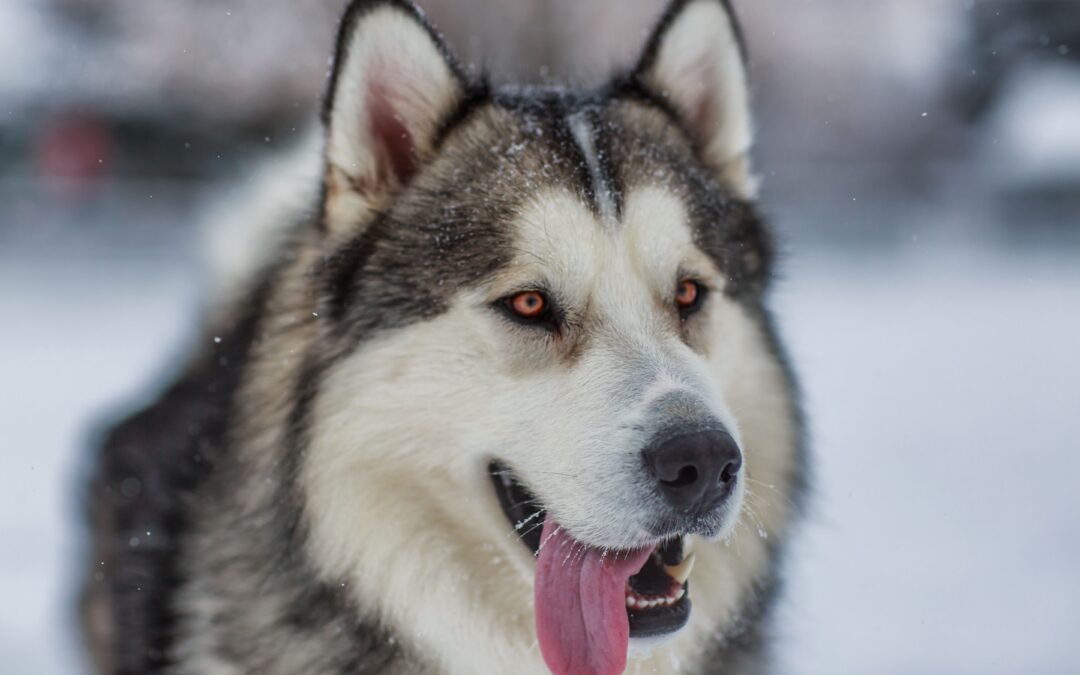
difference between husky and malamute

difference between husky and malamute

Difference Between Husky and Malamute: Size, Temperament, Health and Care (2026)

What is the difference between husky and malamute dogs? The Alaskan Malamute is bigger and heavier, built to haul freight, with brown eyes only. The Siberian Husky is lighter and faster, built to pull light loads over long distances, and can have blue, brown or mismatched eyes. Both are friendly, high-energy sled dogs with thick coats that shed heavily.

Huskies and malamutes look so alike that many people use the names for the same dog. They are two separate breeds with their own breed clubs, standards and health concerns. This guide explains the difference between husky and malamute breeds in size, looks, temperament, exercise, health and daily care.

Key takeaways

  • The biggest difference between husky and malamute dogs is size: malamute males are about 85 lbs, husky males 45 to 60 lbs.
  • Malamutes were bred for strength and freight; huskies for speed over distance.
  • Blue eyes are allowed in huskies but disqualify a malamute in the show ring.
  • Both breeds need lots of exercise, secure fencing and regular brushing.
  • Malamute breeders should screen hips and eyes and DNA test for polyneuropathy.

Difference Between Husky and Malamute at a Glance

In any Alaskan Malamute vs Siberian Husky comparison, start with their jobs: both are Arctic sled dogs bred for different work. The Alaskan Malamute Club of America (AMCA) breed standard describes the malamute as built “for strength and endurance” to haul freight, and says it is not meant as a racing sled dog. The Siberian Husky Club of America (SHCA) breed standard describes a husky that moves with speed and grace and can carry “a light load at a moderate speed over great distances.”

Trait Siberian Husky Alaskan Malamute
Original job Pulling light loads fast over distance Hauling heavy freight
Height (males) 21 to 23.5 inches About 25 inches
Weight (males) 45 to 60 lbs About 85 lbs
Height (females) 20 to 22 inches About 23 inches
Weight (females) 35 to 50 lbs About 75 lbs
Eye color Brown, blue, one of each or parti-colored Brown only (blue disqualifies)
Coat Double, medium length Thick, coarse outer coat, woolly undercoat
Tail Sickle curve over the back Plume carried over the back
Lifespan About 12 to 14 years About 10 to 14 years

Sources: SHCA and AMCA breed standards (size, eyes, coat, tail); PetMD (lifespan). Malamute figures are the breed club’s “desirable freighting sizes,” not limits.

Is a Malamute a Husky?

No. As general advice, “husky” is often used loosely for many sled dogs, but the Alaskan Malamute and the Siberian Husky are separate breeds. The United Kennel Club (UKC) says the malamute was named after the Mahlemut people, who settled along Kotzebue Sound in northwestern Alaska. The UKC says the Siberian Husky was developed by the Chukchi people of northeastern Siberia, and the dogs later reached Alaska.

Alaskan vs Siberian Husky: Another Common Mix-Up

The Alaskan husky is a third type of dog that adds to the confusion. Wikipedia notes it is “not an officially recognized breed by any kennel club” and has no breed standard, because it is a working crossbreed whose looks vary a lot. So when people ask about the difference between husky and malamute dogs, they usually mean the Siberian Husky and the Alaskan Malamute.

Difference between husky and malamute: a Siberian Husky and an Alaskan Malamute side by side
The malamute is larger and heavier; the husky is lighter and built for speed.

Difference Between Husky and Malamute in Size and Looks

As general advice, size is the easiest way to tell them apart. The SHCA standard gives husky males a height of 21 to 23.5 inches and a weight of 45 to 60 pounds, while females are 20 to 22 inches and 35 to 50 pounds. The AMCA lists desirable freighting sizes of about 25 inches and 85 pounds for malamute males, and 23 inches and 75 pounds for females.

That is the most visible difference between husky and malamute dogs: a malamute male can outweigh a husky male by 25 to 40 pounds. The AMCA describes the malamute as powerful and deep-chested, while huskies look leaner and lighter, with a quicker stride. If you like big dogs, see our guide to the biggest dog in the world.

Eyes, Ears and Tail

Eye color is a clear clue. The SHCA standard says husky eyes may be brown or blue, and one of each or parti-colored eyes are acceptable. The AMCA standard asks for brown, almond-shaped eyes and calls blue eyes a disqualifying fault. Both breeds have triangular ears. The SHCA wants husky ears set high and close-fitting, while the AMCA describes slightly rounded tips and lists high-set ears as a fault in malamutes.

Husky vs malamute eye color: a Siberian Husky with blue eyes next to an Alaskan Malamute with brown eyes
Eye color is an easy difference between husky and malamute dogs: only the husky breed standard allows blue eyes.

Tails differ too. A husky carries its tail in a graceful sickle curve over the back when alert. A malamute carries a well-furred plume over its back, which the AMCA says should not be a snap tail or curl tightly against the back.

Coat and Colors

The husky has a double coat of medium length in black, gray, agouti, sable, red or white, with no color preferred. The malamute has a thick, coarse outer coat over a dense, woolly undercoat, in shades from light gray through black, sable and red, with white on the underbody, legs, feet and part of the face.

How to tell them apart Husky Malamute
Build Lean, light, quick Powerful, deep-chested
Eyes Any of brown, blue or mixed Brown only
Tail Sickle curve Fluffy plume
Movement Smooth and fast Steady and strong

Based on the SHCA and AMCA breed standards.

Malamute vs Husky Temperament and Exercise

In personality, the difference between husky and malamute dogs is smaller than in size. The SHCA standard calls the husky friendly, gentle, alert and outgoing, and says it does not show the possessive qualities of a guard dog. The AMCA standard calls the malamute affectionate and friendly, “not a ‘one man’ dog,” and loyal and playful, becoming dignified with age.

Based on those descriptions, neither breed is a natural guard dog. PetMD, in an article written by Tiffany Paul, DVM, and reviewed by Jo Cornett, DVM, describes huskies as smart, outgoing and independent thinkers that need consistent training. PetMD, reviewed by Barri J. Morrison, DVM, says malamutes need early socialization with other pets and can have a high prey drive, so small animals may be chased.

How Much Exercise Do They Need?

Both are working breeds with high energy. PetMD says huskies do best with active families that can give them at least 40 minutes of exercise every day, and that bored huskies may dig and escape yards. PetMD also says malamutes need a lot of exercise and quotes the Alaskan Malamute Rescue of New England: “a tired malamute is a happy malamute!”

As general advice, the difference between husky and malamute exercise styles is speed versus power. Huskies tend to enjoy running and canicross, while malamutes often suit hiking, pulling and backpacking, which match their freighting past. Both need a secure, tall fence and a leash outside it. Both breeds were built for the cold, so in our experience they need shade, water and gentle exercise in hot weather.

Lifestyle need Husky Malamute
Daily exercise At least 40 minutes (PetMD) A lot; tired is happy (PetMD)
Best activities Running, canicross (general advice) Hiking, pulling, backpacking (general advice)
Guard dog? No (SHCA) No, friendly to people (AMCA)
Other pets Usually good with training (PetMD) Needs early socialization; prey drive (PetMD)
Escape risk Bored huskies may dig and escape (PetMD) Secure fencing advised (general advice)

Pet Care Tip: Our suggestion is to check your fence before bringing home either breed. Bury wire or pavers along the base to stop digging, and make sure gates latch firmly.

Health, Lifespan and Grooming Differences

PetMD gives the husky a lifespan of about 12 to 14 years and the malamute about 10 to 14 years. For huskies, PetMD lists eye diseases such as cataracts, progressive retinal atrophy and corneal dystrophy, plus hypothyroidism and hip dysplasia, and recommends yearly eye exams. The Siberian Husky Club of America adds that hereditary cataracts can appear as early as 3 months of age.

For malamutes, PetMD lists hip and elbow dysplasia, cataracts, hypothyroidism, chondrodysplasia (a genetic limb deformity) and polyneuropathy, a nerve disorder with no cure. The AMCA health statement published by the AKC requires hip screening, eye screening and a DNA test for polyneuropathy, and recommends elbow, heart and thyroid screening plus DNA tests for cone degeneration and primary ciliary dyskinesia.

Health topic Husky Malamute
Lifespan About 12 to 14 years About 10 to 14 years
Main concerns Eye disease, hip dysplasia, hypothyroidism Hip and elbow dysplasia, polyneuropathy, chondrodysplasia, hypothyroidism
Tests to ask a breeder for Eye exams and hip screening Hips, eyes, polyneuropathy DNA; ideally elbows, heart, thyroid

Sources: PetMD (both breeds), SHCA eye testing guidance, AMCA health statement via the AKC.

Grooming and Shedding

Both breeds shed a lot. PetMD says the husky undercoat sheds about twice a year and suggests a rake-style brush. For the malamute, PetMD advises daily brushing of the thick double coat and a bath every 6 to 8 weeks. As general advice, avoid shaving either breed, since both breed standards limit trimming to small areas such as the feet.

As general advice, a lean weight helps protect the joints of both breeds. If your dog is carrying extra pounds, read our guide on how to help your dog lose weight.

Husky or Malamute: Which Breed Is Right for You?

Knowing the difference between husky and malamute personalities and needs makes the choice easier. As general advice, a husky may suit a runner or an active family that wants a medium-sized dog, while a malamute may suit an experienced owner who wants a large, strong hiking partner.

Curious about mixes? Read our guides to the German Shepherd husky mix, the Siberian pitbull mix and the greyhound husky mix. Not sure what your rescue is? A dog DNA test can help.

When to call a vet right away: As general advice, call your vet or a 24/7 emergency animal hospital if either breed shows sudden limping, weakness or wobbling, cloudy or painful eyes, heavy panting or collapse in heat, or a swollen belly with retching.

7 questions to ask a breeder or rescue

  1. Is this dog a Siberian Husky, an Alaskan Malamute, or a mix?
  2. Can I see hip and eye results for both parents?
  3. For malamutes, is there a polyneuropathy DNA result?
  4. How does this dog act with cats, small pets and other dogs?
  5. Has the dog ever escaped a fence or dug out?
  6. How much exercise does it get now?
  7. Will you take the dog back if it does not work out?

Example Scenario (illustrative)

Marcus in Denver runs trails three mornings a week and wanted a dog to join him. He met a 50-pound husky and a 90-pound malamute at a rescue. The husky matched his running pace, while the malamute preferred a slower walk. Learning the difference between husky and malamute energy styles helped him choose the husky.

Myth Fact
“Malamutes are just big huskies.” They are a separate breed with their own standard and club (AMCA).
“Huskies and malamutes make good guard dogs.” Both are friendly to people; the SHCA says huskies lack guard-dog possessiveness.
“Malamutes can have blue eyes like huskies.” The AMCA standard calls blue eyes a disqualifying fault; the SHCA standard allows them in huskies.
“Shaving keeps them cool.” Their standards discourage trimming; as general advice, keep the double coat and give shade.

What most owners get wrong

In our experience, many owners choose by looks alone and underestimate the work: both breeds can be independent, energetic and quick to escape. Plan daily exercise, training and a secure yard before you bring one home, whichever breed you choose.

Difference Between Husky and Malamute: FAQs

Which is bigger, a husky or a malamute?

The malamute. Breed club figures put malamute males at about 25 inches and 85 pounds, versus 21 to 23.5 inches and 45 to 60 pounds for husky males.

Can malamutes have blue eyes?

Not in the show ring. The AMCA breed standard calls blue eyes a disqualifying fault, while huskies may have blue, brown or mixed eyes.

Which lives longer, a husky or a malamute?

PetMD gives huskies about 12 to 14 years and malamutes about 10 to 14 years.

Are huskies or malamutes better with kids?

PetMD says huskies are generally good with kids, and the AMCA calls malamutes friendly. As general advice, supervise any large dog with young children.

Do huskies and malamutes shed a lot?

Yes. Both have thick double coats that shed heavily, per PetMD.

Is a husky malamute mix a real breed?

No. As general advice, a husky and malamute cross is a mixed-breed dog, so size and traits can vary widely.

Which is easier to train?

Both are independent and need patient, consistent training. As general advice, neither is a good first choice for a hands-off owner.

Final Verdict: Difference Between Husky and Malamute

The main difference between husky and malamute dogs comes down to their original jobs. Malamutes are larger, heavier freight haulers with brown eyes, while huskies are lighter, faster distance runners that can have blue eyes. Both are friendly, energetic and heavy-shedding, and both need a secure yard. Pick the breed whose size, exercise style and health testing fit your life.

Your next steps

  1. Meet adult dogs of both breeds before deciding.
  2. Ask for health test results for both parents.
  3. Secure your fence and plan daily exercise.

Share your husky or malamute on the Pets Store Home Facebook page, and find more breed guides in our Dogs section.

About the author: Written and reviewed by the Pets Store Home Editorial Team, pet owners who check every guide against trusted sources.

How we checked this guide: Size, eye, coat and temperament details come from the official SHCA and AMCA breed standards. Health and lifespan come from PetMD breed guides reviewed by veterinarians, the AMCA health statement published by the AKC and SHCA eye guidance. Origins come from the UKC breed standards.

Where sources differ, such as lifespan ranges, we give the range and name the source. This guide was written in November 2026 and is reviewed every 12 months.

Last reviewed: November 2026.

can dogs eat white rice

can dogs eat white rice

Can Dogs Eat White Rice? Vet-Checked Guide to Portions and Chicken and Rice (2026)

Can dogs eat white rice? Yes. Plain, fully cooked white rice is safe for most dogs in small amounts, and vets often use it in bland diets for upset stomachs because it is easy to digest. Skip seasoning, butter and fried rice, keep portions small, and ask your vet first if your dog is diabetic or overweight.

Rice is one of the most common foods owners share with dogs, especially when a pup has diarrhea. But “can dogs eat white rice” has a more useful answer than a simple yes. This guide covers when white rice helps, how much to feed by size, how to make chicken and rice for a sick dog, and when rice is the wrong choice.

Key takeaways

  • Can dogs eat white rice? Yes, plain cooked white rice is safe for most dogs, per vet-reviewed sources.
  • Treats and extras, including rice, should stay under 10% of daily calories.
  • For upset stomachs, a common bland diet is 2 parts rice to 1 part boiled chicken.
  • Chicken and rice is a short-term fix, not a complete daily diet.
  • Diabetic or overweight dogs need vet guidance, since white rice can raise blood sugar.

Can Dogs Eat White Rice Safely?

Yes. PetMD, in an article reviewed by Brittany Kleszynski, DVM, says white rice is safe for dogs and helpful for dogs with digestive issues. Vets quoted by the American Kennel Club say it is often used as the carbohydrate in bland diets after stomach upset, because it is easy to digest, and it “helps to bind the stool” in cases of diarrhea.

So is rice good for dogs as a regular food? Not on its own. Whole Dog Journal, written by Debra Eldredge, DVM, notes that rice with plain chicken is “not a balanced diet” and should only be used short term. Many commercial dog foods already include grains or other carbohydrates, so for a healthy dog, white rice works best as an occasional add-on or a short-term tummy fix.

Is Rice Bad for Dogs in Some Cases?

Sometimes. PetMD warns that rice has a high glycemic index and can raise blood sugar, so diabetic or overweight dogs should only have it with vet approval. As general advice, rice also adds calories, which matters for dogs on a weight-loss plan. Seasonings are another problem: the ASPCA says onions and garlic can damage red blood cells, and excess salt can cause vomiting, diarrhea and even seizures.

Type of rice Safe for dogs? Notes
Plain cooked white rice Yes, in small amounts Best choice for upset stomachs (PetMD, AKC)
Plain cooked brown rice Yes, in small amounts More fiber; harder to digest (PetMD, AKC)
Jasmine or basmati (plain) Yes, in small amounts Long-grain white rice varieties (PetMD)
Fried rice or seasoned rice No Oil, salt, garlic or onion can harm dogs (ASPCA)
Uncooked rice No Hard to digest; always cook it (general advice)

Can dogs eat white rice: a dog looking at a bowl of plain cooked white rice
Plain, cooked white rice is safe for most dogs in small amounts.

How Much White Rice Can a Dog Eat?

How often can dogs eat white rice? For a healthy dog, the answer comes down to calories, so treat it like any other extra when feeding rice to dogs. Can dogs have rice as a full meal? Not as a healthy dog’s main food, because rice alone does not supply complete nutrition.

VCA Animal Hospitals says treats should be limited to 10% of your dog’s daily calorie intake, with the rest coming from complete and balanced food. PetMD gives these serving sizes, two to three times a week:

Dog size Weight Rice serving (2 to 3 times a week)
Extra-small 2 to 10 lbs 1 to 2 tablespoons
Small 11 to 20 lbs 2 to 3 tablespoons
Medium 21 to 50 lbs 1/4 cup
Large 51 to 90 lbs 1/2 cup
Extra-large 91+ lbs 2/3 cup

Source: PetMD (reviewed by Brittany Kleszynski, DVM). These are add-on amounts for healthy dogs, not bland diet portions.

These amounts apply when you are feeding rice as an extra. If your vet has prescribed a bland diet for a sick dog, the portions are much larger because rice is part of the main meal, as explained in the next section. If your dog is on a weight-loss plan, see our guide on how to help your dog lose weight before adding any carbs.

Pet Care Tip: Since the answer to “can dogs eat white rice?” is yes for most pups, our suggestion is to cook a small batch of plain rice, cool it and freeze it in ice-cube trays. One cube makes an easy topper for a small dog, and you never have to cook rice in a hurry when your dog’s stomach is upset.

Chicken and Rice for Dogs: A Short-Term Bland Diet

The most common reason owners ask “can dogs eat white rice?” is an upset stomach. Boiled chicken and rice for dogs is the classic bland diet for mild stomach upset. PetMD suggests a 2:1 rice-to-protein ratio for digestive problems, because the rice helps bind stool.

A bland diet handout from Patton Veterinary Hospital uses the same 2:1 mix of plain white rice and skinless, boneless chicken breast with no seasoning. It suggests boiling the rice for 20 to 25 minutes and the chicken for about 15 minutes, and PetMD adds that the food should be cooled before serving.

How much chicken and rice to feed a dog? The Patton handout suggests about 1 cup of the mix per 10 pounds of body weight per day. It says to keep feeding it until symptoms settle, then for 2 more days. Our suggestion is to split the daily amount into a few small meals, which is easier on a sore stomach. Treat this as one clinic’s guide, and follow your own vet’s amounts if they differ.

Dog weight Bland diet per day (about) Rice part (2/3) Chicken part (1/3)
10 lbs 1 cup 2/3 cup 1/3 cup
20 lbs 2 cups 1 1/3 cups 2/3 cup
40 lbs 4 cups 2 2/3 cups 1 1/3 cups
60 lbs 6 cups 4 cups 2 cups

Calculated from the Patton Veterinary Hospital guideline of about 1 cup per 10 lbs per day at a 2:1 rice-to-chicken ratio. Ask your vet to confirm for your dog.

Chicken and rice for dogs: a bowl of plain boiled chicken and white rice for a bland diet
Can dogs eat white rice with chicken? Yes, as a short-term 2:1 bland diet.

How to Switch Back to Regular Food

As general advice, a slow switch helps avoid another round of loose stool. The Patton handout suggests mixing 25% regular food with 75% bland diet for 2 days, then adding another 25% of regular food every 2 days until your dog is fully back on its normal diet, which takes about 8 days. It also advises limiting treats for a week afterward.

Can I Feed My Dog Chicken and Rice Every Day?

Is chicken and rice good for dogs over months? Not long term. Whole Dog Journal calls chicken and rice an incomplete diet, and the Patton handout presents its bland diet as a short-term plan that ends with a switch back to regular food. As general advice, if your dog needs a homemade diet for longer, ask your vet to refer you to a board-certified veterinary nutritionist.

When to call a vet right away: As general advice, skip home treatment and call your vet or a 24/7 emergency animal hospital if your dog has blood in its stool, vomits repeatedly, seems weak or lethargic, refuses food, or has diarrhea lasting more than a day or two. Puppies, seniors and dogs with health conditions need a vet sooner.

Brown Rice, Jasmine Rice and Other Options for Dogs

Once you know the answer to “can dogs eat white rice?”, the next question is usually other grains. Plain brown rice is also safe. PetMD says it has more fiber and a lower glycemic index than white rice, but it can be harder to digest.

The AKC adds that brown rice is not the best pick for a dog with an upset stomach, where easy-to-digest white rice works better. Jasmine and basmati are long-grain white rice varieties, and PetMD and Whole Dog Journal both say they are fine for dogs.

If your dog will not eat rice or does not tolerate it, Whole Dog Journal suggests plain mashed potato instead, and the Patton handout lists potato or plain noodles as options. For a protein swap, the handout lists lean hamburger or ground turkey. It also notes that vet prescription GI diets are complete and balanced, so they can be fed longer if your vet advises it.

How to Cook White Rice for Dogs

Can dogs eat white rice from your own dinner pot? Only if it is plain. Boil rice in plain water with no salt, butter, oil or spices, and cook it until soft. Let it cool before serving.

As general advice, the FDA says cooking rice in plenty of water (6 to 10 parts water to 1 part rice) and draining the excess can cut inorganic arsenic by 40 to 60%, though it may also remove some nutrients. That advice was written for people, but it is a simple step if you cook rice for your dog often.

Step What to do
1. Rinse Rinse plain white rice in cold water (general advice)
2. Boil Cook in plain water until very soft; no salt or oil
3. Drain Drain any extra water (optional, per FDA arsenic advice)
4. Cool Cool fully before serving (PetMD)
5. Serve Feed the right portion for your dog’s size

Looking for other safe and unsafe foods? Read our guides on whether dogs can eat frosting, how to build muscle on a dog with food and our American Bully feeding chart.

7 questions to ask your vet about rice

  1. Is white rice safe for my dog’s health conditions?
  2. How much rice can I add without upsetting its diet?
  3. Should I use a bland diet for this upset stomach?
  4. How much chicken and rice should my dog eat per day?
  5. How long should the bland diet last?
  6. Is my dog’s weight or blood sugar a concern?
  7. When should I bring my dog in instead of treating at home?

Example Scenario (illustrative)

Kayla in Nashville noticed her 20-pound terrier had soft stool after eating something in the yard, but he was bright and eating. She asked her vet, “Can dogs eat white rice?” The vet suggested a short bland diet, so she fed about 2 cups a day of 2:1 rice and chicken in small meals. His stool firmed up in two days, and she eased him back to his kibble over about 8 days.

Myth Fact
“Rice is bad for dogs.” Plain cooked white rice is safe in small amounts (PetMD).
“Chicken and rice is a complete diet.” It is not balanced and is meant for short-term use (Whole Dog Journal).
“Brown rice is always better.” Brown rice is harder to digest and not ideal for upset stomachs (AKC).
“Leftover fried rice is fine.” Oil, salt, garlic and onion can harm dogs (ASPCA).

What most owners get wrong

In our experience, many owners keep a dog on chicken and rice for weeks because it seems gentle. That can leave gaps in nutrition and hide a problem that needs a vet. Use a bland diet for a few days, switch back slowly, and call your vet if symptoms continue.

Can Dogs Eat White Rice? FAQs

Can dogs eat white rice every day?

Dogs can have rice often in small amounts. A little plain rice can fit into a healthy diet, but treats and extras should stay under 10% of daily calories, per VCA.

Is rice good for dogs with diarrhea?

Yes. Vets often use plain white rice in bland diets because it is easy to digest and helps bind stool, according to the AKC.

How much chicken and rice should I feed my dog?

One vet clinic suggests about 1 cup per 10 pounds of body weight per day at a 2:1 rice-to-chicken ratio. Confirm amounts with your vet.

Can puppies eat white rice?

As general advice, a little plain cooked rice is usually fine, but puppies with diarrhea should see a vet promptly.

Is white rice or brown rice better for dogs?

For upset stomachs, white rice is the better pick, per the AKC. Brown rice has more fiber but is harder to digest, per PetMD.

Can dogs eat jasmine rice?

Yes. Plain cooked jasmine rice is a long-grain white rice, and PetMD and Whole Dog Journal say it is fine for dogs in small amounts.

Can diabetic dogs eat white rice?

Only with vet approval. White rice has a high glycemic index and can raise blood sugar, per PetMD and the AKC.

Final Verdict: Can Dogs Eat White Rice?

So, can dogs eat white rice? Yes, when it is plain, fully cooked and fed in the right amount. It is a useful short-term food for upset stomachs, usually as a 2:1 mix with boiled chicken. For healthy dogs, keep rice under 10% of daily calories, avoid seasoned or fried rice, and talk to your vet first if your dog is diabetic, overweight or unwell.

Your next steps

  1. Keep plain rice and lean chicken on hand for upset stomachs.
  2. Ask your vet for your dog’s bland diet amount in advance.
  3. Note the 24/7 emergency vet nearest you.

Share your dog’s favorite safe snack on the Pets Store Home Facebook page, and find more care guides in our Dogs section.

About the author: Written and reviewed by the Pets Store Home Editorial Team, pet owners who check every guide against trusted sources.

How we checked this guide: Safety and portion advice comes from PetMD (reviewed by Brittany Kleszynski, DVM), the AKC, Whole Dog Journal (Debra Eldredge, DVM) and VCA Animal Hospitals. Bland diet amounts come from Patton Veterinary Hospital’s client handout, toxic food guidance from the ASPCA and arsenic guidance from the FDA.

Where sources differ, such as rice add-on portions versus bland diet portions, we explain which applies when. This guide was written in November 2026 and is reviewed every 12 months.

Last reviewed: November 2026.

pitbull dachshund dog

pitbull dachshund dog

Pitbull Dachshund Dog (Doxie Pit): Size, Temperament, Back Health and Care (2026)

What is a pitbull dachshund dog? A pitbull dachshund dog, often called a Doxie Pit or Doxbull, is a cross between a pit bull-type dog and a Dachshund. Dogster lists 12 to 18 inches, 15 to 35 pounds and a 12 to 15 year lifespan. Many may also share the Dachshund’s high risk of spinal disc disease (IVDD).

Picture a pit bull’s broad chest and big grin on a longer, lower body, and you have one common Doxie Pit look. These mixes can be loyal, playful companions, but their build matters more than their looks. This guide covers size, temperament and care, and explains the back health research every pitbull dachshund dog owner should know before bringing one home.

Key takeaways

  • The Doxie Pit is a crossbreed with no breed standard, so looks and size vary.
  • Dogster lists 15 to 35 pounds and 12 to 18 inches for this mix.
  • Chewy says up to 24% of Dachshunds may develop IVDD, a spinal disc disease.
  • The gene behind that risk is dominant, so one copy is enough to raise it.
  • Ramps, a lean weight and no jumping are the core of back-friendly care.

What Is a Pitbull Dachshund Dog?

A pitbull dachshund dog is any dog with one pit bull-type parent and one Dachshund parent. You will see it listed as a Doxie Pit, Doxbull, Dox-Bull, Dachshund pitbull mix, pitbull dachshund mix or pitbull wiener (often spelled weiner) dog. Because it is a crossbreed, there is no breed standard, and puppies from the same litter can look and act quite differently.

Breed labels are often guesses, especially in shelters. In a University of Florida study of 120 shelter dogs, staff labels of “pit bull” were wrong up to 48% of the time, depending on the assessor. A dog DNA test kit can confirm ancestry and, with some tests, screen for genes linked to back problems.

Trait American Pit Bull Terrier Dachshund (standard)
Height 17 to 21 in. 8 to 9 in.
Weight 30 to 60 lbs 16 to 32 lbs
Lifespan 12 to 14 years 12 to 16 years
Exercise notes Very high energy; 60 to 90 minutes a day Avoid rough play and jumping (Chewy)
Key health watch Hip and elbow dysplasia, skin allergies IVDD (spinal disc disease)

Sources: Hill’s Pet Nutrition (American Pit Bull Terrier) and Chewy (Dachshund, reviewed by Barri Morrison, DVM). Miniature Dachshunds weigh 11 pounds or less.

Pitbull dachshund dog: a long-bodied Doxie Pit with short legs standing on grass
A Doxie Pit can take after either parent, or blend the two.

Pitbull Dachshund Dog Size and Appearance

Dogster lists 12 to 18 inches and 15 to 35 pounds for the Dachshund pitbull mix. Because the parents range from an 11-pound miniature Dachshund to a 60-pound pit bull, some dogs will fall outside that range. Our suggestion is to look at the adult size of both parents, or ask your vet to estimate adult weight as your puppy grows.

Dogster lists colors including white, blue, silver, red, brown, gray and black. In our experience, many Doxie Pits have a pit bull-style head and chest on a longer body with shorter legs, though some look more like a small pit bull. Most have a short coat, but a long-haired or wire-haired Dachshund parent can add longer or rougher fur.

If your Doxie Pit takes after… Expect
The pit bull side Taller, heavier build; short, smooth coat
The Dachshund side Longer back and shorter legs; possible longer or wiry coat
A blend Stocky, low dog with a muscular chest

Our general guide, based on parent-breed traits from Hill’s and Chewy. Individual dogs vary.

Pitbull Dachshund Dog Temperament

Both parents are known for strong bonds with their families. Hill’s Pet Nutrition describes the American Pit Bull Terrier as playful, loyal and people-focused, and notes that human aggression is atypical for the breed. Dogster calls the Doxie Pit loyal, loving, intelligent and easy to train, and says it gets along with other pets.

Plan for prey drive and independence, though. Hill’s rates the pit bull’s prey drive 4 out of 5, and Dachshunds were bred as hunting dogs, so in our experience many Doxie Pits love to chase and dig. The United Kennel Club (UKC) standard also notes some level of dog aggression is characteristic of the APBT. Early, reward-based socialization helps your dog stay relaxed around other animals.

Pet Care Tip: Our suggestion is to give your Doxie Pit a legal place to dig, such as a sandbox or a digging mat with hidden treats. It channels hunting instincts and saves your garden, without the jumping and twisting that can strain a long back.

Dachshund pitbull mix puppy with short legs sitting on a rug
Puppies in the same litter can look very different as adults.

Pitbull Dachshund Dog Back Health, IVDD and Lifespan

In our view, back health is the biggest concern for this mix. Chewy says as many as 24% of Dachshunds may develop intervertebral disc disease (IVDD), which is caused by a bulging or slipped disc in the spine. Untreated, it can lead to paralysis. Chewy advises calling your vet if your dog’s movement changes or it has trouble walking.

Genetics explain why. The UC Davis Veterinary Genetics Laboratory reports that a variant called CDDY, an extra copy of the FGF4 gene, makes discs degenerate early. It is dominant, so one copy is enough, and it is found at a frequency of 0.98 in Dachshunds. Dogs with one or two copies are 5 to 15 times more likely to have a disc herniate, with the highest relative risk, 15.1, reported in mixed-breed dogs.

Based on those figures, many Doxie Pits are likely to inherit CDDY from the Dachshund side. UC Davis offers a DNA test for it, so ask a breeder for results or test your own dog. As general advice, a positive result does not mean your dog will get IVDD, but it is a strong reason to follow back-friendly care from day one.

Parent Health concerns to know Source
Dachshund IVDD, bloat (GDV), deafness (higher risk when both parents are dapple), epilepsy, cataracts, PRA, luxating patella Chewy
American Pit Bull Terrier Hip and elbow dysplasia, Demodex mites, skin allergies, ear infections Hill’s
Doxie Pit (reported) Spinal problems, thyroid problems, nervous system disorders, cataracts Dogster

Mixed breeds are not automatically healthier. A UC Davis study of more than 90,000 dogs found that 13 of 24 inherited conditions occurred at similar rates in purebred and mixed-breed dogs. Lifespan estimates sit fairly close together: Dogster lists 12 to 15 years for the mix, Hill’s gives 12 to 14 for the APBT and Chewy gives 12 to 16 for the Dachshund.

When to call a vet right away: As general advice, sudden back pain, a hunched posture, crying when picked up, wobbly or dragging back legs, or loss of bladder control can signal a disc emergency. Chewy also lists a swollen belly, restlessness and dry heaving as bloat signs. Call your vet or a 24/7 emergency animal hospital immediately.

Caring for a Pitbull Dachshund Dog

Back-friendly care comes first. Chewy recommends using ramps or stairs so your dog does not jump onto furniture, supporting both the chest and hind end when you carry it, and avoiding tug-of-war and rough play. It also lists a healthy weight as part of protecting the back, so see our guide on how to help your dog lose weight.

Exercise still matters. Hill’s recommends 60 to 90 minutes a day for the APBT, but a long-backed Doxie Pit may do better with steady walks, sniffing games and gentle play than with jumping, stairs and hard fetch. In our experience, two or three moderate walks a day plus puzzle toys keep most Doxie Pits happy. Ask your vet about the right level for your dog.

Doxie Pit Puppies: The First Few Months

The American Veterinary Society of Animal Behavior (AVSAB) says puppy classes can start at 7 to 8 weeks, once a puppy has had at least one set of vaccines at least seven days before class. Hill’s recommends short, reward-based sessions with recall, loose-leash walking and “leave it.” Our suggestion is to teach your puppy to use a ramp early and to lift it correctly from the start.

Care task Doxie Pit plan
Furniture and car Use ramps or steps; no jumping (Chewy)
Carrying Support chest and hind end together (Chewy)
Play Skip tug-of-war and rough play (Chewy)
Weight Measured meals; keep lean (Chewy)
Walking gear A harness to avoid pulling on the neck (general advice)
Vet checks At least every 12 months (Hill’s)

Pitbull Dachshund Dog Cost and Adoption

We could not find a reliable US price survey for Doxie Pits, so we have not listed a price. In our experience, many are adopted from shelters and rescues, often as dogs with uncertain ancestry. Ask for written fees and health records up front, and ask any breeder whether the parents were tested for CDDY.

Check local rules, too. As general advice, some cities, landlords and insurers restrict pit bull-type dogs, even small mixes. The ASPCA opposes breed-specific laws, but confirm your lease and insurance before adopting.

7 questions to ask before adopting a Doxie Pit

  1. Has the dog had a DNA test, including for CDDY?
  2. Has it ever shown back pain or trouble walking?
  3. How big are the parents, or what does it weigh now?
  4. How does it behave with cats and small pets?
  5. Can I add ramps to my sofa, bed and car?
  6. Does my lease or insurance restrict pit bull-type dogs?
  7. Can I keep it lean for life?

Example Scenario (illustrative)

Jordan in Atlanta adopted a 28-pound Doxie Pit with a long back. A DNA test showed one copy of CDDY, so he added ramps to the couch and car, switched to a harness and swapped tug games for sniff walks. His vet set a target weight and checked the dog’s back at each visit.

Myth Fact
“A Doxie Pit is a recognized breed.” It is a crossbreed with no breed standard.
“Mixing breeds removes back risk.” UC Davis says the CDDY variant is dominant, so one copy raises risk.
“Long-backed dogs need lots of jumping to stay fit.” Chewy advises avoiding jumping and using ramps.
“A little extra weight is harmless.” Chewy lists a healthy weight as key to protecting the back.

What most owners get wrong

In our experience, many owners treat a pitbull dachshund dog like a mini pit bull and encourage jumping, stairs and tug games. That fun can be hard on a long spine. Build habits early: ramps, careful lifting, a lean body and low-impact play.

Pitbull Dachshund Dog: FAQs

What is a pitbull dachshund mix called?

It is usually called a Doxie Pit or Doxbull. You may also see Dox-Bull, Dachshund pitbull mix or pitbull wiener dog.

How big does a pitbull dachshund dog get?

Dogster lists 12 to 18 inches and 15 to 35 pounds, though individual dogs can fall outside that range.

How long do Doxie Pits live?

Dogster lists 12 to 15 years. The parents typically live 12 to 14 years (APBT) and 12 to 16 years (Dachshund).

Do Doxie Pits have back problems?

Many are at risk. Chewy says up to 24% of Dachshunds may develop IVDD, and the CDDY gene behind it is dominant.

Are Doxie Pits good family dogs?

They can be loyal and affectionate, with early socialization, supervision and gentle handling of their backs.

Are Doxie Pits good with cats?

Not always. Both parents can have a strong prey drive, so introduce cats slowly and supervise.

Can a Doxie Pit live in an apartment?

It can, with daily walks, low-impact play, ramps instead of jumping and a lease that allows pit bull-type dogs.

Final Verdict on the Pitbull Dachshund Dog

A pitbull dachshund dog can be a loyal, playful and affectionate companion, but its long back needs protecting. Expect a small-to-medium dog, test for CDDY if you can, and build habits around ramps, careful lifting, low-impact exercise and a lean weight. With that care and early socialization, a Doxie Pit can thrive for many years.

Your next steps

  1. Meet the dog, and ask about any past back pain.
  2. Add ramps to your sofa, bed and car before pickup day.
  3. Book a vet visit to set a target weight and back-care plan.

Share your Doxie Pit on the Pets Store Home Facebook page, and explore more mixes in our Dogs section, including the Chiweenie, the pitbull chihuahua mix dog and the Siberian pitbull mix.

About the author: Written and reviewed by the Pets Store Home Editorial Team, pet owners who check every guide against trusted sources.

How we checked this guide: Parent-breed data comes from Hill’s Pet Nutrition, the UKC and Chewy (reviewed by Barri Morrison, DVM). Genetics come from the UC Davis Veterinary Genetics Laboratory, and research from UC Davis and the University of Florida. Training guidance comes from AVSAB, Doxie Pit figures from Dogster and legal context from the ASPCA.

Where sources differ, such as lifespan for the mix and its parents, we show each figure and name the source. This guide was written in November 2026 and is reviewed every 12 months.

Last reviewed: November 2026.

pitbull chihuahua mix dog

pitbull chihuahua mix dog

Pitbull Chihuahua Mix Dog (Pit Chi): Size, Temperament, Health and Care (2026)

What is a pitbull chihuahua mix dog? A pitbull chihuahua mix dog, often called a Pit Chi or Chipit, is a cross between a pit bull-type dog and a Chihuahua. Dogster lists 15 to 20 inches, 15 to 35 pounds and a 10 to 13 year lifespan, but adults vary widely because the parents differ so much in size.

Few crosses combine two breeds as different as this one: a muscular terrier that can weigh 60 pounds and a toy breed that often weighs 6 pounds or less. That makes every Pit Chi a bit of a surprise. This guide explains what to expect for size, temperament, health and care, with parent-breed facts from vets, kennel clubs and research.

Key takeaways

  • The Pit Chi is a crossbreed with no breed standard, so size and looks vary.
  • Most land in the small-to-medium range, often 15 to 35 pounds (Dogster).
  • Watch for patellar luxation, dental disease, hip dysplasia and skin allergies.
  • Many dogs labeled “pit bull mix” in shelters have uncertain ancestry.
  • Ask any breeder how the litter was produced, given the huge size gap.

What Is a Pitbull Chihuahua Mix Dog?

A pitbull chihuahua mix dog is any dog with one pit bull-type parent and one Chihuahua parent. You will see it called a Pit Chi, Chipit, Chihuahua pitbull mix, Chihuahua and pitbull mix, pitbull mixed with Chihuahua or Chihuahua mixed with pitbull. Because it is a crossbreed, there is no breed standard, and puppies from the same litter can look very different.

In our experience, many Pit Chis come from shelters, where ancestry is often a best guess. In a University of Florida study of 120 shelter dogs, staff labels of “pit bull” were wrong up to 48% of the time, depending on the assessor. A dog DNA test kit is the only reliable way to confirm a mix.

Trait American Pit Bull Terrier Chihuahua
Height 17 to 21 in. About 5 to 8 in.
Weight 30 to 60 lbs Usually 6 lbs or less
Lifespan 12 to 14 years 14 to 16 years
Energy Very high; 60 to 90 minutes a day Daily walks and indoor play
Known traits Playful, loyal, people-focused Affectionate, bonded, may be wary of strangers

Sources: Hill’s Pet Nutrition (American Pit Bull Terrier) and PetMD (Chihuahua, reviewed by Veronica Higgs, DVM).

Pitbull chihuahua mix dog: a small, muscular Pit Chi sitting on grass
No two Pit Chis look exactly alike.

Pitbull Chihuahua Mix Dog Size and Appearance

Size is the biggest unknown. Dogster lists 15 to 20 inches and 15 to 35 pounds for the Pit Chi. With parents ranging from under 6 pounds to 60 pounds, though, an individual dog could fall outside that range. Our suggestion is to look at the adult size of both parents, or ask your vet to estimate adult weight from your puppy’s growth.

In our experience, many Pit Chis have a compact, muscular body with shorter legs, a broad chest and a head shape that sits between the two parents. Ears may stand up like a Chihuahua’s or fold like a pit bull’s. Dogster lists colors including white, black, brindle, brown, golden and tan. Many have a short coat, though PetMD notes Chihuahuas come in short and long coats, so longer fur is possible.

If your Pit Chi takes after… Expect
The pit bull side Larger, heavier, more muscular build; short coat
The Chihuahua side Smaller frame; may chill easily (PetMD)
A blend Small-to-medium dog with a stocky body

Our general guide, based on parent-breed traits from Hill’s and PetMD. Individual dogs vary.

Pitbull Chihuahua Mix Dog Temperament

Both parents tend to bond closely with their people. Hill’s Pet Nutrition describes the American Pit Bull Terrier as playful, loyal and people-focused, and PetMD says Chihuahuas are affectionate and closely bonded to trusted family members. Dogster calls the Pit Chi loyal, loving and intelligent, and notes it often bonds most closely with one person.

There are traits to plan for, too. PetMD says Chihuahuas may be wary of new people or animals and tend to bark when nervous, and Royal Veterinary College VetCompass research found aggression in 4.2% of Chihuahuas, more often than in other dogs. The United Kennel Club (UKC) standard notes some level of dog aggression is characteristic of the APBT. Early, reward-based socialization matters for every Pit Chi.

Pet Care Tip: Our suggestion is to reward calm greetings from day one. A small dog that barks or lunges is often excused, but a Pit Chi can grow into a strong 30-pound adult, so polite manners matter from the start.

Chihuahua pitbull mix puppy with upright ears looking at the camera
Ears and coat can take after either parent.

Pitbull Chihuahua Mix Dog Health Problems and Lifespan

A Pit Chi can inherit health issues from either parent. Ask what screening the parents had, and keep a vet involved from the first visit.

Parent Health concerns to know Source
Chihuahua Patellar luxation, dental disease, collapsing trachea, heart disease, hydrocephalus, hypoglycemia PetMD
American Pit Bull Terrier Hip and elbow dysplasia, Demodex mites, skin allergies, ear infections Hill’s
Pit Chi (reported) Hypoglycemia, luxating patella, hip dysplasia, heart issues Dogster

Dental care deserves special attention. Using 2016 UK vet records, the RVC found dental disease in 13.5% of Chihuahuas and retained baby teeth in 5.7%, and PetMD recommends daily tooth brushing. If your Pit Chi has a small Chihuahua-style mouth, ask your vet to check for crowded or retained teeth.

Mixed breeds are not automatically healthier. A UC Davis study of more than 90,000 dogs found that 13 of 24 inherited conditions occurred at similar rates in purebred and mixed-breed dogs, including hip dysplasia. Screening still matters for a pitbull chihuahua mix dog.

Lifespan estimates vary. Dogster lists 10 to 13 years for the Pit Chi, Hill’s gives 12 to 14 years for the APBT and PetMD gives 14 to 16 years for the Chihuahua. The RVC study reported a much lower average of 8.2 years for Chihuahuas in UK vet records, so treat any figure as a rough guide.

When to call a vet right away: PetMD notes low blood sugar is most common in young Chihuahuas. As general advice, a puppy that is weak, wobbly, trembling or unresponsive needs urgent care, as does any dog with a honking cough and trouble breathing. Call your vet or a 24/7 emergency animal hospital.

A Note on Breeding Ethics

PetMD notes that Chihuahuas can need C-sections because of large heads relative to pelvis size. As general advice, a much larger male bred to a small Chihuahua female can make pregnancy and birth risky. If you buy from a breeder, ask how the litter was produced and which parent was the mother, and walk away if the answers are vague.

Caring for a Pitbull Chihuahua Mix Dog

Exercise needs fall between the parents. Hill’s recommends 60 to 90 minutes a day for the APBT, while PetMD suggests daily walks and indoor play for Chihuahuas. In our experience, most Pit Chis do well with two or three walks plus short play and training sessions, adjusted to the dog’s size and energy.

PetMD recommends a harness rather than a collar for Chihuahuas to protect the trachea, which is a smart choice for any small Pit Chi. Brush short coats weekly, keep nails trimmed and brush teeth daily. PetMD advises keeping Chihuahuas warm, so a sweater helps on cold walks. Watch treats closely, since PetMD lists obesity as a common Chihuahua problem; see our guide on how to help your dog lose weight.

Pit Chi Puppies: The First Few Months

Start training early. The American Veterinary Society of Animal Behavior (AVSAB) says puppy classes can begin at 7 to 8 weeks, once a puppy has had at least one set of vaccines at least seven days before class. Hill’s recommends short, reward-based sessions with recall, loose-leash walking and “leave it” as key skills.

Small puppies need extra watching. PetMD says low blood sugar is most common in young Chihuahuas and that frequent feeding helps prevent it, so ask your vet how often to feed a tiny Pit Chi pup. PetMD also notes Legg-Calve-Perthes disease, a hip problem, usually shows up at 6 to 9 months, so report any limping early.

Care task Pit Chi plan
Exercise Daily walks plus play, adjusted to size (Hill’s, PetMD)
Walking gear Harness instead of a collar (PetMD)
Teeth Brush daily (PetMD)
Coat Brush short coats weekly (PetMD)
Food Measured meals; frequent small meals for young puppies (PetMD)
Vet checks At least every 12 months (Hill’s)

Pitbull Chihuahua Mix Dog Cost and Adoption

We could not find a reliable US price survey for Pit Chis, so we have not listed a price. In our experience, many are adopted from shelters and rescues, often as dogs with uncertain ancestry. Our advice is to ask for written fees and health records up front, and to be wary of sellers marketing a “rare” or “teacup” mix, since PetMD warns against teacup breeders.

Check local rules, too. As general advice, some cities, landlords and insurers restrict pit bull-type dogs, even small mixes. The ASPCA opposes breed-specific laws, but confirm your lease and insurance before adopting. Apartment dweller? See our guide to the best pets for apartments.

7 questions to ask before adopting a Pit Chi

  1. How big are the parents, or what does the dog weigh now?
  2. Has the dog had a DNA test, or is the label a guess?
  3. Has a vet checked its knees, hips, heart and teeth?
  4. How does it behave with strangers, kids and other dogs?
  5. Was the litter produced responsibly, and which parent was the mother?
  6. Does my lease or insurance restrict pit bull-type dogs?
  7. Can I commit to daily training and socialization?

Example Scenario (illustrative)

Tasha in Sacramento adopted a 22-pound Pit Chi from a rescue. Her vet found a mildly slipping kneecap and crowded teeth, so she switched to a harness, started daily tooth brushing and kept her dog lean. A DNA test confirmed Chihuahua and American Staffordshire Terrier ancestry.

Myth Fact
“A Pit Chi is a recognized breed.” It is a crossbreed with no breed standard.
“Every Pit Chi stays small.” Size varies widely; Dogster lists up to 35 pounds.
“Mixed breeds are always healthier.” A UC Davis study found many inherited conditions occur at similar rates.
“Small dogs do not need training.” Early socialization and reward-based training matter for every Pit Chi.

What most owners get wrong

In our experience, many owners treat a pitbull chihuahua mix dog like a lap dog and skip training. Pit Chis are smart, strong for their size and can be wary of strangers. Daily exercise, socialization and clear, kind training make the difference between a nervous barker and a confident companion.

Pitbull Chihuahua Mix Dog: FAQs

What is a pitbull chihuahua mix called?

It is usually called a Pit Chi or Chipit. You may also see Chihuahua pitbull mix or Chihuahua mixed with pitbull.

How big does a pitbull chihuahua mix dog get?

Dogster lists 15 to 20 inches and 15 to 35 pounds, but individual dogs can fall outside that range.

How long do Pit Chis live?

Dogster lists 10 to 13 years. The parents’ ranges are 12 to 14 years for the APBT and 14 to 16 years for the Chihuahua.

Are Pit Chis good family dogs?

They can be loyal and affectionate, but they need early socialization and supervision around young children.

Do Pit Chis bark a lot?

Some do. PetMD says Chihuahuas tend to bark when nervous or meeting others.

What health problems do Pit Chis have?

Common concerns include patellar luxation, dental disease, hip dysplasia, heart issues and low blood sugar in puppies.

Is a Chihuahua pitbull mix good for apartments?

It can be, if it gets daily walks, play and training, and your lease allows pit bull-type dogs.

Final Verdict on the Pitbull Chihuahua Mix Dog

A pitbull chihuahua mix dog can be a loyal, affectionate small-to-medium companion, but its size, coat and temperament are hard to predict. Plan for daily exercise, early socialization, a harness and good dental care. Ask about knee, hip, heart and teeth health, confirm local rules and consider adopting a Pit Chi from a rescue.

Your next steps

  1. Meet the dog, and the parents if possible, before you commit.
  2. Book a vet check for knees, heart and teeth in the first week.
  3. Sign up for a reward-based puppy or manners class.

Share your Pit Chi on the Pets Store Home Facebook page, and explore more mixes in our Dogs section, including the Chiweenie, the Siberian pitbull mix and the bull terrier pitbull mix.

About the author: Written and reviewed by the Pets Store Home Editorial Team, pet owners who check every guide against trusted sources.

How we checked this guide: Parent-breed data comes from Hill’s Pet Nutrition, the UKC and PetMD (reviewed by Veronica Higgs, DVM). Health research comes from the Royal Veterinary College, UC Davis and the University of Florida, and training guidance from AVSAB. Pit Chi-specific figures come from Dogster, and legal context from the ASPCA.

Where sources differ, such as Chihuahua lifespan (PetMD 14 to 16 years, RVC average 8.2 years), we show both. This guide was written in November 2026 and is reviewed every 12 months.

Last reviewed: November 2026.

siberian pitbull mix

siberian pitbull mix

Siberian Pitbull Mix (Pitsky): Size, Temperament, Health and Care Guide (2026)

What is a Siberian pitbull mix? A Siberian pitbull mix, often called a Pitsky, is a cross between a Siberian Husky and an American Pit Bull Terrier or another pit bull-type dog. Based on its parents, expect about 17 to 23.5 inches, 30 to 60 pounds, a 12 to 14 year lifespan and very high energy. Looks and temperament vary widely.

With striking eyes, a strong frame and a big personality, the Siberian pitbull mix turns heads. But a mixed breed is never a sure thing, so the best way to know what you are getting is to understand both parents. This guide covers size, coat, temperament, health risks, exercise, training and cost, using breed data from vets, kennel clubs and research rather than guesswork.

Key takeaways

  • The Pitsky is a crossbreed with no breed standard, so traits vary.
  • Both parents are high-energy dogs that live about 12 to 14 years.
  • Huskies are known escape artists, so a secure yard matters.
  • Screen for eye disease, hip and elbow dysplasia and skin allergies.
  • Petful cites about $200 to adopt, versus $500 to $1,000 from a breeder.

What Is a Siberian Pitbull Mix?

A Siberian pitbull mix is a first-generation or multigeneration cross between a Siberian Husky and a pit bull-type dog. You will see it sold or listed as a Pitsky, Siberian husky pitbull mix, husky pitbull mix, pitbull husky mix or husky pit mix. Because it is a crossbreed, there is no breed standard, so two puppies from the same litter can look and act very differently.

The “pit bull” half is often uncertain. A University of Florida study of 120 shelter dogs found that staff labels of “pit bull” were wrong up to 48% of the time, depending on the assessor. In other words, many dogs listed as a Husky pit mix may have different ancestry. A dog DNA test kit is the only reliable way to know.

Trait Siberian Husky American Pit Bull Terrier
Height 20 to 23.5 in. 17 to 21 in.
Weight 35 to 60 lbs 30 to 60 lbs
Lifespan 12 to 14 years 12 to 14 years
Exercise At least 2 hours a day 60 to 90 minutes a day
Coat Double coat; heavy seasonal shedding Short coat; weekly brushing
Known traits Social, vocal, escape artist Playful, loyal, people-focused

Sources: Chewy (Siberian Husky, reviewed by Barri Morrison, DVM) and Hill’s Pet Nutrition (American Pit Bull Terrier).

Siberian pitbull mix: a Pitsky dog with husky markings standing on grass
A Pitsky can take after either parent, or blend the two.

Siberian Pitbull Mix Size, Coat and Colors

Parent data gives the most reliable size guide. Using Chewy for the Husky and Hill’s Pet Nutrition for the American Pit Bull Terrier, most Pitskies are likely to land between about 17 and 23.5 inches tall and 30 to 60 pounds, with males usually larger. Dogster gives a wider range of 30 to 80 pounds, which may reflect heavier bully-type parents.

Coats vary, too. Some pups inherit the Husky’s thick double coat, which Chewy says sheds year-round and heavily in spring and fall. Others get the pit bull’s short, smooth coat, which Hill’s suggests brushing weekly with a rubber curry. Dogster lists colors such as black, black and white, brown and white, red and white, gray and brindle.

If your Pitsky takes after… Expect
The Husky side Taller frame; double coat; seasonal coat blow
The pit bull side Shorter build; short, smooth coat
A blend A mix of both parents’ traits

Our general guide, based on parent-breed traits from Chewy and Hill’s. Individual dogs vary.

Siberian Pitbull Mix Temperament: What to Expect

Both parents are social, energetic dogs. Hill’s describes the American Pit Bull Terrier as playful, loyal and people-focused, and notes that human aggression is atypical for the breed. The United Kennel Club (UKC) standard agrees, but it also says some level of dog aggression is characteristic of the breed, so introduce other dogs slowly. Chewy calls the Husky friendly and social, but independent, vocal and famously good at escaping. A Siberian pitbull mix can inherit any combination of these traits.

Watch prey drive closely. Hill’s rates the pit bull’s prey drive 4 out of 5, and Chewy says Huskies may chase cats and small dogs. If you have small pets, our suggestion is to introduce them slowly and supervise. Petful adds a useful reminder: there is no validated bite-force figure for the Pitsky, and a dog’s own behavior history matters more than breed labels.

Pet Care Tip: Our advice is to check fences for gaps and dig spots before your Pitsky comes home. Husky genes can make a bored dog a determined escape artist, so pair a secure yard with a well-fitted collar and ID tag, as Chewy recommends.

Husky pitbull mix puppy with blue eyes sitting indoors
Puppies in the same litter can look very different as adults.

Siberian Pitbull Mix Health Problems and Lifespan

A Pitsky can inherit health issues from either side. Ask a breeder or rescue what screening the parents had, and keep your own vet in the loop from the first visit.

Parent Health concerns to know Source
Siberian Husky Cataracts, progressive retinal atrophy (PRA), corneal dystrophy, hip dysplasia Chewy
American Pit Bull Terrier Hip and elbow dysplasia, Demodex mites, skin allergies, ear infections Hill’s

Eyes deserve extra attention. The Siberian Husky Club of America says hereditary cataracts can appear in Huskies as early as 3 months of age, and it urges buyers to ask for current eye exam reports by a board-certified veterinary ophthalmologist for both parents.

Is a mixed breed automatically healthier? Not always. A UC Davis study of more than 90,000 dogs found that 13 of 24 inherited conditions occurred at similar rates in purebred and mixed-breed dogs, 10 were more common in purebreds and 1, cranial cruciate ligament rupture, was more common in mixed breeds. Hip dysplasia showed no meaningful difference, so screening still matters for a Siberian pitbull mix.

Lifespan is a fair estimate rather than a promise. Both parents typically live 12 to 14 years, per Chewy and Hill’s, while Dogster lists 12 to 16 years for the Pitsky. Petful notes it found no Pitsky-specific lifespan study. As general advice, keeping your dog lean, active and up to date on vet checks gives it the best chance of a long life.

Heat is another factor. Chewy says Huskies are best suited to cold climates and suggests exercising early in the morning or in the evening in hot months. A thick-coated Pitsky in Texas or Arizona needs shade, water and air-conditioning on hot days.

When to call a vet right away: As general advice, heavy panting, drooling, weakness, vomiting or collapse on a hot day can signal heatstroke. Move your dog to a cool place, offer water and call your vet or a 24/7 emergency animal hospital immediately. Sudden cloudy eyes or limping also need a prompt vet visit.

Exercise and Training for a Siberian Pitbull Mix

Plan for a lot of activity. Hill’s recommends 60 to 90 minutes a day for the American Pit Bull Terrier, split between physical and mental work, while Chewy says Huskies need at least two hours. Petful cautions against fixed formulas, so in our experience it works best to start near an hour of varied activity and adjust to your dog’s age, health and energy.

Good outlets include brisk walks, fetch, scent games, canicross, agility and obedience work, all of which Hill’s lists for pit bulls. For scent games, see our guide to tracking dog training.

Training should start early and stay positive. Hill’s recommends short sessions, reward-based methods and early socialization, with recall, loose-leash walking, “leave it” and “wait” as key skills. Because pit bulls are highly food-motivated, use small treats and keep them under 10% of daily calories.

Pitsky Puppies: The First Few Months

Early weeks shape the adult dog. The American Veterinary Society of Animal Behavior (AVSAB) says puppy classes can start at 7 to 8 weeks, once a puppy has had at least one set of vaccines at least seven days before class and a first deworming. The key window to meet new people, dogs and places runs until about 3 to 4 months old.

Keep play short and varied while bones grow, since Hill’s advises avoiding repetitive high-impact exercise for puppies. Ask your vet to check your pup’s eyes at early visits, given the Husky risk of early cataracts, and, as our suggestion, start handling paws, ears and mouth daily so grooming stays easy later.

Care task Siberian pitbull mix plan
Exercise About 1 to 2 hours a day, adjusted to the dog (Hill’s, Chewy)
Grooming Weekly brushing; daily during Husky coat blow (Chewy)
Nails Trim every 3 to 4 weeks (Hill’s)
Teeth Brush every 1 to 3 days (Hill’s)
Vet checks At least every 12 months (Hill’s)
Yard Secure fencing and ID tags (Chewy)

How Much Does a Siberian Pitbull Mix Cost?

Petful cites Adopt a Pet estimates of about $200 to adopt a Pitsky and about $500 to $1,000 from a breeder, while noting these are not a market survey. Its hypothetical first-year budget example totals $2,900 before a contingency fund, so get written quotes from the seller or shelter before you commit.

Check local rules, too. As general advice, some cities, landlords and insurers restrict pit bull-type dogs. The ASPCA opposes breed-specific laws and supports breed-neutral dangerous-dog rules instead, but our advice is to confirm your lease and homeowner’s or renter’s policy before adopting. Traveling with your dog? See our list of pet-friendly hotels that allow large dogs.

7 questions to ask before adopting a Pitsky

  1. Has the dog had a DNA test, or is the breed label a guess?
  2. What eye, hip and elbow screening have the parents had?
  3. How does the dog behave with cats, small dogs and children?
  4. Has it ever escaped a yard or crate?
  5. How much exercise does it get now?
  6. Does my lease or insurance allow pit bull-type dogs?
  7. Can I handle heavy seasonal shedding?

Example Scenario (illustrative)

Marisol in Phoenix adopted a two-year-old Pitsky with a thick Husky coat. She moved walks to sunrise and after dark, added a cooling mat and fixed two gaps under her fence. A DNA test showed Husky and American Staffordshire Terrier ancestry, which helped her vet plan screening.

Myth Fact
“A Pitsky is a recognized breed.” It is a crossbreed with no breed standard.
“Mixed breeds never get genetic diseases.” A UC Davis study found many inherited conditions occur at similar rates.
“Shelter breed labels are accurate.” A University of Florida study found frequent mislabeling of “pit bulls.”
“A short-coated Pitsky will not shed.” Coat type varies, and Husky genes can bring heavy seasonal shedding.

What most owners get wrong

In our experience, many people choose a Siberian pitbull mix for its looks and underestimate the energy. A bored Pitsky may dig, chew, howl or escape. Before you commit, be honest about how much daily exercise, training and supervision you can give.

Siberian Pitbull Mix: FAQs

What is a Siberian pitbull mix called?

It is usually called a Pitsky. You may also see husky pitbull mix, pitbull husky mix or husky pit mix.

How big does a Siberian pitbull mix get?

Based on its parents, most Pitskies reach about 17 to 23.5 inches and 30 to 60 pounds. Dogster gives a wider 30 to 80 pound range.

How long do Pitskies live?

Both parent breeds typically live 12 to 14 years, per Chewy and Hill’s. Petful found no Pitsky-specific lifespan study.

Are husky pitbull mixes good family dogs?

They can be, with enough exercise, training and supervision. Individual temperament varies, so meet the dog first.

Do Pitskies shed a lot?

Many do. Husky genes can bring a double coat that sheds heavily in spring and fall.

Are Pitskies good with cats?

Not always. Both parents can have a strong prey drive, so introduce cats slowly and supervise.

How much is a Pitsky puppy?

Petful cites estimates of about $500 to $1,000 from a breeder and about $200 to adopt.

Final Verdict on the Siberian Pitbull Mix

A Siberian pitbull mix can be a loyal, playful and eye-catching companion, but it is a high-energy crossbreed with unpredictable traits. Expect a medium to large dog, plan for one to two hours of daily activity and secure your yard. Ask about eye, hip and skin health, confirm local rules and consider adopting from a shelter.

Your next steps

  1. Meet the dog, and the parents if possible, before you commit.
  2. Check fences, your lease and your insurance policy.
  3. Book a vet visit in the first week to set a screening plan.

Share your Pitsky on the Pets Store Home Facebook page, and explore more mixes in our Dogs section, including the German Shepherd Husky mix, the bull terrier pitbull mix and the agouti Siberian Husky.

About the author: Written and reviewed by the Pets Store Home Editorial Team, pet owners who check every guide against trusted sources.

How we checked this guide: Parent-breed data comes from Chewy (reviewed by Barri Morrison, DVM) and Hill’s Pet Nutrition. Breed standards and eye guidance come from the UKC and the Siberian Husky Club of America. Research comes from the University of Florida, UC Davis and AVSAB. Pitsky-specific figures come from Dogster and Petful, and legal context from the ASPCA.

Where sources differ, such as adult weight (30 to 60 pounds from parent data, 30 to 80 from Dogster), we show both. This guide was written in November 2026 and is reviewed every 12 months.

Last reviewed: November 2026.