
golden retriever names

golden retriever names

Golden Retriever Names: 160+ Essential Picks for Your Happy Golden (2026)

The best golden retriever names are short, upbeat and easy to call across a park, like Cooper, Willow, Maple or Bodie. Many owners choose names inspired by the breed’s gold coat, its Scottish roots or its sunny nature. Below you will find more than 160 golden retriever names for boys, girls and puppies, plus tips on picking one your dog will learn fast.

Naming a new puppy or rescue is one of the happiest jobs you will have as a dog owner. To make it easier, we sorted these names by theme and added a short note on why each one suits a Golden. We also checked the AKC’s 2025 popular-name list and its advice on choosing a name a dog can recognize.

Key takeaways

  • The AKC suggests a name of one or two syllables that ends in a vowel.
  • Avoid names that sound like cues, such as Kit (sit) or Joe (no), per the AKC.
  • Max and Luna topped the AKC’s 2025 list of most popular dog names.
  • Color names like Honey or Maple suit a breed the AKC says is named for its gold coat.
  • Heritage names like Crocus and Primrose come from the very first Golden litter.

Golden Retriever Names: The Short Answer

Short on time? These 20 golden retriever names are our quick picks, chosen because they are easy to say, fit the breed’s look or nature, and do not sound like common training cues.

Boy names Why it fits Girl names Why it fits
Cooper Friendly and classic Maple Warm golden-brown tone
Bodie Bouncy, two syllables Willow Soft and graceful
Murphy Goofy, lovable energy Hazel Gentle and timeless
Tucker Always ready to play Clover Lucky and sweet
Barley Color of ripe grain Sunny Matches the temperament
Rowan Scottish tree name Ellie Easy to call out
Gus Big-hearted and short Birdie Nods to bird retrieving
Moose For a large, cuddly boy Pippa Bright and cheerful
Fletcher Classic sporting feel Juniper Outdoorsy and unique
Wally Fun and friendly Rosie Sweet and familiar

Quick picks by Pets Store Home; descriptions are our own.

Golden retriever names inspiration: a happy golden retriever lying on green grass with its tongue out
In our experience, a cheerful face like this one suits bright, playful golden retriever names. Photo: Barnabas Davoti / Pexels.

How to Pick a Name Your Golden Will Learn

When you compare golden retriever names, think about how each one sounds, not just what it means. A great name is one your dog will notice every time. The AKC recommends short names with one or two syllables that end in a vowel, such as Sadie or Rocky, because they are easy for dogs to recognize.

The AKC also warns against names that sound like cues; “Kit” can be confused with “sit,” and “Joe” with “no.”

Once you choose, use the name often and only in a positive way. The AKC suggests saying it during happy moments like meals, play and petting, and not raising your voice when you call. As general advice, avoid using the name when you scold your dog, so it always signals something good.

Name checklist before you decide

  1. Is it one or two syllables?
  2. Does it sound different from sit, stay, no, down and come?
  3. Is it different from the names of people and pets in your home?
  4. Would you be happy shouting it at the dog park?
  5. Will it still suit a 65-pound adult, not just a puppy?

Pet Care Tip: Our suggestion is to “test drive” two or three names for a day each. In our experience, the one your Golden turns toward most quickly, and the one your family actually uses, is usually the winner.

Male Golden Retriever Names

These male golden retriever names range from classic to quirky. According to the AKC, males stand 23 to 24 inches tall and weigh 65 to 75 pounds, so pick something that will suit a big, friendly adult.

Classic Boy Names

  • Charlie: A timeless favorite
  • Cooper: Warm and approachable
  • Bailey: Soft and friendly
  • Murphy: Full of fun
  • Tucker: Energetic and loyal
  • Riley: Easygoing feel
  • Sam: Simple and steady
  • Toby: Gentle and playful
  • Buddy: Says it all
  • Jack: Short and strong
  • Henry: Polite and dapper
  • Oscar: Charming and clever
  • Louie: Laid-back charm
  • Benny: Cheery and kind
  • Gus: Short for Augustus

Unique Boy Names for a Golden

  • Wilder: For an adventurous pup
  • Fenwick: Old-English charm
  • Ansel: After the photographer of the outdoors
  • Bramble: For a dog who loves the brush
  • Huxley: Smart and distinctive
  • Calloway: Rolls off the tongue
  • Thatcher: Rustic and sturdy
  • Barnaby: Playful and old-fashioned
  • Linus: Gentle and thoughtful
  • Rafferty: Lively and spirited
  • Bowie: Cool and creative
  • Quincy: Fun to say
  • Hamish: A Scottish twist on James
  • Otis: Short with character
  • Tavish: Scottish and rare

Strong Names for a Working Golden

  • Ranger: For hiking and field work
  • Scout: Always exploring
  • Hunter: Fits a retrieving breed
  • Archer: Precise and focused
  • Remington: Classic sporting name
  • Duke: Noble and proud
  • Ace: Top of the class
  • Gunner: Nod to the gundog roots
  • Brody: Bold and outdoorsy
  • Maverick: Independent spirit
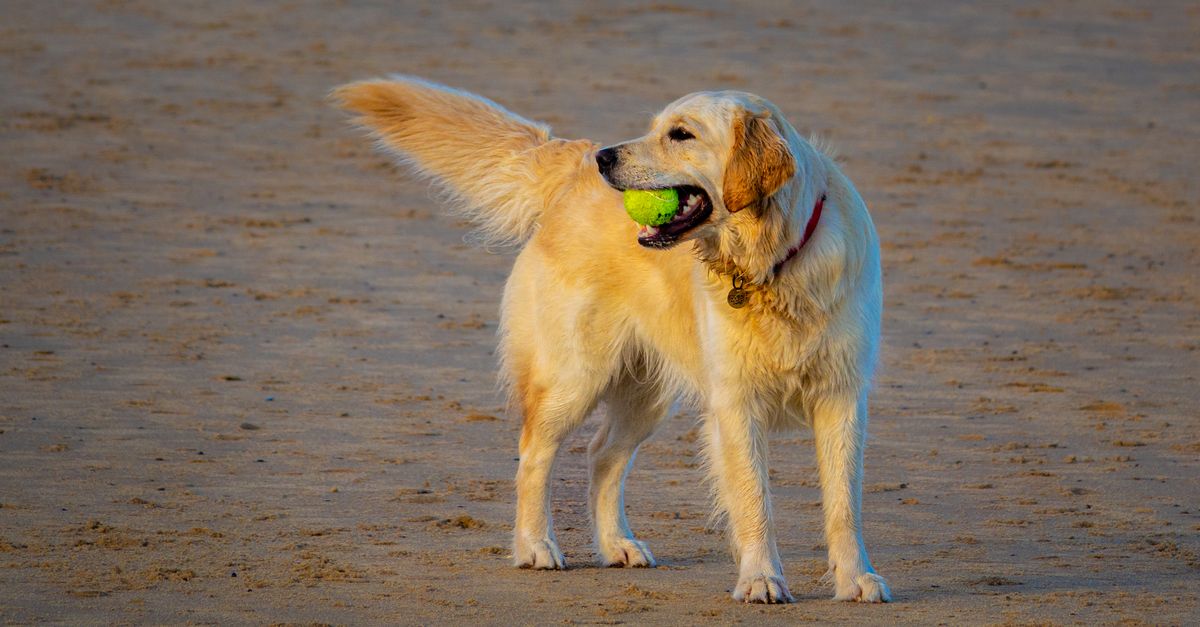
Male golden retriever names idea: a golden retriever with a tennis ball in its mouth on a sandy beach
A ball-crazy boy might suit a sporty name like Scout, Ace or Gunner. Photo: Ray Bilcliff / Pexels.

Female Golden Retriever Names

Female golden retriever names often lean soft and sweet, but bold names work just as well. Use these girl golden retriever names as a starting point. The AKC lists females at 21.5 to 22.5 inches and 55 to 65 pounds, slightly smaller than males.

Sweet Girl Names

  • Lucy: Bright and classic
  • Molly: Warm and familiar
  • Sadie: Short and sweet
  • Ellie: Gentle and easy to call
  • Gracie: Full of grace
  • Lily: Delicate and pretty
  • Abby: Cheerful and loyal
  • Chloe: Light and lively
  • Josie: Playful and fun
  • Rosie: Rosy and sweet
  • Hazel: Soft and timeless
  • Lola: Bouncy and bright
  • Winnie: Cuddly and cute
  • Dottie: Retro charm
  • Mabel: Old-fashioned favorite

Unique Girl Names for a Golden

  • Briar: Wild and pretty
  • Marlow: Modern and soft
  • Sorrel: A warm reddish-brown shade
  • Isla: Scottish island feel
  • Tilly: Bright and bubbly
  • Wren: Small bird, big heart
  • Elodie: Musical and rare
  • Fern: Fresh and outdoorsy
  • Margot: Chic and confident
  • Bonnie: Scottish for pretty
  • Kestrel: A swift bird of prey
  • Opal: A glowing gemstone
  • Thistle: Scotland’s national flower
  • Lark: Joyful songbird
  • Marigold: A golden bloom

Nature Names for Outdoor Girls

  • Aspen: Golden in fall
  • Meadow: For a dog who loves fields
  • Brook: Fits a water-loving breed
  • Sage: Calm and wise
  • Clover: Lucky and green
  • Juniper: Evergreen and strong
  • Daisy: Bright and cheerful
  • Poppy: Bold red bloom
  • Skye: Open and free
  • River: For a swimmer

Golden Dog Names Inspired by Color and Food

The AKC says the breed is “famous for the dense, lustrous coat of gold that gives the breed its name,” so color-inspired golden retriever names are a natural fit. In our experience, Golden coats range from pale cream to deep red, and these golden dog names cover the whole range.

Color names Food names Drink and sweet names
Goldie Biscuit Chai
Amber Waffle Cider
Blondie Pancake Toffee
Sandy Muffin Butterscotch
Bronze Pretzel Fudge
Topaz Nugget Latte
Saffron Maple Caramel
Sunny Honey Brandy
Harvest Barley Malt
Wheat Oatmeal Custard

Name ideas by Pets Store Home.

Golden dog names idea: a young female golden retriever posing in a field of golden wheat with old log houses behind
A coat that matches ripe wheat makes names like Barley, Wheat or Harvest an easy choice. Photo: Barnabas Davoti / Pexels.

Scottish and Heritage Names for a Golden

Some of the most meaningful golden retriever names come from the breed’s own story, which began in Scotland. The AKC says the best records of the breed were kept from 1835 to about 1890 at Guisachan, the Highland estate of Lord Tweedmouth.

The Golden Retriever Club of America explains that Sir Dudley Marjoribanks, later Lord Tweedmouth, bred a yellow retriever named Nous to a Tweed Water Spaniel named Belle, and their litter included four yellow puppies: Crocus, Cowslip, Primrose and Ada.

Name Where it comes from
Nous The yellow retriever behind the first litter
Belle The Tweed Water Spaniel mother of the first litter
Crocus, Cowslip, Primrose, Ada The four puppies in that first litter
Tweed The river and the Tweed Water Spaniel
Dudley After Sir Dudley Marjoribanks, Lord Tweedmouth
Inverness The Highland county where Guisachan stands
Angus, Fergus, Ewan Traditional Scottish boy names
Fiona, Eilidh, Morag Traditional Scottish girl names
Heather, Glen, Loch Scottish landscape names

History: AKC and Golden Retriever Club of America; name ideas by Pets Store Home.

Cute Golden Retriever Puppy Names

Golden retriever puppy names can be playful, but remember your fluffball will grow fast. The AKC notes that Goldens keep their puppyish behavior into adulthood, so a fun name rarely feels out of place. Here are cute names for golden retrievers that still work for a grown dog.

Cute boy names Cute girl names Gender-neutral names
Teddy Peaches Bean
Pip Bunny Pickle
Nugget Button Sprout
Wiggles Cupcake Noodle
Rolo Lulu Bubbles
Ziggy Dolly Mochi
Bear Pebbles Tater
Huckleberry Sugar Jellybean

Name ideas by Pets Store Home.

Golden retriever puppy names idea: a golden retriever puppy with a pink bone-shaped name tag lying on the grass
A bone-shaped tag is ready for whichever golden retriever names your family picks. Photo: Owen.outdoors / Pexels.

Want something familiar? The AKC’s 2025 list, based on its registration data, shows which names Americans chose most. Max returned to the top spot for boys, and Luna held on for girls. Many of these double as classic golden retriever names.

Rank Boy names Girl names
1 Max Luna
2 Hank Bella
3 Teddy Daisy
4 Cooper Lucy
5 Gus Ruby
6 Bear Willow
7 Duke Maggie
8 Maverick Penny
9 Charlie Nova
10 Finn Sadie

Source: American Kennel Club, Most Popular Dog Names of 2025 (published November 2025).

As general advice, a popular name can mean several dogs answering at the park. If that bothers you, pick a unique golden retriever name from the lists above instead.

Common naming mistake Why it matters Better approach
A long, formal name Long names are harder to call quickly Keep a short version, like Gus for Augustus
A name that sounds like a cue The AKC warns Kit can sound like sit Say the name aloud with your cues first
Using the name to scold The AKC advises using it in happy moments Pair the name with treats and play
Changing the name often Mixed signals slow learning Pick one and stick with it

Example Scenario (illustrative)

Tessa in Spokane narrowed her list of golden retriever names to Barley, Ollie and Crocus. She tried each for a day, and her puppy perked up fastest to Barley. Her kids loved that it matched his wheat-colored coat, so Barley it was.

Golden Retriever Names FAQs

What is a good name for a Golden Retriever?

A short, cheerful name with one or two syllables works best, such as Cooper, Willow or Maple. The AKC suggests short names that end in a vowel because they are easy for a dog to pick out.

What are the most popular dog names in 2025?

According to the AKC’s 2025 list, Max and Luna were the top names, followed by Hank and Bella. The list is based on AKC registration data.

Should I name my Golden after its coat color?

You can. Names like Goldie, Honey and Maple suit the breed, which the AKC says is named for its dense, lustrous gold coat.

Can I change a rescue Golden’s name?

Yes. In our experience, dogs can learn a new name at any age. As general advice, pair the new name with treats and praise for a couple of weeks until your dog responds reliably.

What names should I avoid?

The AKC warns against names that sound like cues, such as Kit, which can sound like sit. Avoid harsh or very long names too.

What were the first Golden Retrievers called?

The Golden Retriever Club of America says the first litter from Nous and Belle produced four yellow puppies named Crocus, Cowslip, Primrose and Ada.

Final Verdict

Golden retriever names work best when they are short, cheerful and easy to tell apart from training cues. Choose from classic picks like Cooper and Lucy, color names like Maple and Barley, or heritage names like Crocus and Tweed. Test your favorites, then use the winner warmly and often.

Your next steps

  1. Shortlist three names and run them through the checklist above.
  2. Find more ideas in our interesting names for dogs guide, and read about Golden Retriever puppy costs and Golden shedding.
  3. Explore more breed guides in our Dogs section and Pets hub.

Tell us your Golden’s name on the Pets Store Home Facebook page.

About the author: Written and reviewed by the Pets Store Home Editorial Team: pet owners and animal lovers who check every guide against trusted US veterinary and animal-welfare sources. This article is general information, not a substitute for professional veterinary advice. Always talk to your veterinarian about your own pet’s health.

How we checked this guide: Breed size, coat and history come from the AKC Golden Retriever page. Naming tips come from the AKC puppy names guide, and popularity data from the AKC’s 2025 most popular dog names release. First-litter names come from the Golden Retriever Club of America. All name lists and descriptions are our own. We review this article every 12 months.

Last reviewed: November 2026.

Sources

  1. AKC: Golden Retriever breed information (accessed November 2026)
  2. AKC: Puppy Names That Never Go Out of Style (updated June 2026)
  3. AKC: Most Popular Dog Names of 2025 (November 2025)
  4. Golden Retriever Club of America: Early Ancestors of the Golden Retriever (accessed November 2026)
ginger cat

ginger cat

Ginger Cat Guide: Essential Facts on Orange Tabbies, Genetics and Care (2026)

A ginger cat is any cat with an orange, red or cream coat, and it is a color rather than a breed. Every ginger cat is a tabby, and most are male because the orange gene sits on the X chromosome. Personality comes from upbringing and the individual cat, not coat color.

If you share your home with an orange tabby, or you are thinking about adopting one, this guide explains what science actually says. It covers the 2025 discovery of the orange gene, why female gingers are less common, the different tabby patterns and shades, kitten care, and the harmless freckles many orange cats develop.

Key takeaways

  • Orange is a coat color found in many breeds and in mixed-breed cats.
  • All orange cats show a tabby pattern, according to Chewy’s vet-reviewed guide.
  • Roughly 80% of orange cats are male and about 20% are female (Chewy).
  • A 2025 study linked orange fur to a DNA deletion near the ARHGAP36 gene.
  • Black freckles on an orange cat’s lips are usually harmless lentigo (Merck Veterinary Manual).

Ginger Cat: The Short Answer

What makes a ginger cat different from other cats? Mostly its genes and its coat. Here are the core facts in one place, each tied to its source.

Question Quick answer
Is it a breed? No; orange is a coat color seen across many breeds (Chewy)
Other names Orange, red or ginger tabby; in our experience, often marmalade too
Always a tabby? Yes; the stripes always show (Chewy)
Male or female? About 80% male, 20% female (Chewy)
Gene behind it Deletion near ARHGAP36 on the X chromosome (Kyushu University, 2025)
Lighter shade Cream, a dilute form of red (Fear Free Happy Homes)
Special health issues? Harmless lentigo freckles can appear (Merck)

Sources: Chewy (reviewed by Hannah Hart, DVM), Kyushu University, Fear Free Happy Homes and Merck Veterinary Manual, accessed November 2026.

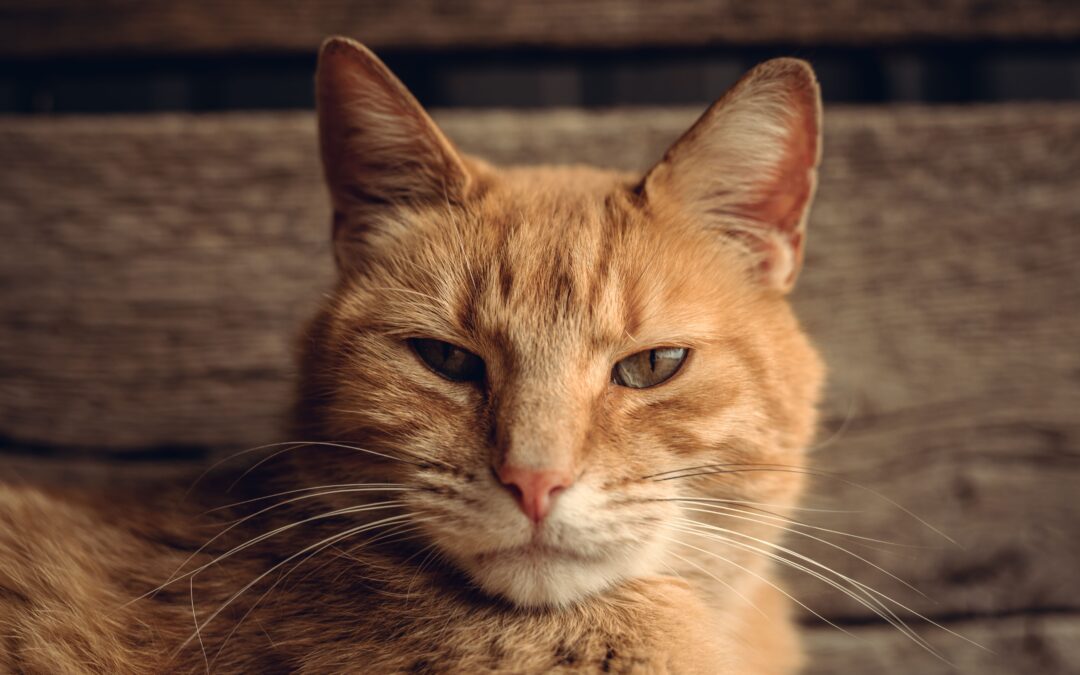
Ginger cat: an orange tabby with clear darker stripes lying on a sunlit wooden surface
The darker stripes on this ginger cat show the tabby pattern every orange cat carries. Photo: Egor Kamelev / Pexels.

Why Are Cats Orange? The Genetics Explained

For decades, scientists have known orange fur is linked to the X chromosome, but not which gene was responsible. That changed in May 2025, when two research teams, one led by Professor Hiroyuki Sasaki at Kyushu University and one at Stanford, published their findings in Current Biology.

Both teams found that orange cats carry a small missing stretch of DNA near a gene called ARHGAP36. Scientific American reported that this gene had never before been tied to pigment. According to Kyushu University, the deletion sits in a non-coding stretch of DNA, so the protein the gene makes stays the same.

Why Female Ginger Cats Are Less Common

Most orange cats are male, so a female ginger cat is the rarer find. Males have one X chromosome, so a single copy of the orange variant makes them orange. Females have two X chromosomes and need the variant on both to be fully orange. Chewy’s vet-reviewed guide gives about 80% male and 20% female, and notes that both parents must carry the gene for an orange daughter.

How Orange Links to Calico and Tortoiseshell Cats

A female with one orange copy and one non-orange copy does not turn out half-orange. Instead, one X chromosome is switched off at random in each cell, so her coat forms patches. This is why calico and tortoiseshell cats are nearly always female, as Kyushu University explains. Our guide asking whether tortoiseshell cats are rare covers that pattern in more depth.

Pet Care Tip: Our suggestion: if you want a female orange kitten, ask the shelter or breeder about the parents. In our experience, female gingers often come from litters where both parents show orange in their coats.

Ginger cat with white: a relaxed orange and white cat resting on a stone block outdoors
A ginger cat with white, like this one, mixes orange tabby fur with patches of white. Photo: Boyana / Pexels.

Ginger Tabby Patterns and Shades

Why does every orange cat have stripes? Chewy explains that the orange gene does not mask tabby markings, so some striping always shows. A vet-reviewed guide from Fear Free Happy Homes names four tabby patterns.

Pattern What it looks like on a ginger tabby cat
Classic Bold swirls on the sides, often with a bullseye shape
Mackerel Narrow stripes running down the sides like a fish skeleton
Spotted Stripes broken into spots along the body
Ticked Banded hairs that give an even, sandy look with few stripes

Pattern names: Fear Free Happy Homes; descriptions are our own.

Shades of Ginger in Orange Tabbies

Orange coats range from pale cream to deep red. Fear Free Happy Homes describes cream as a dilute version of red, also called buff. In our experience, owners use names like marmalade, apricot or copper for the shades in between. A ginger and white cat gets its white patches from separate genetics, which our orange and white cat breed guide explains.

Long-Haired and Fluffy Ginger Cats

Coat length and color are inherited separately, so orange shows up on short, medium and long coats. As general advice, a long-haired ginger cat, whether a Maine Coon, a Persian or a fluffy mixed breed, needs brushing a few times a week to stop mats forming behind the ears and on the belly. Shorthaired gingers usually need only a weekly brush.

Breeds That Come in Ginger

Orange is a color, not a breed, so it turns up in pedigreed and mixed-breed cats alike. In our experience, you will often see red coats in Maine Coons, Persians, British Shorthairs and American Shorthairs, plus countless domestic shorthairs. Our Norwegian Forest Cat vs Maine Coon guide covers the orange Maine Coon.

Ginger Cat Personality: Myth vs Evidence

Are orange cats really friendlier? Many owners think so, but the evidence is thin. A UC Berkeley study surveyed 189 cat-experienced people and found they were more likely to call orange cats friendly. Lead author Mikel Delgado warned there was “little evidence that these perceived differences between differently colored cats actually exist.”

Chewy’s guide agrees, noting that personality depends on genetics, socialization and life experience rather than color. As general advice, meet the individual cat before you adopt, and ask shelter staff how it behaves with people and other pets.

Ginger and Tabby Kittens: What to Know

Ginger and tabby kittens can turn up in the same litter, because each kitten inherits its own mix of coat genes from the parents. Every orange kitten will show some tabby marks, though in our experience they may look faint until the adult coat comes in.

The American Animal Hospital Association (AAHA) advises a full exam at the first vet visit and core vaccines against panleukopenia, calicivirus and rhinotracheitis. It suggests spaying or neutering by about 5 months of age, plus parasite prevention your vet recommends.

Ginger tabby kitten checklist

  1. Book a first vet visit and follow the vaccine schedule your vet sets.
  2. Ask about spay or neuter timing (AAHA suggests by about 5 months).
  3. Set up a litter box, scratching post and climbing space (AAHA).
  4. Start gentle handling and tooth brushing early.
  5. Note any freckles so your vet can track them.
Ginger cat kitten: a pale ginger tabby kitten with blue eyes sitting on dark soil
In our experience, a kitten’s eye color and coat shade can both change as it grows. Photo: Valeriia Yevchinets / Pexels.

Ginger Cat Health and Care

Does coat color change a cat’s health or lifespan? We found no research showing that it does, so care for a ginger cat the same way you would any cat. The one color-linked quirk is lentigo, dark freckles on the lips, nose and eyelids.

The Merck Veterinary Manual says lentigo usually shows up first on the lips and eyelids around 1 year of age and is not precancerous. As general advice, still show your vet any spot that grows, bleeds or looks raised, because other skin problems can look similar.

Daily Care at a Glance

Care task How often Source or note
Wellness exam Every year AAHA
Tooth brushing As often as your vet advises AAHA advises home brushing and dental treats
Brushing the coat Weekly; more for long hair General advice
Play and climbing Several short sessions a day General advice
Litter box cleaning Scoop daily General advice
Freckle check Monthly, and at each vet visit Merck notes lentigo on lips and eyelids

Illustrative schedule; ask your vet to adjust it for your cat’s age and health.

A ginger feline does best with an indoor setup that keeps it busy. As general advice, offer window perches, puzzle feeders and scratching posts in more than one room, since a bored cat is more likely to scratch furniture or overeat.

When to call the vet: As general advice, call your vet promptly if a dark spot on your cat grows quickly, bleeds, becomes raised or crusty, or if your cat stops eating, hides or strains in the litter box.

Common mistake Why it matters Better approach
Assuming freckles are always harmless Other skin conditions can look like lentigo Ask your vet to check new or changing spots
Choosing a cat for its color alone Berkeley researchers found little evidence color predicts personality Meet the cat and ask about its history
Skipping yearly checkups AAHA recommends annual wellness exams Book a checkup every year
Ignoring dental care AAHA advises home brushing and professional cleanings Brush teeth and ask about dental cleanings

Example Scenario (illustrative)

Paige in Omaha adopted Saffron, a two-year-old female ginger cat, and was surprised to learn female gingers are less common. When tiny black dots appeared on Saffron’s lips, Paige mentioned them at the annual checkup. The vet confirmed lentigo and simply noted it in her records.

Ginger Cat FAQs

Are all ginger cats male?

No. Chewy’s vet-reviewed guide puts the split at roughly 80% male and 20% female, because a female needs the orange gene on both X chromosomes.

Are all orange cats tabbies?

Yes. Chewy’s guide says “every orange cat is actually an orange tabby,” because the orange gene does not mask tabby markings.

What gene makes a cat orange?

In 2025, teams at Kyushu University and Stanford linked orange fur to a small DNA deletion near the ARHGAP36 gene on the X chromosome, as reported in Current Biology.

Do orange cats have a special personality?

There is little evidence for it. A UC Berkeley study found people tend to see orange cats as friendly, but the researchers noted little proof that color differences in personality are real.

Why does my orange cat have black freckles?

Those spots are usually lentigo. The Merck Veterinary Manual says the marks often appear on the lips and eyelids and are not precancerous, but ask your vet to check any new spot.

Is a ginger cat a breed?

No. Ginger, also called orange or red, is a coat color that can appear in many breeds and in mixed-breed domestic cats.

Ginger cat: an orange tabby with green eyes lying down and looking at the camera in warm light
A healthy ginger cat needs the same yearly checkups, dental care and enrichment as any other cat. Photo: Anna Fusciello / Pexels.

Final Verdict

A ginger cat is a striking orange tabby whose color comes from a single X-linked gene, which is why most are male. Coat color does not set personality or lifespan, so judge each cat as an individual. Give yours routine vet care, keep an eye on any freckles, and enjoy one of the most recognizable coats in the cat world.

Your next steps

  1. Read the Kyushu University summary of the orange-gene research.
  2. Use the kitten checklist above before your first vet visit.
  3. Find the perfect name in our orange cat names guide, then explore more in our Cats section and Pets hub.

Share your ginger cat photos with our community on the Pets Store Home Facebook page.

About the author: Written and reviewed by the Pets Store Home Editorial Team: pet owners and animal lovers who check every guide against trusted US veterinary and animal-welfare sources. This article is general information, not a substitute for professional veterinary advice. Always talk to your veterinarian about your own pet’s health.

How we checked this guide: Genetics come from Kyushu University and Scientific American coverage of the 2025 Current Biology papers. Sex ratio and tabby facts come from Chewy (reviewed by Hannah Hart, DVM). Patterns and cream come from Fear Free Happy Homes, lentigo from the Merck Veterinary Manual, kitten care from AAHA and personality research from UC Berkeley. We review this article every 12 months.

Last reviewed: November 2026.

Sources

  1. Kyushu University: Scientists find the “meow-tation” that gives cats their orange fur (May 2025)
  2. Scientific American: This Strange Mutation Explains the Mystifying Color of Orange Cats (May 2025)
  3. Chewy: Are All Orange Cats Male and All Calico Cats Female? (updated July 2026)
  4. Fear Free Happy Homes: Cat Colors (accessed November 2026)
  5. Merck Veterinary Manual: Congenital and Inherited Skin Disorders of Cats (accessed November 2026)
  6. AAHA: A Guide to Health Care in Your Kitten’s First Year (accessed November 2026)
  7. UC Berkeley News: Don’t be so fast to judge a cat by its color (October 2012)
pitbull rottweiler mix

pitbull rottweiler mix

Pitbull Rottweiler Mix (Pitweiler): The Essential Owner’s Guide to Size, Temperament and Care (2026)

A pitbull Rottweiler mix, often called a Pitweiler, is a cross between a pit bull-type dog and a Rottweiler. Mix guides put most adults at about 18 to 25 inches tall and 40 to 100 pounds. Expect a strong, loyal, people-focused dog that needs early socialization, steady training and daily exercise.

This guide is for anyone weighing up adoption or a puppy. It compares the parent breeds using the AKC, the United Kennel Club (UKC) and vet-written sources, then covers size, coat, temperament, exercise, grooming, health screening and the US housing and legal questions owners of big, muscular mixes often face.

Key takeaways

  • The Pitweiler is a mixed breed, not a breed recognized by the AKC or UKC.
  • “Pit bull” describes a type of dog; the UKC-registered American Pit Bull Terrier is the usual reference breed.
  • The AKC gives Rottweilers 5 out of 5 for trainability, protectiveness and mental stimulation needs.
  • Mix guides give a lifespan of about 10 to 15 years.
  • Some cities, landlords and insurers restrict pit bull-type dogs, so check local rules first.

Pitbull Rottweiler Mix: The Short Answer

Could a pitbull Rottweiler mix suit your home? Here is a quick profile drawn from the parent-breed sources and two mix guides, from Hepper and Dogster. Because the parents differ so much in size, a single puppy can land anywhere in these ranges.

Trait What to expect
Other names Pitweiler, Rottweiler Pitbull mix, Pit Rottie
Height About 18 to 25 inches, 46 to 64 cm (Hepper, Dogster)
Weight About 40 to 100 pounds, 18 to 45 kg (Hepper, Dogster)
Lifespan 10 to 15 years (Hepper); 10 to 14 years (Dogster)
Coat Short; some inherit the Rottweiler’s undercoat
Exercise About an hour or more of activity a day
Best for Experienced, active owners with time to train

Sources: Hepper and Dogster mix guides, AKC, UKC and Hill’s parent-breed pages, accessed November 2026.

Pitbull Rottweiler mix look-alike: a smiling dark short-coated dog with a broad head and a collar
In our experience, a broad head and a short, glossy coat are common in a pitbull Rottweiler mix. Photo: Sharon Snider / Pexels.

Meet the Parents: Rottweiler vs Pit Bull

To understand a pitbull Rottweiler mix, start with its parents. The AKC traces the Rottweiler back to the mastiff-type dogs that traveled with Roman armies, and describes a calm, confident guardian that can be playful and even silly with its own family.

On the other side, the UKC breed standard says the American Pit Bull Terrier came from 19th-century crosses of Bulldogs and terriers in Britain and Ireland, and names “strength, confidence, and zest for life” as its essential characteristics.

“Pit bull” is a loose label, not one breed. The AVMA calls pit bulls a general type and notes that even experienced people often misidentify mixed-breed dogs. As general advice, ask a breeder or rescue what is actually known about the dog’s background. The table uses the UKC American Pit Bull Terrier as the pit bull reference.

Figure Rottweiler (AKC) American Pit Bull Terrier (UKC, Hill’s)
Height, male 24 to 27 inches 18 to 21 inches
Height, female 22 to 25 inches 17 to 20 inches
Weight, male 95 to 135 pounds 35 to 60 pounds
Weight, female 80 to 100 pounds 30 to 50 pounds
Life expectancy 9 to 10 years 12 to 14 years (Hill’s)
Coat Medium-length outer coat, undercoat on neck and thighs Short; any color except merle

Sources: AKC Rottweiler page, UKC American Pit Bull Terrier standard (revised 2017), Hill’s Pet Nutrition, accessed November 2026.

As general advice, read these as the outer limits for the mix, not a forecast. For more pit bull crosses, see our Siberian Pitbull mix and Pitbull Lab mix guides, or compare another Rottie cross in our Rottweiler German Shepherd mix profile.

Size, Coat and Colors

How Big Is a Pitbull Cross With Rottweiler?

Usually medium to large. A pitbull Rottweiler mix can be compact like its pit bull parent or tall and heavy like a Rottie. Hepper gives 20 to 24 inches and 50 to 100 pounds, while Dogster gives 18 to 25 inches and 40 to 100 pounds. Neither page names a veterinary reviewer, so treat these as rough guides.

Coat Colors

The AKC describes the Rottweiler’s coat as black with rust markings, and the UKC accepts any pit bull color except merle. In our experience, many crosses end up black and tan, brown, brindle or black with white patches. Hepper notes that some pups inherit the Rottweiler’s double coat, which needs brushing several times a week.

Pitbull Rottweiler mix parent: a black and tan Rottweiler standing on a city pavement
The Rottweiler parent can add height, weight and black-and-tan coloring to a pitbull Rottweiler mix. Photo: Genadi Yakovlev / Pexels.

Pitbull Rottweiler Mix Temperament and Training

What is a pitbull Rottweiler mix like at home? Usually loving with its own people and reserved with outsiders, a trait the AKC notes in Rottweilers. The AKC scores the Rottweiler 5 out of 5 for affection with family and for protective nature, but 3 out of 5 with young children and other dogs. Hill’s, in a page by Sarah Wooten, DVM, calls the American Pit Bull Terrier people-focused, fun-loving and devoted.

How Do You Train a Pitweiler?

Start early and stay consistent. The AKC says Rottweilers should be trained from a young age, need puppy socialization and classes, and do best with steady, even-handed discipline and no harsh corrections. It also warns against wrestling-style play. As general advice, reward-based sessions of 5 to 10 minutes and plenty of calm exposure to new people suit this mix well.

Is It Good With Kids and Other Pets?

It can be, with supervision. Hill’s notes that some pit bulls have a strong prey drive, so watch them around small pets. As general advice, never leave any large dog alone with young children, and introduce other dogs slowly on neutral ground. Our guide to socializing a shy or fearful puppy covers the early steps.

Exercise, Grooming and Daily Care

In our experience, a tired Pitweiler is a calmer Pitweiler, so plan your day around activity.

How Much Exercise Does It Need?

A pitbull Rottweiler mix needs real daily work. Hill’s suggests about 60 to 90 minutes a day for the pit bull side, mixing physical work with brain games. The AKC says Rottweilers should get daily exercise and enjoy walking, swimming and jobs such as tracking or obedience work. Hepper suggests roughly 60 minutes of vigorous play, broken into a few shorter bursts.

Time Activity Why it helps
7:00 a.m. 30-minute brisk walk Uses up morning energy before you leave
7:45 a.m. Breakfast in a puzzle feeder Slows eating and adds mental work
Noon Potty break and a short sniff walk Breaks up the day alone
6:00 p.m. Fetch, tug with rules, or a training game Builds focus and impulse control
8:00 p.m. Calm chew and settle on a mat Teaches an off switch

Illustrative routine based on Hill’s and AKC exercise guidance; adjust it with your vet.

Grooming and Feeding

Grooming is simple. The AKC recommends weekly brushing, weekly nail trims and regular tooth brushing for Rottweilers, and Hill’s suggests weekly ear checks for pit bulls. Hepper and Dogster both suggest about 3 cups of quality dry food a day for an adult. As general advice, ask your vet for the right amount for your dog’s weight and activity.

Pet Care Tip: Our suggestion is to teach a solid “place” or “settle” cue early. In our experience, a big, strong mix that knows how to relax on a mat is far easier to live with than one that only knows how to play.

Pitbull Rottweiler mix look-alike: a black short-coated dog running across a park lawn toward an orange ball
Fetch and running games help burn off a pitbull Rottweiler mix’s energy. Photo: Sharon Snider / Pexels.

Pitbull Rottweiler Mix Health and Lifespan

How healthy is a pitbull Rottweiler mix? A cross can inherit problems from either parent, so look at what both sides are tested for. Mix guides from Hepper and Dogster give a lifespan of roughly 10 to 15 years.

Parent Health concerns named Recommended screening
Rottweiler (AKC) Hip dysplasia, eye diseases, heart conditions; cancer can occur Hip, elbow, cardiac and eye exams, JLPP DNA test
American Pit Bull Terrier (Hill’s) Hip and elbow dysplasia, skin allergies, demodex mites, ear infections Early joint checks, regular skin and ear checks

Sources: AKC Rottweiler page and breed club health tests; Hill’s Pet Nutrition (Sarah Wooten, DVM), accessed November 2026.

Dogster also lists bloat for this mix. VCA Animal Hospitals treats bloat as an emergency and names restlessness, drooling and unproductive retching as warning signs. As general advice, ask your vet about feeding and exercise timing for a deep-chested dog.

When to call the vet: As general advice, go to your vet or a 24/7 emergency animal hospital straight away if your dog has a swollen belly, retches without bringing anything up, collapses, or suddenly cannot use its back legs.

Laws, Housing and Insurance

This is the part most mix guides skip. Some US cities and counties have breed-specific rules for pit bull-type dogs, and rules change, so check your state and local laws before you adopt a pitbull Rottweiler mix. The AVMA opposes breed-specific legislation, saying breed is a weak predictor of biting and that “any dog can bite, regardless of its breed.”

As general advice, also ask your landlord, HOA and home or renters insurer whether they restrict Rottweilers or pit bull types. Keep vaccination, license and training records on file, since they can help if you need to show your dog is well managed.

Puppies and Adoption

We could not find reliable, vet-reviewed US price data for this mix, so we do not quote one. Hepper says Pitweiler puppies can be harder to find than either parent.

In our experience, shelters and rescues often have an adult pitbull Rottweiler mix waiting for homes, and adult dogs show their size and temperament up front. If you buy a puppy, ask to see both parents’ hip, elbow, heart and eye results on the OFA database. A dog DNA test can confirm a rescue’s background.

Checklist before you bring one home

  1. Check city, county and state rules on pit bull-type dogs.
  2. Confirm your lease and insurance allow the dog.
  3. Ask for the parents’ OFA results, or the rescue’s behavior notes.
  4. Book a puppy or basic training class before pickup day.
  5. Plan at least an hour of activity every day.
Common mistake Why it matters Better approach
Skipping early socialization The AKC stresses early training and socialization for Rottweilers Enroll in puppy classes and meet new people often
Rough play and wrestling The AKC links wrestling-style play with aggression in Rottweilers Use fetch and tug with clear start and stop cues
Not checking local rules Some areas restrict pit bull-type dogs Check rules, lease and insurance before adopting
Leaving the dog alone all day The AKC calls Rottweilers “people dogs” that struggle when left isolated Arrange a midday walker or doggy daycare

Example Scenario (illustrative)

Corinne in Tulsa wondered whether a pitbull Rottweiler mix would fit her family. Before adopting Moose, a two-year-old rescue, she checked her lease and insurance, then booked a basic manners class. A morning walk, a puzzle feeder and an evening fetch session soon became his routine, and he learned to settle on his mat when guests arrived.

Pitbull Rottweiler Mix FAQs

How big does a Pitweiler get?

It depends on which parent it takes after. Mix guides from Hepper and Dogster give roughly 18 to 25 inches and 40 to 100 pounds, so plan for a medium to large dog.

How long does a Pitweiler live?

Hepper gives 10 to 15 years and Dogster gives 10 to 14. The AKC lists 9 to 10 years for Rottweilers, while Hill’s gives 12 to 14 years for the American Pit Bull Terrier.

Is a Pitweiler a good family dog?

It can be, with early socialization and consistent training. The AKC gives Rottweilers 5 out of 5 for affection with family but 3 out of 5 with young children, so supervise play.

Do Pitweilers shed a lot?

They shed a moderate amount. The AKC says Rottweilers shed more heavily twice a year, in spring and fall, and a weekly brush helps with loose hair.

Is a Rottweiler and Pit Bull cross aggressive?

Not by default. The AVMA stresses that “any dog can bite, regardless of its breed,” and that supervision, socialization and neutering matter more than a breed label.

What is a Pitbull and Rottweiler cross called?

Hepper and Dogster both call it a Pitweiler. In our experience, you may also see Rottweiler Pitbull mix or Pit Rottie.

Pitbull Rottweiler mix parent: a red and white pit bull lying on green grass with a tennis ball
Hill’s calls pit bulls playful and people-focused, traits the pit bull parent can add to a pitbull Rottweiler mix. Photo: Leonardo Merlo / Pexels.

Final Verdict

A pitbull Rottweiler mix can be a loving, loyal companion for experienced owners who will commit to early socialization, steady training and daily exercise. Check local rules, your lease and your insurance before you bring one home. Choose a health-tested breeder or a rescue that knows the dog well, and you may gain a devoted family guardian.

Your next steps

  1. Read the AKC Rottweiler page and the UKC American Pit Bull Terrier standard.
  2. Work through the five-point checklist above.
  3. Explore more mixes in our Dogs section, including the German Shepherd Pitbull mix.

Share your Pitweiler photos with our community on the Pets Store Home Facebook page.

About the author: Written and reviewed by the Pets Store Home Editorial Team: pet owners and animal lovers who check every guide against trusted US veterinary and animal-welfare sources. This article is general information, not a substitute for professional veterinary advice. Always talk to your veterinarian about your own pet’s health.

How we checked this guide: Rottweiler size, traits, care and health tests come from the AKC. Pit bull figures come from the UKC breed standard and Hill’s Pet Nutrition (Sarah Wooten, DVM). Legal context comes from the AVMA and bloat signs from VCA. Mix size, lifespan and food amounts come from Hepper and Dogster, which do not list a vet reviewer, so we label them. We review this article every 12 months.

Last reviewed: November 2026.

Sources

  1. AKC: Rottweiler breed information (accessed November 2026)
  2. UKC: American Pit Bull Terrier breed standard (revised May 2017)
  3. Hill’s Pet Nutrition: American Pit Bull Terrier (accessed November 2026)
  4. AVMA: Why breed-specific legislation is not the answer (accessed November 2026)
  5. VCA Animal Hospitals: Gastric Dilatation and Volvulus in Dogs (accessed November 2026)

  6. Hepper: Pitweiler (accessed November 2026)
  7. Dogster: Rottweiler Pitbull Mix (accessed November 2026)
  8. Orthopedic Foundation for Animals (accessed November 2026)
lab pointer mix

lab pointer mix

Lab Pointer Mix (Pointerdor): The Essential Guide to Size, Energy and Care (2026)

A Lab pointer mix is a cross between a Labrador Retriever and a Pointer, two athletic sporting breeds. Based on the parents’ AKC ranges, most adults stand about 21 to 28 inches tall and weigh roughly 45 to 80 pounds. Expect a friendly, eager-to-learn dog with a lot of energy that needs vigorous daily exercise.

This guide is for anyone thinking about adopting or buying one. It compares the two parent breeds, explains why size estimates for the mix vary so much, and covers temperament, exercise, grooming, health screening and adoption. Parent-breed figures come from the AKC, and mix-specific figures are labeled with their source.

Key takeaways

  • The mix is often called a Pointerdor, and it is not an AKC-recognized breed.
  • The AKC rates both parents 5 out of 5 for trainability and for affection with family.
  • Both parent breeds need lots of exercise every day, according to the AKC.
  • Labs and Pointers are deep-chested, and the AKC warns both can develop bloat.
  • Mix guides give a lifespan of about 10 to 15 years.

Lab Pointer Mix: The Short Answer

Is a Lab pointer mix the right dog for your lifestyle? These quick facts are drawn from the AKC parent-breed pages and two mix guides, from Dogster and Hepper.

Trait What to expect
Other names Pointerdor, Lab Pointer, Pointer Lab mix (Hepper)
Height About 21 to 28 inches, 53 to 71 cm (AKC parent ranges)
Weight About 45 to 80 pounds, 20 to 36 kg (AKC parent ranges)
Lifespan 10 to 15 years (Dogster, Hepper)
Energy High; both parents need lots of daily exercise (AKC)
Shedding Moderate to high; Lab 4/5, Pointer 3/5 (AKC)
AKC status Not recognized; it is a mixed breed

Sources: AKC Labrador Retriever and Pointer pages, Dogster and Hepper, accessed November 2026.

Lab pointer mix look-alike: a black short-coated dog with floppy ears and a plaid bow tie on a dark background
A black, short-coated dog like this shows the look of many a Lab pointer mix. Photo: Sharon Snider / Pexels.

Meet the Parents: Labrador Retriever vs Pointer

The AKC presents the Labrador Retriever as a sociable, cheerful and lively companion that loves fetching and getting in the water. The Pointer gets its name from its job: it points game birds. In the US, “Pointer” usually means the breed many people call the English Pointer, so an English pointer Lab mix is the classic version of this cross.

Breeders sometimes cross Labs with the German Shorthaired Pointer instead. That is a different parent breed with its own AKC standard, so ask which Pointer you are getting. As general advice, a GSP cross may differ in coat, size and drive, and the figures in this guide describe the Pointer (English Pointer) side only.

AKC figure or trait (1 to 5) Labrador Retriever Pointer
Height 21.5 to 24.5 inches 23 to 28 inches
Weight 55 to 80 pounds 45 to 75 pounds
Life expectancy 11 to 13 years 12 to 15 years
Affectionate with family 5 5
Good with young children 5 3
Good with other dogs 5 5
Trainability 5 5
Energy level 5 4
Shedding level 4 3
Coat grooming frequency 2 2

Source: AKC breed pages for the Labrador Retriever and Pointer, accessed November 2026.

As general advice, read these scores as a range for the mix, not a promise. A puppy may take after either parent. For other Lab crosses, see our guides to the Boxer Lab mix and the Pitbull Lab mix.

Size, Coat and Colors

Why do size estimates differ so much? Mix guides do not agree: Dogster lists 22 to 28 inches and 35 to 50 pounds, while Hepper gives 21 to 25 inches and 55 to 65 pounds. Neither page names a veterinary reviewer, so we lean on the AKC parent ranges in the table above.

Black Lab Pointer Mix and Other Colors

According to the AKC, Labs come in yellow, black and chocolate, while Pointers come in several colors, solid or patterned. In our experience, a black Lab pointer mix is a common look, but the mix may also be liver, lemon, orange or chocolate with white markings, as Dogster notes. As general advice, check both parents if you have a color in mind.

Lab pointer mix parent: a black and white ticked English Pointer lying in long green grass with its tongue out
The English Pointer parent brings a lean frame and a ticked or patched coat to a Lab pointer mix. Photo: Genadi Yakovlev / Pexels.

Lab Pointer Mix Temperament and Training

What is a Lab pointer mix like to live with? Expect a social, people-focused dog. WebMD, reviewed by Vanesa Farmer, DVM, describes the Pointer as calm-natured and watchful, while the AKC paints the Lab as sociable and upbeat. Both parents score 5 out of 5 for trainability with the AKC, so short, reward-based sessions usually go well.

Is a Pointerdor Good With Kids and Other Pets?

Often, yes. The AKC rates both parents 5 out of 5 with other dogs. Labs score 5 with young children, but Pointers score 3, and WebMD notes Pointers are not especially good with young kids. As general advice, supervise play with small children, since a bouncy 60-pound dog can knock them over. Pointers were bred to find birds, so introduce cats and small pets slowly.

Exercise, Grooming and Daily Care

Daily care for a Lab pointer mix starts and ends with exercise.

How Much Exercise Does It Need?

A lot. The AKC notes that Labs need plenty of daily activity, and that a bored, under-exercised Lab may get restless or start chewing things. For the Pointer, the AKC recommends long walks and energetic play every day, plus a safely fenced space to run if you have one.

Retrieving games and swimming suit the Lab side. Our guide on stopping a dog from chasing cars and bikes helps with a strong chase drive.

Grooming and Shedding

The AKC explains that the Lab’s dense, weather-resistant double coat does shed but only needs a bath now and then, plus regular nail trims and tooth brushing. For the Pointer, the AKC advises checking the ears regularly for signs of infection and brushing the teeth often with a dog toothpaste. As general advice, a weekly brush-out keeps loose hair under control.

Feeding and a Sample Day

Dogster suggests about 2 to 2.5 cups of dry food a day for an adult, split into two meals. As general advice, treat that as a starting point and ask your vet, because a working dog and a couch companion of the same size need very different amounts.

Time Activity Why it helps
7:00 a.m. 30 to 45 minute brisk walk or jog Burns off overnight energy
8:00 a.m. Breakfast in a puzzle feeder, then rest Slows eating and gives the brain a job
Noon Short potty break and five-minute training game Breaks up a long day alone
5:30 p.m. Fetch, swimming or off-leash play in a fenced area Uses the retrieving and running drive
7:00 p.m. Dinner after a calm cool-down, then a chew Lets the dog settle for the night

Illustrative routine based on the AKC exercise guidance for both parents; adjust it with your vet.

Pet Care Tip: Our suggestion is to give your Pointerdor a job. In our experience, a daily game of fetch or a scent hunt for hidden treats tires these sporting dogs out faster than a walk alone.

Lab pointer mix parent: a black Labrador Retriever running toward the camera on a city sidewalk
Labs thrive on daily exercise, and a Lab pointer mix will likely need just as much. Photo: Genadi Yakovlev / Pexels.

Lab Pointer Mix Health and Lifespan

How healthy is a Lab pointer mix? Mixes can inherit conditions from either side, so it helps to know what the parent breeds are screened for. Mix guides from Dogster and Hepper give a lifespan of 10 to 15 years.

Parent breed Conditions the AKC says breeders screen for Breed club tests
Labrador Retriever Hip and elbow dysplasia, heart disorders, hereditary myopathy, eye conditions including PRA, exercise-induced collapse (EIC) Hip, elbow, eye exam, D locus and CNM DNA tests
Pointer Hip dysplasia, eye disorders Hip, elbow, thyroid, eye exam

Source: AKC Labrador Retriever and Pointer pages, accessed November 2026.

The AKC warns that both breeds, like other large, deep-chested dogs, can develop bloat. VCA Animal Hospitals lists restlessness, heavy drooling and retching without bringing anything up as warning signs and treats it as an emergency. WebMD’s vet-reviewed Pointer guide also mentions allergies, hypothyroidism and von Willebrand’s disease.

When to call the vet: As general advice, go to your vet or a 24/7 emergency animal hospital straight away if your dog has a swollen belly, retches without vomiting, collapses after exercise, or seems weak and wobbly on its back legs.

Puppies, Cost and Adoption

We could not find reliable, vet-reviewed US price data for this mix, so we do not quote one. As general advice, start with shelters and breed rescues; in our experience, sporting-breed mixes turn up there regularly. If you buy a puppy, ask to see both parents’ hip, elbow and eye results on the OFA database. A dog DNA test can confirm a rescue’s background.

Questions to ask before you bring one home

  1. Can I meet both parents, or learn what a rescue knows about the dog’s history?
  2. Do the parents have hip, elbow and eye results, and has the Lab parent been tested for EIC?
  3. How does the dog react to cats, small pets and children?
  4. Do I have time for vigorous exercise every single day?
  5. Is my yard securely fenced?
Common mistake Why it matters Better approach
Only short leash walks The AKC says both parents need lots of daily exercise Add fetch, swimming or off-leash play in a fenced area
Big meals right before hard exercise Both parents are deep-chested and at risk of bloat (AKC) Ask your vet how to time meals and exercise
Skipping ear checks The AKC advises regular ear checks for Pointers Check ears weekly and after swimming
Leaving a bored dog alone for hours The AKC links too little exercise in Labs to restless, chewing behavior Use puzzle toys and plan a midday break

Example Scenario (illustrative)

Gwen in Boise asked, “Can a Lab pointer mix keep up with my running schedule?” She adopted Ranger, a two-year-old rescue, built up his mileage slowly and added fetch on rest days. A puzzle feeder at breakfast and a fenced-park visit each weekend kept him calm at home.

Lab Pointer Mix FAQs

How big does a Pointerdor get?

Most tend to fall between the parents. The AKC lists Labs at 21.5 to 24.5 inches and 55 to 80 pounds, and Pointers at 23 to 28 inches and 45 to 75 pounds.

How long do Pointerdors live?

Mix guides from Dogster and Hepper give 10 to 15 years. The AKC lists 11 to 13 years for Labs and 12 to 15 years for Pointers.

What is a Labrador and Pointer cross called?

It is often called a Pointerdor, according to Hepper, or simply a Lab Pointer.

Is a Pointerdor a good family dog?

It can be. Both parents score 5 out of 5 for affection with family on the AKC scale, but they need lots of daily exercise.

Do Pointerdors shed?

Yes. The AKC rates the Lab 4 out of 5 and the Pointer 3 out of 5 for shedding.

Are Pointerdors easy to train?

Usually, yes. The AKC gives both parent breeds 5 out of 5 for trainability.

Lab pointer mix parent: an orange and white Pointer wearing a collar standing beside its handler outdoors
Pointers are working gun dogs, and in our experience a Lab pointer mix enjoys a job alongside its owner. Photo: Jiří Dočkal / Pexels.

Final Verdict

A Lab pointer mix suits active owners who want a friendly, trainable dog and can offer vigorous exercise every day, ideally with a fenced yard. Plan for regular ear checks, moderate shedding and awareness of bloat. Choose a health-tested breeder or a rescue, and you may gain a loyal running and fetch partner for many years.

Your next steps

  1. Read the AKC Labrador Retriever and Pointer pages.
  2. Ask breeders or rescues the five questions above.
  3. Explore more mixes in our Dogs section and read our Flat-Coated Retriever guide for another sporting breed.

Share your Pointerdor photos with our community on the Pets Store Home Facebook page.

About the author: Written and reviewed by the Pets Store Home Editorial Team: pet owners and animal lovers who check every guide against trusted US veterinary and animal-welfare sources. This article is general information, not a substitute for professional veterinary advice. Always talk to your veterinarian about your own pet’s health.

How we checked this guide: Parent-breed sizes, trait scores, exercise, grooming and health screening come from the AKC Labrador Retriever and Pointer pages. Pointer temperament and health notes come from WebMD (reviewed by Vanesa Farmer, DVM), and bloat signs from VCA Animal Hospitals. Mix size, lifespan, colors and the Pointerdor name come from Dogster and Hepper, which do not list a vet reviewer, so we label those figures. We review this article every 12 months, or sooner if guidance changes.

Last reviewed: November 2026.

Sources

  1. AKC: Labrador Retriever breed information (accessed November 2026)
  2. AKC: Pointer breed information (accessed November 2026)
  3. WebMD: What to Know About Pointers (accessed November 2026)
  4. VCA Animal Hospitals: Gastric Dilatation and Volvulus in Dogs (accessed November 2026)
  5. Dogster: Lab Pointer Mix (accessed November 2026)
  6. Hepper: Lab Pointer (accessed November 2026)
  7. Orthopedic Foundation for Animals (accessed November 2026)
cocker spaniel puppy

cocker spaniel puppy

Cocker Spaniel Puppy Guide: Essential Care, Cost and Training Tips (2026)

A Cocker Spaniel puppy grows into a merry, people-loving sporting dog of about 20 to 30 pounds, according to the AKC. Expect to pay roughly $1,500 to $3,000 or more for a breeder puppy and to feed three to four small meals a day. It also helps to start brushing and ear checks early, and the AKC recommends early socialization and puppy classes.

Bringing home a new puppy raises a lot of questions at once. This guide answers the big ones: how American and English Cockers differ, what to feed, how to groom those long ears, which vaccines come first, which health tests to ask a breeder about, and what the first year may cost. Every figure links to the AKC, PetMD (written and reviewed by veterinarians) or another US source.

Key takeaways

  • The AKC says the Cocker is the smallest of its sporting spaniels, standing roughly 14 to 15 inches.
  • PetMD suggests three to four meals a day for puppies, dropping to two for adults.
  • Most puppy vaccine series begin at 6 to 8 weeks and continue to about 16 weeks (AKC).
  • The breed club recommends hip and eye evaluations before breeding.
  • Ear care matters: the AKC advises cleaning and drying the ear canals, especially after baths.

Cocker Spaniel Puppy: The Short Answer

Is a Cocker Spaniel puppy right for your home? Start with these facts from the AKC breed page, PetMD and the AKC’s puppy vaccine guide.

Topic What to expect
Adult height 13.5 to 15.5 inches, about 34 to 39 cm (AKC)
Adult weight 20 to 30 pounds, about 9 to 14 kg (AKC)
Life expectancy 10 to 14 years (AKC)
AKC group Sporting Group
Meals per day 3 to 4 as a puppy, 2 as an adult (PetMD)
Puppy vaccines Usually start at 6 to 8 weeks, through about 16 weeks (AKC)
Breeder price About $1,500 to $3,000 or more; prices vary (PetMD)

Sources: AKC Cocker Spaniel page, AKC puppy vaccine guide and PetMD, accessed November 2026.

Cocker spaniel puppy with a cream coat and long floppy ears walking across green grass
A young Cocker spaniel puppy exploring the yard, with the breed’s trademark long ears. Photo: Candice Pickering / Pexels.

American vs English Cocker Spaniel Puppies

The AKC registers the American breed simply as the Cocker Spaniel, and it registers the English Cocker Spaniel as a separate, slightly larger breed. If a breeder advertises an American Cocker Spaniel puppy, check which breed the parents are registered as.

As general advice, Cocker puppies from either breed need the same basics: careful socialization, daily coat care and close attention to those long ears. The AKC says the American Cocker comes in many colors and patterns, so you can choose the look you like.

Feature (AKC) American Cocker Spaniel English Cocker Spaniel
Height 13.5 to 15.5 inches 15 to 17 inches
Weight 20 to 30 pounds 26 to 34 pounds
Life expectancy 10 to 14 years 12 to 14 years

Source: AKC breed pages for the Cocker Spaniel and English Cocker Spaniel, accessed November 2026.

Cocker Spaniel Puppy Temperament and Training

What is a Cocker Spaniel puppy like to train? The AKC says Cockers aim to please their people and take a stern voice to heart, so heavy-handed corrections tend to backfire. It recommends early socialization and puppy classes, and treats, games and praise all motivate this breed.

AKC trait Score (1 to 5)
Good with young children 5
Good with other dogs 5
Affectionate with family 4
Trainability 4
Energy level 4
Openness to strangers 4
Coat grooming frequency 4
Shedding level 3
Barking level 3

Source: AKC Cocker Spaniel breed page, accessed November 2026.

Is a Cocker Puppy Good With Kids?

Often, yes. The AKC scores the breed 5 out of 5 with young children and with other dogs. As general advice, still supervise toddlers and teach them to leave a sleeping puppy alone. Our puppy training tips and guide on stopping puppy biting and nipping cover the first weeks.

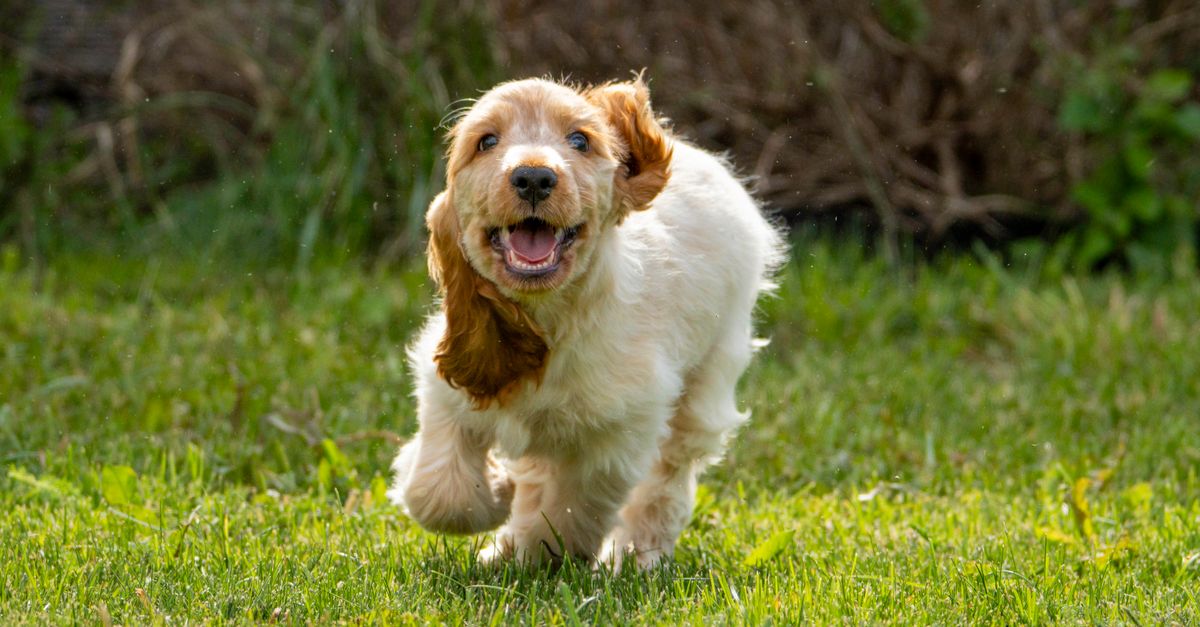
Cocker spaniel puppy relative: an English Cocker Spaniel with a white and orange coat running happily on grass
An English Cocker at full speed. Play and praise motivate a Cocker spaniel puppy too, the AKC notes. Photo: Raul Ling / Pexels.

Feeding, Grooming and Exercise for a New Puppy

Daily care for a Cocker Spaniel puppy revolves around small meals, a steady grooming routine and plenty of gentle play.

Feeding Your Puppy

PetMD recommends three to four meals a day for puppies and two for adults, with treats kept under 10% of the daily diet. It also suggests brushing away food that gets caught in the long coat after meals. The AKC advises choosing food by its label and asking your vet for advice. As general advice, keep the same food the breeder used for the first week, then switch slowly if needed.

Grooming: Comb, Coat and Ears

Start grooming early so your puppy learns to enjoy it. The AKC calls a metal comb with fine and medium teeth a must-have, and warns that skipping a session can leave tangles that are hard to catch up on.

The AKC also advises teasing knots loose starting from the ends of the hair instead of tugging, combing the ear edges gently because the skin there is thin, and rinsing well after every bath, since leftover shampoo can irritate the skin.

Ears need extra attention. The AKC advises learning from your vet how to clean the ear canals, especially after a bath, to help prevent infections. PetMD adds weekly brushing at minimum and regular professional grooming.

Exercise and Play

The AKC notes that the Cocker is a sporting breed that should stay fit, yet it does not need huge amounts of exercise. Games of fetch and walks with the family often cover it. As general advice, keep puppy sessions short and fun, and let your puppy rest often.

First-Year Vet Visits and Vaccines

According to the AKC puppy vaccine guide, most schedules begin between 6 and 8 weeks and run through about 16 weeks, with boosters later in life. The AKC also suggests asking your vet about heartworm prevention at around 12 to 16 weeks. Rabies vaccination rules are set by your state and city, so ask your vet what applies where you live.

First-Week Shopping List

As general advice, have these ready before your puppy arrives:

  • A metal comb with fine and medium teeth, plus a slicker brush (the AKC’s grooming basics)
  • A gentle, dog-specific shampoo and a dog ear cleaner your vet approves
  • A crate, a soft bed and a few washable towels
  • A light collar or harness, a leash and an ID tag
  • The same puppy food the breeder used, plus small training treats
  • Chew toys and a puzzle feeder for quiet time

Pet Care Tip: Our suggestion is to handle your puppy’s ears and paws for a few seconds every day, then reward with a treat. In our experience, it makes ear cleaning and nail trims far easier once your Cocker is grown.

Cocker spaniel puppy care: a groomer brushing the long red coat of a spaniel-type dog on a grooming table
Thorough grooming helps keep a Cocker spaniel puppy’s coat free of mats, the AKC notes. Photo: Goochie Poochie Grooming / Pexels.

Cocker Spaniel Puppy Health and Cost

How healthy is a Cocker Spaniel puppy likely to be? The AKC says the breed has good longevity and that the American Spaniel Club recommends hip and eye evaluations for breeding dogs. It also suggests asking to see both parents’ screening paperwork, such as hip, kneecap and eye results. PetMD lists ear infections, skin infections, hip dysplasia and von Willebrand disease, a bleeding disorder, as breed concerns.

First-year cost Typical amount Source
Breeder puppy About $1,500 to $3,000 or more PetMD
Breeder deposit Usually around $500 Embrace Pet Insurance
Core puppy vaccine series About $75 to $100 AKC
Rabies vaccine About $15 to $20 AKC
Grooming, food, insurance Varies by area and plan Ask local providers

Sources: PetMD, AKC puppy vaccine guide and Embrace Pet Insurance, accessed November 2026. Prices vary.

PetMD suggests looking at pet insurance early, since the breed is prone to several conditions. Our guide to pet insurance and pre-existing conditions explains why timing matters. You can look up parents’ screening results on the OFA database. PetMD notes that Cocker Spaniel rescues also have dogs looking for homes.

When to call the vet: As general advice, call your vet or a 24/7 emergency animal hospital right away if your puppy stops eating, vomits repeatedly, has bloody diarrhea, seems very weak, or bleeds for a long time after a small cut.

Questions to ask a Cocker Spaniel breeder

  1. Can I see both parents’ hip and eye results?
  2. Have the parents been checked for patellas too?
  3. Which vaccines and deworming has the puppy had so far?
  4. What food is the puppy eating, and how many meals a day?
  5. Will you take the dog back at any age?
Common mistake Why it matters Better approach
Skipping ear checks PetMD links floppy ears to infections Check and clean as your vet shows you
Letting mats build up The AKC says missed grooming leads to mats Comb a little every day
Harsh corrections The AKC says Cockers respond to praise, not harshness Use treats, play and praise
Waiting to insure PetMD advises insuring early Compare plans before the first vet visit

Example Scenario (illustrative)

Tobias in Raleigh asked, “Is a Cocker Spaniel puppy too much work for a first-time owner?” He brought home Maple at 10 weeks, booked puppy class and set four small meals a day. A five-minute nightly comb-out and weekly ear checks kept her coat and ears in good shape.

Cocker Spaniel Puppy FAQs

How much is a Cocker Spaniel puppy?

PetMD puts a breeder puppy at about $1,500 to $3,000 or more, depending on bloodline, breeder and location. Prices vary, and rescues are another option.

How big will my Cocker Spaniel puppy get?

The AKC lists adult males at 14.5 to 15.5 inches and 25 to 30 pounds, and females at 13.5 to 14.5 inches and 20 to 25 pounds.

How often should a Cocker Spaniel puppy eat?

PetMD suggests three to four meals a day for puppies and two for adults. Ask your vet about portions.

When does a Cocker Spaniel puppy need shots?

The AKC says most vaccine schedules start between 6 and 8 weeks and run to about 16 weeks, plus rabies under your state’s rules.

Are Cocker Spaniel puppies easy to train?

Usually, yes. The AKC says Cockers aim to please and are motivated by treats, games and praise, while harsh corrections tend to backfire.

Do Cocker Spaniels shed?

Yes. PetMD notes that the double coat sheds all year, and the AKC rates shedding 3 out of 5.

Cocker spaniel puppy guide: two golden Cocker Spaniels sitting together on a bed indoors
Two Cocker spaniels at home. A growing puppy coat needs regular combing, the AKC notes. Photo: Christopher Welsch Leveroni / Pexels.

Final Verdict

A Cocker Spaniel puppy suits families who want an affectionate, trainable companion and have time for daily combing and regular ear care. Budget for a health-tested breeder or a rescue, small frequent meals, the first vaccine series and early insurance. With gentle training and steady grooming, your puppy can grow into a loyal friend for 10 to 14 years.

Your next steps

  1. Read the AKC Cocker Spaniel page and ask breeders the five questions above.
  2. Book a vet visit for your puppy’s first week home.
  3. Find more breed and puppy guides in our Dogs section, including our Clumber Spaniel size guide and puppy socialization tips.

Share your puppy photos with our community on the Pets Store Home Facebook page.

About the author: Written and reviewed by the Pets Store Home Editorial Team: pet owners and animal lovers who check every guide against trusted US veterinary and animal-welfare sources. This article is general information, not a substitute for professional veterinary advice. Always talk to your veterinarian about your own pet’s health.

How we checked this guide: Size, lifespan, trait scores, grooming, exercise, training and health testing come from the AKC Cocker Spaniel and English Cocker Spaniel pages. Vaccine timing and costs come from the AKC puppy vaccine guide. Feeding, health conditions and puppy prices come from PetMD (written by Teresa Kho-Pelfrey, DVM, and reviewed by Tara Hansen, DVM). Deposit figures come from Embrace Pet Insurance. We review this article every 12 months, or sooner if guidance changes.

Last reviewed: November 2026.

Sources

  1. AKC: Cocker Spaniel breed information (accessed November 2026)
  2. AKC: English Cocker Spaniel breed information (accessed November 2026)
  3. AKC: Your Complete Guide to First-Year Puppy Vaccinations (accessed November 2026)
  4. PetMD: Cocker Spaniel (accessed November 2026)
  5. Embrace Pet Insurance: How Much Do Cocker Spaniels Cost? (accessed November 2026)
  6. Orthopedic Foundation for Animals (accessed November 2026)