Irish Wolfhound German Shepherd Mix: Size, Temperament & Health

Irish Wolfhound German Shepherd Mix: Size, Temperament & Health

Irish Wolfhound German Shepherd Mix: 7 Essential Facts on Size, Temperament and Health (2026)

What is an Irish Wolfhound German Shepherd mix? It is a cross between a giant sighthound and a smart herding breed. Adults usually land somewhere between the two parents, from a large Shepherd-sized dog to a near-giant over 30 inches tall. Expect a loyal, fairly calm dog with a likely lifespan of about 6 to 10 years, and big food and vet bills.

This cross has no breed standard, so every litter is a bit of a surprise. This guide explains what each parent brings, how big an Irish Wolfhound German Shepherd mix can get, its likely temperament, the health risks to screen for, and how to raise a puppy that may outgrow your car.

Key takeaways: 7 essential facts

  • Size varies widely: the Wolfhound parent alone is at least 30–32 inches tall, while a male Shepherd is about 24–26 inches.
  • Most mixes fall between the parents, but a single litter can include very different sizes.
  • Temperament is often calm and loyal, with some Shepherd alertness and some Wolfhound prey drive.
  • Likely lifespan is roughly 6 to 10 years, between the two parent breeds.
  • Key health risks include bloat (GDV), heart disease, bone cancer, joint problems and spinal disease.
  • Giant-breed puppies need slow, controlled growth and the right puppy food.
  • Ask for health results on both parents before you buy.

Irish Wolfhound German Shepherd Mix at a Glance

Trait Irish Wolfhound German Shepherd Likely mix
Height At least 32 in (males), 30 in (females) 24–26 in (males), 22–24 in (females) Roughly 25–32+ in
Weight At least 120 lb (males), 105 lb (females) 65–90 lb (males), 50–70 lb (females) Roughly 70–120+ lb
Lifespan About 6–8 years About 7–10 years Roughly 6–10 years
Coat Rough, wiry; light shedding Double coat; heavy seasonal shedding Wiry to dense; moderate to heavy shedding
Energy Moderate; can be lazy indoors High; needs mental work Moderate to high

Parent figures come from the Irish Wolfhound Club of America standard and WebMD breed guides. “Likely mix” ranges are our estimates, not a standard; individual dogs can fall outside them.

Irish Wolfhound German Shepherd mix parent breed: a shaggy Irish Wolfhound in a misty forest
The Irish Wolfhound parent brings giant size and a wiry coat to the mix. Photo: Natalia Gusakova / Unsplash.

Meet the Parent Breeds

The Irish Wolfhound

The Irish Wolfhound Club of America standard describes a very large, muscular, rough-coated hound built like a Greyhound, combining power with speed. It sets a minimum of 32 inches and 120 pounds for males over 18 months, and 30 inches and 105 pounds for females. A WebMD guide reviewed by Vanesa Farmer, DVM calls the breed sweet, loyal and calm, with a strong prey drive and little guarding instinct.

The German Shepherd

WebMD’s German Shepherd guide describes a confident, loyal, intelligent dog that is alert and protective around strangers. Males stand about 24 to 26 inches and weigh about 65 to 90 pounds, while females are about 22 to 24 inches and 50 to 70 pounds. The breed needs daily exercise and mental work, and sheds heavily once or twice a year. If you love the Shepherd side, see our guide to the White German Shepherd.

How Big Does an Irish Wolfhound German Shepherd Mix Get?

Because the parents can differ by 6 inches or more in height and 30 pounds or more in weight, an Irish Wolfhound German Shepherd mix is hard to size in advance. One puppy may take after the Shepherd and settle around 25 to 27 inches, while a littermate leans toward the Wolfhound and tops 30 inches. As a rough guide, expect most adults to weigh somewhere between 70 and 120 pounds, with some going higher.

Size clue What it tells you
Parents’ actual size The best single predictor; ask for both parents’ height and weight
First-generation (F1) vs later crosses F1 puppies vary most; later generations may be a little more predictable
Paw and bone size in puppyhood A rough hint only; many owners find it misleading
Growth curve from your vet Regular weigh-ins show whether growth is steady and healthy

Giant dogs also grow for longer. VCA Animal Hospitals notes that large and giant breeds can take up to two years to reach adult weight, so a Wolfhound-leaning puppy may still be filling out well after its first birthday.

Irish Wolfhound German Shepherd Mix Temperament

Most owners can expect a devoted family dog, but the balance of traits depends on which parent shows through. From the Wolfhound side comes a calm, gentle, affectionate nature and a strong urge to chase. From the Shepherd side comes sharp intelligence, alertness, and a stronger instinct to watch over the home.

  • With family: Usually loyal and affectionate. Early, gentle handling helps a large dog stay relaxed with children and visitors.
  • With strangers: May be reserved or watchful if the Shepherd side is strong. Good socialization from puppyhood matters.
  • With small pets: Use caution. WebMD notes Wolfhounds have a strong prey drive and should be off-leash only in a securely fenced area.
  • Training: Often quick to learn. Reward-based training and short sessions work well, and early leash manners are vital for a dog that may outweigh you.

Irish Wolfhound German Shepherd Mix Lifespan and Health

How long do German Shepherds live? WebMD gives about 7 to 10 years. Irish Wolfhounds have a shorter life expectancy, with most living about 6 to 8 years. An Irish Wolfhound German Shepherd mix will likely land somewhere in between, so a lifespan of roughly 6 to 10 years is a sensible expectation. Good weight control, health-tested parents and prompt vet care give your dog the best chance at the top of that range.

Health risks from both parents

Condition Linked parent What to know
Bloat (GDV) Both (deep-chested) Life-threatening twisting of the stomach; emergency
Dilated cardiomyopathy Irish Wolfhound Heart muscle disease; may show no early signs
Osteosarcoma Irish Wolfhound Bone cancer; watch for new or lasting lameness
Liver shunt Irish Wolfhound Puppies can be screened at 8–10 weeks
Hip and elbow dysplasia Both Poorly formed joints that lead to arthritis
Degenerative myelopathy German Shepherd Spinal disease causing hind-leg weakness
Pneumonia Irish Wolfhound A serious emergency in the breed

Based on the Irish Wolfhound Club of America, WebMD and ACVS. A mixed puppy can inherit risks from either side.

The Irish Wolfhound Club of America lists cancer (especially osteosarcoma), heart disease including dilated cardiomyopathy, bloat, pneumonia and liver shunt among the breed’s serious health issues, and advises liver shunt screening at 8 to 10 weeks of age. On the Shepherd side, the German Shepherd Dog Club of America includes OFA hip, elbow, cardiac and thyroid results, plus a degenerative myelopathy DNA test, in its Health Award of Merit.

Know the signs of bloat

The American College of Veterinary Surgeons lists early signs such as an anxious look, staring at the belly, drooling, a swelling abdomen and retching without bringing anything up. Large, deep-chested dogs and dogs fed one big meal a day are at higher risk. Many surgeons recommend a preventive gastropexy for at-risk dogs, and it can often be done during spay or neuter surgery. Ask your vet whether it suits your dog.

When to call a vet right away: Retching without vomiting, a swollen belly, collapse, labored breathing, sudden hind-leg weakness or a new limp that will not go away needs prompt care. For suspected bloat, go straight to your vet or a 24/7 emergency animal hospital.

Raising an Irish Wolfhound German Shepherd Mix Puppy

VCA Animal Hospitals warns that rapid growth can stress developing bones and joints, and that excess calcium can cause skeletal problems in large and giant breed puppies. Its advice includes:

  • Feed a food made for large or giant breed puppies, not a regular puppy food.
  • Split the day’s food into several small meals and weigh portions on a kitchen scale.
  • Do not add calcium or other supplements unless your vet advises it.
  • Keep treats under 10% of daily calories.
  • Track weight and body condition with your vet, and adjust portions to keep growth steady.

Ask your vet when to switch to adult food and when to spay or neuter, since timing often differs for giant dogs. Short, gentle play beats long runs and jumping while the joints are still forming.

Pet Care Tip: Weigh your puppy on the same day every two weeks and log it in your phone. A steady line on a simple chart is easier for your vet to judge than guesses at each visit.

Exercise, Grooming and Daily Care

  • Exercise: Plan on at least a long daily walk plus play. A Shepherd-leaning dog may need more, including training games and puzzle toys.
  • Safe running: Let your dog run only in a securely fenced area, because of Wolfhound prey drive.
  • Grooming: Brush weekly, and more often during heavy shedding. A wiry coat may need occasional hand-stripping or tidying.
  • Nails and teeth: Trim nails regularly and brush teeth often.
  • Weight: Keep your dog lean. If extra pounds creep on, our guide on how to help your dog lose weight can help.
  • Space: Plan for a large crate, a big bed, a car that fits the dog, and higher costs for food, medicine and boarding.

Is an Irish Wolfhound German Shepherd Mix Right for You?

7 questions to ask before you commit

  1. Do I have room for a dog that may top 120 pounds?
  2. Can I budget for giant-breed food, medicine and vet bills?
  3. Do I have a securely fenced yard?
  4. Can I commit to daily exercise and training for years?
  5. Can the breeder show hip, elbow and heart results for both parents?
  6. Has the litter been screened for liver shunt?
  7. Am I prepared for a shorter lifespan than many smaller dogs?

Example Scenario (illustrative)

Hannah in Madison adopts an 11-month-old Irish Wolfhound German Shepherd mix named Bran. He already weighs 92 pounds and is still growing. Her vet keeps him on a large-breed puppy food, sets meal sizes by weight, and discusses a gastropexy at his neuter. Hannah splits his food into three meals and avoids hard exercise around mealtimes.

Common mistake Why it matters Better approach
Expecting a fixed adult size Mixes vary widely, even in one litter Plan for the larger parent’s size
Feeding a regular puppy food Can push growth and calcium too high Use a large or giant breed puppy formula
One big meal a day Raises bloat risk Feed two to three smaller meals
Off-leash walks in open areas Strong chase instinct Use a leash or a fenced area

What most owners get wrong

Many people expect a “big German Shepherd.” An Irish Wolfhound German Shepherd mix can be far larger, slower to mature and more prone to giant-breed problems such as bloat and heart disease. Plan your space, budget and vet care around the Wolfhound parent, and treat any Shepherd-sized result as a bonus.

Irish Wolfhound German Shepherd Mix FAQs

How big does an Irish Wolfhound German Shepherd mix get?

Most adults likely fall between about 25 and 32 inches tall and 70 to 120 pounds, but some grow larger. The parents’ size is the best guide.

How long does an Irish Wolfhound German Shepherd mix live?

Roughly 6 to 10 years. WebMD gives about 6 to 8 years for Irish Wolfhounds and 7 to 10 years for German Shepherds.

How long do German Shepherds live?

About 7 to 10 years, according to WebMD. Good weight control and regular vet care help.

Is this mix a good family dog?

Often yes, with early socialization and training. Its size and possible prey drive mean supervision around small children and small pets.

Does an Irish Wolfhound German Shepherd mix shed a lot?

Usually moderately to heavily. Wolfhounds shed lightly, but German Shepherds shed heavily once or twice a year, so many mixes need weekly brushing.

When is an Irish Wolfhound German Shepherd mix full grown?

Often not until 18 months to 2 years. VCA notes large and giant breeds can take up to two years to reach adult weight.

What health tests should the parents have?

Ask for hip, elbow and heart results on both parents, a degenerative myelopathy DNA test on the Shepherd, and liver shunt screening for the puppies.

Final Verdict: Irish Wolfhound German Shepherd Mix

An Irish Wolfhound German Shepherd mix can be a calm, loyal and impressive companion, but its size is hard to predict and it may live only 6 to 10 years. Choose health-tested parents, feed a giant-breed puppy food, guard against bloat, and plan your home and budget for the largest possible adult.

Your next steps

  1. Ask the breeder or rescue for both parents’ health results and sizes.
  2. Compare another large shepherd cross in our Wolf German Shepherd Husky mix guide, or a medium option in our Blue Heeler German Shepherd mix guide.
  3. Explore more breed guides in our Dogs section.

Share photos of your gentle giant with other owners on our Pets Store Home Facebook page.

About the author: Written and reviewed by the Pets Store Home Editorial Team, a group of pet owners and animal lovers who check every guide against trusted US veterinary and breed-club sources. This article is general information, not a substitute for professional veterinary advice. Always talk to your veterinarian about your own pet’s health.

How we checked this guide: Wolfhound size limits come from the Irish Wolfhound Club of America standard, and breed health issues from the IWCA health page. Shepherd size, lifespan and health come from WebMD, with health testing from the German Shepherd Dog Club of America. Puppy feeding guidance comes from VCA, and bloat guidance from the American College of Veterinary Surgeons. Mix size and lifespan ranges are our estimates from the parent data. We review this article every 12 months, or sooner if guidance changes.

Last reviewed: October 2026.

Tri Color American Bully Price: 7 Essential Safe Buying Tips

Tri Color American Bully Price: 7 Essential Safe Buying Tips

Wondering about the tri color American Bully price? US asking prices vary a lot from seller to seller, and we couldn’t find any market data that shows what tri-color puppies actually sell for. So rather than quote an average, this guide explains what drives the price, what “tri-color” really means, and the health and breeder checks that matter more than coat color.

A tri-color coat describes how a dog looks. It doesn’t prove pedigree, health, temperament, or good breeding, and a high price doesn’t either.

Key takeaways

  • Prices vary by breeder, location, age, pedigree, health testing, registration, and the individual puppy.
  • An advertised price is a seller’s asking price, not a verified sale price or a national average.
  • “Tri-color” usually means a base color with tan points and white markings. It’s about looks, not quality.
  • The UKC standard accepts any color or pattern except merle.
  • Ask for vet records, parent health testing, a written contract, and a chance to meet the puppy and its mother.
  • Shelters and rescues sometimes have American Bully–type dogs, including tri-colors.

Tri Color American Bully Price in the United States

Any tri color American Bully price you see online is an asking price set by the seller. It isn’t a verified sale price, and it isn’t a national average.

The previous version of this page gave several price tiers, but they contradicted each other and cited “current marketplace data” without saying where it came from. We couldn’t find a US source that publishes verified sale prices for tri-color American Bullies, so we’ve removed those figures rather than repeat them.

Price type What it means How much to trust it
Asking price What a seller advertises A starting point only
Sale price What a buyer actually paid Rarely published
“Average” price A figure across many sales Only meaningful if the method is shown

Why Tri-Color American Bully Prices Vary

Several factors can push the asking price up or down:

  • Breeder: health testing, vet care, and how the litter is raised all cost money.
  • Location: demand and prices differ across US states and cities.
  • Age: young puppies and older puppies or adults are often priced differently.
  • Pedigree and registration: documented parentage can affect the asking price.
  • Health testing: screened parents usually cost the breeder more.
  • Size variety: the UKC recognizes Pocket, Standard/Classic, and XL sizes.
  • The individual puppy: structure, temperament, and what’s included, such as vaccines, a microchip, or a contract.

Some sellers charge more for coat colors they call “rare.” That premium reflects marketing and demand, not better health or breeding.

Tri color American Bully price guide: American Bully with a tri-color coat
The tri color American Bully price depends on the seller and the puppy, not the coat alone.


What Does “Tri-Color” Mean?

“Tri-color” generally describes a coat with three colors: a base color with tan points (often on the eyebrows, cheeks, chest, and legs) plus white markings. You’ll see variations such as black tri, blue tri, and lilac tri, and the exact shades and white areas differ from dog to dog.

The tan-point part of the pattern is controlled by the Agouti gene. UC Davis’s Veterinary Genetics Laboratory explains that this gene controls where and when red and black pigment form, and that these patterns show up only when a dog doesn’t carry the dominant black gene, which hides them. That’s one reason a litter may include some tri puppies and some that aren’t.

Most importantly, coat color describes appearance. It doesn’t predict personality, health, or how well a dog was bred.

Tri-color is not merle

Merle is a different pattern, with irregular darker patches on a lighter background. The AKC advises against breeding merle to merle, because double merle puppies have a greatly increased chance of deafness and often have abnormally small eyes. If a seller advertises a “merle tri,” ask for documented merle DNA results for both parents.

Registry and Breed-Standard Considerations

The United Kennel Club recognized the American Bully on July 15, 2013. Its standard says any color, pattern, or combination of colors is acceptable except merle, which is a disqualification, along with albinism and blue eyes. So under the UKC standard, a tri-color coat is neither a fault nor a bonus.

Other registries have their own rules, so don’t assume every club treats every color or pattern the same way. Registration papers show recorded parentage; they don’t prove a dog is healthy or responsibly bred.

The UKC standard also puts health first: it says quality is never to be sacrificed in favor of size and mass, and that “absolute soundness and proper muscle tone is a must.” Overly massive dogs and dwarfism are disqualifications.

How to Check a Breeder Before Paying a Tri Color American Bully Price

Before you agree to any tri color American Bully price, check the breeder carefully:

  • Meet the puppy and, where possible, its mother in the place where the litter was raised.
  • Ask for veterinary records, including vaccinations and parasite treatments. The AKC suggests asking where the puppy is on its vaccine schedule.
  • Ask about health testing on both parents, and request the documents.
  • Ask about temperament and socialization. The AKC notes puppies should have been around people and dogs and shouldn’t be unusually shy or scared.
  • Get a written contract. Ask about any health guarantee and whether the breeder will take the dog back if you can’t keep it.
  • Ask when the puppy can go home. The AKC says not to expect that until 8 to 12 weeks of age.
  • Ask what support the breeder offers after you take the puppy home.

The AKC’s breeder programs describe good breeders as those who consider canine health, temperament, and training. Those are the qualities to look for, whatever the coat color.

Red Flags to Watch For

Be cautious if a seller:

  • Pressures you to pay a deposit or the full price immediately
  • Won’t provide vet records or health-testing documents
  • Won’t let you meet the puppy, or offers to ship it without a vet check or an in-person meeting
  • Sells mainly on color and “rarity” instead of health and temperament
  • Has puppies of many breeds available at once, or can’t answer basic questions about the parents
  • Offers no written contract

Example Scenario (illustrative)

Andre in Georgia finds an ad for a “rare lilac tri” American Bully with a high asking price and a “deposit today” deadline. He asks to see the puppy with its mother and to get the vet records. The seller says shipping is the only option and sends no paperwork, so Andre walks away and starts checking local rescues instead. This is an illustration, not a real case.

Costs Beyond the Tri Color American Bully Price

The purchase price is only the start. Budget for:

Cost type Examples
Initial vet care First exam, vaccinations, parasite prevention, microchip, spay/neuter when appropriate
Supplies Crate, bed, sturdy collar or harness, leash, bowls, durable toys
Training Puppy classes and socialization
Ongoing costs Food, routine vet visits, dental care, parasite prevention, pet insurance
Unexpected costs Illness, injury, or emergency care

Costs vary widely by location, clinic, and your dog’s needs, so ask a local vet for estimates before you buy. Larger dogs usually eat more, which can raise food costs for Standard and XL Bullies.

Health and Lifelong Care

Whatever its color, an American Bully needs the same lifelong care as any dog:

  • Healthy body condition: keep your dog lean. Extra weight strains joints and overall health. Our guide on helping your dog lose weight can help.
  • Exercise: regular activity suited to your dog’s size, age, and fitness.
  • Training and socialization: early, positive training and plenty of calm exposure to people, places, and other dogs.
  • Routine vet visits: regular checkups, vaccinations, and parasite prevention.
  • Dental care: brushing and dental checks.

The AVMA encourages owners to treat their veterinarian as a partner in preventive care. Ask your veterinarian about appropriate health screening for your specific puppy and its parents. A rare or expensive coat color is never a substitute for good health and sound structure.

Adoption and Rescue Options

If the tri color American Bully price is out of reach, or you’d like to give a dog a second chance, check local shelters and rescues. American Bully–type dogs, including tri-colors, do come up for adoption. For example, Friends for Animals of Metro Detroit has listed a 3-year-old tri-color bully-type dog described as good with pets, kids, and other people.

Rescues can’t promise a particular coat color, and labels on shelter dogs are often best guesses. Focus on the individual dog’s health and personality, and ask the rescue what it knows about the dog’s history.

Tri Color American Bully Price: FAQs

How much does a tri color American Bully cost in the US?

Asking prices vary widely between US sellers, and we couldn’t find verified sale-price data. Compare what each price includes, especially health testing, vet records, and a written contract.

Why do tri-color American Bully prices vary?

Prices depend on the breeder, location, age, pedigree, registration, health testing, size variety, and the individual puppy. Marketing of “rare” colors can also raise asking prices.

Does a tri-color coat make an American Bully more expensive?

Some sellers charge more for tri-color or other colors they call rare. But the coat doesn’t make a dog healthier or better bred, and the UKC standard treats all colors except merle as acceptable.

What should I check before buying a tri-color puppy?

Meet the puppy and its mother if possible, review vet and vaccination records, ask for parent health-testing documents, ask about socialization, and get a written contract.

What extra costs should new owners budget for?

Plan for vet exams, vaccinations, parasite prevention, spay or neuter when appropriate, supplies, training, food, pet insurance, and an emergency fund.

Can I adopt an American Bully instead of buying from a breeder?

Yes. Shelters and rescues sometimes have American Bully–type dogs, including tri-colors, though no specific color can be guaranteed.

Final Verdict: Tri Color American Bully Price

The tri color American Bully price is set by each seller and varies widely, so treat any figure as an asking price. Tri-color is a coat pattern, not proof of quality, and the UKC accepts any color except merle. Put health testing, temperament, a responsible breeder, and lifelong care costs ahead of color when you decide.

Your next steps

  1. Ask every seller for vet records and parent health testing in writing.
  2. Learn how bloodline names are used in marketing in our guide to Razor’s Edge and Gotti bloodlines.
  3. Browse more breed and care guides in our dogs section.

Share your Bully questions with our community on Facebook.

About the author

Written and reviewed by the Pets Store Home Editorial Team: pet owners and animal lovers who check every guide against trusted US veterinary and animal-welfare sources. This article is general information, not a substitute for professional veterinary advice. Always talk to your veterinarian about your own pet’s health.

How we checked this guide: We reviewed the United Kennel Club’s American Bully breed page and standard, AKC guidance on breeders and merle genetics, and UC Davis Veterinary Genetics Laboratory information on coat patterns. We review this article every 12 months, or sooner if guidance changes.

Last reviewed: October 2026

Tri Color American Bully: Coat Genetics, Health & Price Guide

Tri Color American Bully: Coat Genetics, Health & Price Guide

Tri Color American Bully: Essential Coat, Size and Care Guide (2026)

What is a tri color American Bully? It is an American Bully with three coat colors: a main color such as black, blue, chocolate or lilac, tan “points” on the cheeks, eyebrows, chest and legs, and white markings. The pattern is fully allowed under the United Kennel Club standard. A tri coat on its own does not change size, temperament or health.

Tri coats are among the most eye-catching in the breed, and breeders often market them as rare. Before you pay a premium, it helps to know how the pattern is inherited, which sizes exist, what health checks matter and what local rules may apply. This guide covers all of that in plain language.

Key takeaways

  • A tri color American Bully has a base color plus tan points and white markings.
  • The UKC accepts any color or pattern except merle, so tri is a standard, recognized coat.
  • Tan points come from the agouti (A locus) gene, so two non-tri parents can sometimes produce tri puppies.
  • The UKC recognizes four sizes: Pocket, Standard, Classic and XL.
  • Ask breeders about hip screening and breathing, and check your city’s dog ordinances before you buy.

Tri Color American Bully: The Short Answer

A tri color American Bully is simply an American Bully wearing a three-color coat. The breed itself was recognized by the United Kennel Club on July 15, 2013. Its UKC breed standard states that any color, color pattern or combination of colors is acceptable except merle. Here are the most common tri combinations you will see listed:

Tri type Base color What it looks like
Black tri Black Glossy black with rich tan points and white chest or feet
Blue tri Blue (diluted black) Steel gray coat with softer tan points and white
Chocolate tri Chocolate (liver) Brown coat with lighter tan and white; nose usually brown
Lilac tri Lilac (diluted chocolate) Pale purple-gray coat with muted tan and white

The amount of white varies a lot. Some dogs have only a white blaze and chest; others are mostly white with patches of base color and tan. Either way, the dog underneath is the same American Bully.

Pet Care Tip: Ask to see a puppy’s coat in daylight, not just in photos. Tan points on blue and lilac tris can look much brighter or duller depending on lighting and filters.

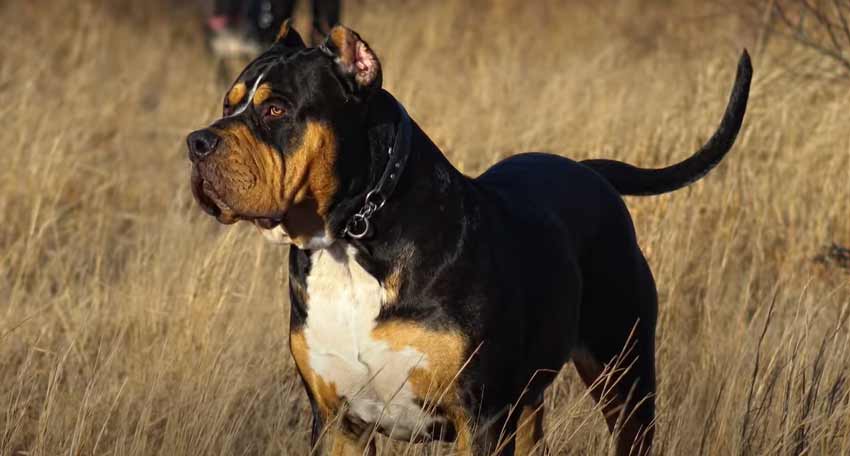
Tri color American Bully with a black coat, tan points on the face and legs, and a white chest
A tri color American Bully shows a base color, tan points and white markings. Photo: [Photographer] / [Source].

How the Tri Color Pattern Works

The tan points on a tri color American Bully come from the agouti gene, also called the A locus or ASIP. The UC Davis Veterinary Genetics Laboratory describes a black-and-tan pattern in which the back is dark and tan appears on the cheeks, eyebrows and undersides. That is the “points” part of a tri coat.

Three other pieces complete the picture:

  • Base color genes decide whether the dark areas are black, chocolate, blue or lilac.
  • White-spotting genes add the white chest, feet, blaze or larger white patches that make the coat “tri.”
  • Dominant black (K locus) can hide the agouti pattern completely. UC Davis notes that agouti patterns only show in the absence of dominant black.

Can two non-tri parents have tri puppies?

Sometimes, yes. UC Davis lists the agouti variants as a series in which some patterns win out over others, and dominant black can mask them all. So a solid-looking parent may still carry the tan-point variant without showing it. When two carriers are bred, some puppies can come out tri. A coat-color DNA test is the most reliable way to know what a dog carries.

Tri color vs. “tri merle”: why it matters

Some sellers advertise “tri merle” bullies. Merle is a different gene, and the UKC lists merle as a disqualification, along with blue eyes. The UC Davis lab also warns that breeding two merle dogs can produce double merles, which may have hearing, eye and other defects. A true tri color American Bully carries no merle, so it avoids that merle-related risk.

If you already own a bully of unknown background, our guide to dog DNA test kits can help you choose a kit that reports coat-color genes, not just breed mix.

Tri Color American Bully Sizes: Pocket, Standard, Classic and XL

Every tri color American Bully also belongs to one of the breed’s size varieties. The UKC standard defines them by height at the withers, the top of the shoulders:

Variety Males Females Notes
Pocket 14 to under 17 in 13 to under 16 in Shortest variety
Standard 17–20 in 16–19 in Mid-height variety
Classic 17–20 in 16–19 in Same height as Standard, lighter frame
XL Over 20 to 23 in Over 19 to 22 in Tallest variety

Source: UKC American Bully standard, effective January 1, 2025. The UKC standard gives heights only, not weights.

The UKC also lists “overly massive dogs” and dwarfism among disqualifications. That matters for buyers, because extreme, exaggerated bodies are not what the standard asks for, whatever the coat color.

Temperament and Family Life

The UKC describes the American Bully as primarily a companion dog: confident and energetic, with a gentle, friendly manner despite its powerful build. The standard calls aggression toward people highly undesirable and uncharacteristic. A tri coat changes none of this. Temperament comes from genetics, early socialization and training.

In daily life, most bullies want to be close to their people. Plan on daily walks, short play sessions and reward-based training from puppyhood. A strong young dog that never learned leash manners is much harder to manage as a heavy adult than as a puppy.

Socialization matters just as much. Gentle, positive meetings with different people, calm dogs, sounds and places during puppyhood help a bully grow into the steady companion the breed standard describes. Puppy classes that use rewards rather than force are a good start, and they also give you support if problems appear later.

Coat care for a tri color American Bully

The short, smooth coat is easy to keep. A weekly brush with a rubber curry or soft bristle brush lifts loose hair and spreads skin oils, and a bath every few weeks, or when dirty, is usually enough. Check the white areas and skin folds now and then for redness or irritation, and ask your vet if anything looks sore. Tan points on puppies can shift slightly in shade as the adult coat comes in, so expect a few changes during the first year.

Health and Daily Care

No health problem is linked to the tri pattern itself. The things to watch are breed-wide and size-related.

Hips and joints

VCA Animal Hospitals describes hip dysplasia as a genetic disease seen mainly in large dogs, including bulldogs. Signs include limping, a wobbly gait and reluctance to climb stairs. VCA reports that large-breed puppies fed freely develop hip dysplasia at twice the rate of those fed measured meals. Keep your puppy lean and ask breeders for hip screening results on both parents.

Breathing and heat

Some bullies have shorter, broader muzzles closer to bulldog types. VCA lists bulldogs and boxers among breeds prone to brachycephalic airway syndrome, with noisy breathing and snoring that often worsen in hot, humid weather. Extra weight makes it worse. Use a harness rather than a collar, exercise in cooler hours and choose a puppy whose parents breathe quietly at rest.

When to call a vet: Loud breathing at rest, gums turning blue or gray, collapse after exercise, or limping that lasts more than a day needs a veterinarian. In heat, move your dog to shade and call a 24/7 emergency animal hospital right away if breathing does not settle.

Buying or Adopting: Price, Papers and Local Rules

Breeders often charge more for tri puppies because the pattern is popular. Prices vary widely by breeder, size and pedigree, and our separate guide to tri-color American Bully prices breaks down what buyers actually pay. Whatever the price, the coat should never be the main reason to choose a breeder.

Check local rules before you commit. The American Veterinary Medical Association opposes breed-specific legislation, but it notes that several US cities, towns and states have adopted breed-specific measures, with “pit bull” types the most common target. Rules vary by state, county and city, so check with your local animal control office and, if you rent, your landlord and insurer.

Before you pay a deposit: 7 questions to ask

  1. Can I see coat-color DNA results for both parents, showing no merle?
  2. Have both parents had their hips screened, and can I see the results?
  3. Do the parents breathe quietly at rest and after play?
  4. Which size variety are the parents, and how tall are they?
  5. Can I meet the mother and see where the puppies are raised?
  6. Which registry are the puppies registered with?
  7. Will you take the dog back at any age if I can no longer keep it?

Example Scenario (illustrative)

Luis in San Antonio, Texas, falls for a blue tri puppy listed as “rare tri merle.” After reading the UKC standard, he learns that a true tri color American Bully carries no merle, so he asks the breeder for coat DNA results. The test confirms merle, so Luis passes. A month later he adopts a two-year-old black tri from a local rescue, after checking his city’s dog ordinance and his renter’s insurance first.

Common mistake Why it matters Better approach
Paying extra for “rare” color Tri is a recognized, widely bred pattern Pay for health testing, not color
Buying a “tri merle” Merle is a UKC disqualification; merle-to-merle risks Ask for DNA proof of no merle
Choosing the most extreme build “Overly massive” is a disqualification; joint and breathing strain Favor a balanced, athletic dog
Skipping local rule checks Housing or city restrictions may apply Check city, landlord and insurer first

What most owners get wrong

Many buyers treat coat color as a mark of quality. It is not. A tri coat tells you about a handful of pigment genes, nothing about hips, breathing or temperament. The best tri color American Bully is the one with healthy, even-tempered parents. For another popular coat, compare our guide to blue American Bully puppies.

Tri Color American Bully FAQs

What makes an American Bully tri color?

Three colors in one coat: a base color, tan points on the face, chest and legs, and white markings. The tan points come from the agouti gene.

Is a tri color American Bully rare?

Tri is popular and widely bred, so it is not truly rare. Some combinations, such as lilac tri, tend to be less common because they need several recessive color genes together.

Is a tri coat recognized by the UKC?

Yes. The UKC accepts any color or pattern in the American Bully except merle, so tri coats are fully recognized.

Do tri color bullies have more health problems?

No health problem is linked to the tri pattern itself. Watch for breed-wide issues such as hip dysplasia and, in shorter-muzzled dogs, breathing trouble in heat.

How big do American Bullies get?

It depends on the variety. UKC heights run from 13 inches for small Pocket females to 23 inches for the tallest XL males.

What is the difference between tri and tri merle?

Tri has tan points and white. Tri merle adds the merle pattern, which the UKC disqualifies and which carries health risks when two merles are bred.

Final Verdict: Is a Tri Color American Bully Right for You?

A tri color American Bully is a standard, UKC-accepted coat on a friendly, people-focused companion breed. Choose the right size variety, insist on hip and breathing checks, avoid anything labeled merle, and confirm your local rules. Do that, and the striking three-color coat is simply a bonus on top of a well-bred, well-raised family dog.

Your next steps

  1. Check your city’s dog ordinance and your housing rules.
  2. Compare costs in our tri-color American Bully price guide.
  3. Explore more breed guides in our Dogs section.

Share your tri bully photos with other pet parents on our Pets Store Home Facebook page.

About the author: Written and reviewed by the Pets Store Home Editorial Team, a group of pet owners and animal lovers who check every guide against trusted US veterinary and animal-welfare sources. This article is general information, not a substitute for professional veterinary advice. Always talk to your veterinarian about your own pet’s health.

How we checked this guide: Breed recognition, sizes, colors and disqualifications come from the UKC American Bully standard (effective January 1, 2025). Coat genetics come from the UC Davis Veterinary Genetics Laboratory. Hip and breathing information comes from VCA Animal Hospitals, and local-rule guidance from the American Veterinary Medical Association. We review this article every 12 months, or sooner if guidance changes.

Last reviewed: October 2026. Sources: UKC, UC Davis VGL, VCA, AVMA.

Gotti Pitbull: What the Bloodline Actually Is, and What It Costs

Gotti Pitbull: What the Bloodline Actually Is, and What It Costs

Quick Answer: “Gotti Pitbull” refers to the Gottiline, a specific American Bully bloodline founded through a dog named The Notorious Juan Gotty in the late 1990s – not a separately recognized breed. Puppies from documented Gottiline breeders typically run $2,500 to $8,000+ depending on variety (Pocket, Standard, or XL), pedigree documentation, and breeder reputation. The American Bully itself is a companion and show breed recognized by the ABKC (2004) and UKC (2013); reputable modern breeders have no connection to dogfighting, despite that history existing further back in the breed’s bull-and-terrier ancestry.

Key Takeaways

  • “Gotti” is a bloodline within the American Bully breed, founded by a dog called The Notorious Juan Gotty, not a distinct breed of its own.
  • Juan Gotty was bred by Tony Moore of Grey Line Kennels and later purchased by Richard Barajas in 1997, who built the Gottiline by breeding Gotty to unrelated dams.
  • Expect to pay roughly $2,500-$8,000+ depending on variety and documentation; well-papered Gottiline pups with strong pedigrees sit at the higher end.
  • The American Bully is recognized by the ABKC (2004) and UKC (2013), with UKC recognizing Pocket, Standard/Classic, and XL varieties.
  • Modern, reputable American Bully and Gottiline breeding is for companionship and conformation showing – not fighting, which is illegal and has no place in responsible breeding today.

Why Trust This Guide?

This guide draws on published American Bully breed history from the UKC and ABKC, documented accounts of the Gottiline’s founding published by breeders and bully-breed publications, and current 2026 pricing data from breeder listings. Where the bloodline’s history involves specific people, dogs, and dates, we’ve cross-checked against multiple independent sources.

In this article: What “Gotti” actually means · Where the Gottiline came from · American Bully breed recognition and varieties · What drives the price · Health considerations · Finding a responsible breeder · Common misconceptions · FAQ

What “Gotti Pitbull” Actually Means

“Gotti Pitbull” is not an officially recognized dog breed – it’s shorthand for the Gottiline, a specific, well-documented bloodline within the American Bully breed. The confusion is understandable: American Bullies descend partly from the American Pit Bull Terrier, and older bloodline names like “Gotti” get colloquially shortened to “Pitbull” even though a modern Gottiline American Bully and an American Pit Bull Terrier are bred to different standards today.

Dogs from the Gottiline are typically recognizable by a blocky, heavy head, a wide chest, and a compact, heavily muscled build – traits that made the foundational dog behind the line, The Notorious Juan Gotty, influential enough that his name still carries weight in American Bully circles nearly three decades later.

Where the Gottiline Actually Came From

The Gottiline traces to a single dog: The Notorious Juan Gotty, bred by Tony Moore of Grey Line Kennels in Los Angeles. Gotty was a purebred product of the Grey Line breeding program – accounts describe him as “100% Greyline.” In 1997, breeder Richard Barajas of West Side Kennels purchased Juan Gotty for $1,300. Barajas then built what became the Gottiline by breeding Gotty to a range of unrelated dams and line-breeding the resulting offspring to lock in the traits – the blocky head, heavy bone, and compact muscle – that came to define the bloodline.

Juan Gotty proved an extraordinarily influential sire, reportedly siring several hundred puppies over his lifetime, and his descendants became foundational to multiple other respected bloodlines within the American Bully world, not just the Gottiline itself. A related “Pocket Gotti” line also developed from this same foundation, contributing to the smaller Pocket variety that’s now part of the UKC’s official American Bully standard.

It’s worth being direct about one thing: the Gottiline’s history is a story about selective breeding for a specific look and temperament, not about dogfighting. Like most bully-type breeds, the deeper ancestry of the American Bully runs back through the American Pit Bull Terrier to 19th-century bull-baiting and pit-fighting dogs – a genuinely dark chapter in dog breeding history that is illegal and universally condemned today. But the Gottiline itself, and the modern American Bully breed it helped shape, were developed for companionship, conformation showing, and temperament – not fighting. Any breeder who frames dogfighting as part of a dog’s appeal, past or present, is not a breeder worth supporting.

American Bully Breed Recognition and Varieties

The American Bully originated in the United States in the 1980s and 1990s, developed by combining the physical build of the American Pit Bull Terrier with the calmer temperament associated with Bulldog breeds. The American Bully Kennel Club (ABKC) recognized the breed in 2004, and the United Kennel Club (UKC) followed in 2013. The UKC standard recognizes several size varieties – Pocket, Standard (sometimes called Classic), and XL – based on height at the withers, with an updated breed standard clarifying these varieties effective January 2024. Note that the American Kennel Club (AKC) does not recognize the American Bully as a breed.

Variety Typical height Typical build
Pocket Under 17in (males), under 16in (females) Compact, heavily muscled for its size
Standard/Classic 17-20in (males), 16-19in (females) The original, most common American Bully build
XL Over 20in (males), over 19in (females) Largest variety; substantial bone and muscle

Gotti vs. Other Famous American Bully Bloodlines

The Gottiline is one of several influential foundation bloodlines within the American Bully breed, and buyers often see these names used interchangeably even though they represent genuinely different breeding programs with different emphases.

Bloodline Founding influence Known for
Gottiline The Notorious Juan Gotty (Richard Barajas, 1997) Blocky head, heavy bone, compact muscle
Razor’s Edge Developed by David Wilson starting in the 1990s Extreme mass and bulk, heavier overall build
Greyline Tony Moore’s foundational breeding program The base stock behind several later bloodlines, including Gotti

In practice, many modern American Bully pedigrees carry influence from multiple foundational bloodlines rather than being “pure” to just one, since breeders have spent decades cross-breeding these lines to refine specific traits. A puppy advertised as “Gotti” today is more accurately described as carrying significant Gottiline influence in its pedigree rather than being a direct, unmixed descendant of Juan Gotty himself, given how many generations separate most current dogs from that original sire.

Temperament and Training

Well-bred American Bullies, including Gottiline-influenced dogs, are typically described as confident, people-oriented, and eager to please – traits deliberately selected for since the breed’s founding purpose was companionship rather than work or sport. Early, consistent socialization still matters enormously for a breed this physically powerful; a poorly socialized dog of any large, strong breed can become difficult to manage, while a well-socialized one is typically described as gentle and affectionate with its family, including children.

Training should begin in puppyhood and continue through the breed’s extended adolescence. Positive-reinforcement methods work well with this breed’s people-pleasing temperament, and structured exercise – walks, play sessions, and activities like weight-pulling or basic obedience work – helps channel the breed’s substantial physical energy productively. Given the breed’s size and strength as an adult, investing in solid leash manners and recall early on makes daily life significantly easier.

What Actually Drives the Price

Gotti Pitbull (Gottiline American Bully) pricing varies enormously based on documentation, variety, and bloodline prestige.

Source Typical price Notes
Backyard or unpapered breeder $800-$2,500 Little to no health testing or documented pedigree; buy with real caution
Reputable breeder, Standard/Classic $2,500-$6,000 Health-tested parents, registered pedigree
Reputable breeder, Pocket variety $3,500-$10,000+ Smaller size and strong Gottiline documentation command a premium
Reputable breeder, XL variety $2,500-$8,000+ Price scales with size, bone, and documented lineage strength
Adoption/rescue $100-$400 American Bully-type dogs are common in shelters; adoption fee only

Beyond the purchase price, budget for the breed’s above-average food costs given its size and muscle mass, routine veterinary care, and the joint and skin screening discussed below. Total first-year costs for a large, muscular breed commonly run $3,000-$4,500 once food, vaccinations, spay/neuter, and basic supplies are included.

Health Considerations

American Bullies, including Gottiline dogs, are prone to a handful of breed-related health concerns worth screening for before buying.

Health concern What it is What to ask breeders
Hip and elbow dysplasia Joint malformation common in heavily muscled, large-boned breeds OFA or PennHIP clearances on both parents
Skin allergies and fold dermatitis Common in bully-type breeds, especially around facial folds Any known family history of skin issues
Brachycephalic-adjacent breathing issues Shorter muzzles in some lines can affect airflow, especially in heat Ask to see the parents breathe after light exercise
Cardiac issues Screened for in responsible breeding programs Cardiac clearance or vet cardiac exam records

Average lifespan for the American Bully is around 10-13 years with good care, weight management, and regular veterinary checkups. Because the breed carries significant muscle mass, keeping a healthy weight matters more than usual for joint longevity.

Finding a Responsible Breeder

A responsible Gottiline or American Bully breeder can produce documented pedigree paperwork tracing the dog’s lineage, provide hip, elbow, and cardiac clearances on both parents, let you meet at least the mother, and speak honestly about the bloodline’s real history rather than leaning on dogfighting mystique to make a puppy sound tougher or more desirable. Be skeptical of sellers who emphasize “gameness,” fighting-adjacent language, or unverifiable bloodline claims without paperwork – these are red flags for both ethics and likely health-testing shortcuts. Reputable breeders should also be transparent about which UKC or ABKC variety (Pocket, Standard, XL) a puppy is expected to mature into, since size varies meaningfully within a single litter.

Questions to Ask Before You Buy

Before committing to a Gottiline or American Bully puppy, it’s worth going through a short checklist with the breeder. Ask to see hip, elbow, and cardiac clearance paperwork for both parents, not just verbal assurances. Ask how the pedigree connects to the Gottiline specifically, and request to see the actual paperwork rather than taking a bloodline claim on faith – reputable breeders keep and share this documentation readily. Ask which UKC or ABKC variety (Pocket, Standard, XL) the litter is expected to mature into, since this affects both size expectations and price. Finally, ask about the breeder’s socialization practices for puppies before they go home, since early handling in the first eight weeks meaningfully shapes adult temperament in any large, powerful breed.

It’s also reasonable to ask directly how the breeder feels about the sport-fighting history that shadows bully-type breeds generally. A breeder who distances their program clearly from that history and can speak knowledgeably about the Gottiline’s actual documented founding is a good sign; one who leans into fighting-adjacent marketing language is a red flag worth walking away from.

Common Misconceptions

The biggest misconception is treating “Gotti Pitbull” as a distinct breed rather than a bloodline within the American Bully. A closely related one is romanticizing the line’s connection to dogfighting – while the deeper ancestry of bully-type breeds includes that history, the Gottiline itself and the modern American Bully were developed for companionship and conformation, and any current breeder invoking fighting culture as a selling point should be avoided. Finally, some buyers assume all “Gotti” dogs are interchangeable in price and quality; in reality, documentation, health testing, and variety (Pocket vs. Standard vs. XL) all meaningfully affect both price and what kind of dog you’re actually getting.

Editor’s Insights

The most useful correction to make when researching this bloodline is a small but important one: Juan Gotty was bred by Tony Moore of Grey Line Kennels, not by Richard Barajas, who purchased and then developed the line through selective breeding. That distinction matters because it’s exactly the kind of detail that gets garbled as bloodline stories get repeated online, and it’s a good reminder to verify pedigree claims with actual paperwork rather than secondhand breeder folklore. More broadly, this is a bloodline with a genuinely interesting, well-documented history that doesn’t need any exaggeration or dogfighting mystique to be worth knowing accurately.

Frequently Asked Questions

Is Gotti Pitbull a real breed?

No. It’s a bloodline – the Gottiline – within the American Bully breed, founded through a dog named The Notorious Juan Gotty in the late 1990s. The American Bully itself is recognized by the ABKC and UKC, but not the AKC.

Who founded the Gotti bloodline?

Juan Gotty was bred by Tony Moore of Grey Line Kennels. Richard Barajas of West Side Kennels purchased Gotty in 1997 and built the Gottiline by breeding him to unrelated dams.

How much does a Gotti Pitbull puppy cost?

Typically $2,500-$8,000+ depending on variety (Pocket, Standard, or XL) and documentation quality; Pocket variety with strong Gottiline paperwork can exceed $10,000.

Are Gotti Pitbulls / American Bullies dangerous?

Not inherently. Modern American Bullies are bred for a stable, people-oriented temperament. Any individual dog’s behavior depends heavily on breeding, socialization, and training, the same as with any breed.

What’s the difference between Pocket, Standard, and XL varieties?

They’re UKC-recognized height categories: Pocket is the smallest and most compact, Standard/Classic is the original mid-size build, and XL is the largest, with correspondingly more bone and muscle.

Is buying a Gotti Pitbull supporting dogfighting?

No, not from a reputable breeder. The Gottiline and modern American Bully were developed for companionship and showing. Dogfighting is illegal and has no place in responsible breeding; avoid any seller who romanticizes that history as part of a dog’s appeal.

Is a Gotti Pitbull the same as a Razor’s Edge Pitbull?

No. Both are influential American Bully bloodlines, but they come from different founding programs – Gottiline traces to The Notorious Juan Gotty, while Razor’s Edge was developed separately by David Wilson. Many modern dogs carry influence from both, since breeders have cross-bred these lines for decades.

How big does a Gotti Pitbull (American Bully) get?

It depends on the variety: Pocket dogs stay under about 17 inches at the shoulder, Standard/Classic dogs run 17-20 inches, and XL dogs exceed 20 inches, with weight scaling accordingly – often 65-120+ pounds depending on variety and individual build.

The Bottom Line

“Gotti Pitbull” describes a specific, well-documented American Bully bloodline founded by The Notorious Juan Gotty in the late 1990s – not a separate breed, and not a dog defined by dogfighting culture. Budget $2,500-$8,000+ depending on variety and documentation, prioritize breeders who provide health clearances and honest pedigree paperwork, and be wary of anyone selling the fighting-dog mystique rather than the breed’s real, interesting history. For more on related bloodlines and breeds, see our guides to the Razor Edge Gotti Pitbull, the Tri-Color American Bully, and the American Staffordshire Terrier, a related but distinct breed worth understanding before you choose between them.

Sources & References

  • United Kennel Club (UKC) – American Bully Breed Standard and Recognition History
  • American Bully Kennel Club (ABKC) – Breed Recognition History
  • Published Gottiline bloodline histories from bully-breed publications and breeders
  • Britannica – American Bully Breed Overview

Written by the Pets Store Home editorial team. Fact-checked against current UKC and ABKC breed documentation and published Gottiline bloodline history.

Last fact-checked: September 2026.

Understanding the Gotti Bloodline’s Roots

Curious how the Gotti line fits into the wider American Bully picture, and how it compares to Razor’s Edge influence? Our guide to the Razor Edge Gotti Pitbull covers the real bloodline history, health considerations, and what to look for.

AmStaff or Pit Bull? Clearing Up the Confusion

If you are weighing a muscular, powerful breed like this one, our American Staffordshire Terrier price and care guide explains exactly how the AmStaff differs from – and relates to – the American Pit Bull Terrier, plus realistic pricing and health-testing advice.

Full Grown Blue Merle French Bulldog

Full Grown Blue Merle French Bulldog

Full Grown Blue Merle French Bulldog: 7 Essential Facts on Size, Health and Care (2026)

How big is a full grown blue merle French Bulldog? Most adult French Bulldogs stand about 11 to 13 inches tall at the shoulder and weigh under 28 pounds, and a blue merle coat does not change that range. Most Frenchies reach adult size at about 12 months. The bigger questions with blue merle are genetics, health testing and where the dog came from.

The blue merle French Bulldog has a gray-blue coat broken up by darker patches, and often light or blue eyes. Breeders often market it as a “rare” Frenchie color. This guide covers what a full grown blue merle French Bulldog looks like, how big it gets, when it stops growing, the health risks tied to the merle and blue genes, and how to care for one as an adult.

Key takeaways: 7 essential facts

  • Adult size: about 11–13 inches tall and usually under 28 pounds, the same as other French Bulldogs.
  • Most French Bulldogs stop growing at around 12 months, though some fill out a little after that.
  • “Blue merle” combines two genes: the dilute (blue) gene and the merle pattern gene.
  • The French Bulldog Club of America standard lists both merle and blue as disqualifying colors for the show ring.
  • Two merle parents can produce “double merle” puppies with a higher risk of hearing and eye defects.
  • Like every Frenchie, a blue merle needs care for its flat face, its back and the heat.
  • With good care, expect a lifespan of about 10–12 years.

Full Grown Blue Merle French Bulldog Size at a Glance

Coat color does not set a dog’s size. Genes for body size, the parents’ build, diet and neutering timing are likely to matter far more. So a full grown blue merle French Bulldog should fall in the same range as any healthy Frenchie. A Healthy Paws breed guide reviewed by Jennifer Coates, DVM puts adults at about 11 to 13 inches tall, and the French Bulldog Club of America standard says a Frenchie should not exceed 28 pounds.

Measure Typical adult range Notes
Height at shoulder About 11–13 in Similar for males and females
Weight (breed standard) Under 28 lb Over 28 lb is a show disqualification
Weight at 12 months (males) About 20–30 lb From the Healthy Paws growth chart
Weight at 12 months (females) About 17.5–28 lb Females tend to be a little lighter
Life expectancy About 10–12 years With good care

Ranges are typical, not guarantees. Ask your vet what a healthy weight looks like for your own dog’s frame.

One caution: the French Bulldog Rescue Network says merle is not native to the breed and was likely brought in by crossing with another breed. If a blue merle line has mixed ancestry, an individual dog may end up a little larger or smaller, or leggier, than the classic Frenchie. Meeting the parents is the best size clue.

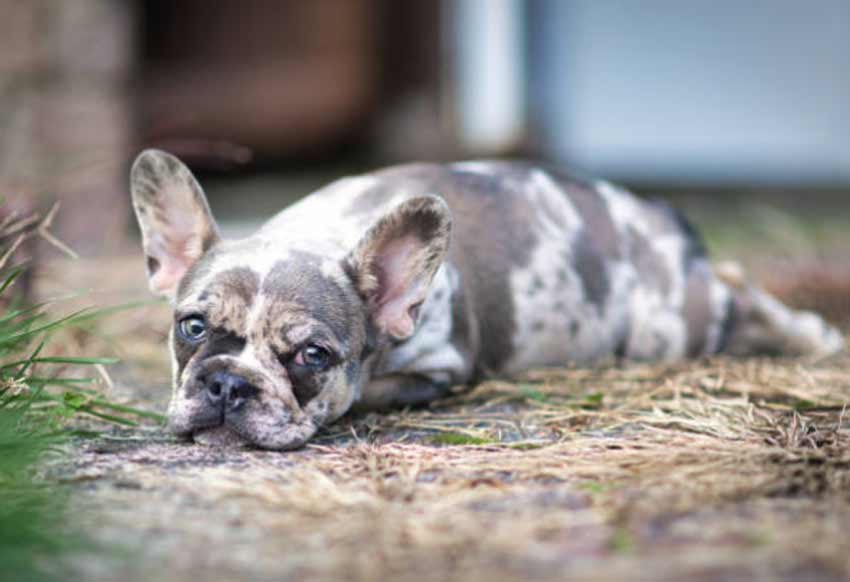
Full grown blue merle French Bulldog with a gray-blue patched coat
A full grown blue merle French Bulldog has the same compact build as other Frenchies, with a patched gray-blue coat.

What Makes a French Bulldog Blue Merle?

“Blue merle” is really two genetic traits stacked together. Understanding them helps you judge both the look and the health risk.

Trait What it does Health note
Dilute (“blue”) A recessive gene lightens black pigment to gray-blue Linked to color dilution alopecia in some dogs
Merle (one copy) Creates patches of diluted and full color Testing advised; often shows light or blue eyes
Blue merle Merle pattern on a dilute blue base Carries the notes for both genes
Double merle (two copies) Often mostly white with little pigment Higher risk of hearing, eye and other defects
Cryptic merle Carries merle but shows little or no pattern Can surprise breeders; only a DNA test finds it

The dilute gene

The French Bulldog Rescue Network explains that blue and lilac Frenchies come from a recessive mutation in the melanophilin gene. A puppy needs a copy from each parent to look blue.

The merle gene

The UC Davis Veterinary Genetics Laboratory lists the French Bulldog among breeds suitable for its merle DNA test. It notes that double merle dogs may have auditory, eye, skeletal and other defects, and that breeding two merle dogs together is discouraged. It also describes “cryptic” merle dogs that carry the gene but show little or no pattern, so two dogs that look non-merle can still produce double merles.

Because the FBRN says merle is not native to French Bulldogs, a reputable breeder should be open about the line’s history and show DNA results for both parents.

When Is a Blue Merle Frenchie Full Grown?

A blue merle puppy grows on the same timeline as any French Bulldog. Healthy Paws says most Frenchies stop growing at about 12 months. Many owners notice their dog’s chest and head keep filling out for a few more months, so a full grown blue merle French Bulldog may look broader at 18 months than at its first birthday.

Stage What usually happens
8–16 weeks Fast growth; puppy coat and merle pattern clearly visible
4–6 months Growth slows; adult teeth come in; ears usually stand fully
6–9 months Height nears adult size; coat shade may shift as puppy fur sheds
About 12 months Most Frenchies reach full height and close to adult weight
12–18 months Some dogs gain a little muscle and chest width

Stages are approximate and vary by dog. Your vet can track growth at each puppy visit.

Do not judge growth by the scale alone. A Frenchie that passes 28 pounds may be carrying extra fat rather than extra frame, and extra weight makes breathing and back problems worse. Ask your vet to show you how to check your dog’s ribs and waist.

What a Full Grown Blue Merle French Bulldog Looks Like

  • Coat: A gray-blue base with darker, irregular patches. Each dog’s pattern is unique, and the shade can look a little lighter or darker as the adult coat comes in.
  • Eyes: Often light, blue or odd-colored. The FBDCA standard treats any blue or green in the eyes as a disqualification.
  • Nose and pads: Often gray-blue or partly pink rather than black.
  • Body: The same compact, muscular, heavy-boned build as other Frenchies, with bat ears and a short face.

Shedding is similar to other short-coated Frenchies. If you want to know what to expect around the house, see our guide on whether French Bulldogs shed a lot.

Full Grown Blue Merle French Bulldog Health Risks

A full grown blue merle French Bulldog faces two layers of health risk: those tied to its color genes and those shared by every Frenchie.

Color-linked risks

  • Double merle defects: UC Davis notes double merles may have hearing, eye and skeletal defects. A single-merle dog from tested parents is generally considered lower risk, but a hearing (BAER) test and an eye exam are sensible.
  • Color dilution alopecia (CDA): WikiVet describes CDA as a hair follicle problem in some dilute dogs that causes a dry, brittle coat and patchy hair loss. Signs often start between about 6 months and 3 years, there is no cure, and care focuses on gentle grooming, moisturizers and treating skin infections.

Breed-wide risks

The UC Davis School of Veterinary Medicine explains that short-nosed dogs can develop brachycephalic obstructive airway syndrome (BOAS). Signs include noisy breathing, trouble breathing, vomiting, tiring quickly on walks and overheating, and obese dogs are more likely to be affected. Healthy Paws also lists hip dysplasia, allergies, spinal problems such as intervertebral disc disease, and patellar luxation among common Frenchie issues.

Warning sign Possible cause What to do
No reaction to sounds or name Possible hearing loss Ask your vet about a BAER test
Bumping into things, cloudy eyes Possible eye problem Book an eye exam
Thinning, brittle coat on the back Possible CDA or allergies Vet skin check
Loud breathing, gums turning blue Airway distress or heatstroke Emergency vet now
Back pain, wobbly or dragging legs Possible spinal disc problem Emergency vet now

When to call a vet right away: Labored breathing, collapse, blue or gray gums, sudden weakness in the back legs, or signs of overheating need urgent care. If your vet is closed, go to a 24/7 emergency animal hospital.

Caring for an Adult Blue Merle Frenchie

  • Keep it cool: UC Davis advises keeping short-nosed dogs out of hot environments. Walk early or late on warm days and use air conditioning.
  • Keep it lean: A trim body eases breathing and protects the spine and joints.
  • Exercise gently: Short, regular walks and indoor play beat long runs. Watch breathing closely.
  • Protect the back: Use ramps or steps for couches and beds where you can.
  • Be gentle with the coat: Use a mild shampoo, and ask your vet before using harsh products if the coat looks dry or thin.
  • Protect light skin: Ask your vet about pet-safe sun protection for pale noses and thin-coated areas.

Pet Care Tip: Record a short video of your Frenchie breathing while resting and after a walk. If the noise or effort changes over time, the clips help your vet judge whether airway problems are getting worse.

Before You Buy a Full Grown Blue Merle French Bulldog

Merle Frenchies cannot be shown in FBDCA-standard conformation events, because the standard lists merle and blue as disqualifying colors. That does not make a well-bred pet unhealthy, but it means you should check the breeder’s health work, not the coat. For price ranges, see our separate guide on how much a merle French Bulldog costs.

7 questions to ask a breeder

  1. Do you have merle DNA results for both parents?
  2. Has either parent tested as cryptic merle?
  3. Has this puppy had a BAER hearing test?
  4. Has an eye exam been done?
  5. How much do the parents weigh, and how tall are they?
  6. Do the parents breathe quietly at rest and after light exercise?
  7. Will you take the dog back at any age if I cannot keep it?

Example Scenario (illustrative)

Marcus in Denver adopts a 2-year-old blue merle Frenchie named Pixel from a rescue. Pixel weighs 31 pounds and snores loudly. His vet helps Marcus plan a slow weight loss to about 26 pounds and books a hearing test, which comes back normal. A few months later Pixel walks farther in cool weather and breathes more quietly at night.

Common mistake Why it matters Better approach
Buying on coat color alone Color says nothing about breathing or spine health Ask for parent health and DNA results
Ignoring merle-to-merle breeding Can produce double merle puppies Confirm only one parent is merle
Treating snoring as “normal” Loud breathing can be a BOAS sign Ask your vet to assess the airway
Letting weight creep up Extra weight worsens breathing and back strain Measure meals and track weight monthly

What most owners get wrong

Many buyers expect a “rare” coat to mean a special or tiny dog. In reality, a full grown blue merle French Bulldog is a regular Frenchie in size and needs, with extra genetic questions on top. The coat is the least important thing to check.

Full Grown Blue Merle French Bulldog FAQs

How much does a full grown blue merle French Bulldog weigh?

Usually under 28 pounds, the breed standard limit. Healthy Paws lists about 20–30 pounds for males and 17.5–28 pounds for females at 12 months.

How tall is a full grown blue merle French Bulldog?

About 11 to 13 inches at the shoulder, the same as other French Bulldogs.

At what age is a blue merle French Bulldog full grown?

Most reach full height at around 12 months, and some fill out a little more by 18 months.

Does a blue merle Frenchie’s coat change as it grows?

The pattern stays, but the shade can look lighter or darker as the puppy coat sheds and the adult coat comes in.

Are blue merle French Bulldogs healthy?

They can be, but they carry Frenchie breathing and back risks plus color-linked risks. Double merles have a higher risk of hearing and eye defects, and dilute dogs can develop CDA.

Can a blue merle French Bulldog be shown at dog shows?

Not in conformation events that follow the FBDCA standard, which lists merle and blue as disqualifying colors.

How long does a blue merle French Bulldog live?

About 10 to 12 years with good care, similar to other French Bulldogs.

Final Verdict: Full Grown Blue Merle French Bulldog

A full grown blue merle French Bulldog is usually 11 to 13 inches tall and under 28 pounds, and most reach that size by about 12 months. The coat does not change size, but it does raise genetic questions. Choose a breeder with DNA and health tests, keep your dog lean and cool, and check hearing and eyes.

Your next steps

  1. Ask your breeder or rescue for parent DNA and health records.
  2. Read our guide on French Bulldogs with long tails.
  3. Explore more breed guides in our Dogs section.

Share your Frenchie’s photos and questions with other owners on our Pets Store Home Facebook page.

About the author: Written and reviewed by the Pets Store Home Editorial Team, a group of pet owners and animal lovers who check every guide against trusted US veterinary and animal-welfare sources. This article is general information, not a substitute for professional veterinary advice. Always talk to your veterinarian about your own pet’s health.

How we checked this guide: Size and weight limits come from the French Bulldog Club of America standard and a DVM-reviewed Healthy Paws breed guide. Merle genetics come from the UC Davis Veterinary Genetics Laboratory, breed color history from the French Bulldog Rescue Network, CDA details from WikiVet, and airway guidance from the UC Davis School of Veterinary Medicine. We review this article every 12 months, or sooner if guidance changes.

Last reviewed: October 2026.

Blue American Bully Puppy Price

Blue American Bully Puppy Price

Blue American Bully Puppy Price: Real Costs, Health Checks & Red Flags

The typical blue American Bully puppy price from a US breeder is about $2,000 to $4,500, based on current breeder listings, though some sellers ask $5,000 to $10,000 or more for “premium” bloodlines, XL size or breeding rights. Shelter and rescue fees are far lower. The blue coat alone shouldn’t double the price: blue is a common dilute color, not a rare one, and it comes with a skin condition risk you should ask about.

The puppy is only the first bill. The AKC estimates a large dog’s first year costs over $3,000 in food, vet care, supplies and training on top of the purchase price. This guide breaks down what drives the price, what a fair deal looks like, and how to spot a breeder who’s charging for color instead of health.

Before you pay a deposit: meet the puppy and its mother in person or on a live video call, get registration papers (ABKC or UKC) and vet records in writing, and never pay by wire transfer, gift card or crypto to a seller you can’t verify. Also check your city’s rules, landlord policy and homeowner’s insurance, since some restrict bully breeds.

Key takeaways

  • Most breeder puppies list around $2,000 to $4,500; premium claims reach $5,000 to $10,000+.
  • Blue is a dilute color, not a rare one, so be wary of large “rare color” markups.
  • Blue dogs can develop color dilution alopecia, an inherited hair-loss condition.
  • Merle is a disqualifying color in the UKC breed standard, so “blue merle” is not a show color.
  • Budget roughly $3,000+ for the first year of care beyond the purchase price.

Blue American Bully Puppy Price at a Glance

There’s no official price list, so the best guide is current market asking prices. A July 2026 Petful roundup of American Bully breeder and marketplace listings found these typical asks (asking prices, not confirmed sales):

Where you get the dog Typical price
Shelter or rescue Adoption fee set by each organization; usually far less than breeder prices
Pet-quality puppy from a breeder About $1,500 to $3,000
Breeder national range About $2,000 to $4,500
Entry XL puppy Around $3,000
“Premium” bloodline or breeding rights $5,000 to $10,000 or more

Petful found no fixed “most expensive” color; color premiums shift with seller demand. In practice, a blue American Bully puppy price usually falls inside the same ranges as other colors. When a seller adds thousands just for “rare blue,” that’s a sales pitch, not a market rule.

What Is a Blue American Bully?

The American Bully is a young companion breed developed in the US from the American Pit Bull Terrier, with influence from bulldog-type breeds. The United Kennel Club, which recognized the American Bully in July 2013, describes it as a muscular, compact dog that should be confident and friendly. The American Bully Kennel Club (ABKC), founded in 2004, was the first registry for the breed. The American Kennel Club does not recognize it.

“Blue” isn’t a separate breed. It’s a coat color: a diluted black that looks steel gray to slate blue, often with a gray or blue-gray nose. The UKC standard accepts any color except merle, so a blue dog can be registered and shown like any other color.

Whatever the color, the blue American Bully puppy price should reflect the dog’s health and temperament first. If you’re also looking at patterned coats, our guide to the tri-color American Bully explains that coat.

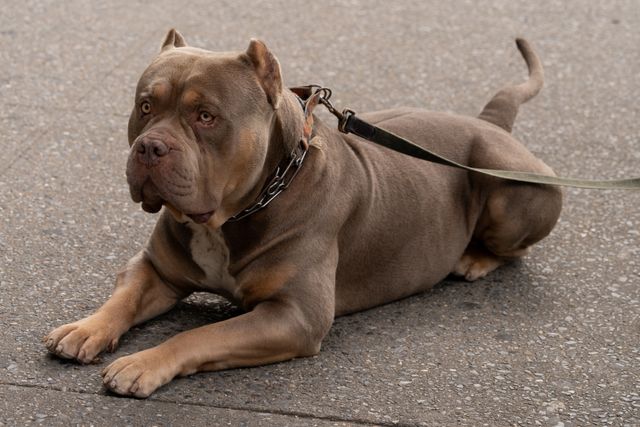
Blue American Bully puppy price guide: blue-gray bully puppy lying on a carpet indoors
A blue coat is a diluted black, from pale steel gray to dark slate. Photo: Rick van Fessem / Pexels.

What Affects the Blue American Bully Puppy Price?

Factor Effect on price Worth paying for?
Health testing of the parents Raises cost Yes, the most valuable extra
Registration (ABKC or UKC) Raises cost slightly Yes, it confirms parentage
Size variety (XL, Pocket) Often higher for XL Only if size suits your home
Famous bloodline names Can add thousands Rarely, for a pet
“Rare” color claims Can add thousands No; blue is common
Breeding rights Adds to the price Not needed for a pet
Location and demand Varies by region Shop around

“Exotic” and “micro” bullies

Some sellers market “micro” or “exotic” bullies with extreme short legs, huge heads and very flat faces, often at high prices. Petful notes that “micro” is not an official UKC or ABKC variety. Extreme body shapes may bring breathing, joint and birthing problems, so a higher price may buy you more vet bills, not a better dog.

If a listing pushes the blue American Bully puppy price up because of an “exotic” look, ask for the parents’ health records first.

Is a blue merle American Bully worth more?

Be careful here. The UKC standard lists merle as a disqualifying color, and blue eyes are also a disqualification. Because merle sits outside the standard, ask the breeder directly whether another breed was used in the pedigree. Don’t pay a premium for a disqualifying color, and ask hard questions about the parents.

American Bully Sizes and the Breed Standard

Size is one of the biggest swings in a blue American Bully puppy price, and it also changes the space and food you’ll need. The UKC standard groups the breed into three height varieties, measured at the shoulder:

Variety Males Females
Pocket 14 to under 17 in 13 to under 16 in
Standard / Classic 17 to 20 in 16 to 19 in
XL Over 20 to 23 in Over 19 to 22 in

The UKC standard sets height, not weight. In the ABKC system, the Classic is generally described as a lighter-framed version of the Standard. Ask to see both parents, because their size is the best clue to how big your puppy will grow. If you’re deciding between sexes too, our guide to the female American Bully puppy has more on choosing a female.

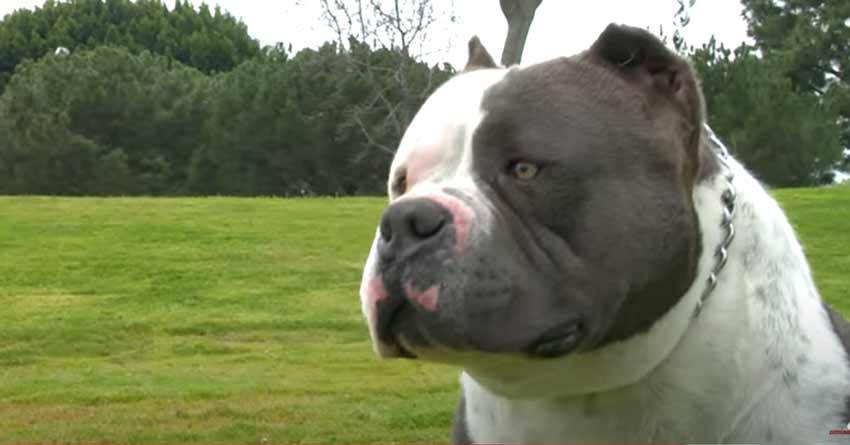
Blue American Bully puppy price and size: muscular American Bully standing on pavement
American Bullies are compact and muscular; size variety affects price, space and feeding costs. Photo: Denniz Futalan / Pexels.

Health Issues That Should Shape the Blue American Bully Puppy Price

A higher price should buy you a healthier puppy, not just a prettier coat. These are the questions worth asking.

Color dilution alopecia

Blue is a dilute color, and dilute dogs can develop color dilution alopecia (CDA). VCA Animal Hospitals explains that CDA is an inherited condition causing patchy hair thinning and loss, most common in blue and fawn dogs. Puppies look normal at birth, and signs usually appear from about six months of age.

CDA can’t be cured, but it’s usually manageable with medicated shampoos and treatment for any skin infections, and it doesn’t affect the dog’s overall health beyond the skin and coat. VCA advises that affected dogs, their parents and their siblings shouldn’t be bred, so ask whether any relatives have had thinning coats.

Joints, breathing and skin

  • Hips and elbows: ask whether the parents have hip and elbow evaluations, such as OFA screening.
  • Breathing: dogs bred with very short faces can struggle in heat and exercise. Choose a puppy whose parents breathe quietly at rest.
  • Skin problems: itchy or irritated skin can show up in any short-coated dog, including bullies; budget for vet visits if it appears.
  • Weight: extra pounds add strain to joints, so keep your dog lean.

A breeder who can’t show health results is not offering a bargain, even at a lower price. For more on reading a dog’s body language when something hurts, see our guide to why a dog’s back is arched.

First-Year Costs Beyond the Blue American Bully Puppy Price

The AKC estimates that the first year with a large dog costs about $3,239, and about $23,410 over a dog’s lifetime across all sizes. Those figures date from 2018, so expect higher costs today. Plan for:

Expense What it covers
Vet care Puppy vaccines, checkups, spay or neuter, microchip, parasite prevention
Food A large-breed puppy food, measured to keep growth steady
Gear Sturdy crate, harness, leash, bed, chew-proof toys
Training Puppy classes and early socialization
Insurance or emergency fund Skin, joint or injury bills; some insurers limit bully breeds

Prepare for the “puppy blues”

Many new owners feel overwhelmed, tired or even regretful in the first weeks with a puppy, a feeling often called the “puppy blues.” For many people it eases as routines settle in. Line up help with walks and training before your puppy comes home, and ask your trainer or vet for support if you’re struggling.

Blue American Bully puppy price and health: close-up of an American Bully resting its head
Ask for health results on both parents before paying any deposit. Photo: Genadi Yakovlev / Pexels.

How to Find a Fair Blue American Bully Puppy Price

  1. Start with rescues. Bully-type dogs are often found in US shelters. Search Petfinder, local shelters and breed rescues first; adoption fees are usually much lower than breeder prices.
  2. Check registration. Ask for the litter registration number and confirm it with the ABKC or UKC.
  3. Ask for health results. Request hip and elbow evaluations on the parents, and ask about coat problems in blue relatives.
  4. Meet the dogs. The mother should be friendly and relaxed. The UKC standard calls aggression toward people highly undesirable.
  5. Get a written contract. It should cover health guarantees, what’s included and a take-back policy.
  6. Pay safely. Use a traceable method, and never send money before you’ve confirmed the breeder is real.

Red flags that should lower your trust

  • “Rare blue” or “exotic” pricing with no health testing.
  • Puppies always available, or several litters at once.
  • No visits allowed, or a meeting in a parking lot.
  • “Blue merle,” “tri merle” or blue-eyed puppies sold as top quality.
  • Pressure to pay a deposit today.

Example scenario (illustrative)

Derek in Atlanta found a “rare blue XL” puppy online for $7,500, with a $1,000 deposit due that day by app transfer. Instead of paying, he asked for registration papers and the parents’ hip results. The seller stopped replying. Derek later found a UKC-registered blue Standard puppy for $2,800 from a breeder who showed him both parents’ health records and the mother’s calm temperament in person.

Blue American Bully Puppy Price: FAQs

How much is a blue American Bully puppy?

Most breeder puppies list around $2,000 to $4,500. Premium bloodlines, XL size or breeding rights can push asks to $5,000 to $10,000 or more.

Are blue American Bullies rare?

No. Blue is a dilute color that turns up regularly in the breed and isn’t considered rare. Be cautious of sellers charging extra for “rare” blue.

Do blue American Bullies have health problems?

They can develop color dilution alopecia, an inherited hair-loss condition seen in dilute colors. Ask about coat problems in the puppy’s relatives.

Is the American Bully a pit bull?

It was developed from the American Pit Bull Terrier but is a separate breed recognized by the UKC and ABKC. The AKC doesn’t recognize it.

Why are XL American Bullies more expensive?

Demand and size drive many XL prices. Larger dogs also cost more to feed and may cost more to insure, and some places outside the US, such as the UK, restrict XL bullies.

How much does it cost to own an American Bully per year?

The AKC’s 2018 estimate put a large dog’s first year at about $3,239. Expect higher costs today for food, vet care, training and insurance.

Final Verdict: Is the Blue American Bully Puppy Price Worth It?

A fair blue American Bully puppy price is usually $2,000 to $4,500 from a breeder who health-tests and registers their dogs, and much less through a rescue. Don’t pay thousands extra for “rare blue,” merle or extreme looks. Spend your money on health testing, a good temperament and the first year of care, and you’re far more likely to bring home a happy, healthy companion.

Your next steps

  1. Check local rescues and Petfinder for bully breeds first.
  2. Confirm any breeder’s ABKC or UKC registration and health results.
  3. Check your housing, insurance and local rules for bully breeds.
  4. Browse more breed guides in our dogs section.

Share your bully’s story with other owners in our Facebook community.

About the author — Written and reviewed by the Pets Store Home Editorial Team: pet owners and animal lovers who check every guide against trusted US veterinary, breed-registry and consumer sources. Prices are market asking prices and change often. This article is general information, not a substitute for professional veterinary advice.

How we checked this guide: Breed details come from the United Kennel Club standard; health information from VCA Animal Hospitals; cost estimates from the American Kennel Club; and current asking prices from Petful’s July 2026 market review. We review it every 12 months.

Last reviewed: October 2026.

Sources