

Black Pug Dog: Size, Personality, Care & Health Guide
A black pug dog is a purebred Pug with an all-black coat. It isn’t a separate breed or a rare variety. The AKC breed standard recognizes only two Pug colors, fawn and black, and black Pugs share the same compact build, wrinkled face, curled tail, and affectionate personality as their fawn littermates. Like all Pugs, they’re flat-faced dogs that need careful attention to heat, breathing, weight, and eye and skin-fold care.
This guide covers what makes a black Pug, typical size and weight, temperament, puppy care, grooming, exercise, health, and how to find a puppy responsibly in the US.
Key takeaways
- Black is one of only two colors in the AKC Pug standard, alongside fawn.
- Pugs typically stand about 10–13 inches tall; the standard’s desirable weight is 14–18 pounds.
- Coat color doesn’t determine temperament or health. Black and fawn Pugs share the same breed traits and risks.
- Pugs are brachycephalic (flat-faced), so they can overheat and have breathing difficulties. Keep exercise moderate and avoid heat.
- Daily care includes wrinkle cleaning and drying, eye checks, dental care, and weight control.
- Choose a breeder who shares health-test results, or consider adoption or a Pug rescue.
In this guide
What Is a Black Pug Dog?
A black pug dog is simply a Pug whose coat is black all over. The AKC’s official Pug standard lists fawn and black as the only acceptable colors, and any other color is a disqualification in the show ring.
Don’t confuse an all-black Pug with a fawn Pug that has black markings. Fawn Pugs have a black mask on the muzzle, black ears, black cheek moles, a black “thumb mark” or diamond on the forehead, and often a dark line (called a trace) down the back. The standard asks for these markings to be as black as possible and to contrast clearly with the fawn coat. On a black Pug, the whole coat is black, so those markings blend in.
Be wary of “rare” color claims: Black is a standard Pug color. Sellers who advertise unusual colors such as blue, merle, or brindle as “rare” are offering colors outside the AKC standard.
Black Pug Dog Appearance and Characteristics
Beyond color, a black pug dog looks like any well-bred Pug. The AKC standard and the Pug Dog Club of America (PDCA) describe these features:
| Feature | What the standard describes |
|---|---|
| Coat | Fine, smooth, soft, short, and glossy |
| Build | Decidedly square and cobby (compact and sturdy) |
| Face | Large, deep wrinkles and a short, blunt, square muzzle |
| Eyes | Dark, very large, bold, and prominent, with a soft expression |
| Tail | Curled as tightly as possible over the hip; a double curl is considered ideal |
| Colors | Fawn or black only |
How Big Does a Black Pug Get?
Color doesn’t change size. The AKC standard gives a desirable weight of 14 to 18 pounds for both males and females, and the PDCA and PetMD list a typical height of about 10 to 13 inches at the shoulder.
| Measure | Typical range | Source |
|---|---|---|
| Height | About 10–13 inches | PDCA; PetMD |
| Weight | 14–18 pounds (desirable) | AKC standard |
| Lifespan | About 13–15 years (average estimate) | PetMD |
Individual dogs can fall outside these ranges. Your vet can tell you whether your Pug is at a healthy weight for its frame. Claims of “teacup” or “mini” black Pugs aren’t recognized sizes, and PetMD discourages teacup Pugs because breeding for tiny size often compromises health.
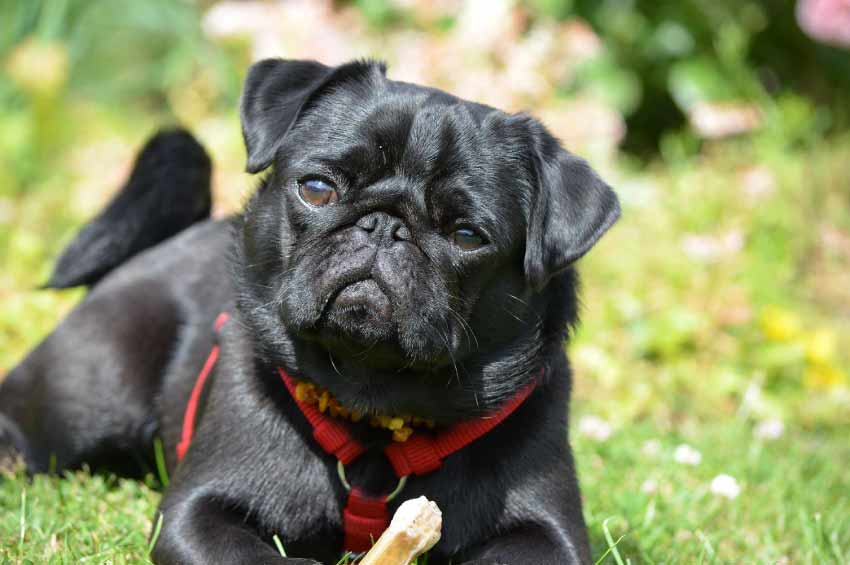
Black Pug Dog Temperament
The AKC standard describes the Pug as even-tempered and stable, with a playful, charming, dignified, outgoing, and affectionate disposition. The AKC also calls the Pug an “ideal house dog” that adapts well and suits owners of any age.
- Companion-focused: PetMD says Pugs are friendly, eager to please, and happiest when they’re included in family life.
- Family-friendly: the AKC notes that Pugs are good with children and usually get along with other dogs, especially when well socialized.
- Food-motivated: handy for training, but it also makes weight gain easy.
A black pug dog has the same temperament as any other Pug. Coat color doesn’t change personality. Every dog is an individual, shaped by genetics, socialization, training, and daily routine, so no Pug is guaranteed to behave a certain way. Always supervise young children with any dog.
Black Pug Puppies and Adult Dogs
Black Pug puppies are born with dark coats and grow into the same compact adult shape as fawn Pugs. To give a puppy a healthy start:
- Book a vet visit soon after you bring your puppy home. The AVMA’s pet owner resources cover vaccinations, parasite control, and routine care.
- Socialize early and gently: introduce new people, places, sounds, and handling in short, positive sessions.
- Start handling routines now: touch your puppy’s face folds, paws, ears, and mouth so grooming becomes easy later.
- Feed small meals: PetMD notes puppies may need up to four meals a day to help prevent low blood sugar, while adults typically eat two or three small meals.
- Keep play short and cool: avoid overexertion and hot weather, even with a young, energetic puppy.
As adults, Pugs are generally calm house dogs. PetMD says they need only several short walks a day and are poor candidates for running or agility work.
Grooming and Daily Care
A black Pug’s short coat is easy to maintain, but Pugs do shed. PetMD says they shed year-round, with heavier shedding in spring and fall, and the AKC notes they shed a fair amount. Shed hair can be very noticeable on light-colored furniture and clothing.
| Care task | What to do |
|---|---|
| Brushing | The AKC recommends weekly brushing; brush more during heavy shedding |
| Wrinkle care | PetMD advises cleaning the facial wrinkles and drying them thoroughly to help prevent infections |
| Eyes | Check daily for redness, squinting, cloudiness, or discharge |
| Ears | Check regularly; ask your vet how often to clean them |
| Nails | Trim regularly, as the AKC recommends |
| Teeth | PetMD advises daily brushing and professional cleanings because Pugs’ teeth are crowded |
| Vet checkups | Routine visits help catch skin, eye, dental, and weight problems early |
For a step-by-step approach to cleaning and drying facial folds, see our guide to wrinkle wipes and fold care. If nail trims make you nervous, our guide on trimming nails without cutting the quick can help.
Exercise, Heat, and Breathing
Every black pug dog is brachycephalic, or flat-faced. The AVMA explains that short-nosed breeds, including Pugs, often have smaller nostrils, a longer soft palate, and a narrowed trachea, which makes breathing less efficient. They can struggle to cool down during play, exercise, or stress, and extra weight makes these problems worse.
Follow these steps to keep your Pug safe:
- Keep exercise moderate. The AKC says moderate activity keeps Pugs healthy. Short walks and indoor play usually suit them well.
- Avoid heat and humidity. The AKC advises against strenuous exercise in hot, humid weather. The AVMA suggests shorter walks, more frequent rests, and walking at cooler times of day for short-nosed dogs.
- Don’t run with your Pug without checking with your vet first. The AVMA notes running may be too risky for short-nosed breeds.
- Keep your home cool in warm weather and always provide fresh water and shade.
- Use a harness instead of pulling on a collar around the neck, and ask your vet which fit is best.
Signs of heat stress: get veterinary help right away
The AVMA lists these warning signs:
- Unusual anxiety or weakness
- Breathing hard and often
- Heavy drooling
- Gums that look discolored, dry, or sticky
- Slower response to commands
Heat stress can quickly progress to heatstroke, which can be fatal without immediate veterinary care. PetMD also advises that heavy or labored breathing needs prompt veterinary attention.
Diet and Healthy Weight
Pugs love food, and the AKC warns that their food motivation makes weight gain easy. PetMD lists obesity as a common concern that can worsen breathing, overheating, joint problems, heart disease, and diabetes.
- Feed a complete and balanced diet. PetMD suggests asking your vet to recommend an AAFCO-compliant food.
- Measure meals instead of free-feeding. The right amount depends on your dog’s age, activity, and body condition, so ask your vet rather than relying on one universal figure.
- Count treats as part of daily calories.
- Give supplements only after talking with your vet.
If your Pug is already overweight, our guide on helping your dog lose weight explains how to work with your vet on a safe plan.
Black Pug Dog Health Concerns
Coat color doesn’t create special health problems. A black pug dog faces the same breed-related risks as a fawn Pug. Not every Pug develops these conditions, but knowing them helps you spot problems early.
| Concern | What to know |
|---|---|
| Breathing (BOAS) | The PDCA notes not all Pugs are affected, but changes may develop with age. Snoring, noisy breathing, and exercise intolerance are worth discussing with your vet. |
| Eye problems | The AKC says Pugs’ prominent eyes are prone to corneal ulcers and dry eye. PetMD notes eye injuries are emergencies. |
| Obesity | Worsens breathing and heat tolerance; prevent it with measured meals |
| Skin and ears | PetMD lists skin allergies and ear infections, aggravated by skin folds and narrow ear canals |
| Dental disease | Crowded teeth raise the risk of gum disease |
| Joints and spine | The PDCA lists luxating patellas, hip dysplasia, and Pug myelopathy; PetMD mentions Legg-Calvé-Perthes disease |
| Pug Dog Encephalitis (PDE) | A serious inflammatory brain disease; the PDCA lists a genetic test for breeding dogs |
Talk to your vet about any changes in breathing, eyes, skin, appetite, mobility, or behavior. Pet insurance may also help with unexpected costs, as PetMD suggests.
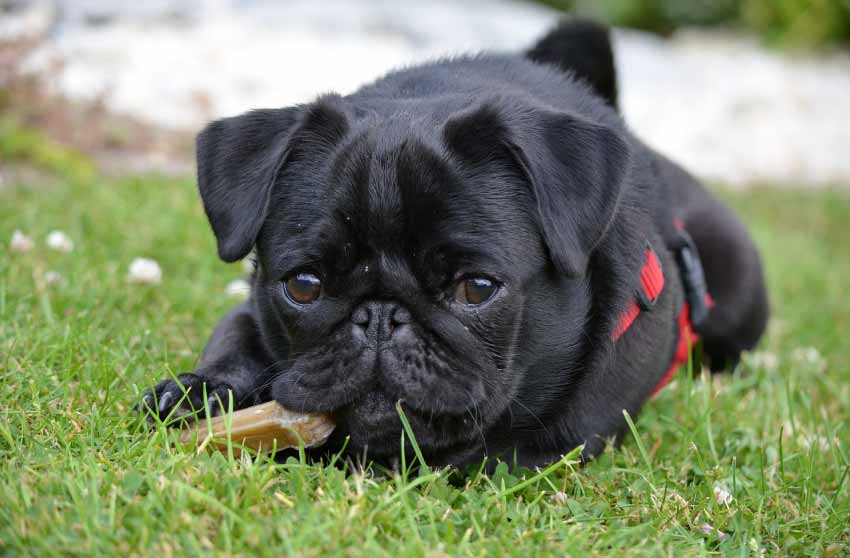
Finding a Black Pug Dog Puppy
Choosing a responsible breeder
- Meet the puppy and, where possible, its mother in the place where the litter is raised.
- Review the puppy’s veterinary, vaccination, and deworming records.
- Ask for the parents’ health-test results. The PDCA’s health page lists a PDE genetic test, an eye exam by a board-certified veterinary ophthalmologist, and a patella evaluation as its required CHIC tests, with hip, elbow, and other evaluations optional.
- Ask about the parents’ breathing, temperament, and age, and the breeder’s contract and return policy.
- The PDCA website also has a breeder directory under “Find a Pug.”
Red flags
- “Rare” color claims or premium prices just because a puppy is black
- “Teacup” or “mini” Pugs
- No health records, no visit allowed, or pressure to pay a deposit immediately
- Guarantees that a puppy will never have health problems
Adoption and rescue
PetMD notes that adopting from a shelter or rescue is an option. Breed-specific Pug rescues and local shelters sometimes have black Pugs and Pug mixes looking for homes, and adult dogs often come with a known personality.
What does a black Pug puppy cost?
There’s no single US price. PetMD gives a typical range of about $1,000 to $2,500 for a Pug puppy; treat this as a rough estimate, since prices vary by breeder, location, and what’s included. Adoption fees are usually lower. Budget for ongoing costs too: food, vet care, grooming supplies, and possibly pet insurance.
Black Pug Dog FAQs
Are black Pugs purebred?
Yes, a black Pug can be purebred. The AKC Pug standard recognizes two colors, fawn and black. A puppy’s registration papers and parentage, not its coat color, show whether it’s purebred.
How big does a black Pug get?
The same size as any Pug: about 10–13 inches tall, with a desirable weight of 14–18 pounds under the AKC standard. Individual dogs can vary.
How long do black Pugs live?
PetMD gives an average Pug lifespan of about 13–15 years. This is an estimate. Genetics, weight, and lifelong care all play a part.
Do black Pugs shed?
Yes. PetMD says Pugs shed year-round, with heavier shedding in spring and fall. Weekly brushing helps, and Pugs are not hypoallergenic.
Are black Pugs good family pets?
Many are. The AKC describes Pugs as affectionate, adaptable, and good with children. Every dog is an individual, so socialize your Pug and supervise young children.
Do black Pugs have special health problems?
No. Black Pugs share the same breed-related risks as fawn Pugs, including breathing difficulties, heat sensitivity, eye problems, skin-fold issues, and weight gain. Coat color doesn’t add or remove these risks.
How much does a black Pug puppy cost?
Prices vary. PetMD estimates about $1,000 to $2,500 for a Pug puppy. A black coat shouldn’t mean a higher price, and adoption is a lower-cost option.
Final Verdict: Is a Black Pug Dog Right for You?
A black pug dog is a standard-color, purebred Pug: affectionate, playful, and happiest close to its family. Its color doesn’t change its size, temperament, or health. What matters is daily care: keep it cool and at a healthy weight, clean and dry its wrinkles, watch its eyes and breathing, and choose a breeder who shares health-test results or adopt from a rescue.
Your next steps
- Ask breeders for the parents’ PDE, eye, and patella results before you visit.
- Plan for a cool home, a harness, and short daily walks.
- Keep your Pug’s teeth healthy with daily brushing and vet-approved dental chews.
- Browse more breed guides in our dogs section.
Share your black Pug photos with our community on Facebook.
About the author
Written and reviewed by the Pets Store Home Editorial Team: pet owners and animal lovers who check every guide against trusted US veterinary and animal-welfare sources. This article is general information, not a substitute for professional veterinary advice. Always talk to your veterinarian about your own pet’s health.
How we checked this guide: We used the AKC’s official Pug standard and breed guidance, the Pug Dog Club of America’s standard and health pages, AVMA guidance on short-nosed dogs and walking in heat, and PetMD’s Pug breed guide. We review this article every 12 months, or sooner if guidance changes.
Last reviewed: October 2026
Sources
- AKC – Official Standard of the Pug (accessed Oct 2026)
- AKC – Is the Pug the Right Breed for You? (accessed Oct 2026)
- AKC – Pug Dog Breed Information (accessed Oct 2026)
- Pug Dog Club of America – Breed Standard (accessed Oct 2026)
- Pug Dog Club of America – Health (accessed Oct 2026)
- AVMA – Short-Nosed Dogs FAQ (accessed Oct 2026)
- AVMA – Walking or Running With Your Dog (accessed Oct 2026)
- PetMD – Pug (accessed Oct 2026)






[…] Which foreign pets are legal in Washington State? […]